Best US Stock Brokers 2026: Futu vs IB vs Firstrade

Updated: 2026/03/02  |  CashbackIsland

【美股戶口推薦2026】7大美股證券行平台比較:邊間免佣、手續費最低?(富途/IB/Firstrade)

Want to invest in US stocks such as Apple and NVIDIA, but feel overwhelmed by the wide range of brokerage platforms and unsure where to start? Worried that “comparing platforms to buy US stocks” will leave you confused, and that high fees will erode your profits? This article compiles the latest 2026 recommended US stock brokerages, providing a comprehensive comparison of account opening requirements, trading fees, platform features, and commission-free offers. It also breaks down popular topics such as Futu US stock fees, helping you clearly evaluate and choose the most suitable commission-free US stock account


5 Key Criteria for Choosing a US Stock Brokerage Platform

Before diving into detailed comparisons of major platforms, establishing a clear evaluation framework is essential. Every investor has different needs. Some prioritize ultra-low costs, while others value platform stability and functionality. The following five criteria are the core factors you must consider when choosing a US stock account.


Trading Commissions and Platform Fees: Does Commission-Free Really Mean Free?

“Commission-free” has become the loudest marketing slogan among brokerages in recent years, but it does not mean trading is completely cost-free. Investors need to distinguish between different types of charges:

  • Commission Fee: This is the traditional trading fee, charged per transaction or per share. Platforms such as Firstrade truly offer zero commissions, while many others, including Futu and IB, provide commission-free trading only under specific conditions or for certain account types.
  • Platform Fee: Even with commission-free trading, some brokers charge a platform usage fee, usually a fixed amount per order. For example, under Futu’s commission-free plan, a US$1 platform fee per order still applies. For small investors who trade frequently, platform fees may have a greater impact than commissions.
  • Other Charges: These include dividend tax handling, ADR (American Depositary Receipt) custody fees, SEC fees, and Trading Activity Fees (TAF). Although small per transaction, these costs accumulate over time.

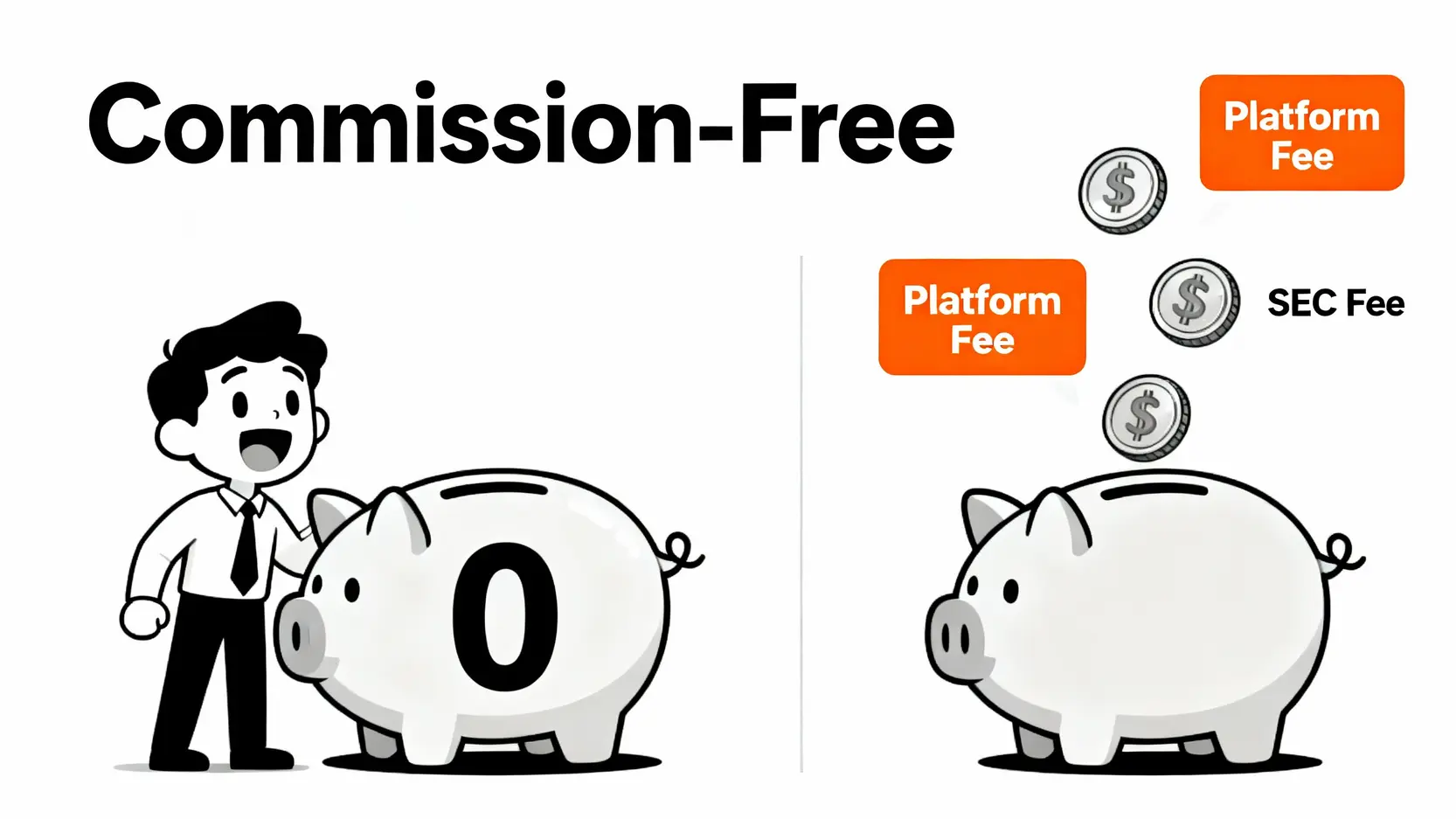
一張對比圖,解釋了美股交易中「免佣」不等於零成本,仍需支付平台費等其他費用。

“Commission-free” does not equal “free”. Platform fees and other miscellaneous charges are important components of total trading costs.

In short: When comparing costs, do not look only at commissions. You must include platform fees and hidden charges to identify a truly low-cost commission-free US stock account.


Platform Features and Chinese Support: App Usability and Customer Service Experience

A good trading platform should be your investment assistant, not an obstacle. Consider the following:

  • User Interface (UI/UX): Is the trading app or website intuitive and easy to use? Are order placement, account queries, stop-loss and take-profit settings clear and smooth? Futu, for example, is widely praised for its community features and user-friendly interface.
  • Charting and Analytical Tools: Does the platform provide sufficient technical analysis tools, such as multiple indicators and drawing functions? This is especially important for investors who conduct in-depth research.
  • Chinese Support: A fully localized Chinese interface is a basic requirement. More importantly, can you easily access Chinese-speaking customer service when problems arise? Response speed and professionalism are key indicators of service quality.
  • Market Information: Whether the platform offers free real-time quotes (Level 1 / Level 2), financial news, and expert analysis can help you make more informed investment decisions.


Fund Security and Regulatory Licenses: How Important Is SIPC Protection?

When entrusting funds to any financial institution, security always comes first. When choosing a US stock brokerage, you must confirm that it is regulated by authoritative institutions and provides adequate asset protection.

  • Regulatory Authorities: In the US, the primary regulators are the Securities and Exchange Commission (SEC) and the Financial Industry Regulatory Authority (FINRA). Brokers regulated by these bodies operate under stricter standards.
  • SIPC Protection: This is one of the most important safeguards for investors. The Securities Investor Protection Corporation (SIPC) protects clients of member brokerages. In the event of a brokerage failure, each customer’s securities and cash are protected up to US$500,000 (including a US$250,000 limit for cash). Before opening an account, be sure to confirm that the platform is an SIPC member.

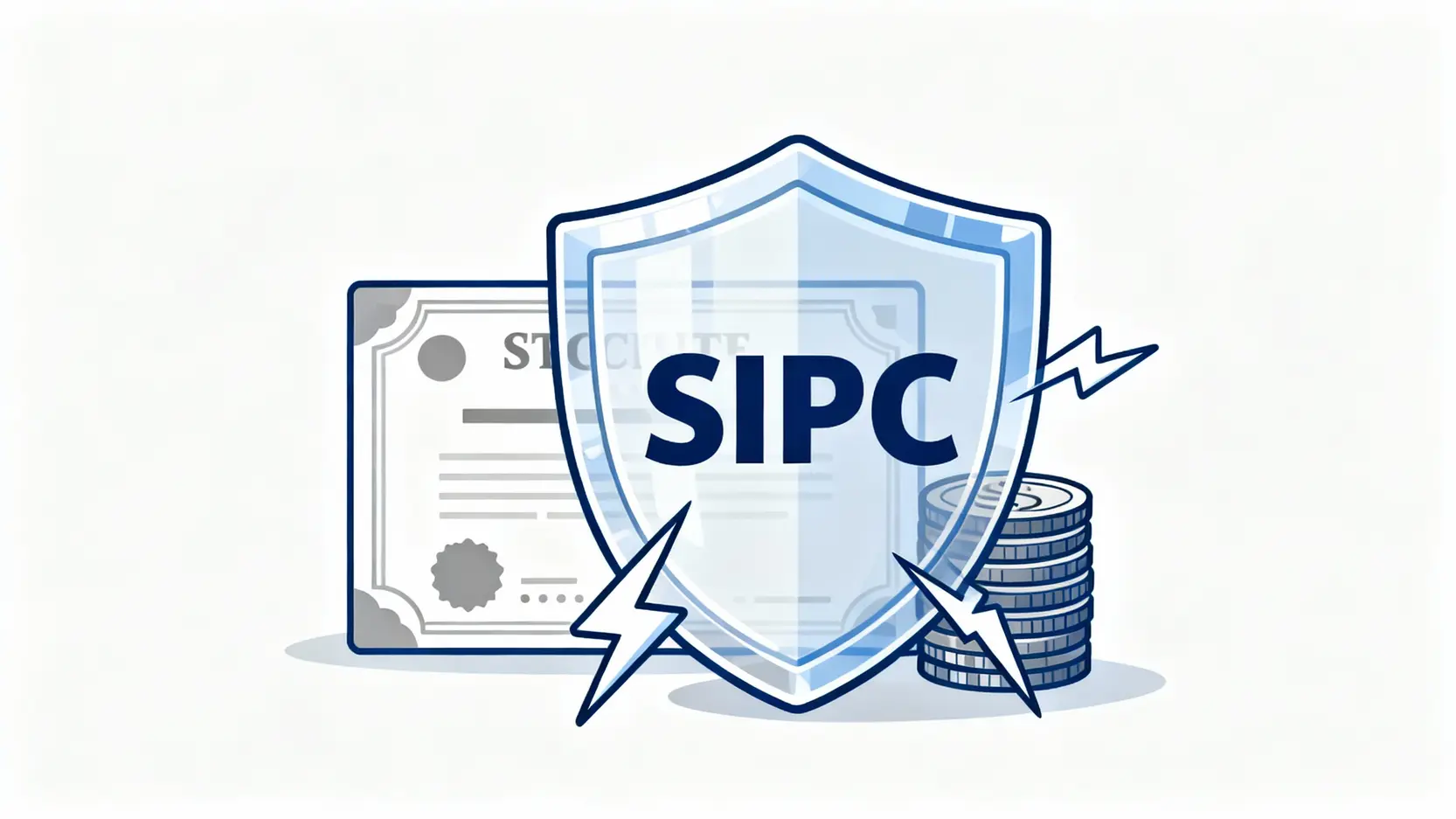
一張概念示意圖,展示了SIPC(美國證券投資者保護公司)像一個盾牌一樣保護投資者的證券和現金資產。

SIPC Protection: Up to US$500,000 in asset protection for your US stock investments.


Ease and Cost of Deposits and Withdrawals: Comparing Transfer Costs and Processing Time

How you deposit and withdraw funds directly affects both efficiency and cost. Common methods used by Hong Kong investors include:

  • Local Bank Transfers (such as FPS): One of the most convenient and cost-effective methods, typically available only for brokerages with a physical presence in Hong Kong, such as Futu and SoFi.
  • Overseas Wire Transfer: Suitable for all overseas brokers such as Firstrade and IBKR. Funds arrive quickly, but banks charge wire transfer fees (approximately HK$150-250), and intermediary banks may also impose charges.
  • ACH/Wise and Other Third-Party Transfers: Some brokers support ACH transfers via multi-currency accounts such as Wise. Fees are generally lower than traditional wire transfers, but you must first set up and fund a Wise account.

When comparing, consider both deposit and withdrawal fees and processing times. Some brokers may reimburse incoming wire transfer fees, which can be an added advantage.


Further Reading (Highly Recommended)

How to Open a Sub-Brokerage Account? 2026 Latest Process and Step-by-Step Guide, A Must-Read for Beginners!

2026 Complete Guide to US Stock CFD Trading: Platform Comparison, Pros and Cons, and Beginner Tutorial!


Minimum Account Funding Requirement and Fractional Share Trading

For retail investors with smaller capital or beginners, these two factors are particularly important:

  • Minimum Funding Requirement: Most online brokerages have eliminated minimum account funding requirements, making it easier to open an account without pressure. However, some traditional brokers or professional accounts may still have higher thresholds.
  • Fractional Shares: Want to buy a stock priced at several hundred or even over a thousand US dollars per share (such as NVIDIA or Amazon)? The fractional share feature allows you to purchase a portion of a stock with a small amount of capital (for example as low as US$1). This significantly lowers the investment threshold and makes it easier to build a diversified portfolio. Platforms such as SoFi and IBKR offer this feature.


Comparison of 7 Popular US Stock Platforms in 2026 (With Summary Table)

After understanding the evaluation criteria, let us examine some of the most popular US stock trading platforms in the market. The table below provides a quick summary of key information for each platform to help you conduct an initial comparison of platforms to buy US stocks.

Brokerage Platform US Stock Commission Platform Fee

SIPC Protection

Fractional Share Trading

Suitable For

Futu Securities (Futu) HK$0 (Fixed Plan) US$1 per order Feature-focused users, active traders
Interactive Brokers (IBKR) US$0.005 per share (minimum US$1) None Professional investors, high-frequency traders
Firstrade US$0 None Long-term investors, ETF enthusiasts
SoFi Hong Kong US$0 None Beginners, retail investors with smaller capital
uSMART Securities US$0.0049 per share (minimum US$0.99) US$1.5 per order Smart investing enthusiasts
Charles Schwab US$0 (Online Trading) None ✅ (Selected S&P 500 Stocks) Well-capitalized investors, full-service seekers
Local Banks Higher (e.g., US$18-25 per trade) Custody fees may apply ❌ (Not SIPC) Conservative investors who prefer one-stop banking services


1. Futu Securities (Futu): Powerful Features, In-Depth Breakdown of Futu US Stock Fee Structure

Futu NiuNiu is undoubtedly one of the most popular brokerage platforms in Hong Kong. Its app interface is user-friendly and feature-rich, integrating trading, quotes, news, and social features for an excellent overall experience.

  • Advantages:
    • The platform is stable, with fast execution speed.
    • Comprehensive features, providing detailed charts, financial statement data, and options chains.
    • A strong NiuNiu community that makes it easy to exchange investment insights.
    • Supports FPS, making deposits and withdrawals extremely convenient and fast.
  • Disadvantages:

    • The fee structure is relatively complex, and the “commission-free” plan still charges a platform fee.
  • Futu US Stock Fees Explained: Futu offers two pricing plans: (1) Fixed plan: HK$0 commission, US$1 platform fee per order; (2) Tiered plan: US$0.0049 commission per share (minimum US$0.99 per order), with the platform fee based on monthly share volume, starting from a minimum of US$1 per order. For most retail investors, the fixed plan is more cost-effective.
  • Suitable For: Investors who prioritize a good user experience, need strong analytical tools, and trade relatively frequently.


2. Interactive Brokers (IBKR): A Professional Investor’s Choice, Commission Structure Explained

IBKR is a globally recognized, long-established online broker. It is known for professional-grade trading tools, broad product coverage, and highly competitive commissions, making it a top choice for many professional traders.

  • Advantages:
    • Extremely low commissions, especially suitable for high-frequency or large-volume traders.
    • Broad global market coverage. One account can trade stocks, options, futures, forex, and more.
    • Provides the powerful trading platform Trader Workstation (TWS).
    • Very low financing rates.
  • Disadvantages:
    • The platform interface (especially TWS) is relatively complex, and beginners need time to adapt.
    • Only one free withdrawal per month, with fees charged thereafter.
  • Commission Structure: Offers fixed pricing (US$0.005 per share, minimum US$1) and tiered pricing. The IBKR Lite version provides zero-commission trading for US-listed stocks and ETFs, but Hong Kong users default to the IBKR Pro version.
  • Suitable For: Professional investors, high-frequency traders, and experienced users who need a wide range of financial products.


3. Firstrade (First Trade Securities): A True Zero-Commission Representative, Suitable for Long-Term Investors

Firstrade is one of the earliest online brokers in the US to offer zero-commission services. Its simple and straightforward pricing model has attracted many overseas investors.

  • Advantages:

    • True zero commission and zero platform fees for trading US stocks, ETFs, and options.
    • Simple account opening process, with full Chinese customer service.
    • Over 30 years of history, with a solid reputation.
  • Disadvantages:

    • Does not support fractional share trading.
    • The app interface and functions are relatively basic, lacking advanced analytical tools.
    • Deposits and withdrawals mainly rely on overseas wire transfers, which are more costly and slower.
  • Suitable For: Long-term investors who follow a “buy and hold” strategy, especially those focused on ETFs, and users who are highly sensitive to trading costs.


4. SoFi Hong Kong: Social Investing and Fractional Share Trading Features

SoFi in Hong Kong emphasizes simplicity and a zero-fee concept, while introducing social investing elements, making it highly suitable for beginners and younger investors.

  • Advantages:

    • Zero commission, zero platform fees, and zero custody fees.
    • Supports fractional share trading, with entry as low as US$10.
    • Clean app design with intuitive operation.
    • Supports FPS, making deposits convenient.
  • Disadvantages:
    • A relatively limited range of tradable products, mainly focused on popular US stocks and ETFs.
    • Lacks advanced charting and analytical functions.
  • Suitable For: Beginners, investors with smaller capital, and younger users who want to start investing in US stocks with a low entry threshold.


Further Reading (Highly Recommended)

How to Open a Sub-Brokerage Account? 2026 Latest Process and Step-by-Step Guide, A Must-Read for Beginners!

2026 Complete Guide to US Stock CFD Trading: Platform Comparison, Pros and Cons, and Beginner Tutorial!

5. uSMART: Focused on Intelligent Investment Features

uSMART is an emerging fintech brokerage. Its distinctive feature is the integration of artificial intelligence technology into investment services, providing users with intelligent investment tools.

  • Advantages:
  • Offers AI investment functions such as “Smart Alerts” and “Pattern Analysis”.
  • Competitive fee structure and frequently launches account opening promotions.
  • Supports fractional share trading.
  • Disadvantages:
  • Relatively lower brand recognition.
  • The fee structure includes both commissions and platform fees, requiring careful calculation.
  • Suitable For: Investors interested in AI and big data-driven investment features who seek quantitative analysis support.


6. Charles Schwab: A Leading Established US Brokerage With Comprehensive Services

Charles Schwab is one of the largest publicly listed investment service companies in the US, known for its comprehensive product offerings, high-quality customer service, and strong brand reputation.

  • Advantages:

    • Outstanding reputation and very high level of fund security.
    • Zero commission for online trading of US-listed stocks and ETFs.
    • Provides comprehensive wealth management planning and research reports.
    • Highly rated customer service.
  • Disadvantages:
  • Higher minimum funding requirement for account opening (typically US$25,000).
  • Platform design is relatively traditional and may be less convenient for Hong Kong users compared with localized brokers.
  • Suitable For: High-net-worth investors with larger capital who value brand reputation and comprehensive wealth management services.


7. Local Bank Accounts (Citibank/HSBC) vs Brokerage Accounts: Pros and Cons Analysis

Many investors prefer to use their regular banks to trade stocks for convenience and easier fund management. However, compared with professional brokerages, bank-based securities services usually have the following issues:
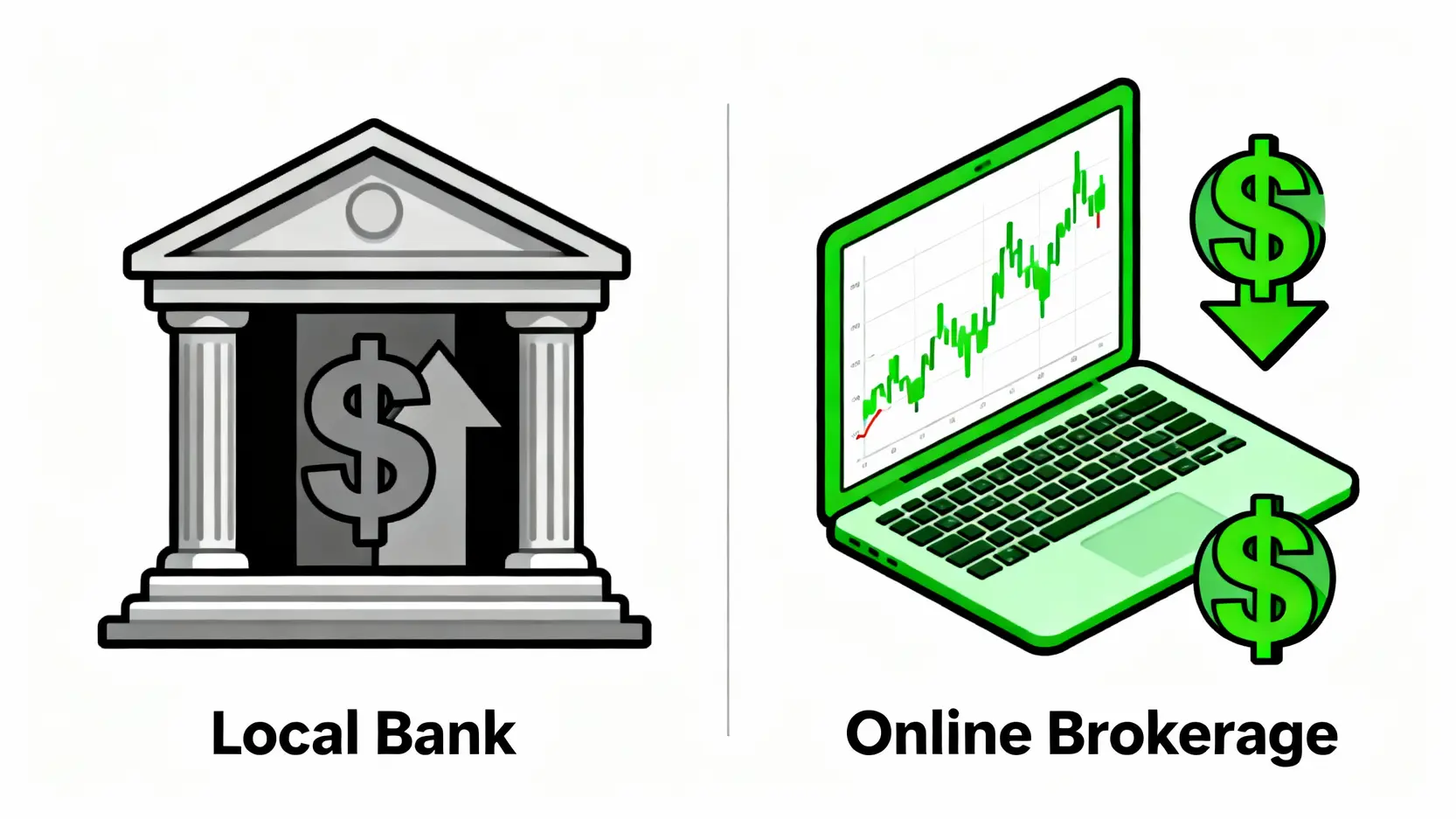
本地銀行與網絡證券行在美股交易上的優劣對比圖,顯示證券行在費用上更具優勢。

Local Banks vs Professional Brokerages: Significant Differences in Trading Costs and Platform Features.

  • Advantages:
  • Centralized fund management and familiar operations.
  • No need to open additional accounts or transfer funds.
  • Disadvantages:
  • High costs: Trading commissions are significantly higher than those of online brokers, often close to US$20 per trade, and may include minimum charges.
  • Limited functionality: Trading platforms are basic and lack professional analytical tools and real-time quotes.
  • Less favorable exchange rates: US dollar conversion rates are usually less competitive than those offered by brokerages or money changers.
  • No SIPC protection: US stocks purchased through local banks are held in custody by the bank and are not covered by SIPC protection.
  • Conclusion: Unless you are completely insensitive to trading costs and strongly prefer to keep all assets within the same bank, choosing a professional online brokerage is a more prudent and cost-effective option among recommended US stock brokerages.


FAQ: Common Questions About US Stock Investing

Q: Do Hong Kong investors need to pay dividend tax when buying US stocks?

A: Yes. The US withholds 30% dividend withholding tax (Dividend Withholding Tax) on dividend income for non-US tax residents. For example, if a company pays a dividend of US$1 per share, you will actually receive US$0.7. The W-8 BEN form you complete when opening an account is used to declare your non-US resident status, ensuring that you do not need to pay US capital gains tax. This 30% tax rate is fixed and is automatically withheld by the broker when dividends are paid.

Q: If an overseas brokerage goes bankrupt, are my assets safe? (SIPC Protection)

A: Very safe, provided that the broker you choose is an SIPC member. As mentioned earlier, SIPC provides protection of up to US$500,000 per customer. Importantly, clients’ securities are legally segregated from the broker’s own assets and held under trust protection. Even if the broker fails, these assets will not be used to repay debts. SIPC will step in to help transfer your positions and cash to another healthy brokerage.

Q: What time are US stock trading hours in Hong Kong time?

A: Regular US stock market trading hours are divided into daylight saving time and standard time. In Hong Kong time, they are as follows:

  • Daylight Saving Time (approximately mid-March to early November): Hong Kong time 9:30 p.m. to 4:00 a.m.
  • Standard Time (approximately early November to mid-March): Hong Kong time 10:30 p.m. to 5:00 a.m.

In addition, US stocks also have pre-market (Pre-market) and after-hours (After-hours) trading sessions. Most brokerage platforms support trading during these periods, but liquidity is lower than during regular sessions.

Q: What is the W-8 BEN form? Do I have to fill it out?

A: The W-8 BEN form (Certificate of Foreign Status of Beneficial Owner for United States Tax Withholding and Reporting) is an Internal Revenue Service (IRS) document used to prove that you are a “non-US tax resident”. All non-US citizens must complete this form when opening a US stock account. Its main purposes are: (1) to exempt you from capital gains tax; (2) to confirm that you are subject to the 30% dividend withholding tax rate. The form is typically valid for three years, and the broker will remind you to renew it before it expires.


Conclusion

In summary, choosing the best platform to buy US stocks depends on balancing your investment frequency, capital size, and demand for platform features. For long-term investors seeking the lowest possible costs, Firstrade is an excellent choice. For active traders who value functionality and user experience, Futu provides unmatched convenience. For professional traders, IBKR’s depth and breadth are unparalleled. It is hoped that this comprehensive “comparison of platforms to buy US stocks” and “recommended US stock brokerages” guide will help you find your preferred “commission-free US stock account” and clearly understand fee details such as “Futu US stock fees”. Take your first step toward global investing today based on your investment habits!

If you liked this article, please share it!

Related Articles

  • HK Crypto Cards: Crypto.com vs Binance Comparison
    【Hong Kong Crypto Credit Card Comparison】Crypto.com Card vs Binance Card Ultimate Showdown (Including Application Guide and Fee Analysis) Looking to use your crypto directly for daily spending but unsure which card to choose? With the wide array of crypto credit cards on the market, especially the highly popular Crypto.com Card...
    2026 年 4 月 14 日
  • HK Monthly Dividend Funds 2026: Top 10 Compared
    [2026 Hong Kong Monthly Dividend Fund Recommendations] Top 10 High-Yield Funds Compared, with a Comprehensive Breakdown of Income Strategies and Pitfalls In the current prolonged low interest rate environment, relying solely on bank savings is almost unable to keep up with inflation, and assets are gradually shrinking in real terms....
    2026 年 3 月 26 日
  • HK Forex Websites: 5 Real-Time Quote Platforms Compared
    A Guide to Hong Kong Financial Websites for Forex: A Comparison of 5 Major Real-Time Quote Platforms (ET Net/AAStocks) In the fast-changing forex market, obtaining fast and accurate information is the key to successful investing. Are you tired of financial websites with outdated information and delayed quotes? Do you want...
    2026 年 3 月 26 日
返回顶部