From the Strait of Hormuz to the Taiwan Strait: Understand the Global Economic Chain Reactions of Strait Blockades in One Article
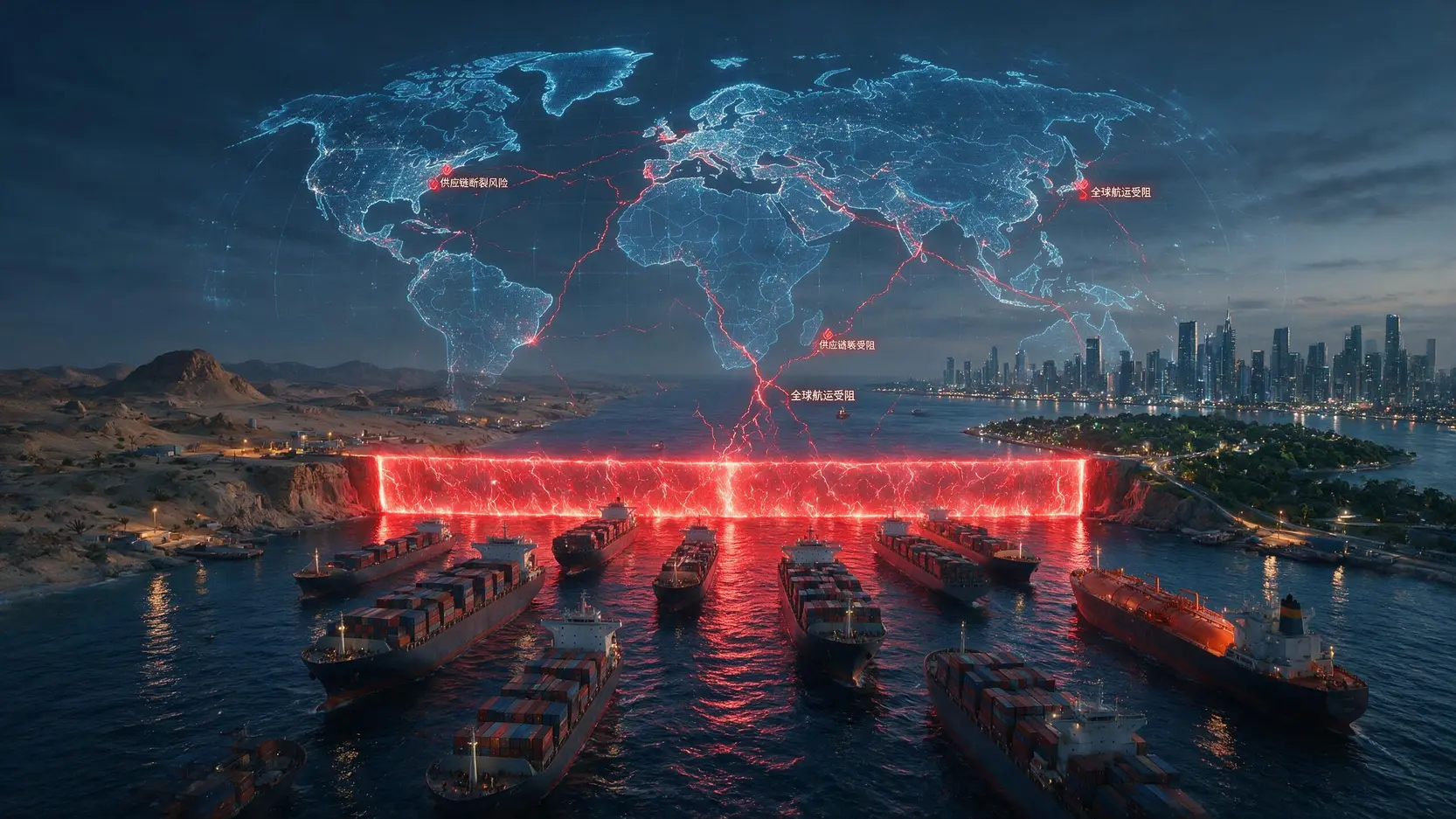
Recent intensification of international conflicts has brought the geopolitical term “strait blockade” into the global spotlight. This is not merely a military scenario on a map, but a deadly threat to the lifelines of the global economy. Once a critical maritime chokepoint is cut off, the resulting global economic impact will extend far beyond a regional conflict, unleashing an economic tsunami that affects everyone. The depth and breadth of the disruption may far exceed expectations. This article will provide an in-depth analysis of the definition of a strait blockade and historical cases, while examining its potential impact on the global economy in 2026, from energy crises to supply chain disruptions, helping you fully understand the chain reactions of this potential crisis.
What Is a Strait Blockade? Why Can It Shake the World Overnight?
A strait blockade is an act of using military or non-military force to control or cut off a specific strait shipping route, with the aim of paralyzing an opposing party or affecting maritime trade and resource transportation in a particular region. In today’s highly globalized world, more than 80% of internationally traded goods are transported by sea, and these routes depend heavily on several narrow “chokepoints”. Once these chokepoints are “strangled”, the arteries of the global economy are effectively severed, with potentially disastrous consequences.
The Chokepoints of the Global Economy: Understanding Three Key Shipping Routes
Not all straits have equal strategic value. Several key straits have become the most vulnerable nodes in the global economy because of their irreplaceable geographic locations and enormous shipping volumes:
- Strait of Hormuz: Located between Iran and Oman, it connects the Persian Gulf with the Gulf of Oman. It is the world’s busiest oil transportation route, with approximately 20-30% of global oil and large volumes of liquefied natural gas (LNG) exported through it each day. Once blocked, international oil prices could surge uncontrollably within hours.
- Strait of Malacca: Located between the Malay Peninsula and the Indonesian island of Sumatra, it is the shortest shipping route connecting the Indian Ocean and the Pacific Ocean. Approximately one-third of global trade, including oil transported from the Middle East to East Asia and containers carrying Asian manufactured goods to markets around the world, must pass through this route.
- Taiwan Strait: Located between Taiwan and mainland China, it is the most direct shipping route between Northeast Asia and Southeast Asia. More importantly, it lies at the core of the global semiconductor supply chain. Nearly half of the world’s container ship fleets pass through this area each day, and any instability would directly disrupt the lifeline of the global technology industry.
Modern Blockade Methods: Not Just Warships, but Also Mines and Cyberwarfare
In the traditional understanding of a blockade, large numbers of warships may be deployed at sea. However, in 2026, blockade methods have expanded far beyond this, becoming more diverse and difficult to prevent:
- Deployment of Smart Mines: Advanced smart mines are highly concealed and difficult to remove, allowing shipping routes to be paralyzed for weeks or even months without the need for a large-scale fleet.
- Cyberattacks Paralyzing Ports: Cyberattacks can disable port operating systems and shipping company dispatch systems on both sides of a strait, creating an effective blockade without firing a single shot.
- Drone and Unmanned Vessel Harassment: Low-cost drones or unmanned vessels can be used to continuously harass or attack commercial ships, sharply increasing maritime insurance costs and forcing shipping companies to abandon the route.
- “Quasi-Blockade” Strategy: Authorities may announce prolonged military exercises in designated waters or board and inspect all ships on the grounds of customs or quarantine requirements. Although this does not constitute a formal declaration of war, it can effectively disrupt commercial shipping.
Historical Warnings: From the Cuban Missile Crisis to Threats of a Strait of Hormuz Blockade
Although blockades or quasi-blockades have been relatively rare throughout history, each occurrence has caused severe disruption to the global economy and become a textbook-level warning. These events show that the impact of strait blockades is far from theoretical.
Case Review: The Impact of Past Blockade Events on Global Trade
Let us review several key events and examine how they affected market sentiment:
| Event |
Year |
Location |
Main Impact |
| Suez Canal Crisis |
1956 |
Egypt |
The canal was closed, forcing Europe to reroute around the Cape of Good Hope in Africa. Transportation costs surged, triggering severe energy shortages and an economic recession in Europe. |
| Cuban Missile Crisis |
1962 |
Waters Around Cuba |
The US imposed a maritime “quarantine” on Cuba. Although it did not directly block major international shipping routes, the threat of nuclear war triggered panic in global financial markets, causing gold prices to surge. |
| Strait of Hormuz Tanker Attacks |
2019 |
Strait of Hormuz |
Several oil tankers were attacked. Although the strait was not completely blocked, oil prices surged nearly 20% in a single day, while global maritime insurance rates soared. |
Data Analysis: Historical Linkages Between Oil Prices, Shipping Costs, and Inflation
Data does not lie. From past crises, we can clearly identify the following transmission path:
Blockade Threat → Oil and Freight Rate Surges → Imported Inflation → Global Economic Slowdown
Take the tensions in the Strait of Hormuz in 2019 as an example. At the time, Brent crude oil futures rose from approximately US$60 per barrel to US$72 within just a few trading days. This not only directly increased transportation and logistics costs, but also spread through rising petrochemical feedstock prices to plastics, fertilizers, textiles, and almost all everyday consumer goods, ultimately reflected in a higher Consumer Price Index (CPI). The impact of an energy crisis triggered by a single geopolitical event is crucial to understanding the consequences of a strait blockade.
Further Reading (Highly Recommended)
How Did the Russia-Ukraine War Trigger a Global Currency Storm? In-Depth Analysis of the 2026 Energy Crisis and Foreign Exchange Market
How Much Does the Geopolitical Risk Premium Affect Taiwan Stocks? Understanding Risks, Opportunities, and Investment Strategies
2026 Scenario Analysis: Three Waves of Impact on the Global Economy When a Key Strait Is Blockaded
If a large-scale strait blockade were to occur in 2026, whether in the Strait of Hormuz or the Taiwan Strait, the global economy could face three devastating waves of impact. This would be a perfect economic storm, with an unprecedented speed of transmission and scope of influence.
First Wave of Impact: Energy and Commodity Prices Spiral Out of Control
This would be the most direct and immediate reaction. Once news of a blockade is confirmed, market panic would instantly ignite the energy and commodity markets.
- Oil and Natural Gas: If the Strait of Hormuz were blockaded, international oil prices could exceed US$150 per barrel within 72 hours and may even challenge the historic high of US$200. Economies that are highly dependent on energy imports, such as Japan, South Korea, and the European Union, would immediately face a severe energy crisis.
- Food and Metals: Disruptions to maritime transportation would affect not only energy, but also global shipments of food products (such as soybeans and wheat) and industrial metals (such as iron ore and copper). Surging prices would trigger a global food security crisis and send industrial production costs out of control.
Second Wave of Impact: Global Supply Chain Disruptions (Semiconductors, Automobiles, and Consumer Goods)
After the first wave of price shocks, the pain in the real economy would follow. Modern manufacturing relies heavily on the “Just-in-Time” model, which requires an extremely stable supply chain.
- Semiconductor Industry Paralysis: If transportation through the Taiwan Strait were disrupted, more than 60% of the global supply of advanced-process chips would abruptly stop. From smartphones and servers to electric vehicles, every industry that depends heavily on chips would face a severe “supply shortage”, setting the global technology industry back by several years.
- Automotive and Electronics Industries Grind to a Halt: Without key components from Asia (such as chips, display panels, and batteries), automobile factories and electronics assembly lines in Europe and the US would be forced to suspend operations within weeks, triggering mass unemployment.
- Consumer Goods Shortages: From clothing and toys to pharmaceutical ingredients, large volumes of consumer goods that depend on Asian manufacturing would be unable to reach European and US markets. Supermarket shelves would become empty, recreating the panic buying seen at the beginning of the pandemic, but on an even larger scale. This vulnerability highlights the urgency of building global supply chain resilience.
Third Wave of Impact: Financial Market Panic and a Global Economic Recession
The disaster in the real economy would eventually spread back to financial markets and drag the world into a deep economic recession.
- Stock Market Crashes and Risk-Off Sentiment: The collapse of corporate earnings expectations would cause global stock markets to plunge simultaneously. Capital would flood into traditional safe-haven assets such as the US dollar and gold, while high-risk emerging markets would face devastating capital outflows.
- Stagflation: Central banks around the world would be trapped in an impossible dilemma. On one hand, prices would soar due to supply shortages, requiring interest rate hikes to curb inflation. On the other hand, economic activity would contract sharply due to production disruptions, requiring interest rate cuts to stimulate growth. This “stagflation” is every policymaker’s nightmare.
- A Hard Landing for the Global Economy: According to scenario analyses by institutions such as the International Monetary Fund (IMF), a large-scale strait blockade could reduce annual global GDP growth by 3 to 5 percentage points. This means that a global recession more severe than the 2008 financial crisis would be difficult to avoid.
Strategies for Businesses and Individuals: How to Find Safe-Haven Solutions During a Crisis
Faced with a high-impact, low-frequency “black swan” event such as a strait blockade, both business operators and individual investors must prepare in advance and build resilience to protect their interests. Remaining passive would only leave them vulnerable when a crisis strikes.
Building Supply Chain Resilience for Businesses
For businesses, the “low-cost, high-efficiency” supply chain strategy pursued over the past several decades has become extremely fragile under today’s geopolitical risks. Building “supply chain resilience” has become essential for survival:
- Source Diversification: Avoid concentrating all production capacity or suppliers in a single country or region. Actively promote “China+1” or “Taiwan+1” strategies and establish backup production bases in countries such as Vietnam, Mexico, and India.
- Increase Critical Inventory Levels: Moderately move away from the “zero inventory” mindset and maintain at least three to six months of safety stock for critical components and raw materials to cope with sudden transportation disruptions.
- Route Redundancy: Reassess and plan alternative transportation routes, such as increasing the proportion of air freight or studying the feasibility of land transportation options such as the China-Europe Railway Express.
- Strengthen Risk Early-Warning Mechanisms: Invest resources in establishing a geopolitical risk assessment team, closely monitor developments in global hotspots, and formulate response plans for different risk levels.
Asset Allocation Adjustment Recommendations for Investors
For individual investors, the threat of a strait blockade means that portfolios must be reassessed and include more elements capable of withstanding geopolitical risks:
- Increase the Proportion of Safe-Haven Assets: Traditional safe-haven assets such as gold, the US dollar, and the Swiss franc can effectively hedge against market panic during the early stages of a crisis. A moderate allocation of 5-10% can help stabilize a portfolio.
- Position in Energy and Defense Industries: Under expectations of a blockade, energy stocks related to oil and natural gas, as well as defense industry stocks that benefit from heightened regional tensions, may become market safe havens.
- Focus on Domestic Demand and Resilience-Themed Stocks: Domestic demand industries that are less affected by international supply chain disruptions, as well as companies with supply chain resilience (such as localized production capabilities) may offer stronger defensive qualities.
- Reduce Exposure to Highly Leveraged and Cyclical Stocks: Industries such as technology and consumer discretionary that are highly dependent on global supply chains and closely linked to the economic cycle would be among the first to suffer during a blockade crisis. Their portfolio weightings should be reduced appropriately.
Further Reading (Highly Recommended)
Investment Strategies for Troubled Times: Understand Geopolitical Risks and Deploy Assets With Five Wartime Investment Strategies
More Than Just Oil Prices! How Could US-Iran Tensions Drive Up Your Trading Costs? Lessons for Investors
Frequently Asked Questions About Strait Blockades (FAQ)
Q: Is a strait blockade considered an act of war?
A: Under international law, blockading the ports or coastline of a sovereign state is generally regarded as an act of war. However, in modern conflicts, countries may adopt ambiguous “quasi-blockade” measures, such as “forced isolation”, “military exercise zones”, or “special customs enforcement operations”, to avoid the legal and political consequences of directly declaring war. Regardless of the terminology used, the actual economic impact is no different from that of a formal blockade.
Q: Do ordinary people need to prepare for the potential risks of a strait blockade?
A: Absolutely. Although a strait blockade may appear to be a confrontation at the national level, its consequences would directly affect everyone’s daily life. Ordinary people can prepare in two ways. First, financially, they can review their investment portfolios to ensure a certain level of risk resistance. Second, in daily life, they can moderately stock up on non-perishable essential goods and maintain both psychological preparedness and emergency savings to cope with short-term price surges.
Q: Which industries are most vulnerable to the impact of a strait blockade?
A: The most vulnerable industries generally have the following characteristics: 1. Heavy dependence on imported raw materials or energy (such as petrochemicals and aviation); 2. Highly globalized and complex supply chains (such as automobile and electronics manufacturing); 3. Non-essential industries (such as luxury goods and tourism). In contrast, domestic demand industries such as utilities, basic healthcare, and local agriculture are generally subject to less direct impact.
Q: If the Taiwan Strait were blockaded, would the impact on the global semiconductor industry truly be irreplaceable?
A: It would be completely irreplaceable in the short term. Taiwan accounts for more than 60% of the global market for semiconductor manufacturing, particularly advanced processes below 7 nanometers. Constructing these cutting-edge wafer fabrication plants, installing equipment, and improving production yields require at least three to five years, as well as the support of an extremely complex industrial ecosystem. Therefore, any blockade of the Taiwan Strait would cause the global advanced technology industry to face a prolonged “chip shortage”, creating a gap that no country could fill within a short period.
Conclusion
In summary, a strait blockade is a high-impact risk event within the global economic system. Its effects would spread through energy, supply chains, and financial markets, from surging international oil prices to rising prices for everyday necessities, ultimately affecting everyone’s daily life and financial security. In 2026, an era of increasingly complex geopolitics, understanding the mechanisms and potential impact of a strait blockade on the global economy is a crucial first step for businesses and individuals seeking to develop forward-looking strategies and protect their assets. Ignoring this risk would be like swimming naked in the turbulent waves of the global economy, an extremely dangerous position.