What Is Stock Short Selling? Beginner’s 3-Minute Guide

What Does Stock Short Selling Mean? Understand the Secret to Making Money Even When the Stock Market Falls in 3 Minutes
When ordinary investors enter the market, they are usually used to earning price differences by “buying low and selling high”. But if they encounter an economic recession, a bear market, or a company suddenly faces a financial crisis, can they only watch helplessly as their assets shrink? As a veteran who has spent years in the market, I must tell you: in capital markets, declines are also full of opportunities. At this point, you must thoroughly understand what stock short selling means. This article will provide you with a complete guide to short selling, deeply analyze how the short-selling mechanism works, help you break away from the one-way mindset of only going long, and learn how to profit in reverse when the market crashes.
What Does Stock Short Selling Mean? Analyzing the Trading Logic of Selling First and Buying Back Later
In the world of trading, there is never only one direction. To understand what stock short selling means, you must first overturn traditional consumption and holding habits, and re-examine price fluctuations from the perspective of a two-way market.
The Basic Definition of Short Selling: Selling First and Buying Back Later
The core logic of short selling is “selling first and buying back later”. When, through in-depth research, you expect the price of a certain underlying asset to fall, you can “borrow” that asset from a broker and immediately sell it at the current market price for cash. After the stock price falls as expected in the future, you then “buy back” the same quantity of the asset from the market at a lower price and return it to the broker. The price difference, after deducting related fees and interest, is your actual profit.
Imagine that you foresee a mobile phone manufacturer’s new product sales facing a Waterloo moment, with its current stock price at 100. You borrow 1,000 shares from a broker and sell them at 100, receiving 100,000 in cash. A few months later, its financial results disappoint sharply, and the stock price falls to 60. At this point, you spend 60,000 to buy back 1,000 shares from the market and return them to the broker. The 40,000 difference is the substantial profit created in a falling market. This is precisely the secret weapon that enables many professional traders to survive or even make a significant profit during stock market crashes.
A Logical Comparison Between Short Selling and Going Long
To understand what stock short selling means more thoroughly, we can compare it with traditional going long. Going long means being optimistic about future prospects, buying assets and waiting for them to appreciate; short selling means being pessimistic about future development, using borrowed shares to sell first and lock in a high price in advance.
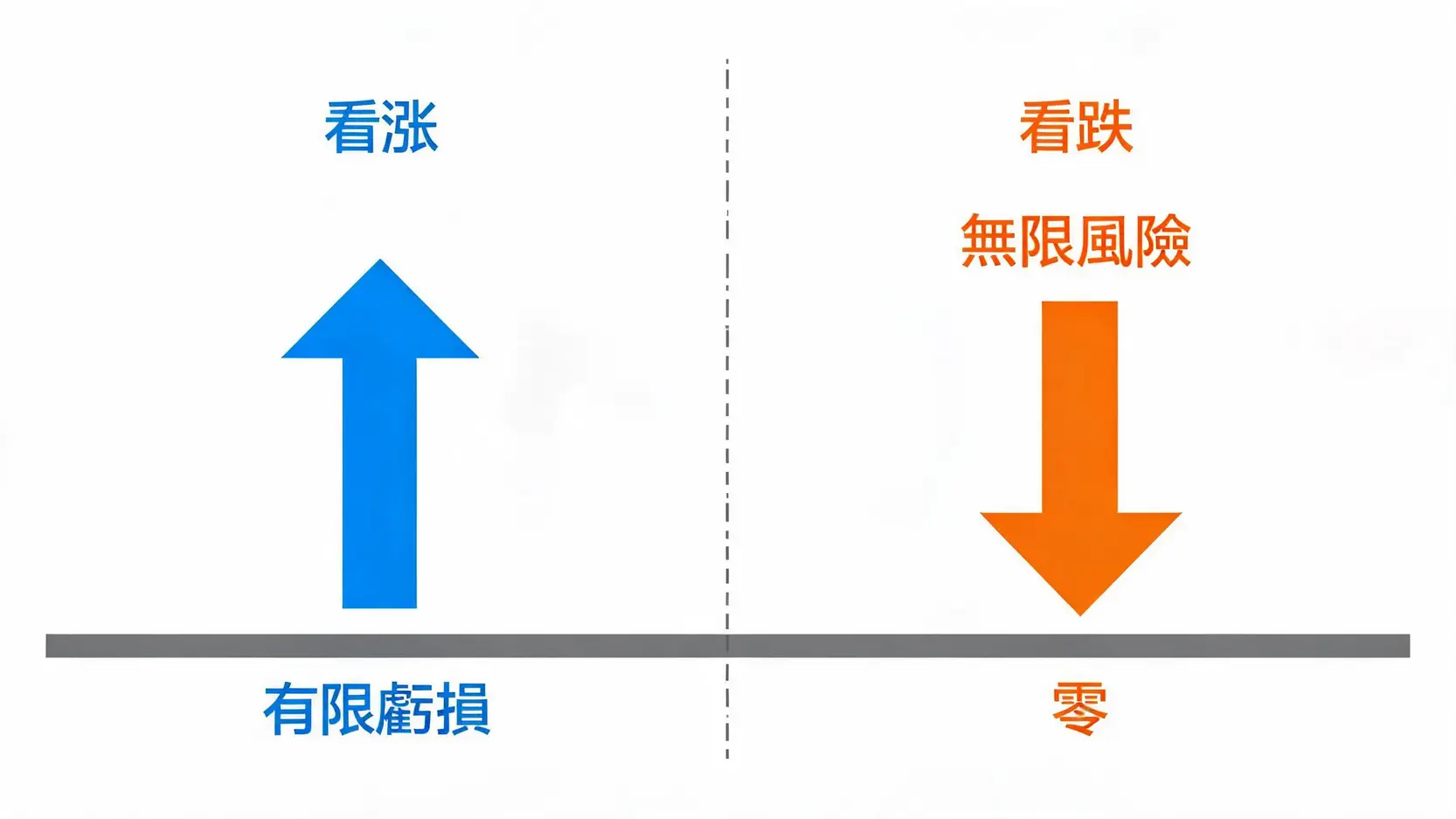
It is worth noting that the maximum loss from going long is the invested principal (when the stock price unfortunately falls to 0) while the profit potential is theoretically unlimited because the stock price can multiply indefinitely. In contrast, because a stock price can theoretically rise without limit, the potential loss from short selling is unlimited, while the maximum profit is limited to the stock price falling to 0 (which means nearly a 100% return on the principal). This asymmetrical risk-reward characteristic is an iron rule that every trader must keep firmly in mind when executing a short-selling strategy.

Comparison Between Going Long and Short Selling: The Asymmetry Between Profit Potential and Loss Risk
Further Reading (Highly Recommended)
How to Build a Long-Term Investment Portfolio? 5 Key Strategies for Beginners in One Guide
Why Does the Stock Market Need a Short-Selling Mechanism? Revealing Hedge Fund Short-Selling Strategies
Many beginners may ask, since short selling is “cursing” a company to fall, why do major exchanges still allow this system to exist? In fact, the short-selling mechanism is crucial to maintaining the health and efficiency of capital markets.
Providing Market Liquidity and Price Discovery
In a mature financial system, the confrontation between bulls and bears is what brings the most authentic “price discovery”. If the market only allows buying, stock prices can easily form huge overvaluation bubbles driven by one-way capital flows. The existence of short sellers is like the market’s cleaner and brake pad. They invest significant resources into uncovering flaws in corporate financial statements and loopholes in business models, then quickly reflect this negative information in stock prices through borrowed-share selling. This not only increases overall market liquidity, but also effectively curbs irrational valuation mania. Therefore, gaining a deep understanding of what stock short selling means can also help you evaluate extreme market sentiment from a more objective and rational perspective.
Hedge Fund and Institutional Short-Selling Strategies
In the practical operations of institutional investors, short selling is not always purely for speculation or bearish views. Many large hedge funds use long/short equity strategies, buying high-quality assets while shorting weaker, lower-quality assets. In this way, regardless of whether the overall market rises or falls, they can hedge out systematic market risk (Beta) and purely earn excess returns (Alpha) generated by the manager’s stock-picking ability.
In addition, when institutions hold large spot positions that cannot be easily sold, they also use derivative investment tools such as futures and options to establish short positions, thereby hedging short-term downside risk. This is the essence of how professional capital flexibly uses the short-selling mechanism, and it is also the dividing line between amateur retail investors and professional institutions.
Analyzing the Cost Structure of Short Selling: A Must-Read Risk Checklist Before Executing Margin Short Selling
There is no free lunch. To profit from declines in a bear market, you must pay the corresponding price. Compared with simply buying spot shares, margin short selling involves a more complex cost structure and stricter regulatory restrictions.
Calculating Stock Borrowing Rates and Margin Interest
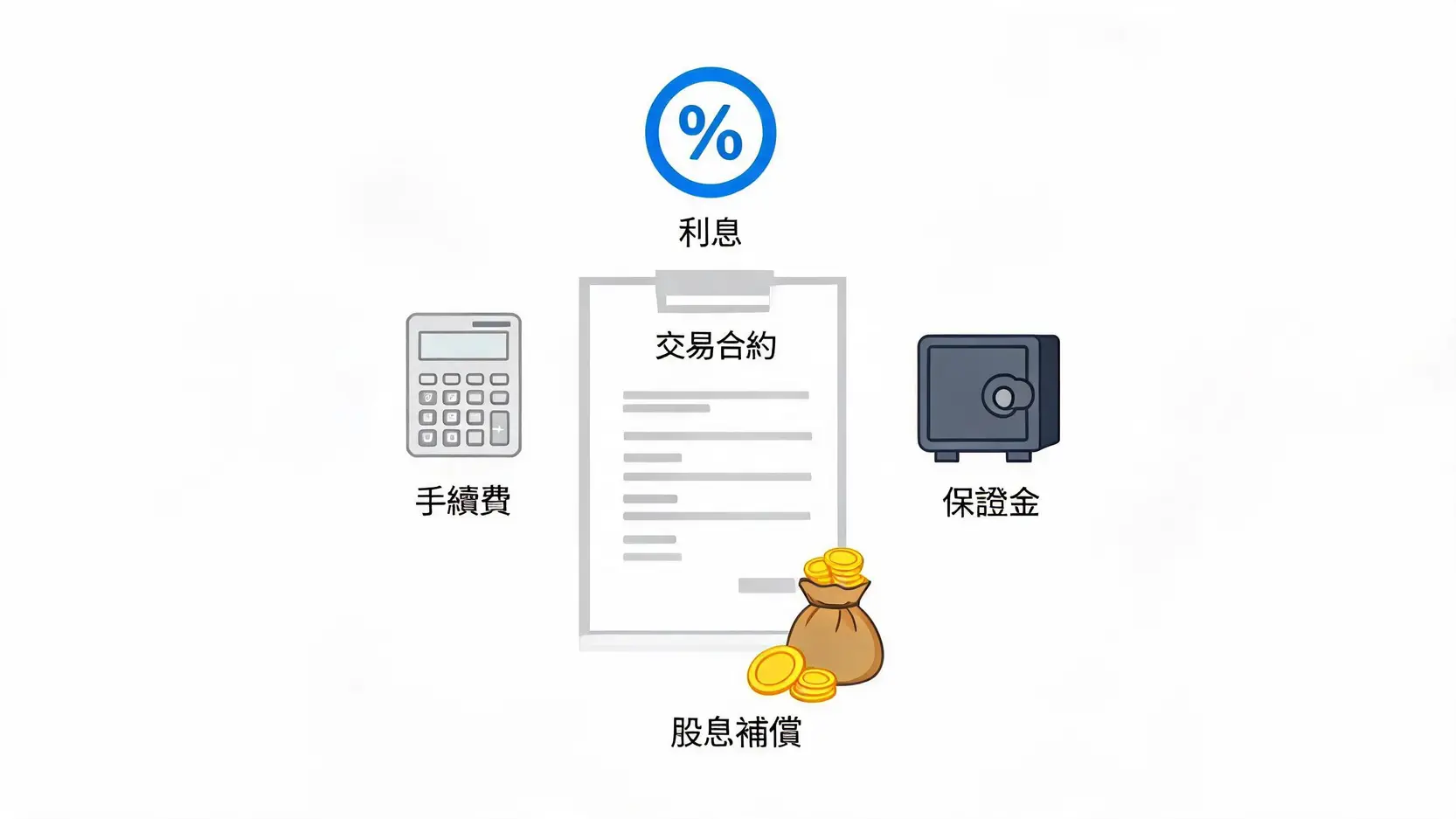
When you decide to short sell, you are essentially borrowing someone else’s asset, so you must pay a “stock borrowing rate” or margin short-selling interest. This rate is not fixed, but dynamically adjusts according to the supply and demand of that underlying asset’s shares in the market. If everyone wants to short a popular company facing a crisis, causing shares to become hard to borrow, the stock borrowing rate may surge to an annualized double-digit level or above. For ordinary traders, if the stock borrowing rate is too high, even if the stock price falls as expected, profits may be completely eaten away by expensive interest costs.
In addition, to prevent default, brokers will require you to deposit margin (usually higher than the total market value of the shorted target). The opportunity cost of having this capital frozen is also a hidden cost you must consider. In the Taiwan market, margin trading also requires constant attention to the Taiwan Stock Exchange’s maintenance ratio requirements. Once account losses cause the maintenance ratio to fall below the statutory standard, you will face a margin call from the broker and may even be forcibly liquidated.
Forced Buy-In and Dividend Compensation During Ex-Rights and Ex-Dividend Periods While Short Selling
This is one of the most commonly overlooked aspects in actual operations among beginners. When you short sell a company and the company announces a dividend distribution, as the borrower of the shares, you must pay out of pocket to “compensate” the original stock owner with an equivalent cash dividend. In addition, during certain specific periods (such as before the annual general meeting or before the ex-rights and ex-dividend trading date), markets in various countries generally require short positions to undergo “forced buy-in”.
This means that even if you strongly believe the stock price will continue to fall sharply in the future, you must still bite the bullet and buy back the underlying asset from the market at any cost before the specified date to return it. Once the market has too many short positions and faces a forced buy-in period, it can easily trigger a “short squeeze”, causing devastating damage to short positions. This institutional short-squeeze risk is a trap that must be carefully guarded against after thoroughly understanding what stock short selling means.
The Impact of Brokerage Fees and Transaction Taxes on Profits
In addition to stock borrowing costs and dividend compensation, entry and exit fees and transaction taxes will also ruthlessly erode your profits. Short selling is usually viewed as a relatively short-term trading strategy, and frequent entries and exits can accumulate considerable trading friction costs. Therefore, when setting take-profit and stop-loss levels, you must accurately factor in these detailed costs to ensure the risk-reward ratio has an advantage, so you do not end up in the awkward situation of “getting the direction right but working for nothing”.

Must-Know Costs of Short Selling: Stock Borrowing Rates, Margin, and Various Hidden Expenses
Further Reading (Highly Recommended)
FAQ: Frequently Asked Questions About Stock Short Selling
In the process of practicing a short-selling guide, the following core questions are concepts that every trader must clarify before entering a short market:
Q: What is the maximum profit from short selling a stock? What is the maximum loss?
A: The maximum profit from short selling is when the company unfortunately goes bankrupt and its stock price falls to 0, allowing you to earn nearly a 100% return on your principal (after deducting stock borrowing and other related transaction costs). However, since there is theoretically no ceiling to how high a stock price can rise, if the stock price surges sharply due to unexpected positive news, your potential loss will be unlimited. This is why short selling must never be done without strict capital management and stop-loss discipline.
Q: Can every stock be shorted?
A: Not necessarily. Regulators and brokers in various countries screen shortable securities based on liquidity and financial quality. Usually, only companies with larger market capitalization, better liquidity, and transparent financial information are included on the margin short-selling list. Small-cap stocks with depleted liquidity, or securities that are under warning or disposition measures, often face a situation where there are “no shares available to borrow”, making it impossible to execute short selling smoothly.
Q: How much margin is required for short selling?
A: This depends on local market regulations and the broker’s risk control policy. Generally speaking, the margin requirement for short selling is stricter than for going long. Taking margin trading in Taiwan as an example, investors are usually required to prepare a margin ratio as high as 90% or even higher, and must constantly monitor changes in the maintenance ratio during trading hours. Once the stock price rises sharply in the opposite direction and causes the maintenance ratio to fall below a safe level, additional cash must be deposited immediately, otherwise you will lose control of the position.
Q: When the market crashes, will the government intervene in short selling?
A: It certainly can. Under extreme market conditions involving panic-driven crashes, financial regulators in many countries will implement emergency administrative measures such as “short-selling bans”, or “no short selling below the previous closing price”, in order to stabilize financial order and investor confidence. As a mature trader, you must always pay attention to changes in macroeconomic policy conditions to avoid having an established strategy become instantly ineffective due to regulatory restrictions.
Conclusion: Only by Strictly Following Discipline Can You Master the Short-Selling Mechanism
After the detailed analysis above and a thorough understanding of what stock short selling means, you will find that although it can provide an investment portfolio with a powerful tool to profit against the trend in bear markets and even protect assets, the risk characteristics and cost structure behind it are far more complex and stringent than simply going long. The asymmetrical nature of limited profit and unlimited loss means short selling is absolutely unsuitable for speculators who lack time to monitor the market or who have weak discipline.
In your future trading journey, whether you want to use the short-selling mechanism to hedge the long positions in your portfolio, or intend to precisely target overvalued bubble assets, you must always place capital management first. Carefully calculate the potential friction costs of every margin short-selling transaction and set stop-loss points that must be executed unconditionally. Only on the premise of respecting market trends and being cautious about uncertainty risk can short selling become a powerful tool for accumulating wealth in all market conditions, rather than a poison that destroys your principal
Related Articles
-
How Does Hedging Work? Advanced Hedge Fund Strategies and Practical Trading Guide In the rapidly changing financial markets, relying solely on a “buy-and-hold” strategy often makes it difficult to withstand severe market volatility and achieve stable long-term profits. If you have heard Wall Street leaders discuss risk hedging, you are...2026 年 7 月 14 日
-
What Is Hedging? A Risk Management Guide Every Financial Beginner Should Read In the investment market, we often hear the term “hedging”, but what exactly does it mean? Why do professional investors use it? Hedging means adopting strategies to protect assets from adverse price movements. Whether in the stock, foreign...2026 年 7 月 14 日
-
2026 Complete Guide to US Treasury Yields: Trend Analysis, Impact of Surging Yields, and Asset Allocation Strategies In the rapidly changing global financial market, US Treasury yields have long been regarded as the most important benchmark for the risk-free rate. Entering 2026, amid recurring shifts in inflation expectations and dynamic...2026 年 7 月 13 日