Trading Drawdown Recovery: Psychological Adjustment Guide

From Losses to Recovery: The Essential Psychological Adjustment Techniques for Traders During Equity Drawdowns, Say Goodbye to Drawdown Anxiety
Watching the equity curve in your account continue heading south, along with the feelings of helplessness, anxiety, and self-doubt, is a nightmare every market participant may experience. Psychological pressure management of the equity curve is not only a beginner’s issue, but also a lifelong discipline that experienced traders must constantly stay alert to. Consecutive losses do not merely erode your capital. More seriously, they destroy the confidence you painstakingly built in your decision-making, trapping you in a vicious cycle of “the more you lose, the more anxious you become, and the more anxious you become, the more you lose”. Want to know how to deal with continuous account losses? This article will take an in-depth look at the psychological traps behind drawdowns and provide five battle-tested psychological adjustment techniques for equity drawdowns. These methods will help you scientifically manage stress, face losses rationally, and ultimately rebuild a strong trading mindset capable of delivering stable profitability.
Know Your Mental Demons: What Is Drawdown and Its Psychological Impact?
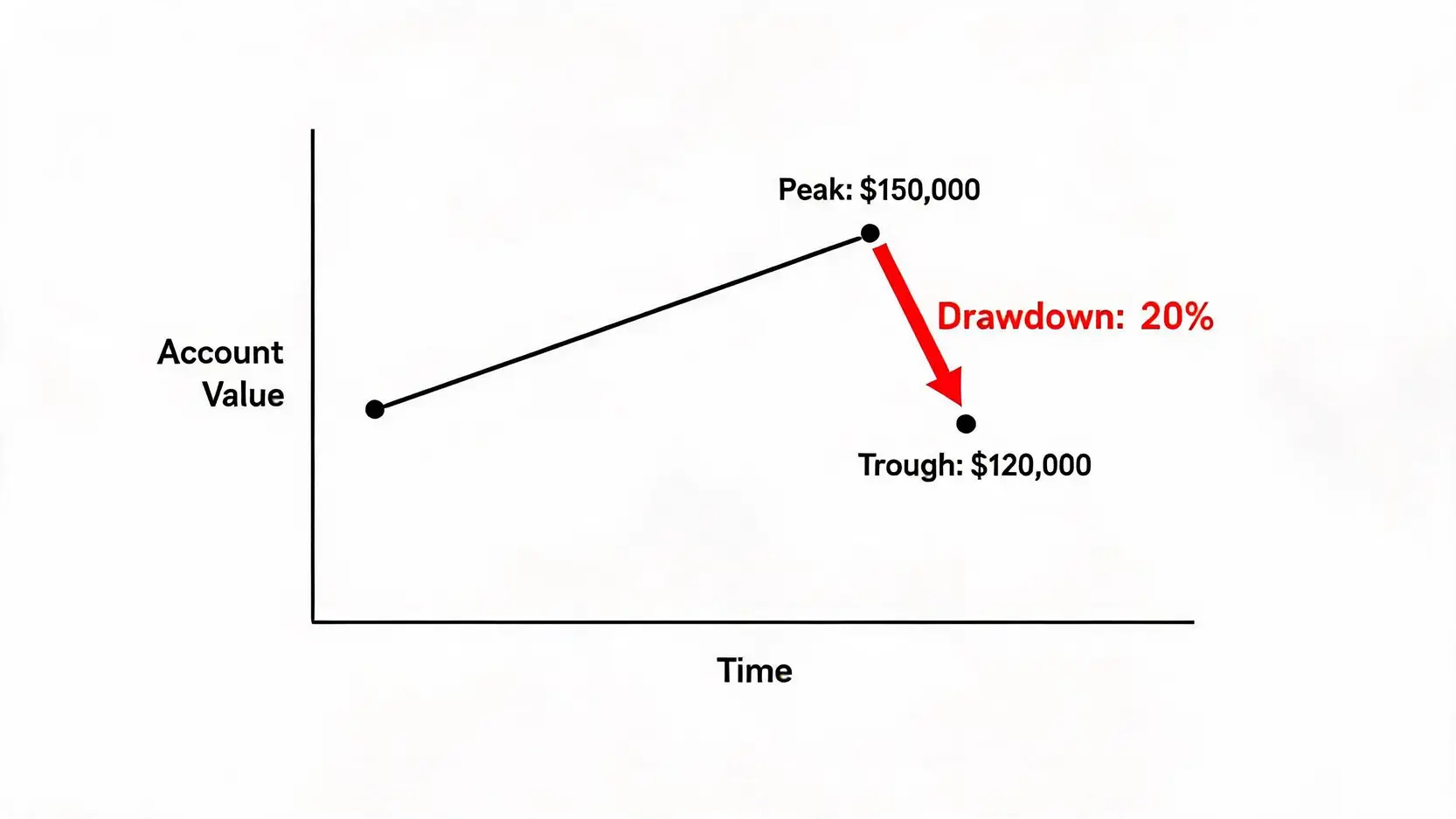
Drawdown refers to the decline in a portfolio or trading account from its highest point to its lowest point. For example, if your account grows from US$100,000 to US$150,000, and then falls to US$120,000, your drawdown would be (US$150,000 – US$120,000) / US$150,000 = 20%. Behind this cold number lies an enormous psychological impact.

Drawdown is not just a number. It is also a psychological test.
Drawdown Is More Than Just a Number: How It Evolves From Financial Loss Into a Crisis of Confidence
For traders, drawdown is never merely a percentage. It is more like a mirror reflecting our deepest fears. At first, it is only a reduction in the account balance on paper. But as losses expand, it develops into a full-blown crisis of confidence:
- Self-Doubt: “Has my strategy stopped working?”, “Am I simply not suited for trading?”, “Why can others make money while I keep losing?” These thoughts spread like a virus, making you uncertain about every decision you make.
- Fear of Missing Out (FOMO): When you see the market reverse immediately after you stop out, or surge while you are sitting in cash, the feeling of “missing out on a fortune” can create intense anxiety, pushing you to jump back into the market impulsively, often resulting in buying high and selling low.
- Stress Spillover: Trading stress silently seeps into your daily life, affecting your sleep quality, family relationships, and even your physical health. You may become irritable, depressed, and lose interest in other things.
Irrational Behavior During Losses: Identifying the Warning Signs of Revenge Trading and Overtrading
When confidence is eroded, the amygdala in the brain (responsible for fear and emotions) takes control away from the rational prefrontal cortex. This is when a series of destructive trading behaviors quietly emerge. You must learn to identify these warning signs like a detective:
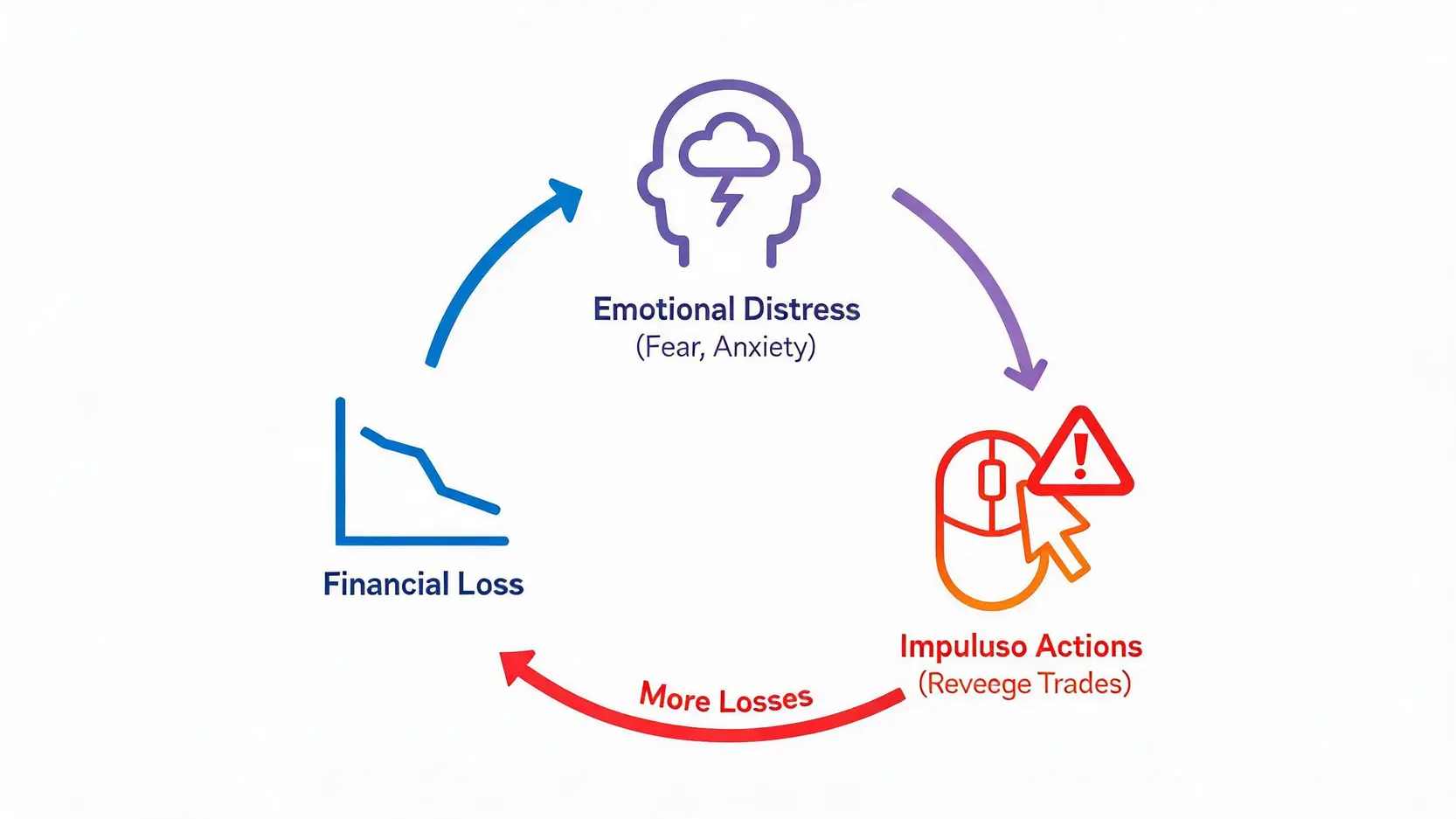
- Revenge Trading: “The market owes me, and I must win it back!” With this mindset, you ignore risk, increase position sizes, and trade excessively in an attempt to recover all losses in one or two trades. This is no longer trading. It is gambling.
- Overtrading: Driven by frustration or anxiety, you begin taking low-quality trades that do not meet your system criteria, simply for the feeling of “having a position open”. This rapidly drains both your capital and energy.
- Randomly Changing Rules: You continuously move your stop-loss levels during losing trades, or even cancel them altogether. Your entry criteria also become increasingly loose. This is a warning sign that your trading discipline is collapsing.

Warning! The vicious cycle from drawdown to irrational trading.
The root of these behaviors largely comes from an inability to accept losses. Many studies in trading psychology point out that humans are naturally loss-averse, and the pain of losses far outweighs the joy of equivalent gains. Therefore, learning how to handle drawdown pressure is an essential path toward becoming a professional trader.
Stabilize Yourself: 5 Practical Psychological Adjustment Strategies for Handling Drawdown Pressure
When you realize you are trapped in a streak of continuous losses, remember that your top priority is not recovering losses, but stopping further losses and protecting your most important asset: your mindset. The following five strategies are your lifeboat for stabilizing yourself.
Strategy 1: Press the Pause Button – Acknowledge Losses and Temporarily Step Away From the Market
When you experience consecutive losses or feel emotions taking control of your decisions, the most effective move is simple: close the charts and walk away from the computer.
Acknowledging losses is a sign of maturity. It does not mean you failed. It means you are facing reality and giving yourself room to breathe. Taking a short break from the market for several days, or even one to two weeks, can help you:
- Break the Negative Emotional Cycle: Prevent further poor decisions made under anger and frustration.
- Regain Objectivity: Once you shift from being “inside the game” to becoming an “observer”, it becomes easier to see both the market and your own trading problems more clearly.
- Recharge Yourself: Engage in activities unrelated to trading, such as exercise, reading, or spending time with family, allowing your brain and body to genuinely rest.
Strategy 2: Conduct Data-Driven Reviews – Replace Emotional Self-Blame With Trading Journals
“How could I be so stupid?” “This market is impossible!” Emotional self-criticism is useless. What you need is an objective and calm, data-driven review.
Take out your trading journal and analyze it like a scientist reviewing experimental data by answering the following questions:
- Did I Follow My Rules? Did these losing trades strictly follow my trading system’s entry and exit rules? If not, the problem lies in execution.
- Has the Market Environment Changed? Under what market conditions does your strategy perform best (such as trending or ranging markets)? Has the recent market environment become unsuitable for your strategy?
- What Do These Losing Trades Have in Common? Do these losses share specific characteristics? For example, do they mostly occur during certain time periods or involve specific instruments?
Through data analysis, you may discover that the problem is not your strategy itself, but rather your execution or inability to adapt to the market environment. This can significantly reduce self-doubt.
Strategy 3: Reduce Pressure Proactively – Decrease Position Size to Ease Decision-Making Burdens
After consecutive losses, your confidence reaches a low point. Fear of further losses may cause hesitation, missed opportunities, or premature exits. At this stage, one highly effective method is to actively reduce your trading size. For example, instead of trading 1 lot, reduce it to 0.1 lots or even 0.01 lots.
The benefits of doing this include:
- Reducing Psychological Pressure: When the potential loss of each trade becomes insignificant, your decision-making pressure decreases substantially.
- Rebuilding Trading Confidence: Your goal shifts from “making big money” to “making correct decisions”. Even successfully executing a few trades correctly with smaller size can greatly help restore your rhythm and confidence.
- Focusing on the Process: This allows you to refocus on executing your trading strategy itself rather than obsessing over profit and loss fluctuations.
Strategy 4: Build a Firewall – Set a “Maximum Drawdown” Psychological Stop Line
Professional fund managers all operate with strict maximum drawdown limits. Once those limits are reached, they must stop trading and conduct a comprehensive review. As an individual trader, you should establish the same kind of “firewall” for yourself.

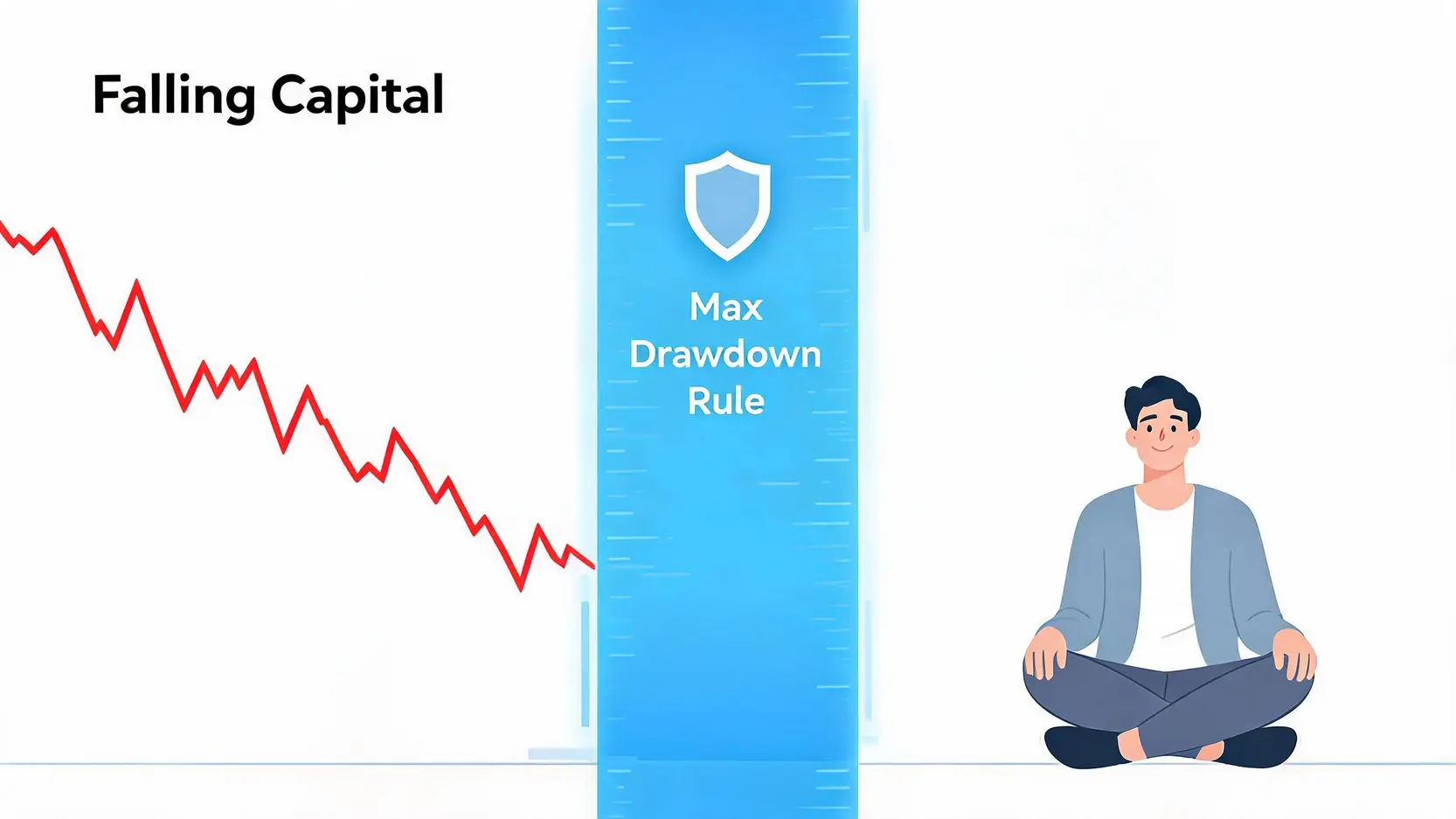
Build your capital firewall by setting a maximum drawdown stop line.
This stop line can be based on a percentage of capital (for example, monthly losses exceeding 15%) or the number of consecutive losing trades (for example, 7 consecutive losses). Once this line is reached, immediately execute Strategy 1: stop trading unconditionally for at least one week.
This discipline may appear harsh, but it is the ultimate barrier protecting you from blowing up your account. It forces you to stop and address problems before small wounds turn into fatal injuries.
Strategy 5: Manage Physical and Mental Health – Reset Your Psychological State Through Mindfulness and Exercise
Do not forget that traders are human beings. Your physical and mental condition directly affects your trading performance. During high-pressure drawdown periods, physical and mental health management becomes even more important.
- Mindfulness Meditation: Spending 10-15 minutes daily practicing mindfulness can improve focus, reduce emotional impulses, and help you become more aware of your psychological state.
- Regular Exercise: Exercise releases endorphins, which are natural anti-anxiety chemicals. Whether it is running, swimming, or strength training, exercise effectively helps release stress and clear your mind.
- Sufficient Sleep: Long-term sleep deprivation severely affects cognitive ability and decision-making quality. Ensuring 7-8 hours of high-quality sleep every night is the foundation for maintaining peak trading performance.
Rebuilding a Profitable Mindset: How to Manage Equity Curve Pressure at Its Root?
The five strategies above are “first aid techniques” for handling drawdowns. However, to solve the problem fundamentally, you need to reshape your understanding of losses and profits, and build a healthier trading mindset.
Further Reading (Highly Recommended)
Accept Drawdowns as Normal: Treat Them as a Necessary Trading Cost Rather Than Failure
Imagine opening a restaurant. You need to pay costs such as rent, ingredients, and employee salaries. In the business of trading, drawdowns are one of the “costs” you must pay. No trading strategy can guarantee a 100% win rate, and drawdowns are an unavoidable part of the profit curve.
Once you begin viewing drawdowns as an “operating cost” rather than a “personal failure”, your mindset will change dramatically. You will shift from emotional reactions to rational cost management, thinking about how to keep this “cost” within an acceptable range instead of trying to eliminate it entirely.
Focus on Long-Term Expectancy: Build Deep Trust in Your Trading System
Why do you so easily abandon your trading system during consecutive losses? The root cause is that you do not trust it deeply enough. This trust should not come from a few profitable trades, but from extensive and objective historical backtesting and live trading validation.
A trading system with positive expectancy means that over a sufficiently large number of trades, it is profitable overall. Once you deeply understand and believe this, you will be able to maintain discipline and continue executing your strategy even during unavoidable drawdown periods. This is because you know that as long as you persist, probability and time will ultimately work in your favor.
Conclusion
In summary, successful trading is essentially a psychological game. Effective psychological pressure management of the equity curve is the core competitive advantage that allows you to survive and thrive in the market over the long term. Handling drawdowns is like a pilot dealing with turbulence during flight. Panic and incorrect actions will only make the situation worse. Only by staying calm and trusting your training and system can you pass through safely. Through the five major strategies provided in this article, you will be better equipped to handle the challenge of continuous account losses and remain focused and composed when the next drawdown arrives. Start applying these psychological adjustment techniques for equity drawdowns today, transform every loss into fuel for growth, and move toward becoming a more mature and stable trader.
FAQ: Frequently Asked Questions About Drawdowns and Psychological Adjustment
Q: After consecutive losses, should I immediately trade to recover the losses?
A: Absolutely not. This is the classic “revenge trading” mindset, which is one of the main reasons traders suffer even greater losses or even blow up their accounts. After consecutive losses, your top priority should be to stop trading, analyze the reasons behind the losses, and adjust your mindset. Before regaining a calm and objective state, you should not place any trades. Remember, the market will always be there, but your capital will not.
Q: How can I determine whether losses are caused by strategy problems or simply normal market fluctuations?
A: This requires data-driven trade reviews. First, check whether you strictly followed your trading discipline. If discipline was not the issue, then analyze your trading system itself. Every robust trading system should have historical maximum drawdown data. If the current drawdown is still within the historical maximum drawdown range, then it is likely just a normal fluctuation period for the system. However, if the drawdown significantly exceeds historical data, or if the market conditions causing the losses are completely inconsistent with the original design of the strategy, then the strategy may no longer be effective and should be re-evaluated or optimized.
Q: Besides adjusting mindset, are there any other tools or methods that can help with stress management?
A: Absolutely. You can join a trustworthy trading community or seek guidance from a mentor. Having people to communicate and share experiences with can effectively reduce feelings of isolation. In addition, some trading assistance tools (EAs) can help automatically execute stop losses, preventing emotional adjustments to stop-loss levels. Finally, reading classic trading psychology books such as “Trading in the Zone” and “The Disciplined Trader” can also provide strong psychological support.
Q: What is a reasonable level for setting a “maximum drawdown”?
A: There is no standard answer. It depends entirely on your personal risk tolerance, the characteristics of your trading strategy, and your capital size. A more aggressive short-term trader may accept a 25%-30% drawdown, while a conservative long-term investor may not even tolerate 15%. A good starting point is to refer to the maximum historical drawdown from your strategy’s backtesting results, then add a buffer zone based on your psychological tolerance level (For example, if the historical maximum drawdown is 20%, you might set 25% as your own stop line).
Q: What should I do if losses begin affecting my sleep or daily life?
A: This is a very serious warning sign indicating that your trading risk or emotional investment has far exceeded your tolerance level. Immediately stop all trading and consider seeking professional help. First, significantly reduce your position size until profits and losses no longer affect your emotions. If the situation still does not improve, you may need to seek assistance from a professional therapist or counselor. Remember, no investment is worth sacrificing your physical and mental health for.
Related Articles
-
How to Get Started with Bitcoin? The Complete 2026 Bitcoin Buying Guide for Beginners After watching Bitcoin repeatedly reach new highs in recent years and successfully pass spot ETF reviews in the US and Hong Kong in 2024, officially entering mainstream financial markets, many investors have turned their attention to...2026 年 7 月 20 日
-
Is Gold’s V-Shaped Rebound a Bottom-Fishing Signal? A Complete Guide to Trading Strategies Amid “$100 Price Swings” What Is a Gold V-Shaped Rebound? More Than Just a Technical Pattern The gold market has recently experienced sharp rises and falls, with prices frequently displaying dramatic “gold V-shaped rebounds”. Single-day “$100 price...2026 年 7 月 20 日
-
What Is PPI Data? 2026 Latest Analysis: Understand the Differences from CPI and How It Affects Stock Market Trends With market information constantly changing, do you always hold your breath while waiting for CPI data to be released? But did you know that a more forward-looking inflation indicator, PPI data...2026 年 7 月 20 日