Gold Price per Mace: Tael Weight & Conversion Guide

What Is the Gold Price per Mace? How Heavy Is One Tael? A Super Practical Gold Unit Conversion Table
In physical gold trading, quotes such as “gold price per mace: NT$XXX” are common. Being familiar with gold weight unit conversions and how gold shops calculate prices is the foundation of investing in and trading physical gold. This article compiles a gold unit conversion guide and pricing analysis to help investors clarify transaction details and ensure asset value.
Taiwan’s Most Common Gold Weight Unit Conversions: Tael, Mace, Candareen, and Li
Taiwan’s traditional gold shop market mainly uses the Taiwanese units of “tael, mace, candareen, and li”, and calculates them using the decimal system.
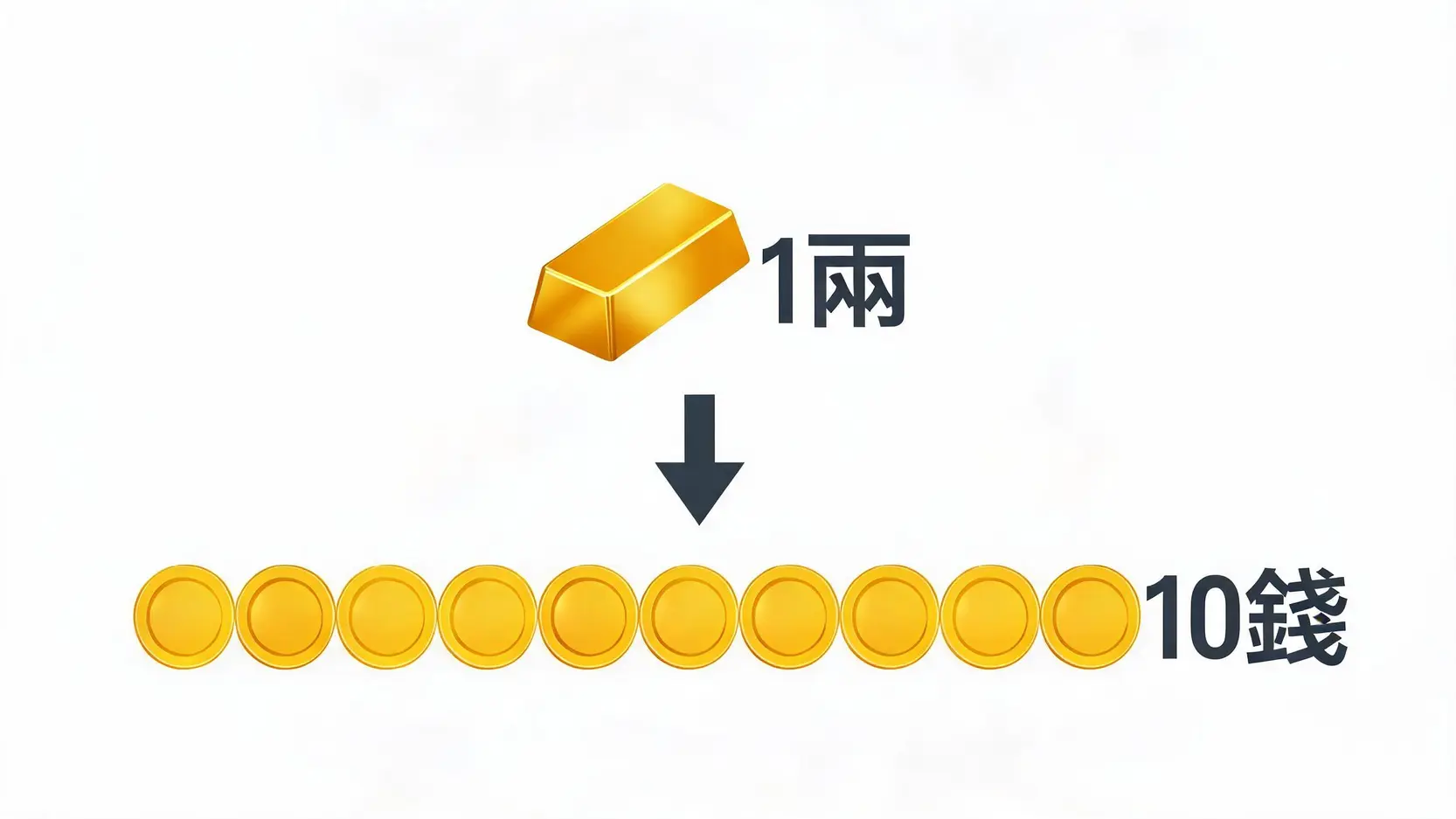
Unit Conversion Formula: 1 Tael = 10 Mace
The conversion basis is: 1 tael equals 10 mace, 1 mace equals 10 candareen, and 1 candareen equals 10 li. For example, if a piece of gold jewelry weighs “1 tael, 2 mace, 3 candareen, and 4 li”, it represents a total weight of 12.34 mace. When observing changes in the gold price per tael, dividing that figure by 10 gives the benchmark gold price per mace.
Taiwan’s traditional gold weight unit conversion relationship
Converting International Units (Ounces, Grams) and Taiwanese Units (Mace, Tael)
To match international market quotes with Taiwan gold shops, you need to understand the conversion relationship between Taiwanese traditional units and metric units: 1 mace equals 3.75 grams, and 1 tael equals 37.5 grams; 1 ounce (oz) is approximately 31.1035 grams, equivalent to about 8.294 mace. If investors are considering different gold asset allocations, they can refer to this article: Comparison of the Pros, Cons, and Costs of 5 Major Channels: Physical Gold, Passbooks, ETFs, and Futures to choose a suitable investment tool.
How Much Is One Mace or One Tael of Gold? Learn How to Read Gold Shop Quotes
Gold prices quoted by Taiwan gold shops are usually divided into two types: the “selling price” is the price at which the gold shop sells gold to consumers; the “buying price” (recycling price) is the price at which the gold shop buys back gold.
Example Calculation: Today’s Gold Price × Weight = Pure Gold Value
Assume today’s gold shop selling price per mace is NT$9,500. For a gold ring weighing 3.5 mace, its “pure gold value” is NT$33,250 (NT$9,500 × 3.5 mace). This calculation only represents the value of the gold itself. If you need to check historical prices for reference, you can use the Bank of Taiwan Historical Gold Passbook Price Inquiry.
Hidden Costs in How Gold Shops Price Gold Buying and Selling (Gold Workmanship Fees and Wastage Calculation)
Physical gold transactions need to account for additional costs, mainly including gold jewelry workmanship fees and recycling wastage. These are factors that cannot be ignored when evaluating the cost of gold price per tael.
How Gold Jewelry “Workmanship Fees” Are Calculated
The final selling price of gold jewelry is “(gold jewelry weight × daily selling price) + workmanship fee”. Workmanship fees vary depending on the complexity of the jewelry design and level of craftsmanship. Plain designs have lower fees, while complex craftsmanship can cost several thousand NT dollars. This should be clearly confirmed with the merchant before purchase.
The “Weight Deduction (Wastage)” Rule When Recycling Gold
When gold shops recycle old gold jewelry, they usually deduct about 5% of the “wastage weight” due to wear from use and loss during remelting. The actual calculation formula is “(gold jewelry weight × 0.95) × daily buying price”. This mechanism for calculating gold workmanship fees and wastage directly affects the cash-out amount.
Are Gold Bars Exempt from Weight Deduction? Choosing Gold Products with Higher Value Preservation
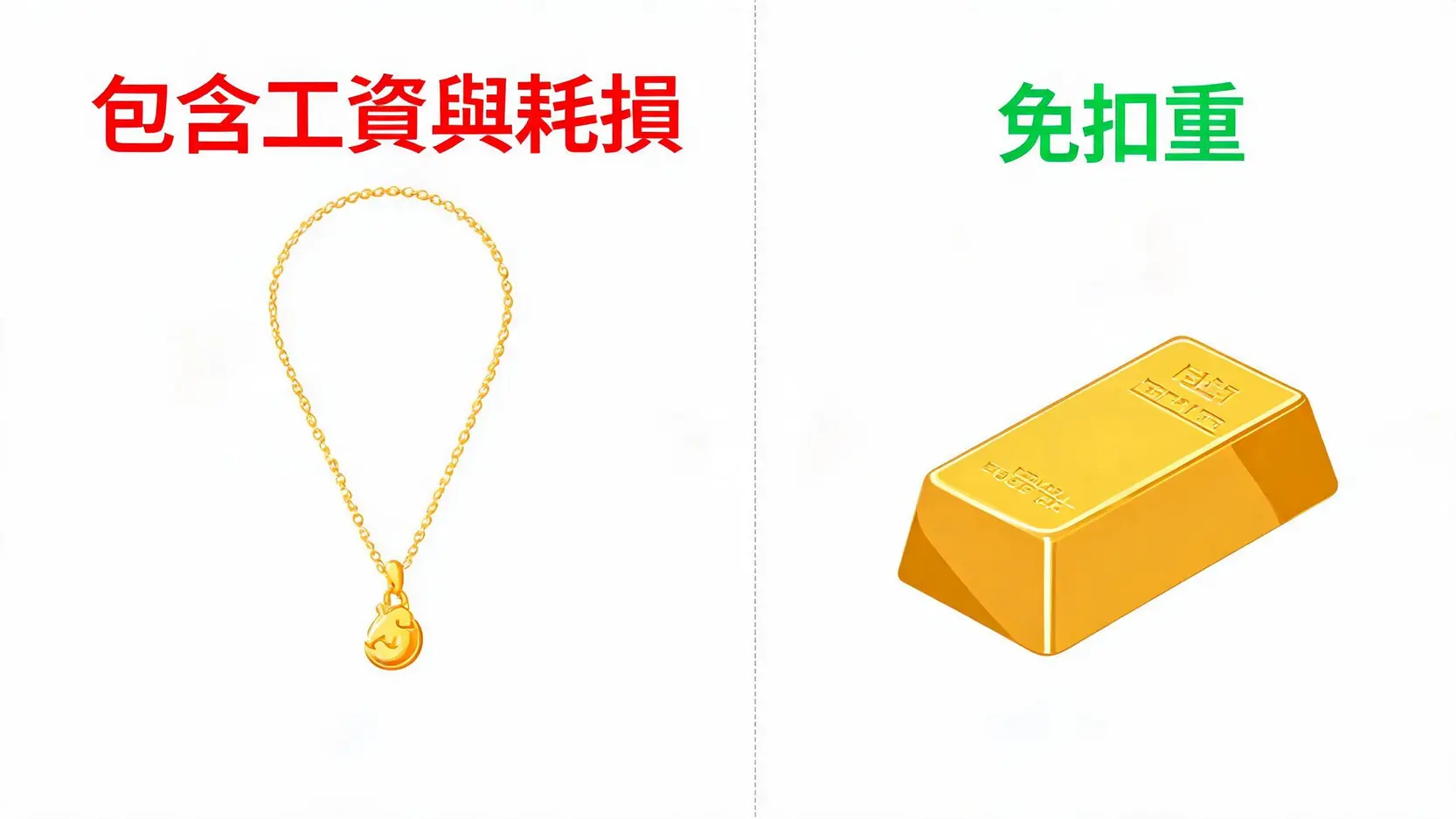
If asset value preservation is the main purpose, standard investment-grade “gold bars” or “gold bullion” offer advantages. They usually do not charge workmanship fees, and when recycled, most gold shops do not deduct weight or apply only a very low deduction rate, allowing asset value to be preserved to the greatest extent.

Comparison of Value Preservation and Hidden Costs Between Gold Jewelry and Gold Bars
Further Reading (Highly Recommended)
Frequently Asked Questions FAQ on Physical Gold Buying and Selling
Q: How many taels is 1 kilogram of gold? How many maces is it equal to?
A: 1 kilogram is 1,000 grams. Since 1 tael equals 37.5 grams, 1 kilogram is approximately equal to 26.666 taels after conversion (or about 266.66 mace). This is the standard specification for international physical gold delivery.
Q: Are gold bars and gold jewelry priced in the same way?
A: The core gold weight pricing is the same. The difference lies in the additional fees. Gold jewelry requires payment of design workmanship fees and will face weight deduction when recycled in the future; gold bars usually have no workmanship fees and are exempt from weight deduction, offering better value preservation.
Q: When selling gold at a gold shop, why is the calculated price lower than the quoted price?
A: When gold shops recycle gold jewelry, they need to cover the loss from remelting, and usually deduct about 5% of the weight. Therefore, the actual amount received will be lower than the result calculated purely based on the quoted price.
Q: Are gold passbooks also priced using taels and mace?
A: Gold passbooks offered by banking institutions usually use “grams” or “ounces” as the basic pricing unit, which differs from the Taiwanese units commonly used by physical gold shops (such as taels and mace).
Conclusion
By mastering the decimal conversion of Taiwan’s gold units and clarifying the rules for workmanship fees and weight deduction, you can accurately calculate the actual cost of gold transactions. Fully understanding the pricing structure before trading helps investors protect their asset rights in the physical gold market.
Related Articles
-
Unable to Borrow Money Through Stock Pledge Loans? Uncovering Brokerage Funding Shortages and the FSC’s Deleveraging Policy When you urgently need funds or want to add to your positions, but do not want to sell your high-quality holdings, what should you do? “Stock pledge” is the secret weapon that helps...2026 年 7 月 9 日
-
What Is Stock Lending? A Guide to Earning Interest on Idle Stocks, Asset Activation Strategies Every Dividend Investor Should Learn, and a Full Breakdown of Brokerage Settings Are the stocks in your hands stuck in long-term losses, or are you holding quality stocks that you are reluctant to sell? Instead...2026 年 7 月 9 日
-
2026 Bond Yield Full Guide: US Treasury Trends, Inversion Analysis, and Bond ETF Allocation In the vast ocean of the investment market, whether you prefer the dramatic waves of the stock market or the steady reliability of fixed income, there is one core indicator that no market participant can ignore,...2026 年 7 月 9 日