Gold Plunge Guide: 5 Investment Strategies

Updated: 2026/07/03  |  CashbackIsland

gold-investment-strategy-guide

Practical Guide After a Gold Plunge: 5 Gold Investment Strategies and Safe-Haven Asset Allocation Fully Revealed

Facing the uncertainty of the global economy in 2026, as well as a market environment where gold prices frequently plunge and remain under pressure, blindly following the crowd often only leads to unnecessary losses. Establishing a scientific gold investment strategy is a required lesson for every participant in a turbulent market. Especially at a time when inflation expectations are shifting and geopolitical risks are intertwined, knowing how to include gold in overall safe-haven asset allocation is the only way to achieve a true defensive effect when a crisis arrives. This article will guide you through an in-depth breakdown of the advantages and risks of various gold investment tools, and provide a practical trading guide for volatile markets


Comparison of the Pros and Cons of Common Gold Investment Tools and Investment Methods

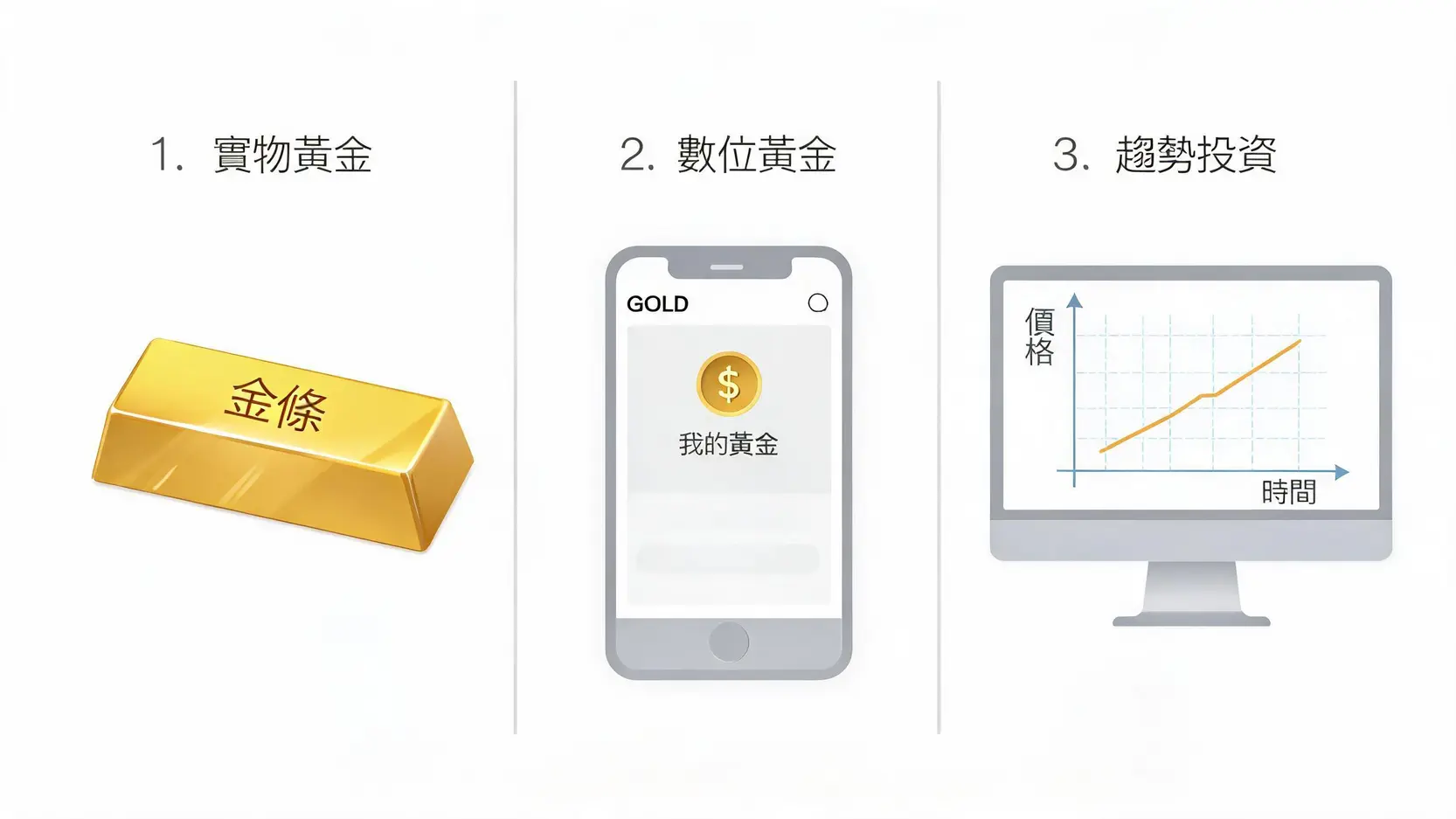
Before entering specific tactical planning, you must first clarify the tools you have. There are various gold investment channels in the market, and each tool differs in liquidity, holding costs, and risk tolerance. Comparing gold investment methods properly is the first step toward steady returns.三種常見黃金投資工具比較:實物黃金、黃金存摺與黃金ETF

Physical Gold, Passbooks, and ETFs: Comparing Three Major Gold Investment Tools


Physical Gold: The First Choice for Hedging but With Poor Liquidity

Physical gold (such as gold bars and gold coins) has always been considered the asset that offers the greatest sense of security in traditional thinking. When facing extreme geopolitical crises or a systemic collapse of the financial system, physical gold held in hand has an irreplaceable value-preserving function. However, from the perspective of modern financial trading, the disadvantages of physical gold are also very obvious: first, storage costs are high, as investors must rent a safe deposit box or bear the risk of theft; second, the bid-ask spread is extremely wide, and liquidity is relatively poor when cash is urgently needed, making it unsuitable for short-term spread trading.


Gold ETFs and Paper Gold: Convenient Trading Choices

Compared with physical gold, gold ETFs and paper gold (such as bank gold passbooks), perfectly solve the problems of liquidity and storage. A deeper look at the differences between gold ETFs and spot gold shows that ETFs are traded through the securities market. Investors only need to pay very low management fees and transaction fees to enjoy investment returns that are highly linked to international gold prices. These assets can not only be bought and sold quickly, but can also be easily integrated into existing stock portfolios, making them an excellent tool for flexibly adjusting safe-haven asset allocation.

Investment Tool Liquidity Holding Cost Suitable For
Physical Gold Low High (storage fees, insurance) Large asset holders focused on extreme hedging and long-term wealth transfer
Gold Passbook Medium Medium-low (bank bid-ask spread) Small investors who are accustomed to banking services and prefer regular fixed investments
Gold ETF High Low (transaction fees, low embedded expenses) Traders who value capital efficiency and are familiar with the securities market


Further Reading (Highly Recommended)

Comparison of the Pros, Cons, and Costs of the 5 Major Channels: Physical Gold, Passbooks, ETFs, and Futures

Gold ETF Recommendations, Gold Passbooks, and Physical Gold Ultimate Comparison: Beginner’s Investment Guide


Safe-Haven Asset Allocation and Operating Strategies Under Different Market Environments

The market always cycles between bull markets, bear markets, and volatile markets. A mature gold investment strategy must be able to adjust dynamically according to the current market atmosphere. Asset allocation does not mean buying and then ignoring it, but requires strict control over capital levels.


Right-Side Trend-Following Strategy in a Bull Market

When international gold prices break through important resistance levels and the macro environment (such as high inflation and a weaker US dollar) continues to provide momentum, the market enters a bull market structure. At this stage, adopting a “right-side trend-following strategy” is most suitable. In specific operations, do not preset a high point, and use moving averages (such as the 20-day or 60-day moving average) as the defensive bottom line. As long as the price remains above the moving average, positions can be increased in line with the trend. Once it effectively falls below the moving average, take profits decisively. This strategy ensures that investors can capture the most profitable portion when the trend forms, while avoiding being deeply trapped when the trend reverses.


Dollar-Cost Averaging and Grid Trading in Bear Markets and Volatile Markets

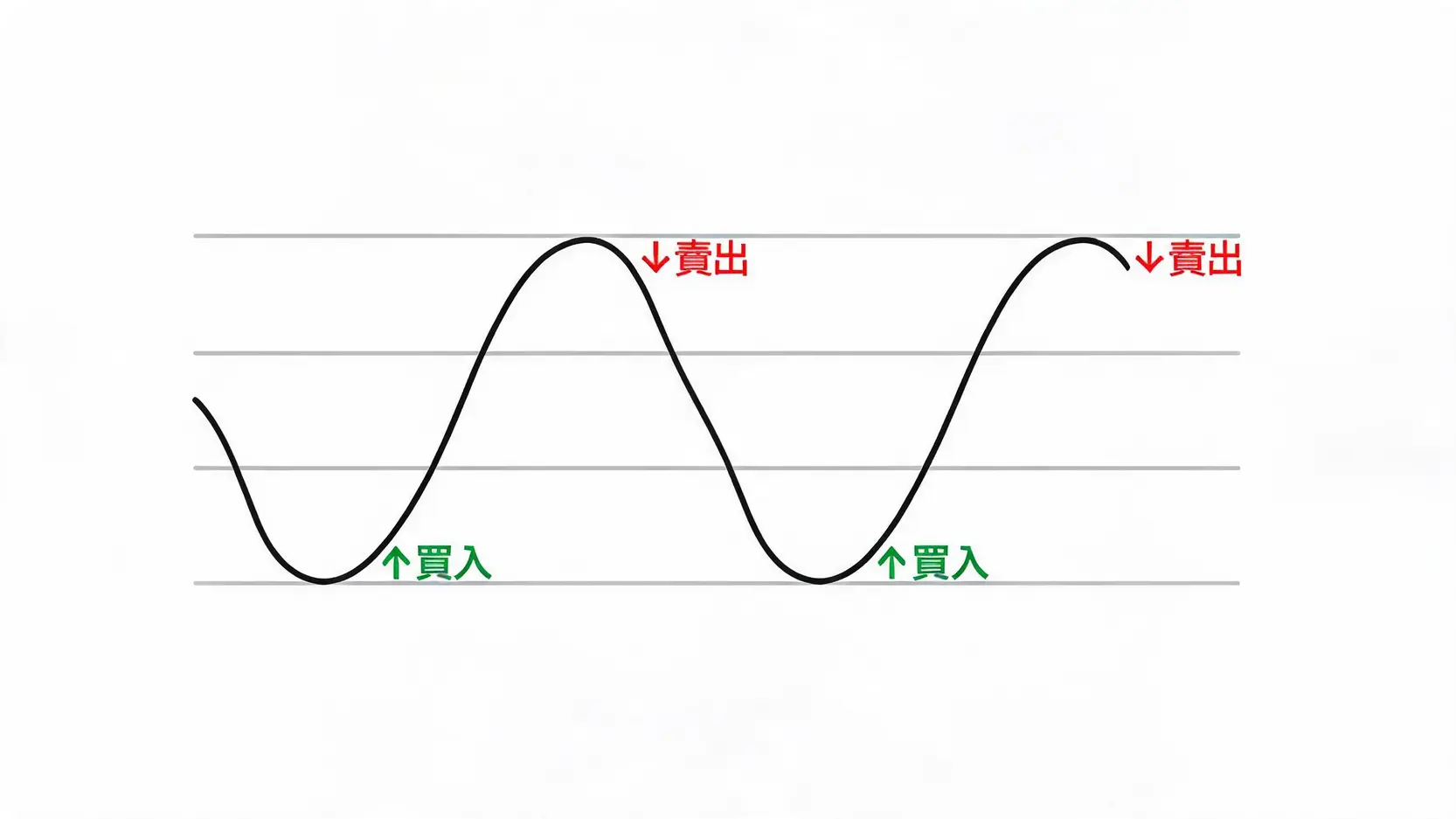
When gold prices lose a clear direction, fall into a long period of range-bound consolidation, or come under pressure during a rate hike cycle, many traders feel at a loss. At this point, mastering a trading guide for volatile markets is especially important. The first thing to evaluate is “regular fixed investment (dollar-cost averaging)”, which effectively averages down the overall holding cost through disciplined batch buying. In addition, “grid trading” is also a profitable tool in volatile markets: set the upper and lower price limits and grid spacing, then have the system or manually buy low and sell high. This not only turns small market fluctuations into actual profits, but also greatly reduces the anxiety caused by human nature when facing consolidation.

震盪市場中的網格交易法圖解

A Profitable Tool in Volatile Markets: Illustration of How Grid Trading Works


Risk Disclosure and Prevention for Gold Leverage Trading

Besides traditional spot gold and ETFs, many market participants who pursue capital efficiency choose gold margin trading (such as CFD contracts for difference or futures). Although these tools are attractive, without strict risk control, they can easily cause devastating damage to capital. Preventing gold leverage trading risks is the key to long-term survival. 

The Double-Edged Sword Effect of Leverage Trading

The essence of leverage trading is using small capital to gain larger exposure. Suppose 10x leverage is used. If gold prices rise by only 1%, the investor’s principal can generate a 10% return. The reverse is also true. If the direction is wrong, a 1% decline will result in a 10% loss. While this double-edged sword amplifies profits, it also amplifies psychological pressure in the same proportion. The release of global macroeconomic data often triggers sharp fluctuations in gold prices. According to Reuters’ analysis of Federal Reserve interest rate policy and gold prices, such monetary policy decisions can instantly change the holding cost of gold and market sentiment, causing prices to experience massive washouts within minutes and posing a major threat to highly leveraged positions. 

How to Calculate Maintenance Margin and Prevent Liquidation

Before participating in leverage trading, the first task is to thoroughly understand how “maintenance margin” works. When the equity in the account falls below the maintenance margin level required by the platform, a margin call will be triggered, or the position may even be forcibly liquidated. Therefore, when formulating a gold investment strategy, sufficient available funds must be reserved in the account to cope with daily price fluctuations, and full-position trading must be avoided. A reasonable approach is to keep margin usage within 20% to 30% of total capital, leaving a very large buffer.


Application of the “2% Rule” in Gold Trading Fund Management

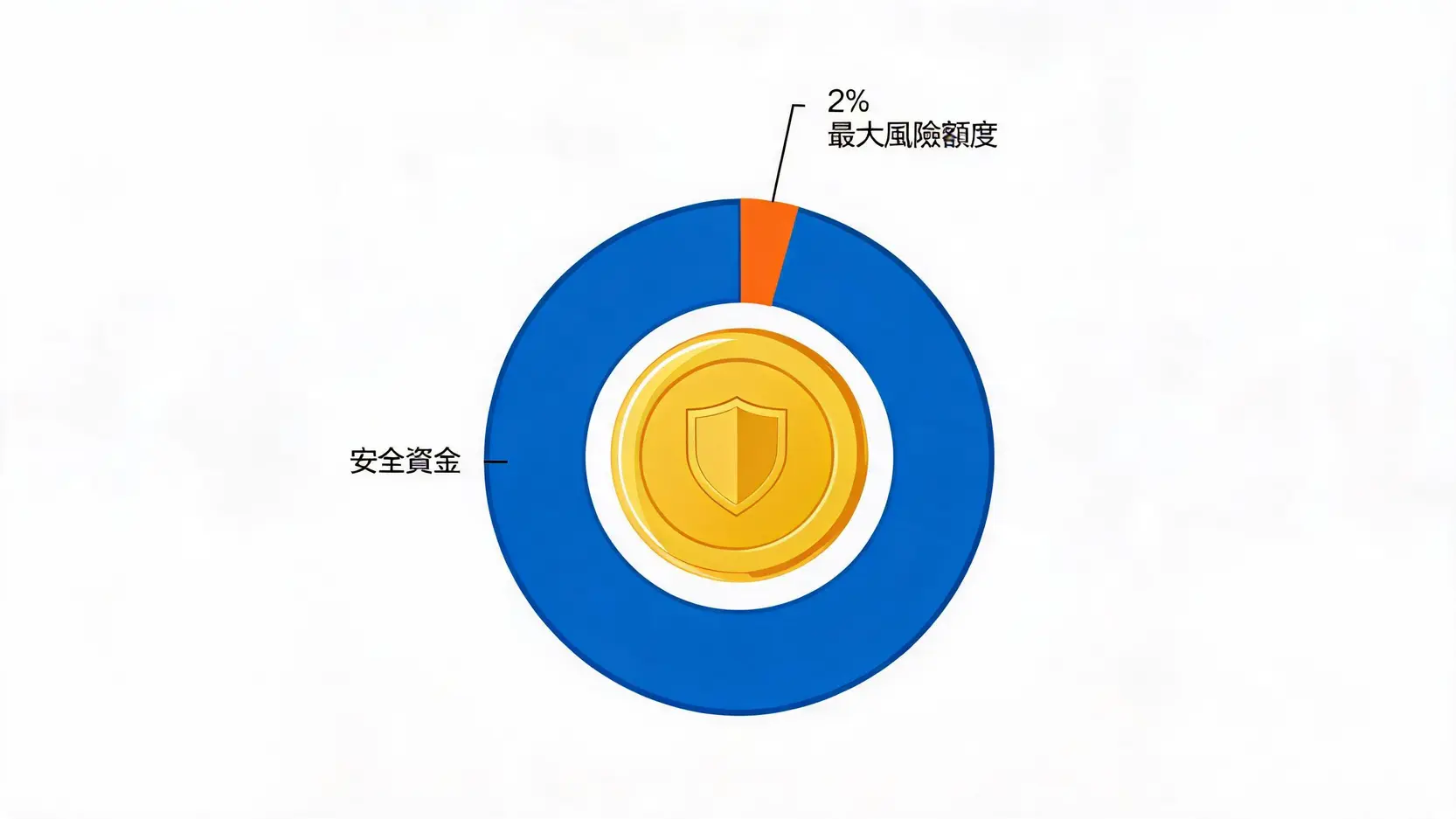
The widely circulated “2% rule” in professional trading circles is equally applicable to the gold market. The core principle of this rule is: in any single trade, the maximum loss one is willing to bear must never exceed 2% of total capital. For example, if you have a trading account of US$100,000, the maximum stop-loss amount for a single trade is US$2,000. By setting the stop-loss distance, a reasonable entry position size can be calculated in reverse. As long as the 2% rule gold trading discipline is strictly followed, even when facing consecutive losses, the account can still retain the strength to make a comeback. This is the true way to survive in the financial market over the long term.

黃金交易資金管理:單筆虧損不超過2%的法則

Strictly Follow the 2% Rule: The Capital Protection Shield for Gold Trading


Frequently Asked Questions FAQ

Q: Which Gold Investment Method Is Most Recommended for Beginners?

A: For beginners who are just entering the market, gold ETFs or gold passbooks should be the top priority. These tools feature a low capital threshold and high liquidity, effectively eliminating the storage costs and theft risks of physical gold, making them highly suitable for becoming familiar with market movements and price characteristics.

Q: How Should the Cycle for Gold Dollar-Cost Averaging Be Set?

A: The setting of the dollar-cost averaging cycle depends on personal cash flow and capital size. Generally speaking, monthly dollar-cost averaging best matches the salary payment frequency of most people. If funds are relatively sufficient, weekly dollar-cost averaging can also be considered to spread price fluctuations in volatile markets more precisely.

Q: What Fees Are Required When Investing in Gold?

A: This depends entirely on the investment tool selected. Physical gold has a relatively high bid-ask spread. Gold ETFs require brokerage trading fees and embedded management fees. Gold margin trading involves spreads and overnight interest. Before committing funds, be sure to carefully read the fee structure of each platform to avoid eroding profits.

Q: Can Gold Completely Replace Bonds as a Safe-Haven Asset Allocation?

A: It cannot completely replace them. Gold itself does not generate yield, and its returns mainly come from capital gains and price appreciation, while bonds can provide relatively stable fixed income. In a sound and defensive asset portfolio, the two should complement each other to achieve the best downside protection effect.

Q: How Will the Current Global Monetary Easing Policy Affect Gold Prices?

A: Monetary easing is usually accompanied by falling interest rates and the dilution of fiat currency purchasing power, which significantly reduces the opportunity cost of holding gold and stimulates the market’s demand for inflation hedging. From a macro cycle perspective, an easing liquidity environment usually provides significant support and upward momentum for gold prices.


Conclusion

Looking across the overall financial market, gold has always played an indispensable role as a stabilizing anchor. The core of gold investment strategies actually lies in strict risk control and reasonable safe-haven asset allocation. Whether choosing to hold physical gold, participate through ETFs, or use margin for tactical trading, investors must deeply understand the attributes and potential risks of the tools they use. Investors should tailor a gold defensive fortress suited to their own capital size, risk tolerance, and judgment of market trends. When facing future volatility, only by maintaining rational analysis and strictly following capital management discipline can they move forward steadily in an unpredictable market.

If you liked this article, please share it!

Related Articles

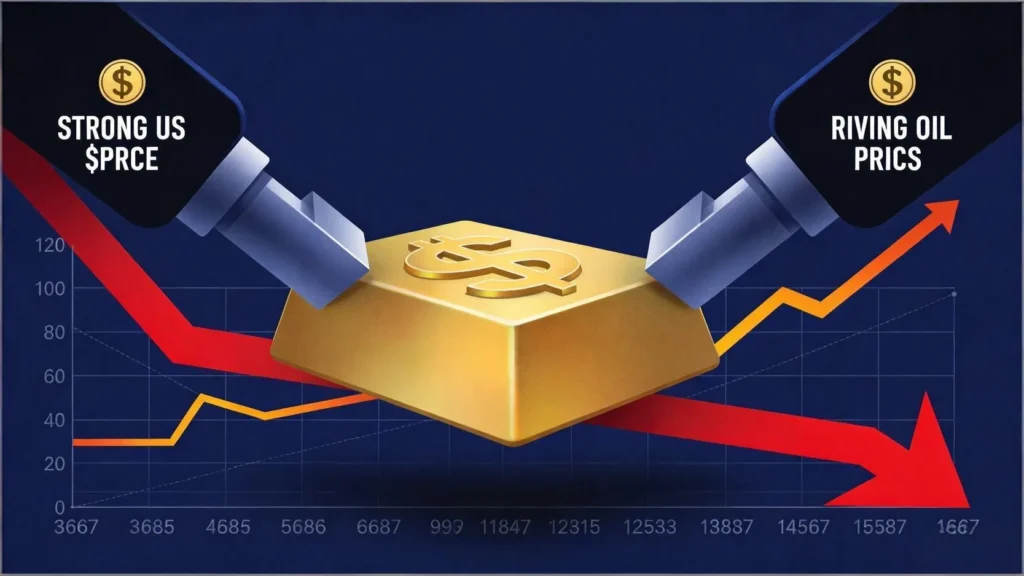
  • Gold Under Pressure: Oil Prices & Strong US Dollar
    Analysis of Gold Under Pressure: How Do Rising Oil Prices and a Stronger US Dollar Put Gold Prices Under Dual Pressure? Recently, “gold under pressure” has become a high-frequency term in financial news. Under the influence of multiple factors such as a stronger US dollar and oil price volatility, gold...
    2026 年 7 月 3 日
  • Gold V-Shaped Reversal: Signals & Trading Guide
    Gold V-Shaped Reversal: Master Bottom Reversal Signals From Identification to Trading Strategies in One Article In the gold market, price movements are often unexpected. One of the sharpest and most explosive patterns is the gold V-shaped reversal. After the market experiences a rapid decline, panic spreads, but the price then...
    2026 年 7 月 2 日
  • Gold Outlook: Rate Pressure vs Structural Support
    Gold Outlook: Rate Pressure vs Structural Support Recent gold price trends have been like a roller coaster, with V-shaped reversals and sharp volatility becoming the norm, while bullish and bearish forces in the market are locked in an intense battle. The core of this gold bull-bear tug of war lies...
    2026 年 7 月 2 日
返回顶部