Forex Hedging Guide for Trade & Overseas Investors

Forex Hedging for Trade and Overseas Investors
Hard-earned overseas profits or operating revenue may shrink significantly simply because of sharp exchange rate fluctuations. This is the unavoidable “exchange rate risk”. For any business or individual involved in cross-border transactions, an effective forex hedging strategy is key to protecting assets. Forex hedging is a financial operation designed precisely to address this pain point. A comprehensive exchange rate risk management mechanism allows you to focus on the business itself, rather than anxiously watching exchange rate quotes every day. This article will explain what forex hedging is, why it is so important, and introduce common hedging tools and practical applications in the simplest and easiest-to-understand way, helping you protect your assets and no longer feel anxious about exchange rate movements.
Core Concept: What Exactly Is Forex Hedging?
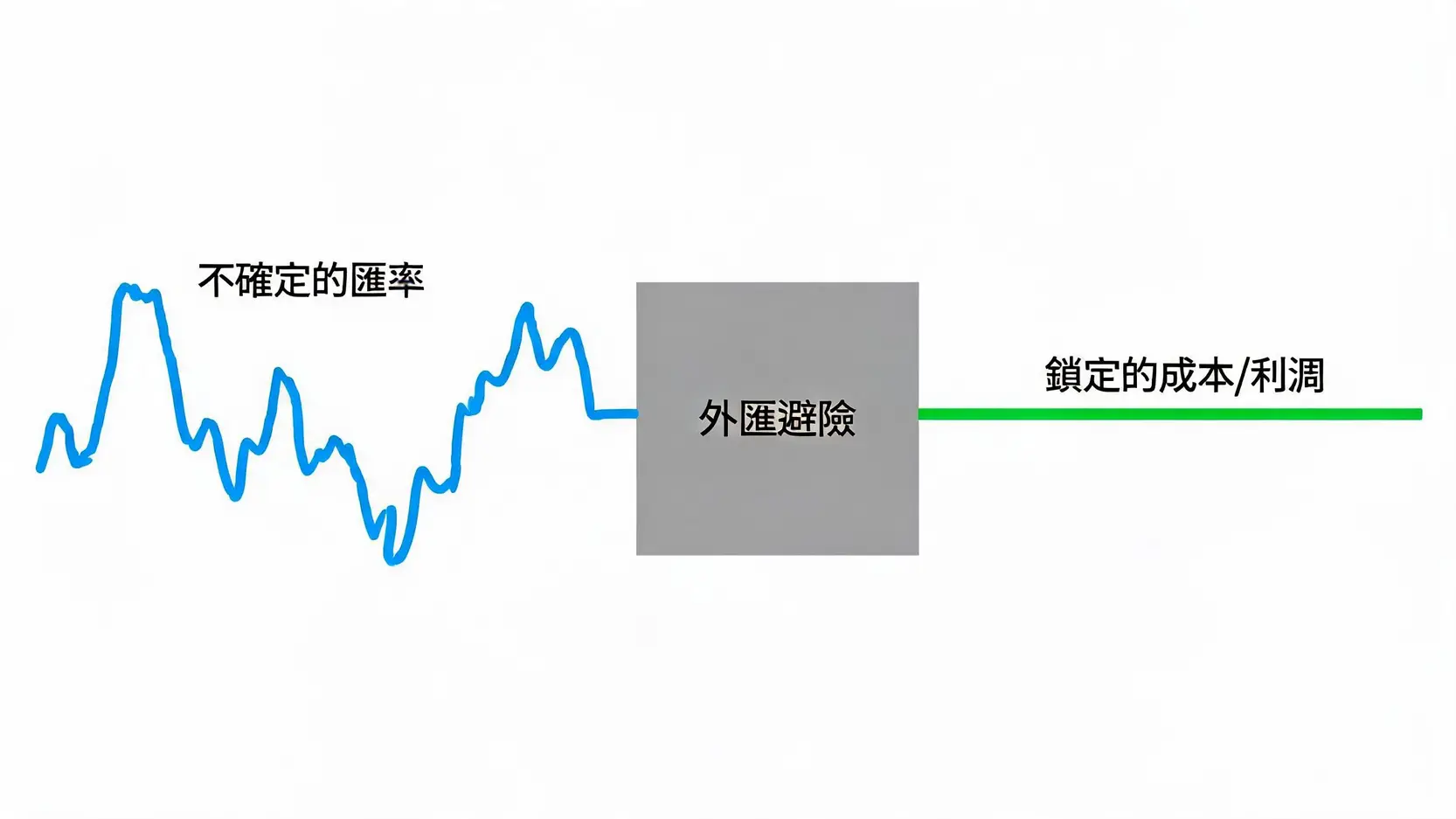
Forex hedging, simply put, is a financial operation adopted to avoid the risk of future foreign currency exchange rate fluctuations. Its core purpose is not to earn extra profits, but to “lock in” future costs or returns and eliminate the uncertainty caused by exchange rate movements. You can think of it as a financial “stabilizer”.
Forex hedging is like a stabilizer, turning uncertain exchange rate fluctuations into predictable outcomes.
Definition: A Financial Operation to Avoid the Risk of Future Exchange Rate Uncertainty
When you expect to have a foreign currency income or expense at a certain point in the future, any exchange rate movement between now and then will directly affect the final amount you convert into your domestic currency. Forex hedging uses certain financial instruments, such as forward foreign exchange contracts, forex futures, or options, to fix a future exchange rate in advance, thereby hedging the exchange rate fluctuation risk during this period.
Benefits of Forex Hedging: Locking in Costs and Profits While Reducing Uncertainty
The greatest benefit of forex hedging lies in the “certainty” it provides, which is crucial for business operations and personal investment.
- Locking in costs and profits: For importers, it can lock in future procurement costs; for exporters, it can ensure future sales profits are not damaged by unfavorable exchange rate movements.
- Simplifying financial budgeting: Once costs and profits are fixed, a company’s financial statements and budget planning become more accurate and reliable.
- Reducing operational risk: It helps avoid situations where exchange rate “black swan” events put company operations in difficulty, allowing management to focus more on the development of core business.
- Improving investment stability: For overseas investors, it can protect the value of overseas assets, such as stocks and real estate, and prevent their value from shrinking due to exchange rate depreciation.
Disadvantages of Forex Hedging: Potentially Giving Up Exchange Rate Gains and Hedging Costs
Of course, hedging is not without cost. It is a double-edged sword.
- Giving up potential gains: If the exchange rate moves in your favor, you will not be able to enjoy this additional exchange rate gain because you have already locked in the exchange rate. This is the “opportunity cost” of hedging.
- Generating direct costs: Using certain hedging tools, such as options, requires paying a premium, while using tools such as forward foreign exchange may also generate indirect costs due to the spread in bank quotes.
- Requires professional knowledge: Effective hedging operations require a certain level of understanding of financial markets and various financial derivatives. Improper operation may instead increase risk.
Who Needs Forex Hedging the Most? Two Typical Application Scenarios
Basically, as long as your cash flow, assets, or liabilities include foreign currencies, exchange rate risk exists, which also means you need to understand forex hedging. Among them, the two most typical groups are import and export traders and overseas investors.
Import and Export Traders: Preventing Payments From Shrinking Due to Exchange Rate Fluctuations
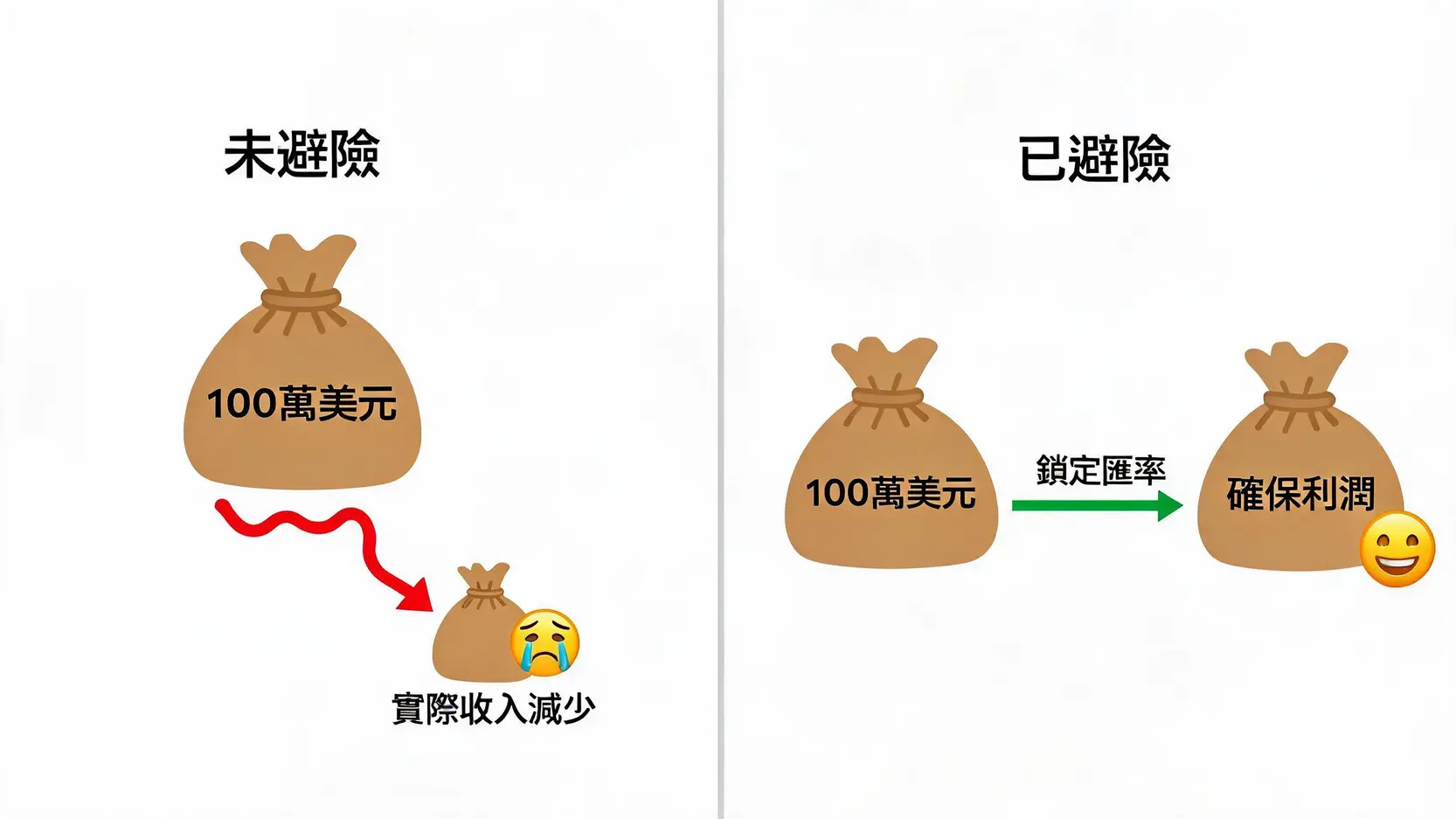
A trader’s daily operations are inseparable from foreign exchange. Suppose a Taiwanese computer parts exporter sells a batch of goods worth US$1 million to a US customer, with payment terms requiring collection after three months. When the contract is signed, the USD/TWD exchange rate is 1:31.5, and the expected income is NT$31.5 million. But if the US dollar falls sharply to 1:30.5 three months later, the company will actually receive only NT$30.5 million, resulting in an unnecessary loss of NT$1 million. If the company conducts forex hedging when signing the contract, such as entering into a three-month forward foreign exchange transaction and locking in an exchange rate of 31.4, it can secure its income and rest easy.

With or Without Forex Hedging, the Outcome Can Be Very Different: Effective exchange rate risk management is key to securing profits.
Overseas Investors: Protecting the Asset Value of Overseas Stocks, Funds, and Real Estate
For individuals who purchase property or invest overseas, exchange rate risk also cannot be ignored. For example, a Malaysian investor buys US$500,000 worth of stocks in the US. Even if these stocks rise by 10%, if the US dollar depreciates by 15% against the Malaysian ringgit (Ringgit) over the same period, the investor will still suffer an overall loss after converting the investment returns back into ringgit. This is why many global fund managers frequently use forex hedging tools to protect the value of their overseas assets, ensuring that the performance of their portfolios is not distorted by exchange rate fluctuations.
Further Reading (Highly Recommended)
How to Execute Exchange Rate Risk Management? 3 Common Forex Hedging Tools
After understanding the importance of forex hedging, the next question is: how exactly should it be done? There are many financial tools in the market that can help you manage exchange rate risk. Below are three of the most mainstream and easiest-to-understand hedging tools.
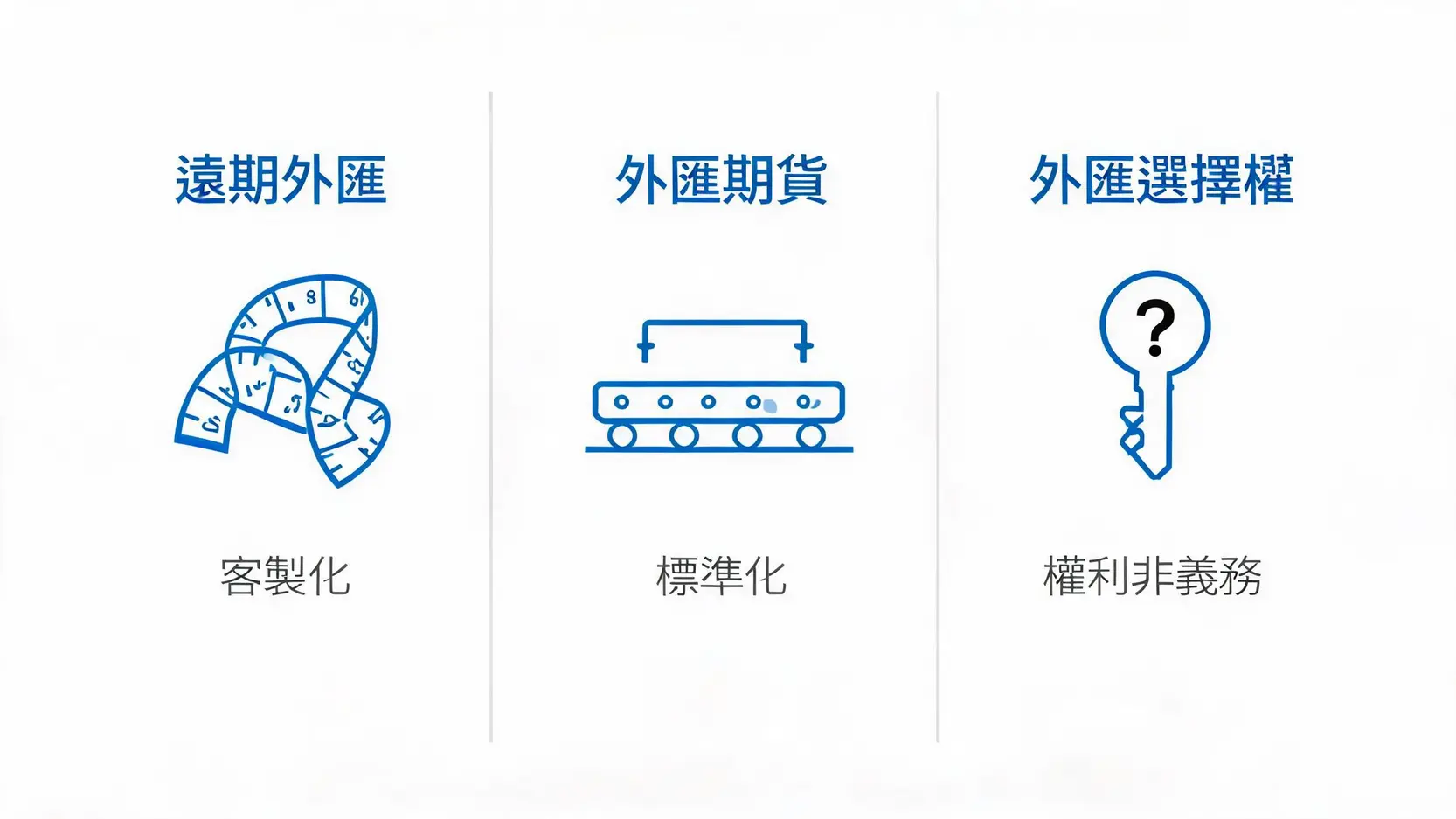
1. Forward Contracts
This is the most common and most direct hedging method, and is especially popular among small and medium-sized enterprises. A forward foreign exchange contract is a customized contract signed by both parties to a transaction, usually the client and the bank, agreeing to buy or sell a specific amount of foreign currency on a specific future date at an exchange rate agreed in advance.
- How it works: You make an agreement directly with the bank, such as “three months later, I want to sell US$1 million at a price of 31.4”. No matter what the market spot exchange rate becomes three months later, the bank must buy this US$1 million from you at the exchange rate of 31.4.
- Advantages: High flexibility, as the contract amount and maturity date can be customized according to actual needs. The operation is simple and suitable for enterprises with clear foreign currency income and expenditure needs.
- Disadvantages: This is a binding contract. Once signed, it must be fulfilled, and you cannot benefit from favorable exchange rate movements.
2. Forex Futures
Forex futures are similar in concept to forward foreign exchange. Both involve agreeing to trade foreign currency at a specific price in the future. The biggest difference is that futures are “standardized” contracts traded on public futures exchanges.
- How it works: The contract amount, such as €125,000 per contract, and the maturity date, such as the third Wednesday of each quarter, are pre-defined by the exchange. Investors buy and sell these standardized contracts in the market through futures brokers.
- Advantages: High liquidity, as positions can be bought, sold, or closed in the market at any time. Since they are guaranteed by an exchange, counterparty default risk is extremely low.
- Disadvantages: Their standardized nature makes them less flexible, so they may not fully meet a company’s specific amount or date requirements, which may create “basis risk”, where the hedging position does not fully match the actual need.
3. Forex Options
Options provide a more flexible hedging method. Buying forex options means you pay a “premium” to obtain the “right”, but not the “obligation”, to buy (Call) or sell (Put) foreign currency at a specific price in the future.
- How it works: Suppose you are an exporter and are worried that the US dollar will fall. You can buy a “put option”, which gives you the right to sell US dollars at a price of 31.0 three months later. If the US dollar falls to 30.5 by then, you can exercise the right and sell at the price of 31.0. If the US dollar rises to 32.0, you can choose not to exercise the right and sell directly in the market at the higher price of 32.0. Your maximum loss is only the premium you paid at the beginning.
- Advantages: The biggest benefit is that it “locks in downside risk while preserving upside potential”. It allows you to hedge while not missing favorable exchange rate movements.
- Disadvantages: You need to pay a premium, which is a direct hedging cost. Regardless of whether you eventually exercise the right, this fee cannot be recovered.
To help you understand the differences among the three more clearly, you can refer to the comparison table below:

Understand the core differences among three mainstream forex hedging tools in one chart.
| Hedging Tool | Trading Venue | Contract Specifications | Advantages | Disadvantages |
| Forward Foreign Exchange | Bank (OTC) | Customized | High flexibility, fully matches needs | Must be fulfilled, lower liquidity |
| Forex Futures | Futures Exchange | Standardized | High liquidity, low credit risk | Fixed specifications, lack of flexibility |
| Forex Options | Exchange or bank | Standardized or customized | Can benefit from favorable exchange rate movements | Requires payment of premium cost |
Understanding Safe-Haven Currencies: A Capital Safe Haven During Market Turmoil
When discussing foreign exchange, you may often hear the terms “safe-haven currency” or “safe haven currency”. These currencies refer to currencies that investors tend to hold when global economic or political uncertainty rises in order to avoid risk. They usually have characteristics such as stable currency value and stable national political and economic conditions.
US Dollar (USD): The Status of the Global Reserve Currency
The US dollar is the world’s main reserve currency and medium of exchange. The vast majority of global commodities, such as oil and gold, are priced in US dollars. When panic appears in the market, investors sell high-risk assets and turn to holding the most liquid and widely accepted US dollar cash, causing the US dollar to often strengthen during crisis periods.
Japanese Yen (JPY): Low Interest Rates and the Characteristics of a Net Creditor Nation
The safe-haven status of the Japanese yen comes from two main reasons. First, Japan has long been in an extremely low interest rate environment, making the yen a “funding currency”. Global investors borrow low-cost yen to invest in other higher-yield assets, known as carry trades. When a risk event occurs, investors close these trades, sell high-risk assets, and buy back yen to repay loans, thereby pushing up the yen exchange rate. Second, Japan is the world’s largest net creditor nation, with huge overseas assets, which also provides strong support for the value of the yen.
Swiss Franc (CHF): Political Neutrality and a Stable Financial System
Switzerland is a world-renowned permanently neutral country. Its stable political environment, independent monetary policy, and sound financial and banking system make it a safe haven for global capital. Whenever political or economic turmoil occurs in Europe, funds often flow into the Swiss franc to seek safety.
Further Reading (Highly Recommended)
Conclusion
In summary, forex hedging is basic financial literacy that any individual or business involved in cross-border capital flows should have. Unlike speculative trading, which pursues high returns, it is more like holding up a protective umbrella for your assets. Its core objective is to “eliminate uncertainty”. Although it may sacrifice some potential excess exchange rate gains or require certain hedging costs, it can protect you from the relentless impact of exchange rate storms, ensuring that your business profits and investment results are not wiped out by uncontrollable market factors. Starting with an understanding of the basic concepts and tools of forward foreign exchange, futures, and options is an indispensable first step toward more stable and professional financial planning.
Frequently Asked Questions About Forex Hedging (FAQ)
Q: Is forex hedging complicated to operate?
A: This depends on the tool you use. For business owners or individuals with clear foreign currency income and expenditure needs, conducting a “forward foreign exchange contract” through a bank’s foreign exchange department is the simplest and most direct method, requiring almost no complicated operations. However, if you want to use forex futures or options for more refined hedging, you need to open the corresponding trading account and have more knowledge of financial markets.
Q: Can individuals also do forex hedging?
A: Of course. Individual investors, especially those with overseas assets, such as US stocks or overseas real estate, or children studying overseas, meaning they will need to pay tuition fees in the future, also face exchange rate risk. Individuals can conduct hedging operations through bank foreign exchange services, futures brokers, or contracts for difference (CFD) platforms that support forex trading. For example, if you expect to pay a US dollar tuition fee in six months, you may consider buying a forward contract on US dollars to lock in the cost.
Q: How Are Hedging Costs Calculated?
A: The calculation method for hedging costs varies depending on the tool. For forward foreign exchange, the cost is usually embedded in the spread between the “forward exchange rate” and the “spot exchange rate” provided by the bank, and this spread mainly reflects the interest rate difference between the two currencies. For futures, the cost mainly consists of trading fees and possible basis losses. For options, the cost is the “premium” you pay to purchase the option, which is also the most direct and clearest cost.
Q: Can All Currencies Be Effectively Hedged?
A: Not all currencies are suitable or easy to hedge. Major currencies such as the US dollar (USD), euro (EUR), Japanese yen (JPY), British pound (GBP), and Swiss franc (CHF) have large trading volumes and good liquidity, so related hedging tools are very comprehensive and hedging costs are relatively low. However, for some emerging market currencies or currencies with smaller trading volumes, suitable hedging tools may not be available, or the cost of hedging may be very high.
Related Articles
-
How to Get Started with Bitcoin? The Complete 2026 Bitcoin Buying Guide for Beginners After watching Bitcoin repeatedly reach new highs in recent years and successfully pass spot ETF reviews in the US and Hong Kong in 2024, officially entering mainstream financial markets, many investors have turned their attention to...2026 年 7 月 20 日
-
Is Gold’s V-Shaped Rebound a Bottom-Fishing Signal? A Complete Guide to Trading Strategies Amid “$100 Price Swings” What Is a Gold V-Shaped Rebound? More Than Just a Technical Pattern The gold market has recently experienced sharp rises and falls, with prices frequently displaying dramatic “gold V-shaped rebounds”. Single-day “$100 price...2026 年 7 月 20 日
-
What Is PPI Data? 2026 Latest Analysis: Understand the Differences from CPI and How It Affects Stock Market Trends With market information constantly changing, do you always hold your breath while waiting for CPI data to be released? But did you know that a more forward-looking inflation indicator, PPI data...2026 年 7 月 20 日