2026 Swiss Franc (CHF) Exchange Rate Trend Analysis: An Investment Guide to the Strongest Safe-Haven Currency
When global markets are volatile, the Swiss franc (CHF) often stands out. Whether you are planning a trip to the Alps or are a forex investor seeking to preserve asset value, understanding the current and future CHF exchange rate trend is crucial. By reviewing historical Swiss franc exchange rate data, we can clearly see that this strong currency has demonstrated remarkable resilience during multiple financial crises. As we enter 2026, amid recurring inflation and rapidly changing international conditions, the allocation of safe-haven assets has become particularly important. Next, we will uncover the secrets behind the strength of the Swiss franc and provide an in-depth analysis of the CHF-to-TWD trend and its correlation with major currencies, helping everyone accurately identify the right time to enter the market.
Recent Swiss Franc (CHF) Exchange Rate Performance and Historical Review of the CHF-to-TWD Trend
Looking back over the past decade, the Swiss franc has been an outstanding performer in the forex market. Entering the second half of 2026, the global economy faces the dual challenges of persistent inflation and geopolitical tensions, yet the CHF exchange rate continues to fluctuate at high levels. To fully understand its strength, we must look for clues in historical data.
Long-Term Trends of CHF Against Major Currencies (US Dollar/Euro/Hong Kong Dollar/New Taiwan Dollar)
Historical USD/CHF data shows that when the US dollar fluctuates due to shifts in Federal Reserve (Fed) monetary policy, the Swiss franc often remains stable or even rises against the trend. Because Switzerland has a stable economic structure and has maintained a substantial current account surplus over the long term, CHF has also remained strong against the euro. Even as the European Central Bank adjusted its policies several times, the Swiss franc continued to demonstrate strong resilience.
For Asian investors, the performance of CHF against the New Taiwan dollar and Hong Kong dollar is also worth monitoring. Historical data from recent years shows that when emerging Asian market currencies face capital outflows or depreciation pressure, holding Swiss francs is undoubtedly an excellent way to diversify risk. In the 2026 forex market, the New Taiwan dollar and Hong Kong dollar are affected by changes in US Treasury yields and Asian export momentum. Including a certain proportion of Swiss francs in an investment portfolio can effectively reduce overall asset volatility.
The Far-Reaching Impact of Swiss National Bank (SNB) Interest Rate Decisions on Exchange Rates
Monetary policy is a core factor determining medium- to long-term exchange rate trends. The Swiss National Bank (SNB) has always prioritised price stability and maintaining the purchasing power of the currency. Historically, the SNB implemented a negative interest rate policy for an extended period to restrain an excessively strong Swiss franc, but as the global inflation environment changed, the SNB decisively adjusted its approach.
During the alternating rate-cutting and rate-hiking cycles from 2025 to 2026, the SNB adopted a relatively cautious and forward-looking approach. This helped control the interest rate differential between the Swiss franc and other major currencies, further supporting the strength of the CHF exchange rate. In addition, the SNB does not rule out directly intervening in the forex market when necessary. Therefore, continuously monitoring changes in the Swiss National Bank’s foreign exchange reserves and interest rate decisions is essential for every forex investor.
Practical Currency Exchange Guide for Travelling to Switzerland and How to Invest in or Exchange Swiss Francs
If you are preparing to fly to Zurich or Geneva, or to admire the magnificent Jungfrau, mastering currency exchange techniques can certainly help you save a considerable amount on travel expenses. When the exchange rate is at a high level, how to invest in or exchange Swiss francs becomes a matter that requires careful calculation.
Where Is the Most Cost-Effective Place to Exchange CHF in Taiwan/Hong Kong? Analysis of Banks and Money Changers
In Taiwan, the most direct and secure way to exchange Swiss franc banknotes is to visit a major state-owned bank. Investors can refer to the Bank of Taiwan for historical posted exchange rates or Mega International Commercial Bank. These two banks offer the widest range of foreign currencies and generally maintain sufficient cash reserves.
In Hong Kong, in addition to traditional banks, many reputable money changers also offer competitive CHF exchange rates. However, you should always compare rates before making a transaction and pay attention to hidden fees. Regardless of the region, setting exchange rate alerts through a banking app in advance and exchanging currencies in batches during short-term pullbacks is the best strategy for averaging currency exchange costs.
Using Credit Cards and Overseas Withdrawals to Reduce Currency Exchange Costs
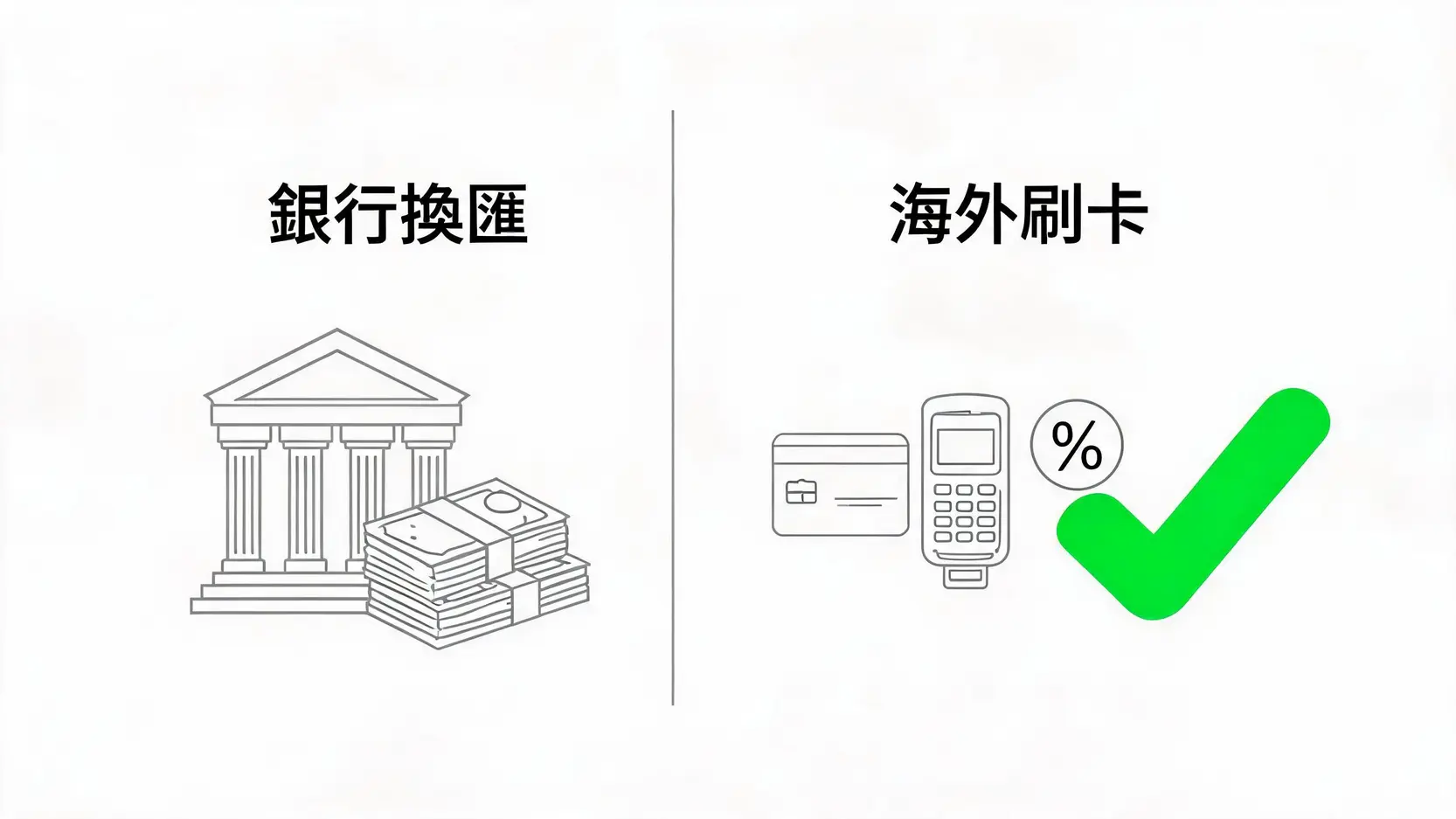
In addition to carrying large amounts of cash, modern travellers increasingly prefer to use credit cards and local ATM withdrawals. Making good use of dual-currency credit cards or overseas credit cards with high rewards can effectively offset overseas transaction fees of 1.5% to 2%. To learn more about the differences in card payment settlement mechanisms, refer to the Complete Guide to Visa Exchange Rate Enquiries and Overseas Credit Card Transaction Fees to calculate the actual cost of every transaction. Electronic payments are extremely widespread in Switzerland, and even a cup of coffee can be paid for by card. Therefore, you only need to exchange a small amount of CHF cash for backup purposes.
Comparison of the Advantages and Disadvantages of Currency Exchange and Payment Methods in Switzerland
Analysis of the Swiss Franc’s Safe-Haven Characteristics: Unique Advantages and Risks as the Ultimate Safe-Haven Asset
Why does capital flood into the Swiss franc whenever panic emerges in the market? The answer lies in an in-depth analysis of the Swiss franc’s safe-haven characteristics. Among fiat currencies, the Swiss franc and Japanese yen are both regarded as traditional safe-haven currencies, but the Swiss franc has stronger fundamentals.
The Safe-Haven Effect of CHF Capital During Geopolitical Crises
As a permanently neutral country, Switzerland has an extremely high degree of political stability, a sound legal system, and a globally renowned banking and wealth management industry. When geopolitical conflicts intensify (such as tensions in the Middle East or internal friction within Europe) or when cracks emerge in the global financial system, the preferred safe havens for large multinational institutions and high-net-worth individuals are usually the Swiss franc and physical gold.
This market consensus creates a “safe-haven premium”, giving the CHF exchange rate considerable upside momentum during turbulent periods. According to an authoritative financial institution’s analysis of the Swiss franc’s potential as a safe-haven currency, research indicates that the Swiss franc often has a strong positive correlation with gold, earning it the title of “paper gold”.
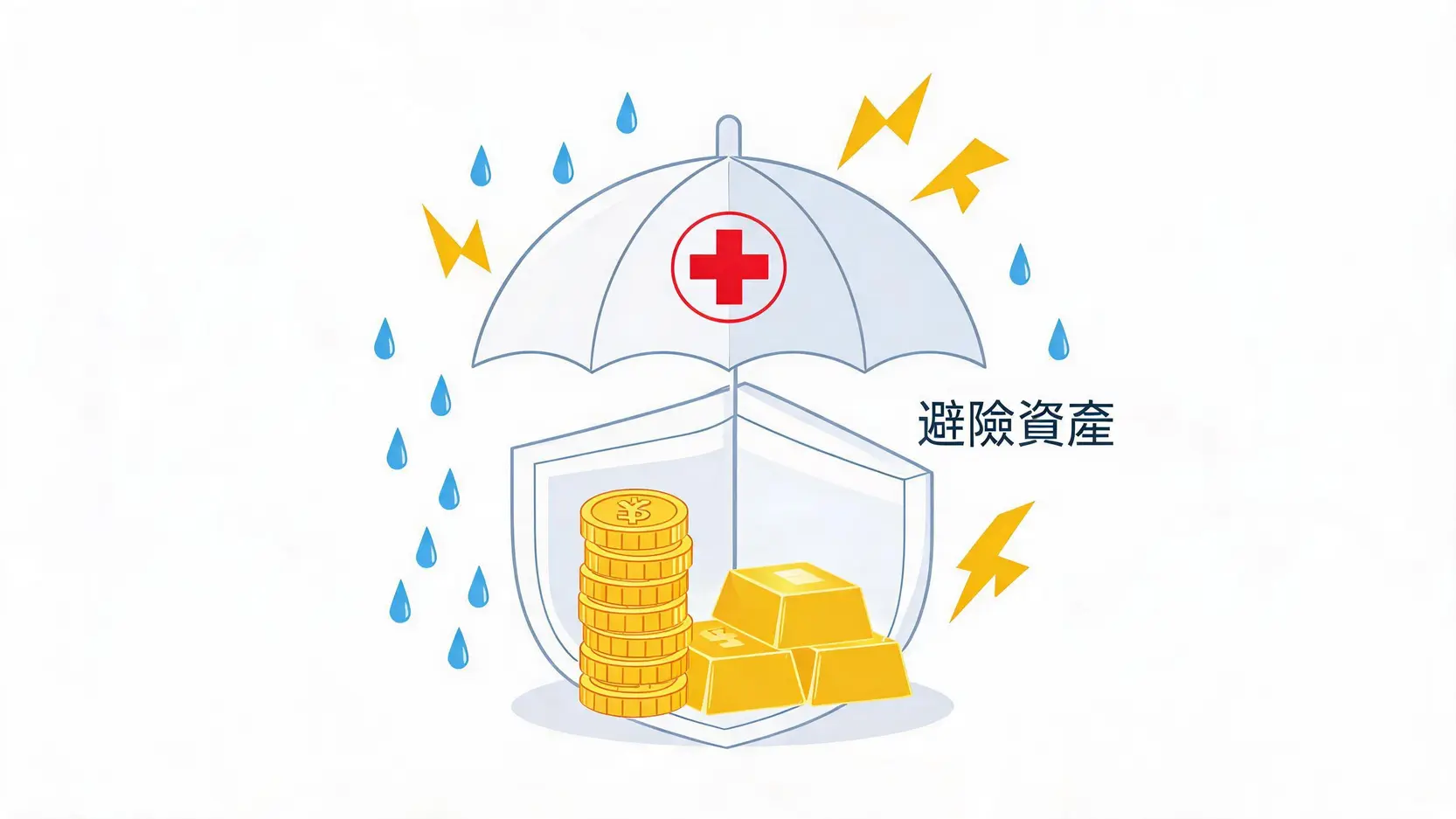
Illustration of the Swiss Franc’s Safe-Haven Concept as a “Safe Haven for Capital”
Advantages and Disadvantages of Holding Swiss Franc Banknotes vs Foreign Currency Deposits vs Investment Instruments
Understanding how to invest in or exchange Swiss francs requires selecting suitable instruments based on your risk tolerance:
Cash holdings: The advantages are absolute liquidity and a sense of security, making them suitable for travel or coping with extreme black swan crises. The disadvantages are that banks charge higher cash handling fees, there is no interest income, and the bid-ask spread is the widest.
Foreign currency deposits: The advantages are that spot exchange rates apply to purchases and sales, the spread is narrower, and funds can be flexibly allocated to foreign currency fixed deposits. Although the negative interest rate era has ended, fixed deposit rates remain relatively low compared with high-yield currencies (such as the US dollar), so the opportunity cost of capital must be considered.
Forex margin trading and ETFs: Professional investors can trade USD/CHF through forex trading platforms or purchase ETFs that track the Swiss franc, using leverage to amplify returns while also trading in both directions. However, these investment instruments carry higher risks and require solid technical analysis skills and strict stop-loss discipline.
Frequently Asked Questions About the Swiss Franc (CHF) Exchange Rate and Currency Exchange
Q: Why Is the Swiss Franc Exchange Rate So High?
The Swiss franc’s persistently high exchange rate is mainly attributable to Switzerland’s strong economy, highly competitive precision manufacturing and pharmaceutical exports, long-standing current account surplus, stable political environment, and extremely low inflation rate. In addition, as a globally recognised safe-haven currency, inflows of safe-haven capital during periods of market volatility further strengthen its value, creating a positive cycle.
Q: Can Euros Be Used in Switzerland, or Must I Exchange Them for CHF?
Switzerland’s legal currency is the Swiss franc (CHF). Although many large hotels, chain supermarkets, and shops in tourist areas near the border accept payments in euros, change is usually given in Swiss francs, and the conversion rates offered by merchants are generally less favourable and include hidden exchange rate costs. Therefore, to save money, the best options are to use CHF cash locally or pay directly by card.
Q: Does the Swiss Franc Have Significant Appreciation Potential in the Future?
Its future appreciation potential depends on the global economic environment and the stance of the Swiss National Bank (SNB). If the global economy faces recession risks or geopolitical tensions persist in 2026, safe-haven demand will provide strong support for the CHF exchange rate. However, if the Swiss National Bank believes that an excessively strong franc is seriously damaging the competitiveness of domestic exporters, it may intervene in the foreign exchange market by selling Swiss francs to curb excessive appreciation.
Q: Where Can I Access Historical Swiss Franc Exchange Rate Data?
Investors can access historical posted exchange rates through the official websites of major banks (such as the Bank of Taiwan and E.SUN Bank) or use professional financial databases and charting software, such as MacroMicro, TradingView, and Bloomberg, to obtain CHF exchange rate charts covering more than ten years and conduct cross-analysis with macroeconomic data. This is highly useful for identifying historically low exchange rate levels and long-term trends.
Conclusion: Accurately Track the CHF Exchange Rate and Optimise Foreign Currency Asset Allocation
Whether for the practical purpose of planning a dream trip to the Alps or seeking a safe haven for asset allocation amid volatile financial markets, the Swiss franc (CHF), supported by its solid economic fundamentals and irreplaceable safe-haven characteristics, has always held an important position in the global foreign exchange market.
Through an in-depth analysis of the Swiss franc’s safe-haven characteristics, we have learned why it remains resilient during crises. For forward-looking forex investors, continuously monitoring the Swiss National Bank’s monetary policy direction, developments in the global political and economic environment, and making effective use of historical Swiss franc exchange rate data to support decision-making can help them identify the best times to buy and sell CHF more accurately. In the highly uncertain investment environment of 2026, appropriately including the Swiss franc in an asset allocation strategy is undoubtedly a prudent way to strengthen overall defensive resilience and preserve financial stability.
Binance Margin Trading Guide: Differences Between Cross and Isolated Margin Modes and Illustrated Borrowing Instructions Short on funds but expect a particular cryptocurrency to surge? Besides the commonly used futures trading, you can also use “Binance Margin” to borrow funds and purchase spot assets, amplifying your investment returns. This Binance...
2026 Euro Exchange Rate Forecast: Is Now the Best Time to Buy Euros? Planning a trip to Europe or considering foreign currency investments? As the world’s second-largest reserve currency, fluctuations in the euro directly affect your currency exchange costs and investment returns. As we enter 2026 and face changes in...
【2026 In-Depth Analysis】Trump’s Major Shift in Middle East Policy: How Will It Trigger a New Round of Correlated Oil and Gold Price Movements? In 2026, global markets are once again focusing on the Middle East. As the Trump administration makes a significant shift in foreign policy, from maximum pressure on...