Computing Power Options: AI Trading Strategy Guide

Updated: 2026/05/18  |  CashbackIsland

computing-power-options-guide

What Are Computing Power Options? A Complete Guide to Understanding the Definition and Trading Strategies Behind the New AI-Era Opportunity

As the AI wave sweeps across the globe, are you still focused only on chasing popular AI stocks such as NVIDIA? As “computing power” becomes a strategic resource of the digital era comparable to oil, a new form of “computing power financial derivatives investment” is quietly emerging: computing power options. This article provides an in-depth explanation of the definition of computing power options, explores various computing power options trading strategies and investment approaches, and helps you seize investment opportunities at a deeper level than chip stocks in the AI era. 


What Are Computing Power Options? Breaking Down a New Generation of Financial Derivatives

Before diving into the more complex strategies, it is essential to build a solid foundation and fully understand this emerging concept. At its core, computing power options are the product of turning abstract “computing power” into a tradable and financialized asset, representing an important future trend in financial markets.


Core Concept: When “Computing Power” Becomes a Tradable Commodity

In the past, when we talked about commodities, we thought of gold, crude oil, or soybeans. Today, the core force driving artificial intelligence, blockchain, and cloud computing, namely “computing power”, also has the potential to become a tradable asset. Imagine the floating point operations per second (FLOPS) or GPU hours provided by data centers being quantified, priced, and traded just like electricity generated by a power plant. This transformation is the foundation behind the emergence of the computing power financial derivatives market.


Precise Definition of Computing Power Options: Contracts for Future Computing Power Usage Rights

The definition of computing power options is straightforward: they are financial contracts that grant the holder the “right”, but not the “obligation”, to buy or sell a specified amount of computing power at a predetermined price (strike price) on a future date (expiration date).

  • Call Option: Grants you the right to “buy” computing power at a fixed price in the future.
  • Put Option: Grants you the right to “sell” computing power at a fixed price in the future.

This works exactly like stock options, except the underlying asset shifts from company shares featured in AI stock investment guides to the more fundamental layer of computing capacity itself. Its emergence means computing power is no longer merely a cost for technology companies, but also a new type of asset that can be used for hedging risk and speculation.

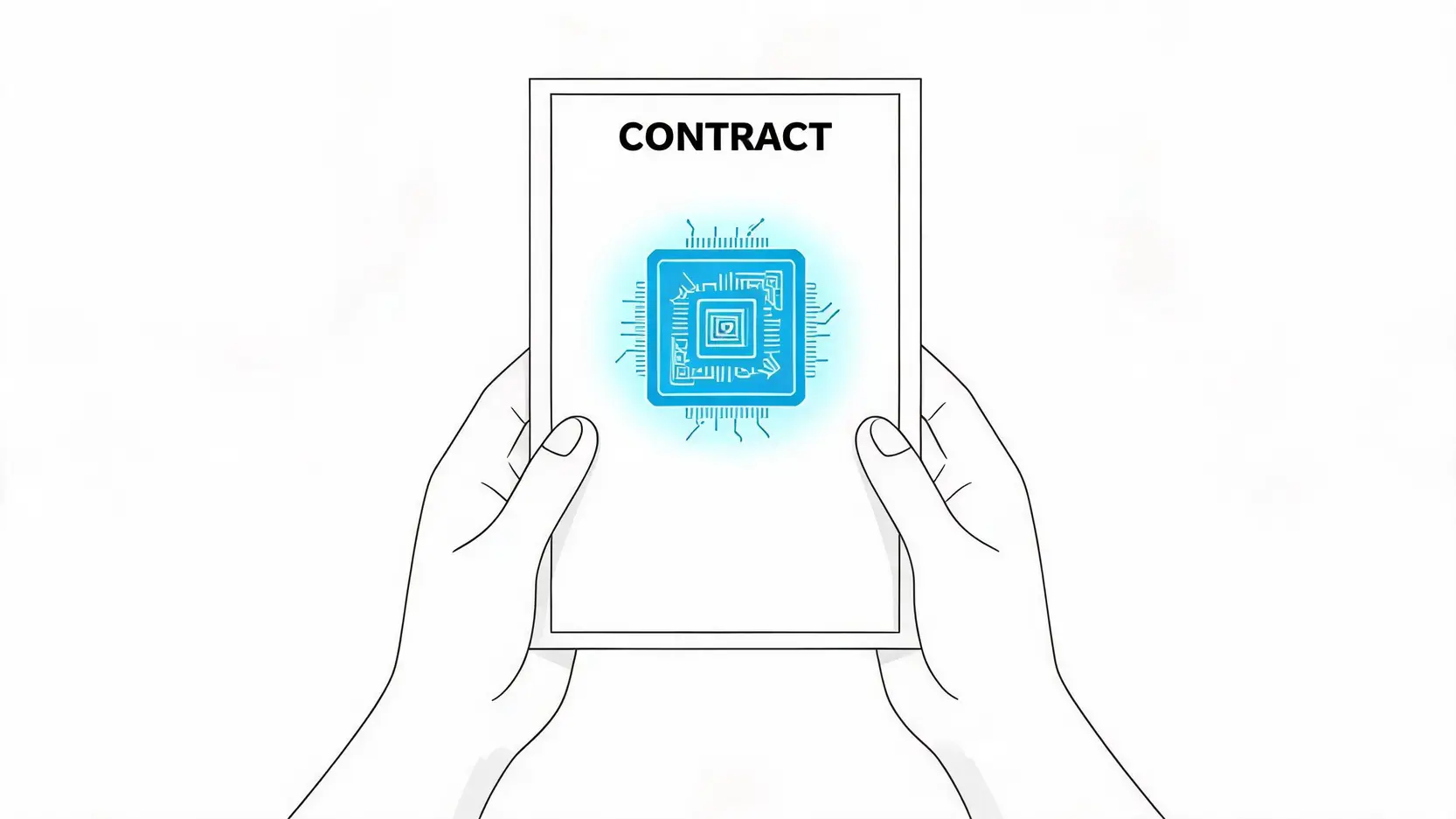
一张算力期权合约的示意图,图中一份合约上印有发光的 GPU 芯片图案,代表将计算能力作为金融资产进行交易。

Computing Power Options: Transforming Intangible Computing Capacity Into Tradable Financial Contracts.


Market Participants: Who Needs to Trade Computing Power Options?

An active market requires different types of participants. The computing power options market is mainly made up of the following three groups:

  1. Demand Side (Buyers): Primarily large AI model developers, cloud gaming platforms, scientific research institutions, and others. They require massive and stable computing power resources, and can use call options to lock in future computing power costs and avoid sharp price increases caused by surging demand.
  2. Supply Side (Sellers): Data centers, mining farms, or cloud service providers with large GPU inventories. They can sell call options to lock in future revenue in advance and stabilize cash flow.
  3. Speculators/Investors: Individual or institutional investors who are bullish or bearish on the future computing power market. They do not directly use computing power, but instead trade options contracts based on their market outlook to profit from price differences while providing liquidity to the market.


Further Reading (Highly Recommended)

2026 Apple (AAPL) Stock Price Analysis: A Complete Guide to Price Charts, After-Hours Trading, and Future Investment …

XRP Derivatives Guide: From Beginner to Expert in XRP Contracts, Including Top 5 Futures Trading Platform Recommendations


Must-Learn Computing Power Options Strategies for 2026: From Beginner to Advanced

After understanding the basic definition, let us now explore several core computing power options trading strategies. These approaches are not only suitable for professional investors, but can also help industry participants manage business costs and risks more effectively. 

Basic Strategy (1): Buying Call Options (Long Call) – Betting on an Explosion in Computing Power Demand

This is the most direct strategy and is suitable for investors who are highly optimistic about the future of AI development and expect computing power demand to far exceed supply.

  • Scenario: Assume the current market price for 1 PFLOPS/s of computing power is US$1,000 per month. You believe that in three months, the launch of next-generation AI models will push the price to US$2,000.
  • Your Strategy: You pay a premium (for example, US$100) to purchase a call option expiring in three months with a strike price of US$1,100.
  • Outcome Analysis:
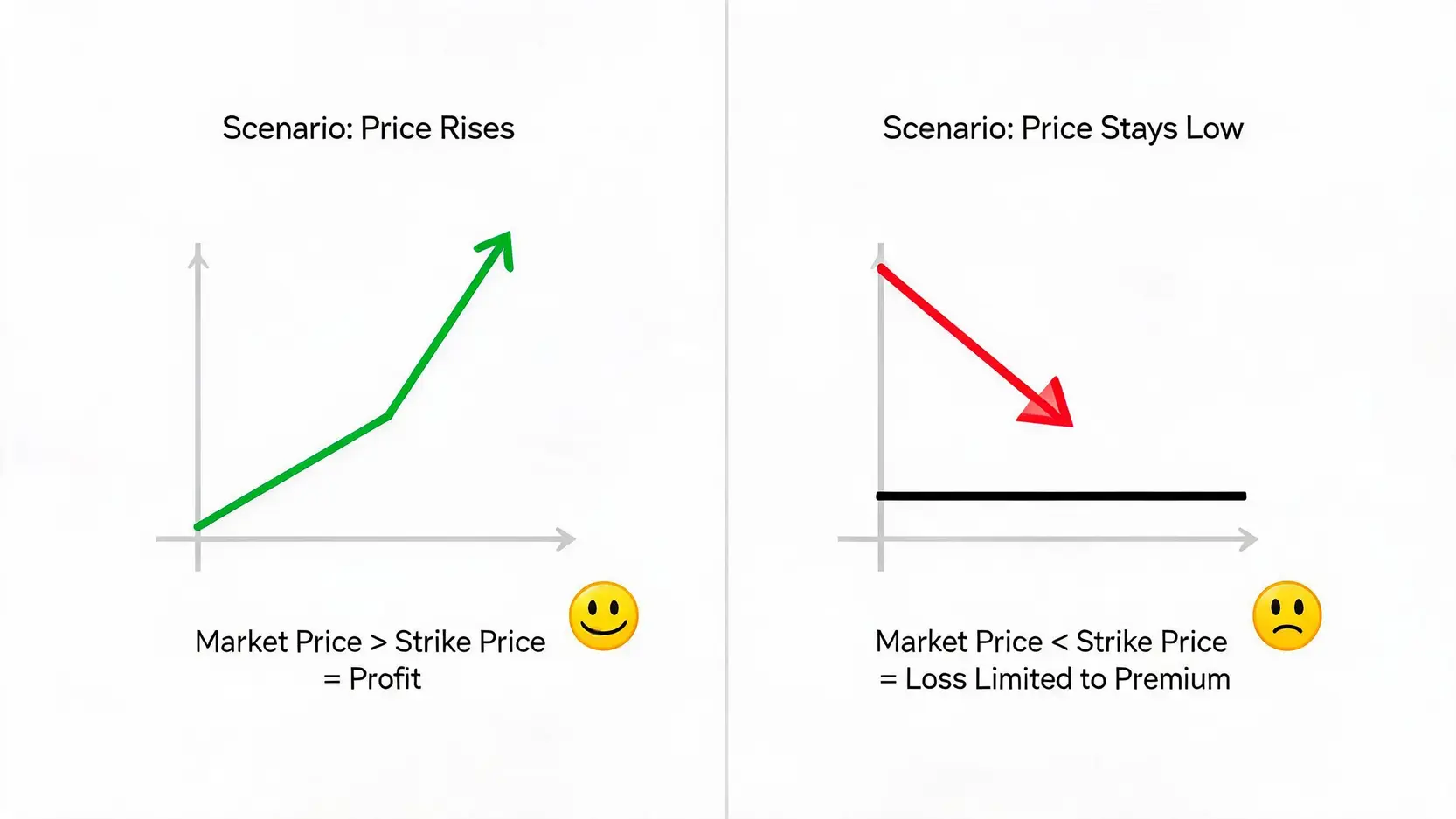
    • If the price rises sharply to US$2,000 as expected: You can exercise your right to buy computing power worth US$2,000 at the strike price of US$1,100, immediately making a profit of US$900. After deducting the US$100 premium, your net profit is US$800.
    • If the price falls or does not rise significantly (below US$1,100): You can choose not to exercise the option, and your maximum loss is limited to the original US$100 premium.

一张对比图解释买入看涨期权的两种结果。左边显示市场价格上涨时,投资者获利;右边显示市场价格下跌时,投资者损失仅限于权利金。

Long Call Strategy Profit and Loss Analysis: Limited Risk, High Potential Returns.

The appeal of this strategy lies in its “limited risk, unlimited profit” potential, making it an excellent tool for capturing explosive market growth.


Basic Strategy (2): Buying Put Options (Long Put) – Hedging Computing Power Costs or Taking a Bearish View

Buying put options generally serves two purposes: first, to hedge existing computing power assets (such as prepaid data center contracts); Second, to speculate on a market decline without holding the underlying asset.

  • Scenario: Assume you are a computing power supplier expecting market competition to intensify, causing computing power prices to fall from US$1,000.
  • Your Strategy: You pay a premium to purchase a put option with a strike price of US$900.
  • Outcome Analysis:
    • If the price drops to US$700: You can exercise your right to sell computing power at US$900 while the market price is only US$700, thereby locking in profits or reducing losses.
    • If the price rises: You choose not to exercise the option, and your maximum loss is limited to the premium.


Advanced Strategy: How AI Companies Use Computing Power Options to Lock in Operating Costs

For AI companies, computing power is a core production resource, and price fluctuations directly impact profit margins. Computing power options provide a perfect hedging tool. For example, an AI startup may expect to require large amounts of GPU resources in six months to train a new model, but fears that booming demand could significantly drive up computing power prices by then. The company can purchase enough call options in advance to lock in computing power costs for the next six months within a predictable range. This is a financially smart strategy that ensures core operations are not disrupted by market volatility, representing an important real-world application of investing in computing power financial derivatives

Investing in Computing Power Financial Derivatives: Opportunities, Risks, and Future Outlook

As an emerging market, investing in computing power financial derivatives is filled with opportunities, but it also comes with risks that cannot be ignored. Before committing capital, it is essential to conduct a comprehensive evaluation of its prospects.


Potential Opportunities: Capturing the Underlying Value of AI Infrastructure and Profiting From Industry Growth

The greatest appeal of investing in computing power options lies in the direct exposure they provide to the “fuel” powering AI infrastructure. As the entire AI industry continues to expand rapidly, regardless of which company’s model ultimately dominates, overall demand for computing power will continue to rise. This means investing in computing power options may offer greater certainty than betting on a single AI company stock, while also allowing investors to benefit from the growth of the entire industry.


Key Risks: Market Volatility, Insufficient Liquidity, and Regulatory Uncertainty

There is no such thing as a free lunch, and high return potential often comes with high risk:

  • Market Volatility: Computing power prices are influenced by multiple factors, including technological upgrades (such as new NVIDIA chip releases), market demand, and energy costs. Prices may fluctuate dramatically over short periods.
  • Insufficient Liquidity: The market is still in its early stages, with relatively low trading volume and limited participation. Situations where “you cannot buy when you want to buy, and cannot sell when you want to sell” may occur.
  • Regulatory Uncertainty: Financial regulators have yet to establish clear definitions and regulatory frameworks for these new types of derivatives. Policy changes could significantly impact the market.


Future Outlook: The Potential Emergence of Computing Power Futures and Exchanges

As the market matures, the emergence of standardized computing power futures contracts and dedicated computing power exchanges is highly likely. This would greatly improve market liquidity and transparency while attracting more institutional investors. At present, learning and understanding computing power options trading strategies in advance is undoubtedly an important step toward preparing for the next major financial trend. 

Frequently Asked Questions (FAQ)

Q: What is the difference between computing power options and directly investing in NVIDIA stock?

A: Investing in NVIDIA stock means investing in a company that designs and sells GPUs, with its share price influenced by company operations, competition, market sentiment, and other factors. Investing in computing power options, on the other hand, involves directly investing in or hedging against the future price of “computing power” as a commodity itself. You can think of NVIDIA as the “mining equipment manufacturer”, while computing power is the “mined resource”. The two are related, but fundamentally different.

Q: Are there currently platforms that allow trading of computing power options?

A: As of 2026, the computing power options market is still at a very early stage of development. Currently, several emerging centralized and decentralized platforms are attempting to provide such services, but none have yet achieved the scale or credibility of mainstream platforms such as the Chicago Board Options Exchange (CBOE). Investors should exercise extreme caution and fully assess platform risks before participating.

Q: What is the biggest risk of investing in computing power financial derivatives?

A: In addition to the market volatility and regulatory risks mentioned earlier, the greatest current risks are liquidity risk and counterparty risk. In an immature market, it may be difficult to find buyers or sellers to complete your trades. Furthermore, if the trading platform lacks credibility, there is also the risk of platform failure or default.

Q: Are computing power options suitable for ordinary investors?

 A: Due to their high risk and complexity, computing power options are currently more suitable for professional investors with a deep understanding of financial derivatives tutorials, or companies with actual computing power hedging needs. Ordinary investors are advised to continue observing and learning first, and consider participating only after the market becomes more mature and regulations become clearer.

Conclusion

In summary, computing power options, as an innovative financial instrument, provide investors and AI industry participants with a new way to manage risk and capture growth opportunities. They transform the most critical resource of the AI era, namely computing power, into a tradable asset with significant potential. Although the market is still in its early stages and filled with uncertainty, understanding the definition and core trading strategies of computing power options in advance will be the crucial first step toward successfully investing in computing power financial derivatives. Only by continuously monitoring developments in this field can investors gain an advantage in future market transformations.

If you liked this article, please share it!

Related Articles

  • What Does a Non-USD Currency Rebound Signal?
    What Signal Does a Rebound in Non-USD Currencies Send? Understanding Investment Opportunities and Risks Amid a Weaker US Dollar Core Driver: Why Does a Rebound in Non-USD Currencies Occur? When the US Dollar Index (DXY) starts to weaken, the forex market often sees a wave of “non-USD currency rebound” movements....
    2026 年 6 月 29 日
  • How to Choose a Forex Broker: 5 Essential Criteria
    How to Choose a Forex Platform? 5 Key Criteria to Avoid Scam Broker Traps When entering the fast-changing forex market, the first and most critical step is making the right forex platform selection. A good broker is your solid support in the market. Conversely, choosing the wrong platform may not...
    2026 年 6 月 29 日
  • Forex Carry Trade Guide: Profit From Rate Differentials
    Forex Carry Trade in Practice: A Complete Guide to Profiting From G10 Currency Interest Rate Differential Trades Amid Expectations of US Dollar Depreciation The 2026 forex market is highly unpredictable. For advanced investors seeking stable returns in volatile market conditions while effectively hedging exchange rate risk, simply holding a single...
    2026 年 6 月 29 日
返回顶部