What Is Web3? 2026 Beginner Guide to Blockchain

Updated: 2026/03/06  |  CashbackIsland

Web3 咩係?2026 香港新手懶人包:一次搞懂區塊鏈、去中心化同未來機遇

What Is Web3? 2026 Hong Kong Beginner’s Guide: Understand Blockchain, Decentralization, and Future Opportunities in One Article

In recent years, whether you are browsing Facebook or reading the news, terms such as “Web3”, “blockchain”, and “NFT” seem to be everywhere. Yet do you also feel confused? Many people worry about falling behind the times and not understanding what Web3 is, thereby missing new investment or career opportunities. In fact, you are not alone. This new concept can indeed be complex. This article will explain Web3.0 Hong Kong development in the most straightforward and accessible way, clarify the core technology “what blockchain is”, as well as the “meaning of decentralization”, and explore the latest developments and potential opportunities of Web3 in Hong Kong. Whether you are a beginner investor or a working professional, you will be able to grasp future trends with ease. 


What Exactly Is Web3? How Is It Different From the Internet We Use Today?

Simply put, Web3 is the “next generation of the internet”. Its core concept is to return ownership of data from technology giants to each individual user. Sounds abstract? Let us start with history and everything will become clear.


From Web1.0 to Web3.0: Not Just Using the Internet, but Owning It

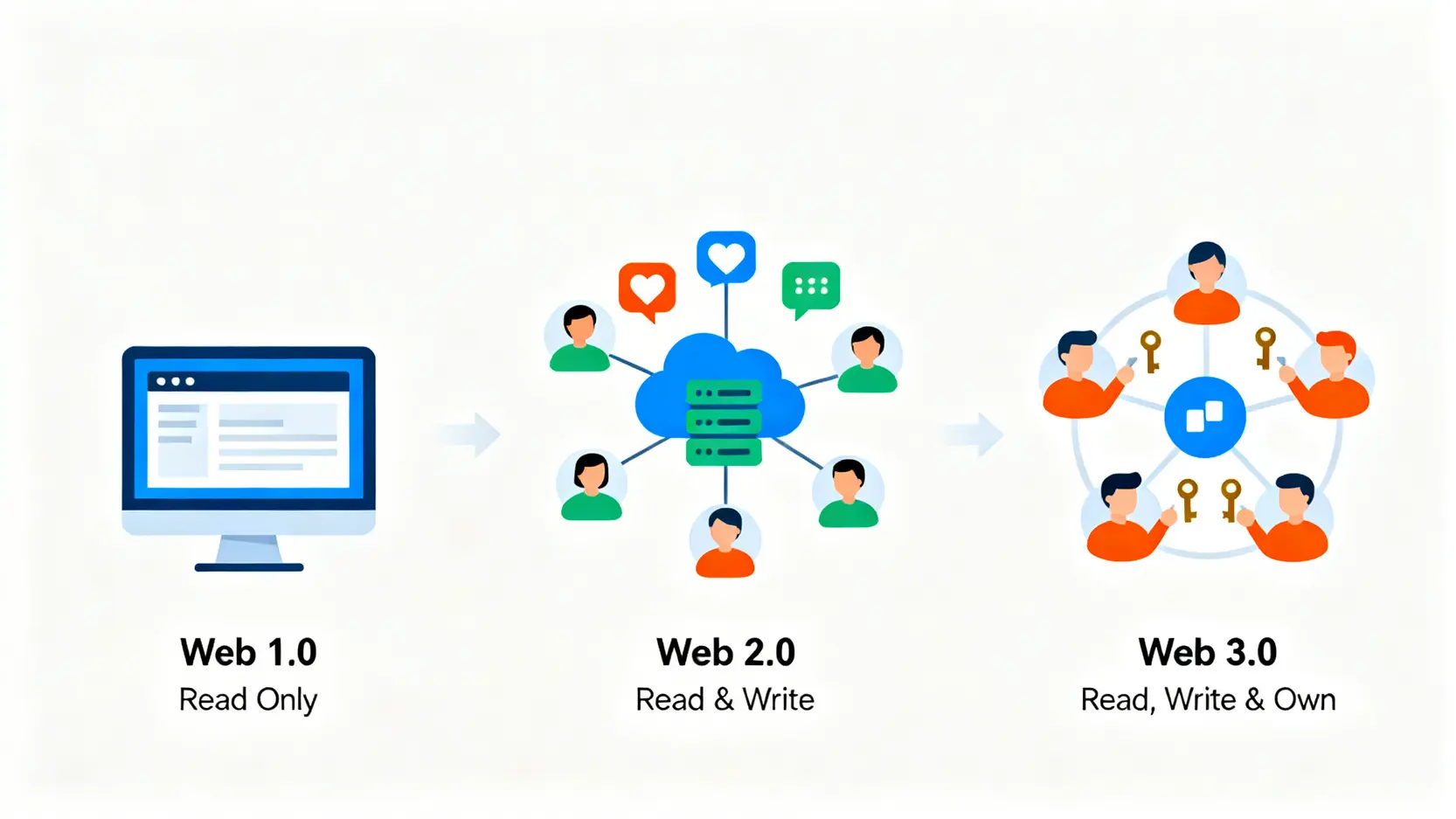
To understand Web3, it helps to review the evolution of the internet:

  • Web1.0 (approximately 1990 to 2004): The read only internet.
    Imagine early websites such as Yahoo! Hong Kong. At that time, websites mainly published content created by companies, and users could only browse and read, much like reading an online newspaper, with minimal interaction. The defining feature of this era was the clear distinction between “information providers” and “information receivers”.
  • Web2.0 (approximately 2004 to present): The read and write internet.
    This is the era most familiar to us. Platforms such as Facebook, Instagram, YouTube, and Google rose to prominence. Users not only consumed content but also created it, posting photos, writing blogs, and producing videos. We evolved from passive readers into content creators. However, there is a critical issue: all our data, including personal information, social connections, and creative content, is stored on the servers of these large corporations. They can delete, censor, or even monetize your data at any time. We have the “right to use” the platforms, but not true “ownership”.
  • Web3.0 (the future trend): The read, write, and own internet.
    Web3 aims to solve the problems of Web2.0. By leveraging blockchain technology, it builds a “decentralized” network. In the Web3 world, your digital assets, personal data, and online identity, such as your account, truly belong to you. No single company can unilaterally control or seize your assets, enabling genuine “digital ownership”.

一張圖解Web1.0、Web2.0到Web3.0的互聯網演進過程,展示從唯讀到讀寫,再到用戶擁有數據的轉變。

The Evolution of the Internet: From One Way Browsing to Truly Owning Your Digital World.


Web2 vs Web3 Comparison Table: Breaking Away From Platform Monopoly, Putting Data Back in Your Hands

To help you understand more clearly, below is a simple comparison table:

Feature

Web2.0 (Present)

Web3.0 (Future)
Core Technology Centralized Servers, Cloud Computing Blockchain, Peer-to-Peer Network (P2P)
Data Ownership Owned by Platforms (Such as Meta and Google) Owned by Individual Users
Control Centrally Controlled by Platform Companies Decentralized, Governed Collectively by the Community
User Identity Registered With Email Address or Mobile Number Crypto Wallet Address (Such as MetaMask)
Representative Applications Facebook, Instagram, YouTube DeFi (Decentralized Finance), NFT, GameFi
Value Model Platforms Generate Revenue Through Advertising or Commission Fees Value Flows Directly Between Creators and Users


Breaking Down the Two Foundations of Web3: Understanding Blockchain and the Meaning of Decentralization

The grand vision of Web3 is not built on empty promises. It is founded on two core technologies: Blockchain and Decentralization. Once you understand these two concepts, you hold the key to understanding the future development of Web3.0 Hong Kong.


What Is Blockchain? A Secure Digital Ledger for Public Record Keeping

Many people find the term “blockchain” intimidating, but there is no need to. You can think of what blockchain is as a “publicly shared digital ledger” for record keeping.

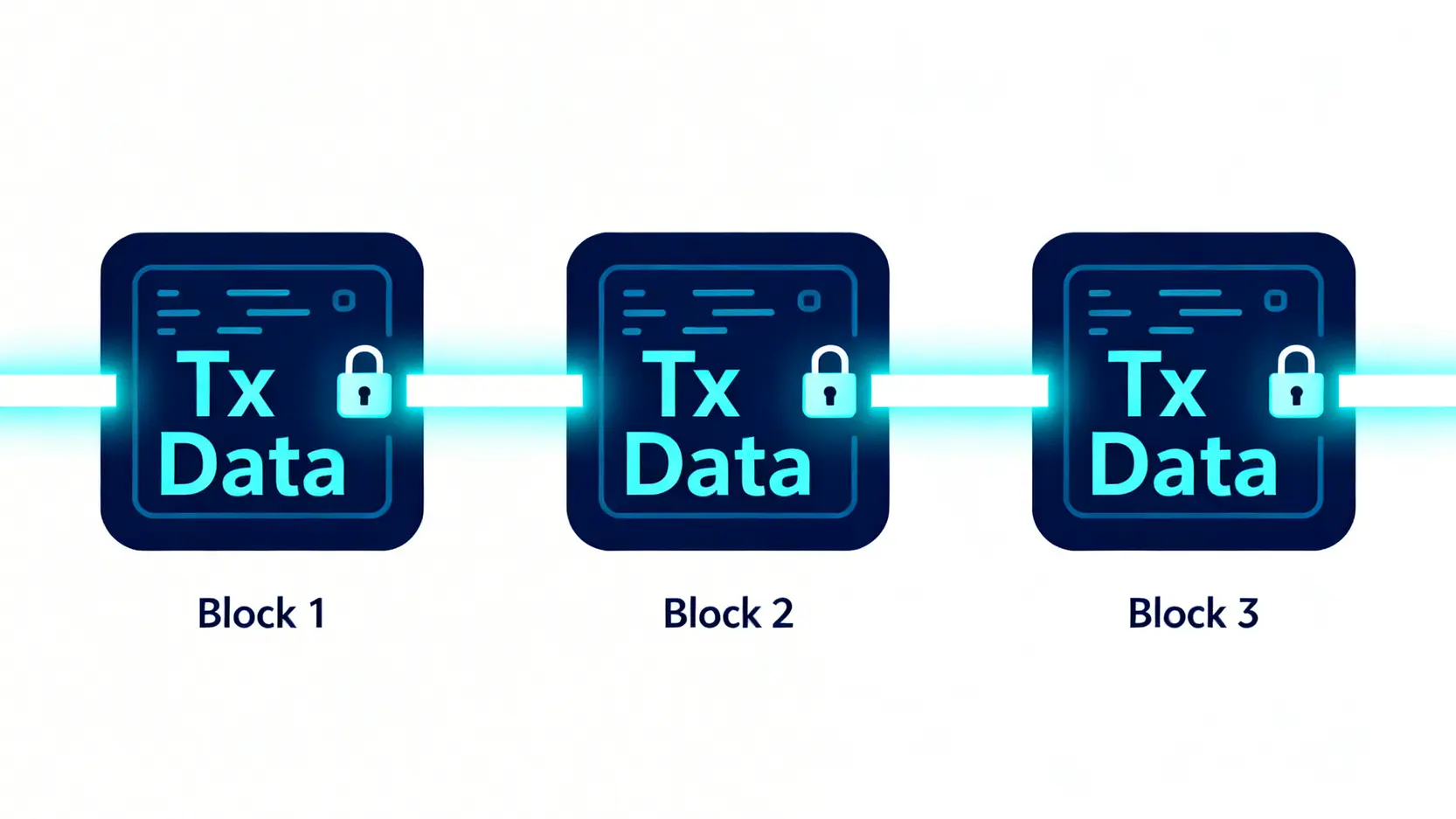
區塊鏈技術示意圖,展示多個數據區塊通過加密技術連接成一條不可篡改的鏈條。

Blockchain Principle: Each “block” is like a page of a ledger, linked together by cryptography into a secure and tamper resistant “chain”.

  • Block: Refers to individual data packages that record transaction information, like each page in a ledger.
  • Chain: Each new block is connected to the previous block using cryptographic techniques, forming an irreversible chain.

This structure brings several key characteristics:

  1. High Security: Because all blocks are linked together, altering the data in one block would require modifying all subsequent blocks. The computational power required makes this practically impossible, ensuring strong data security.
  2. Transparency: The ledger is public (although participants can remain anonymous). Anyone can review the records, yet no single party can control them.
  3. Immutability: Once data is written onto the blockchain, it is extremely difficult to delete or modify.

These features allow blockchain to serve as the foundation of trust in Web3, enabling secure transactions and interactions without intermediaries.


The Meaning of Decentralization: Why Intermediaries Are No Longer Needed? A New Trust Revolution

Once blockchain is understood, the “meaning of decentralization” becomes clear. Traditional Web2 services are “centralized” such as banks, governments, and Facebook. Our money and data are stored on their central servers, managed and verified by them. This model is efficient but carries risks, including single points of failure (server crash), data breaches, and content censorship.

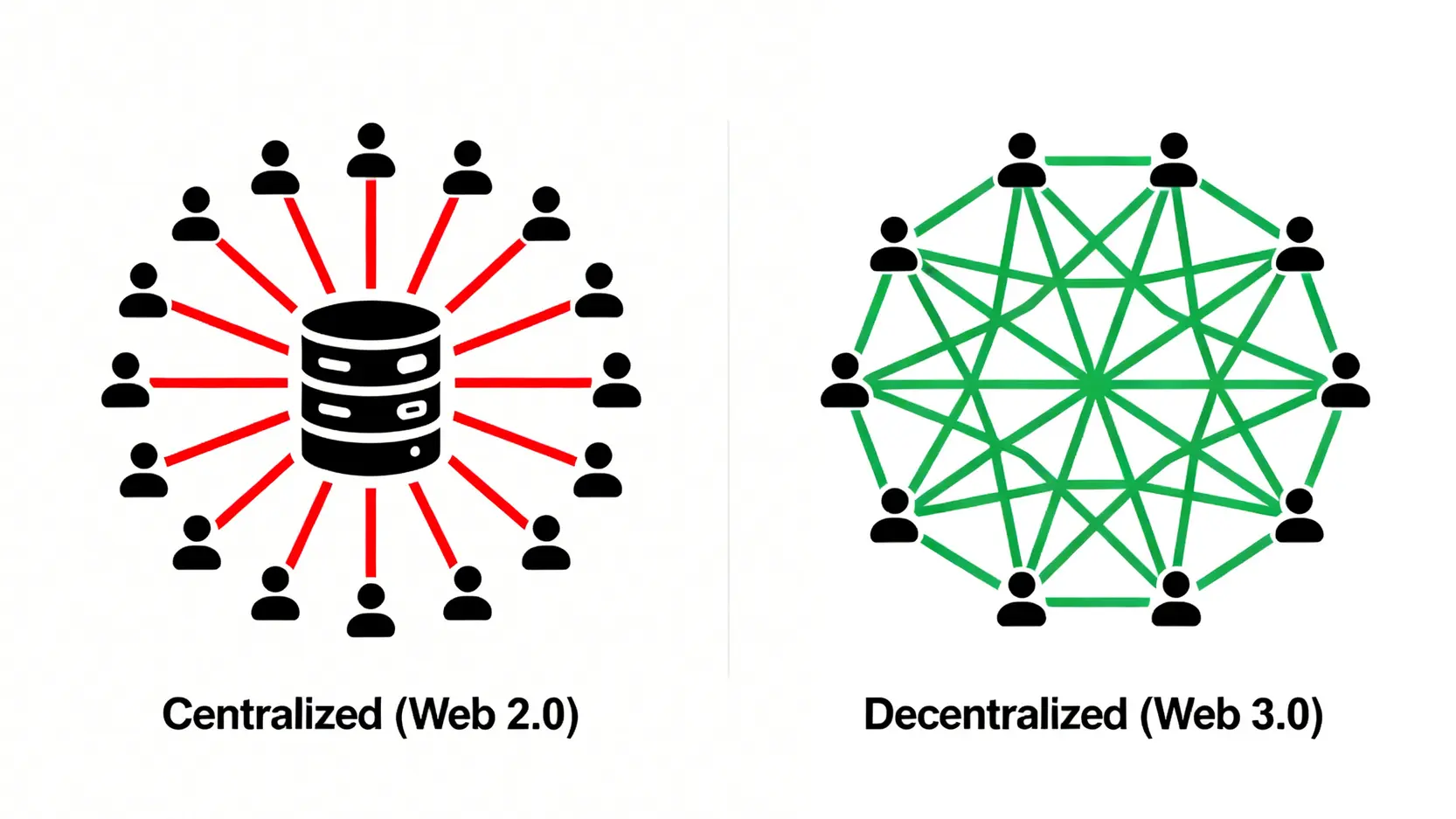
中心化網絡與去中心化網絡的結構對比圖,顯示Web2的集中式控制和Web3的分散式連接。

Centralization vs. Decentralization: Web3 Returns Power From Central Servers to Individual Users.

Decentralization distributes power and data across every participant (or node) in the network, without a single “central authority” in control. Like a peer-to-peer network, everyone holds a copy and shares responsibility. According to Wikipedia, decentralization is the process of distributing authority and decision making. In the Web3 world, applications, known as DApps, run directly on the blockchain rather than on the servers of a single company. This shift means:

  • Resistance to Censorship: No central authority can arbitrarily delete your content or suspend your account.
  • User Autonomy: You fully control your own data and assets without relying on third party platforms.
  • Fairer Value Distribution: Creators can receive rewards directly from supporters without significant platform commissions.


The Development and Opportunities of Web3.0 in Hong Kong

After understanding the concepts, it is worth examining the practical situation. For many people in Hong Kong, the key question is how Web3 relates to them? What the development prospects of Web3.0 Hong Kong are? In fact, Hong Kong is actively embracing this trend and positioning itself as a global Web3 hub.


The Determination of the Hong Kong Government: Policies and Advantages for Building a Global Web3 Hub

In recent years, the Hong Kong government has adopted a proactive stance toward Web3. Starting with the issuance of the “Policy Statement on the Development of Virtual Assets in Hong Kong”, it clearly expressed its intention to establish an appropriate regulatory environment to unlock the potential of Web3 and virtual assets.

Hong Kong has several distinct advantages:

  • International Financial Center Status: A mature financial system, strong rule of law, and a large pool of professional talent.
  • Free Flow of Capital: Capital can move freely, attracting global investors and startups.
  • Policy Support: Clear government endorsement and regulatory frameworks (such as the licensing regime for virtual asset trading platforms), provide certainty for the industry.
  • Connection to the Greater Bay Area: Access to a vast mainland market and technology talent pool.

The combination of these factors creates significant potential for the development of Web3.0 Hong Kong, attracting numerous international Web3 companies across financial technology and other innovative sectors.


Further Reading, Highly Recommended

2025 Complete Guide to Blockchain Applications: 10 Real World Use Cases of Virtual Currency and Ethereum


Local Practical Applications: From FinTech and NFT to Everyday Life Changes?

Web3 is not just about “speculating on coins”. Its applications are gradually penetrating different aspects of society:

  • Financial Technology (FinTech): This is the most important application area of Web3 in Hong Kong. For example, asset tokenization (which converts physical assets such as real estate and artworks into blockchain based tokens), regulated virtual asset exchanges, and even the digital Hong Kong dollar (e-HKD) pilot program are all manifestations of Web3 technology.
  • Non-Fungible Tokens (NFT): Hong Kong’s art market and creative industries have also begun adopting NFT technology. Local artists can sell their works to global collectors through NFTs while ensuring copyright protection and authenticity. Some event tickets and membership passes are also being issued in NFT form to provide unique experiences.
  • GameFi and the Metaverse: Local startups are developing “Play-to-Earn” blockchain games, where in-game assets (such as items and characters) truly belong to players and can be freely traded.


How Can Ordinary People Participate? Exploring Web3 Career Opportunities and Prospects in Hong Kong

With Web3 developing rapidly, how can ordinary individuals get involved? Beyond investing in cryptocurrencies, there are many other opportunities.

As the industry grows, demand for Web3 talent has surged, creating numerous new roles:

  • Technical roles: Blockchain engineers, smart contract developers, cybersecurity specialists.
  • Non-technical roles: Community managers, product managers, marketing professionals, legal and compliance experts, UI/UX designers.

Even if you do not come from a technical background, as long as you are passionate and willing to learn, you can find an entry point. Many Web3 companies value self-learning ability, community participation, and industry understanding more than formal academic credentials.


Frequently Asked Questions About Web3

Q: Is Web3 safe? Is it easy to get scammed?

A: The underlying blockchain technology of Web3 is highly secure, but risks often arise from user operations and malicious project teams. For example, phishing websites may attempt to steal your wallet’s private key, or you might invest in a “Rug Pull” project where founders abscond with funds. Therefore, users must stay vigilant, learn how to protect their digital assets by using hardware wallets, avoid clicking suspicious links, and conduct thorough due diligence before investing (known as DYOR, Do Your Own Research).

Q: Does investing in Web3 projects require a lot of money?

A: Not necessarily. Although major cryptocurrencies such as Bitcoin and Ether are relatively expensive, many emerging Web3 project tokens are priced very low. More importantly, participating in Web3 does not always mean “speculating on tokens”. You can earn “airdrop” rewards by engaging in community activities or testing new products, or purchase NFTs at relatively low cost. The key is to participate within your financial means and only use funds you can afford to lose.

Q: Do I need programming skills to learn Web3?

A: Absolutely not. Just as you do not need to know how to build a website to use the internet, you do not need to be an engineer to participate in Web3. As mentioned above, the Web3 industry requires a wide range of non-technical talents, including marketing, operations, design, and content creation. The most important qualities are curiosity and a willingness to learn. Once you understand the core principles of Web3, you can find your place within the ecosystem.

Q: What is the relationship between Web3 and the Metaverse?

A: Web3 can be seen as the economic and value foundation of the Metaverse. The Metaverse refers to a shared virtual space, while Web3 provides the ability to truly “own” assets within that space. For example, if you purchase virtual land or clothing in the Metaverse, NFT technology ensures that these assets genuinely belong to you rather than to the company operating the platform. Without Web3, the Metaverse would simply become another Web2 game controlled by large corporations.


Conclusion

In summary, Web3 represents an internet revolution built on blockchain technology with decentralization at its core. Its goal is to return ownership of data and digital assets to users and reshape our digital lives. For Hong Kong, Web3.0 is not only a technological trend but also a strategic opportunity to strengthen its status as an international financial center and drive economic transformation. Understanding what Web3 is, along with its core concepts of “what blockchain is” and the “meaning of decentralization”, is the first step toward grasping the future of the digital economy and potentially creating new career pathways. This field evolves rapidly and presents many challenges, but it also holds immense possibilities.

If you liked this article, please share it!

Related Articles

  • Volatility Surface Guide: Skew Trading Strategies
    Practical Applications of Volatility Surfaces: From Options Modeling to Advanced Skew Trading Strategies In options markets, implied volatility is never a flat line. Instead, it forms complex "smile" or "skew" surfaces. For advanced traders, mastering the practical applications of volatility surfaces is equivalent to possessing a lens that reveals market...
    2026 年 6 月 3 日
  • Foreign Capital Flow Model: Track Institutional Money
    Building a Foreign Capital Flow Copy Trading Model: A Stock Market Indicator for Accurately Tracking Institutional Positioning In Asia-Pacific stock markets, foreign capital inflows and outflows often determine the direction of the index. However, simply looking at daily net buy and sell data is no longer enough. Only by building...
    2026 年 6 月 3 日
  • Options Buying Strategies for Extreme Market Risks
    Options Buyer Strategies During Extreme Market Conditions: Black Swan Hedging and Cross-Market Arbitrage During Volatility Surges The most terrifying aspect of financial markets is not a gradual decline, but overnight flash crashes and cross-market capital withdrawals accompanied by volatility surges. In the highly unpredictable global macroeconomic environment of 2026, geopolitical...
    2026 年 6 月 3 日
返回顶部