The 2025 Complete Guide to Blockchain Applications: 10 Real-World Cryptocurrency and Ethereum Application Cases
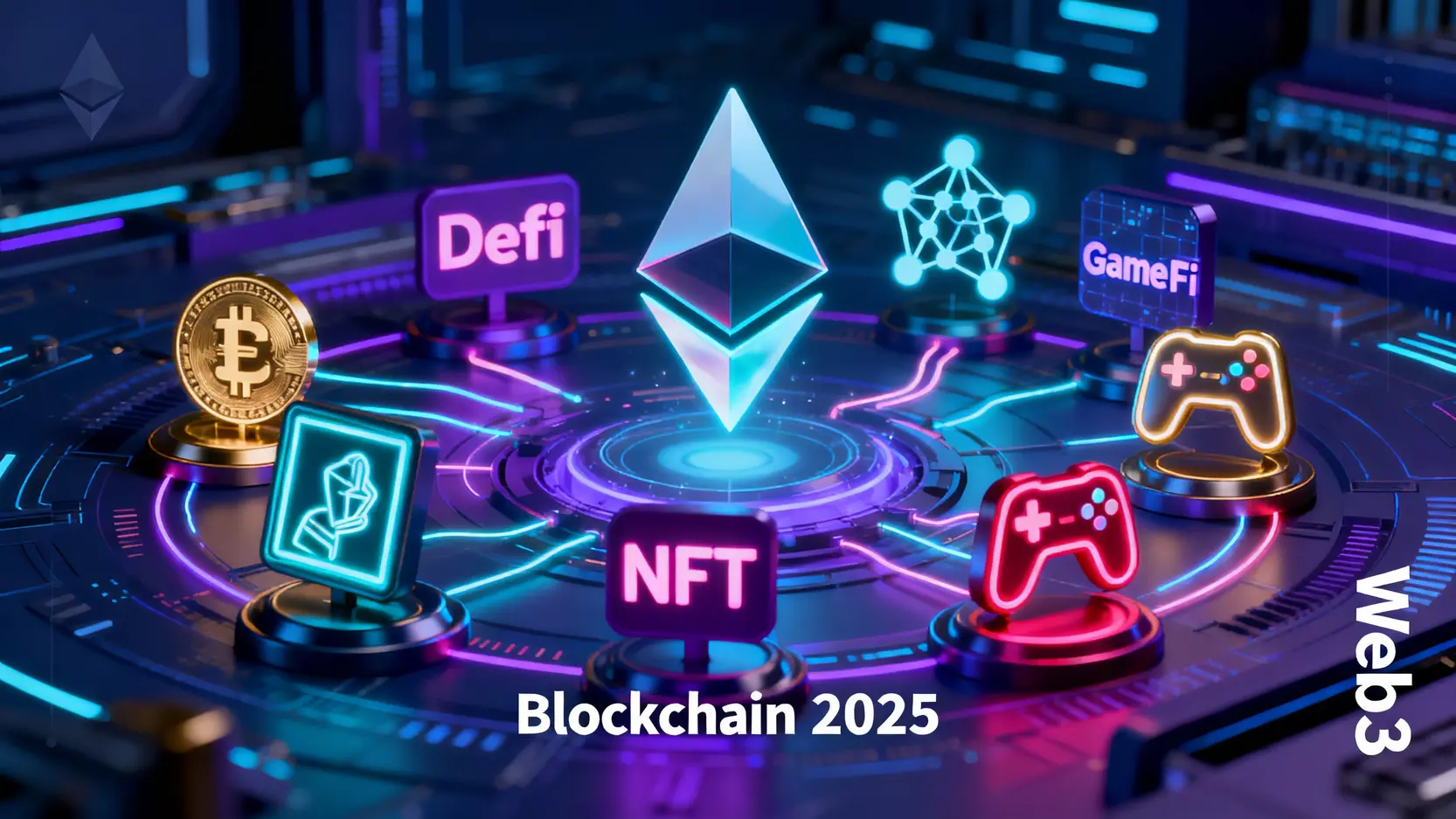
Are you curious about the potential of blockchain but only familiar with the price fluctuations of virtual currencies like Bitcoin or Ethereum? In reality, the true value of blockchain technology lies in its broad and disruptive “blockchain applications”. These applications are quietly reshaping our digital lives. This article will guide you through the most promising virtual currency application scenarios in 2025, with a special focus on innovations within the Ethereum ecosystem, from decentralized finance to blockchain gaming, helping you grasp the core of the Web3.0 revolution and understand future Ethereum application trends.
What Is a Blockchain Application (DApp)? Why Will It Disrupt the Digital World of the Future?
A blockchain application, commonly known as a “DApp” (Decentralized Application), is an application that runs on a decentralized network such as a blockchain. Unlike the apps we commonly use on our phones, a DApp is not controlled by any single company or individual. Instead, it operates automatically through smart contracts, with all data recorded publicly and transparently on the blockchain, making it nearly impossible to tamper with.
The Core Value of Decentralization: How Is It Different From Traditional Apps?
Traditional apps (such as Facebook or Uber) have their data and operational rules fully controlled by centralized companies. Users must trust that the company will properly manage their data and execute services fairly. However, the rise of DApps completely changes this power structure. Their core value lies in “decentralization”, which brings several key differences:
- 🔐 Censorship resistance: No central authority can unilaterally shut down or alter a DApp’s operations.
- 🤝 User data sovereignty: Your personal data and digital assets are entirely controlled by you, rather than being stored on corporate servers.
- 🔍 High transparency: All transactions and rules are recorded on a public ledger and can be verified by anyone, reducing the possibility of hidden manipulation.
- 🌐 Permissionless participation: Anyone who meets the protocol rules can participate or build on existing DApps, fostering innovation within the ecosystem.
For clearer understanding, please refer to the comparison table below.
| Features |
Traditional App (Web 2.0) |
Blockchain Application DApp (Web 3.0) |
| Underlying Architecture |
Centralized Servers |
Decentralized Blockchain Network |
| Data Control |
Controlled By A Single Company |
Users Control Assets Through Their Own Private Keys |
| Operational Rules |
The Company Can Modify Service Terms At Any Time |
Executed Automatically By Smart Contracts; Any Modification Requires Community Consensus |
| Transparency |
Non-Transparent, Internal Operations |
Fully Public And Transparent, Verifiable On-Chain |
Getting Started: What Do You Need Before Using A DApp?
To step into the world of DApps, you need two essential tools, your passport to the decentralized world:
- Crypto wallet:
This is not a wallet for storing physical cash, but a digital tool used to manage your virtual currency assets and interact with DApps. It generates a pair of keys: a public key (similar to a bank account number, can be shared) and a private key (similar to a withdrawal password, must never be disclosed). Common wallet types include browser extension wallets (such as MetaMask) and mobile app wallets (such as Trust Wallet).
- Gas fee:
Executing any action on a blockchain, such as transferring funds or interacting with smart contracts, requires paying a fee to miners or validators on the network. This fee is the “gas fee”. It is typically paid using the blockchain’s native token (for example, ETH on Ethereum). Gas fees fluctuate depending on network congestion.
Reviewing the Three Major Mainstream Blockchain Application Sectors
Today’s virtual currency applications are developing rapidly and have already demonstrated impressive potential across multiple fields. Among them, the three most notable mainstream sectors are decentralized finance, non-fungible tokens, and blockchain gaming.
Decentralized Finance (DeFi): Transforming Your Banking Experience
Decentralized finance (DeFi) is arguably the most mature field within blockchain applications. It aims to use blockchain and smart contracts to build an open financial system that eliminates the need for traditional intermediaries such as banks or brokers. Anyone with internet access and a crypto wallet can participate.
DeFi services include:
- Decentralized exchanges (DEX): Allow users to trade virtual currencies directly in a peer-to-peer manner, without entrusting assets to a centralized platform.
- Lending protocols: You can deposit your virtual currencies into a protocol to earn interest, or use collateral to borrow other types of tokens.
- Stablecoins: Cryptocurrencies pegged to fiat currencies such as the US dollar, serving as the primary medium of exchange in the DeFi ecosystem.
- Liquidity mining: Earning platform token rewards by providing liquidity to DeFi protocols, a high-risk, high-return investment method.
Non-Fungible Tokens (NFTs): Virtual Currency Applications from Digital Art to Identity Verification
A non-fungible token (NFT) is a unique and indivisible proof of digital asset ownership. Unlike “fungible” assets such as Bitcoin or paper currency, each NFT is one of a kind. This characteristic allows it to shine in many virtual currency application scenarios.
NFT applications extend far beyond digital artwork:
- 🎨 Digital collectibles and art: Provide verifiable scarcity and ownership for digital artworks, transforming the art market.
- 🎮 In-game items: Weapons, equipment, or land in games can be NFTs, giving players true ownership and enabling free secondary-market trading.
- 🎫 Tickets and memberships: Concert tickets, event passes, or club memberships can be issued as NFTs, eliminating scalping and offering exclusive holder benefits.
- 🌐 Digital identity and domain names: For example, Ethereum Name Service (ENS). A `.eth` domain itself is an NFT and can represent your digital identity.
Blockchain Gaming (GameFi): A New Play-To-Earn Model
GameFi is the combination of “Game” and “Finance”, referring to blockchain games that integrate DeFi and NFTs. In the GameFi world, players are no longer merely consumers; they become participants and beneficiaries of the game economy. This “Play-to-Earn” (P2E) model has attracted a massive number of users.
Core features of GameFi:
- Asset ownership: Items or characters earned in the game are NFTs owned by the players.
- Economic incentives: By completing tasks or winning battles, players can earn game tokens with real-world value.
- Open economy: In-game assets and tokens can be freely traded with other players on open markets, forming a dynamic economic ecosystem.
Although early P2E game models faced challenges, GameFi continues to evolve, and future developments will focus more on gameplay quality and sustainable economic structures.
Ethereum Application: Why Is Ethereum the Preferred Platform for DApp Developers?
When discussing blockchain applications, Ethereum is indispensable. Ethereum is not only a virtual currency (ETH); it is also a global, open-source blockchain platform. Its introduction of “smart contracts” made DApp development possible, establishing it as the top choice for DApp developers.
Ethereum leads the industry for several key reasons:
- The earliest smart contract platform: It possesses strong first-mover advantages and the largest developer community.
- Mature development tools and standards: Such as ERC-20 (fungible token standard) and ERC-721 (NFT standard), which significantly lower development barriers.
- High network security and decentralization: Its massive node network ensures strong security and stability.
- A vast ecosystem and composability: Various Ethereum applications can stack and interconnect like Lego blocks, enabling the creation of more complex financial or entertainment products.
Top 5 Must-Know Ethereum Applications
There are already thousands of DApps within the Ethereum ecosystem. Below are five representative applications from different sectors to help you quickly understand the appeal of Ethereum applications:
- Uniswap (Decentralized Exchange): The leading DEX in the DeFi sector, using the automated market maker (AMM) model, allowing anyone to easily swap ERC-20 tokens or become a liquidity provider.
- Aave (Lending Protocol): A top decentralized lending platform where users can deposit assets to earn passive income or use collateral to borrow stablecoins, achieving high capital efficiency.
- OpenSea (NFT Marketplace): The world’s largest and most well-known NFT trading platform, featuring everything from art and collectibles to in-game items. It is often referred to as “the Taobao of NFTs”.
- The Sandbox (Metaverse Game): A blockchain-based virtual world where players can create, own, and monetize their gaming experiences. Land and in-game assets are all NFTs.
- Ethereum Name Service (ENS) (Digital Identity): A decentralized naming service that allows users to replace long wallet addresses with simple, memorable names like `yourname.eth`, serving as the identity gateway to the Web3.0 world.
Ethereum’s Challenges and Future: The Importance of Layer 2 Solutions
Despite Ethereum’s thriving ecosystem, it also faces a serious challenge — scalability. As more users and DApps join, the Ethereum mainnet (Layer 1) becomes increasingly congested, resulting in slower transaction speeds and soaring gas fees. During peak times, a simple transaction fee can reach tens or even hundreds of dollars, significantly limiting participation from everyday users.
To address this issue, “Layer 2 scaling solutions” emerged. Layer 2 refers to secondary networks built on top of the Ethereum mainnet. They process and batch large numbers of transactions off-chain, then submit the final results back to the mainnet for settlement. This approach greatly increases transaction speed, reduces fees, and still inherits the security of the Ethereum mainnet.
Mainstream Layer 2 technologies include Rollups (Optimistic Rollups and ZK-Rollups), with well-known projects such as Arbitrum, Optimism, and zkSync. The development of Layer 2 is crucial for the widespread adoption of Ethereum applications, making small and high-frequency interactions possible and driving Ethereum toward true large-scale use.
Frequently Asked Questions (FAQ) about Blockchain Applications
Q: Is Using Blockchain Applications or Virtual Currency Applications Safe?
A: Blockchain technology itself is relatively secure because its decentralized and cryptographic nature makes it difficult to tamper with. However, the risks mainly come from three areas: first, smart contract vulnerabilities, if a DApp’s source code contains flaws, hackers may exploit them, causing financial loss. Second, user errors such as losing or exposing private keys or granting permissions to malicious websites, which can lead to permanent asset loss. Third, market risks, virtual currency prices fluctuate dramatically, and token values associated with these applications may also drop sharply.
Q: Do I Need Programming Knowledge To Use Ethereum Applications?
A: Not at all. For regular users, using a DApp feels very similar to using a normal website or app. You only need to learn how to set up and use a crypto wallet (such as MetaMask) and understand how to connect and authorize actions through the wallet interface. Programming skills are only required if you want to develop a DApp.
Q: What Are The Risks Of Investing In These Blockchain Applications?
A: Investing in blockchain applications or their issued tokens is considered high risk. In addition to the technical security risks and market volatility mentioned earlier, there are also regulatory risks (uncertain policies across countries), project risks (the project team may mismanage or disappear), and liquidity risks (some smaller tokens may be difficult to buy or sell). Before investing, always conduct your own research (DYOR – Do Your Own Research) and only invest funds you can afford to lose.
Q: What Is Web3.0 And How Is It Related To Blockchain Applications?
A: Web3.0 is viewed as the next generation of the internet, centered on “decentralization” and “user ownership”. If Web 1.0 was “read-only” (static webpages), and Web 2.0 was “read and write” (social media and user-generated content), then Web3.0 is “read, write, and own”. Blockchain applications (DApps) are the fundamental infrastructure and primary form that enable the Web3.0 vision, using blockchain technology to return data and asset ownership to users.
Conclusion
In summary, blockchain applications have long surpassed simple virtual currency transactions and are now penetrating multiple layers such as finance, art, gaming, and identity verification with unprecedented depth and breadth. In particular, the rapid growth of Ethereum applications and the continued maturation of Layer 2 solutions reveal the limitless possibilities of a more open, fair, and user-driven Web3.0 era. Now is the best time to begin exploring these innovative DApps and to personally experience the charm of the decentralized world.