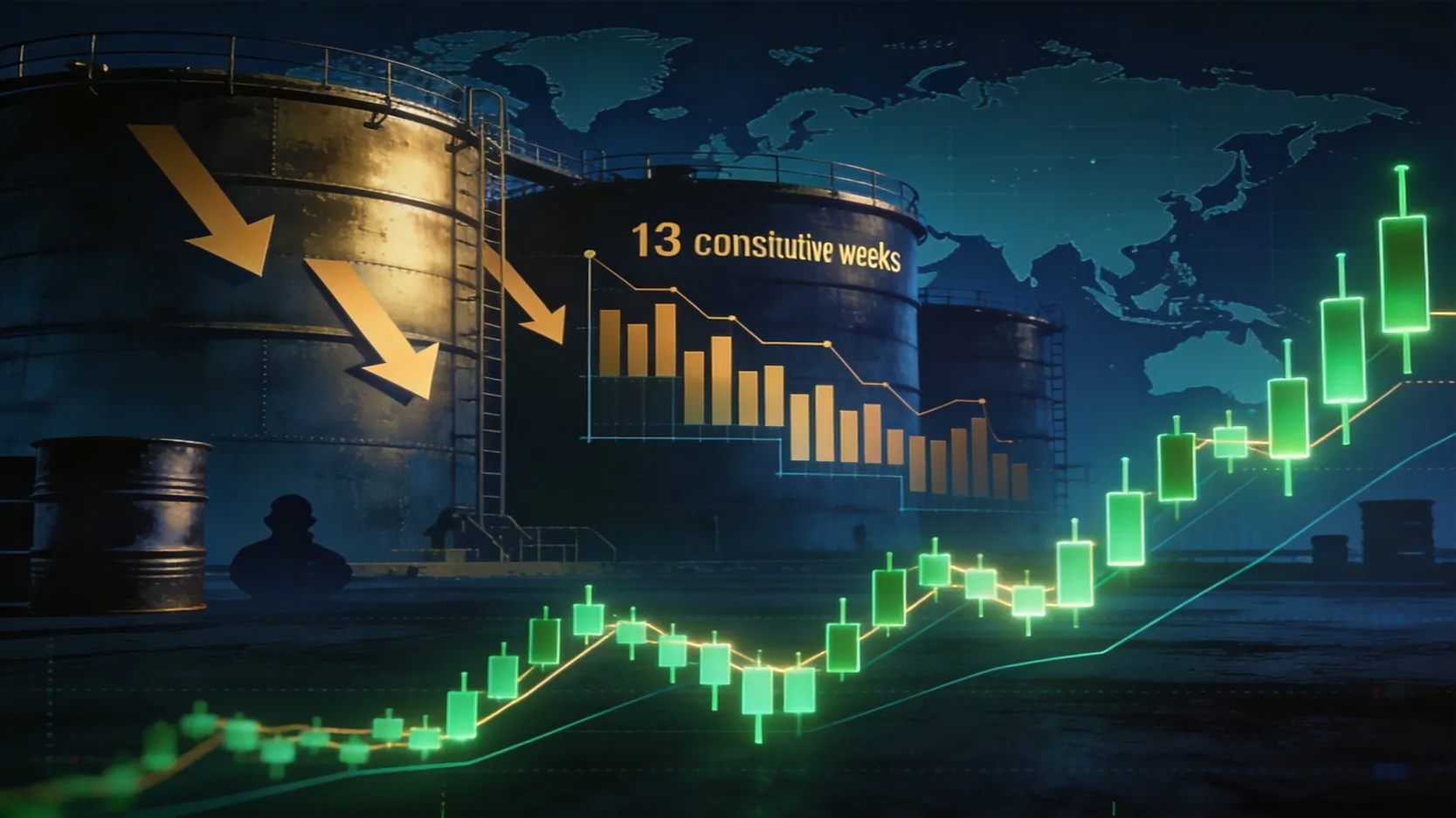
US Crude Oil Inventories Fall for 13 Consecutive Weeks: Are Oil Prices About to Soar? Complete Analysis of the Latest Market Impact in 2026
International oil prices have recently shown signs of rising. Are you also worried about higher living costs? This is closely related to the major news that “US crude oil inventories have fallen for 13 consecutive weeks”. As a key indicator of market supply and demand, the continued decline in this data has drawn significant global attention to future oil price trends. What is causing inventories to keep falling? What chain reactions will this have on your fuel costs, everyday expenses, and investment portfolio? This article provides an in-depth analysis of the significance behind the data, from interpreting the latest official figures to examining the economic impact and personal investment strategies, offering comprehensive market insights.
US Crude Oil Inventories Fall for 13 Consecutive Weeks: Latest Data and Key Facts
To understand the future direction of oil prices, it is essential to first grasp the most important data. US crude oil inventory data is released by two major organisations: the American Petroleum Institute (API) and the US Energy Information Administration (EIA). Among them, EIA data is regarded as more authoritative because it comes from an official government agency.
Summary of the Latest API and EIA Data: How Large Was the Decline?
According to the latest Weekly Petroleum Status Report released by the US Energy Information Administration (EIA), US commercial crude oil inventories fell sharply again last week, exceeding market expectations and marking the 13th consecutive weekly decline. The cumulative decrease has reached tens of millions of barrels, which is relatively rare in recent years. Meanwhile, data released earlier by the industry organisation API also showed a similar downward trend. The consistency between the two reports has reinforced market expectations of tightening supply.
- Official EIA Data: Shows that commercial crude oil inventories (excluding strategic reserves) have continued to decline over the past 13 weeks, with a significant overall decrease.
- Refinery Utilisation Rate: Remains above 90%, indicating strong downstream demand.
- Gasoline and Distillate Inventories: Have also declined or remained stable, reflecting robust end-user consumption.
Comparison with Historical Data: How Significant Is This Decline?
Thirteen consecutive weeks of inventory declines represent more than just a numerical change. They indicate a profound shift in the market’s supply and demand fundamentals. Compared with the average level for the same period over the past five years, current crude oil inventories are clearly low. This significant downward trend is usually interpreted as a strong signal that demand is growing much faster than supply, making it a key fundamental factor supporting higher oil prices.
Why Are Crude Oil Inventories Continuing to Fall? Three Key Driving Factors Revealed
A single data point cannot provide the full picture. The continued decline in crude oil inventories is the result of multiple factors working together. The underlying drivers can be analysed from the perspectives of demand, supply, and policy.
Demand: Peak Summer Fuel Consumption and the Strength of the Global Economic Recovery
Summer is traditionally the peak driving and travel season in the Northern Hemisphere, causing gasoline demand to rise sharply. As the global aviation industry continues to recover in 2026, demand for jet fuel has also provided additional growth momentum. More importantly, despite ongoing challenges, major global economies remain on a recovery path. Increased industrial production and commercial activity mean that overall energy demand remains strong.
Supply: Higher Refinery Capacity and Changes in International Supply Chains
To meet strong summer demand, US refineries are operating at high capacity to convert crude oil into refined products such as gasoline and diesel, directly consuming large volumes of crude oil inventories. On the international supply side, production policies adopted by major oil-producing countries such as OPEC+, as well as geopolitical risks, directly affect global crude oil supply. Current supply growth remains relatively restrained, making the market more vulnerable to shortages.
Policy: Strategic Petroleum Reserve (SPR) Releases and Replenishment Strategies
In recent years, the US government has released oil from the Strategic Petroleum Reserve (SPR) several times to stabilize oil prices. However, current SPR inventories have fallen to their lowest level in decades. The market is closely watching when and how the government will replenish the reserve. Replenishing the SPR means that the government must purchase crude oil from the market, creating additional demand. This could further tighten market supply and become a potential factor affecting medium- to long-term oil prices.
Further Reading (Highly Recommended)
How to Buy Crude Oil Futures? A 2026 Beginner’s Guide to Oil Futures Investment, Oil Price Trend Analysis, and Global Impact
Beginner’s Guide to Commodity Investment: Understanding Futures Trading, Volatility, and Inflation Strategies
How Does Falling Inventory Affect Me? From Fuel Costs to Consumer Inflation
Crude oil is the lifeblood of the modern economy. Its price fluctuations are transmitted through the industrial supply chain and ultimately affect everyone’s daily life. The continued decline in crude oil inventories signals that these effects may soon become more apparent.
Direct Impact on Gasoline Prices: How Much Will My Fuel Costs Increase?
The most immediate impact will be seen on petrol station price boards. Crude oil costs account for approximately 50% to 60% of the final retail price of gasoline. Therefore, when international benchmark crude oil prices such as WTI and Brent rise due to falling inventories and tightening supply, the amount you pay at the pump will almost inevitably increase as well. Thirteen consecutive weeks of inventory declines may indicate that your driving costs will face upward pressure in the coming months.
Chain Reaction on Overall Inflation: A Driver of Broad-Based Price Increases?
The impact of oil prices extends far beyond fuel costs. Transportation expenses are an important component of the cost of all physical goods. From truck deliveries to air freight, fuel is essential. Higher oil prices increase logistics costs, and these expenses are eventually passed on to consumers through higher supermarket food prices, online shopping delivery fees, and the prices of everyday goods. In addition, many industrial products (such as plastics and chemicals) use crude oil as a raw material. Rising energy prices will broadly increase manufacturing costs and become a key force driving overall inflation.
Market Signals and Potential Opportunities Investors Should Monitor
For investors, opportunities often emerge during periods of uncertainty. Crude oil inventory data is an important tool for assessing the energy market cycle. When inventories continue to decline and oil prices trend higher, the following investment opportunities may arise:
- Energy Stocks: The profitability of oil exploration, refining, and oilfield services companies is usually positively correlated with oil prices.
- Energy ETFs: For investors who do not want to select individual stocks, ETFs covering a basket of energy companies provide a convenient way to participate in the market.
- Commodity Futures/CFDs: Experienced investors can use derivatives such as crude oil futures to invest directly in the direction of oil prices. However, their high-risk and high-leverage characteristics must be carefully considered.
Closely monitoring oil price trends and their impact on the broader economy will help you adjust your asset allocation and respond to potential inflation risks.
Frequently Asked Questions About US Crude Oil Inventories (FAQ)
Q: When Is Crude Oil Inventory Data Released Each Week?
A: Under normal circumstances, data from the American Petroleum Institute (API) is released every Tuesday at 4:30 p.m. Eastern Time. The official data from the US Energy Information Administration (EIA), which receives greater market attention, is released every Wednesday at 10:30 a.m. Eastern Time. Investors should note that release times may be postponed due to US federal holidays or special circumstances.
Q: Apart from the US, Which Countries’ Crude Oil Inventories Are Worth Monitoring?
A: Although US inventory data receives the most attention, data from other major economies also provides valuable reference points. China, as the world’s largest crude oil importer, offers an important window into global demand conditions through changes in its commercial and strategic petroleum inventories. In addition, inventory and production data from major OPEC members (such as Saudi Arabia) as well as inventory levels in major consuming regions such as Europe and Japan, have a significant impact on the balance of the global oil market.
Q: What Are “Cushing Crude Oil Inventories”, and Why Are They Important?
A: Cushing is a small town in Oklahoma, US, but it is a key hub in the global oil market. It is the designated delivery location for West Texas Intermediate (WTI) crude oil futures contracts. In other words, all physical deliveries of WTI futures contracts take place there. Therefore, changes in the amount of oil stored in Cushing directly reflect the immediate supply and demand conditions of WTI crude oil. Changes in this data often have an immediate impact on WTI oil prices, making it one of the core indicators closely monitored by traders and analysts.
Q: How Long Will the Rise in Oil Prices Continue?
A: This is a complex question that depends on the interaction of multiple supply and demand factors. Based on the current continued decline in inventories, the tight market supply situation is unlikely to reverse quickly in the short term, and oil prices may remain strong. However, medium- to long-term trends will also depend on whether global economic growth slows, whether major oil-producing countries adjust their output policies, and the progress of the transition to new energy. Continuously monitoring EIA and API inventory data is key to identifying changes in the trend.
Conclusion
In summary, the decline in US crude oil inventories for 13 consecutive weeks is a clear signal of tight market supply and demand. It not only reveals strong demand amid the current global economic recovery but also highlights the challenges facing the supply side. In the short term, this trend may continue to push oil prices higher and place pressure on global inflation. Whether you are an ordinary consumer concerned about fuel costs or an investor seeking market opportunities, gaining a deeper understanding of US crude oil inventory data and monitoring its chain reactions are essential first steps towards making informed decisions in the current complex economic environment.