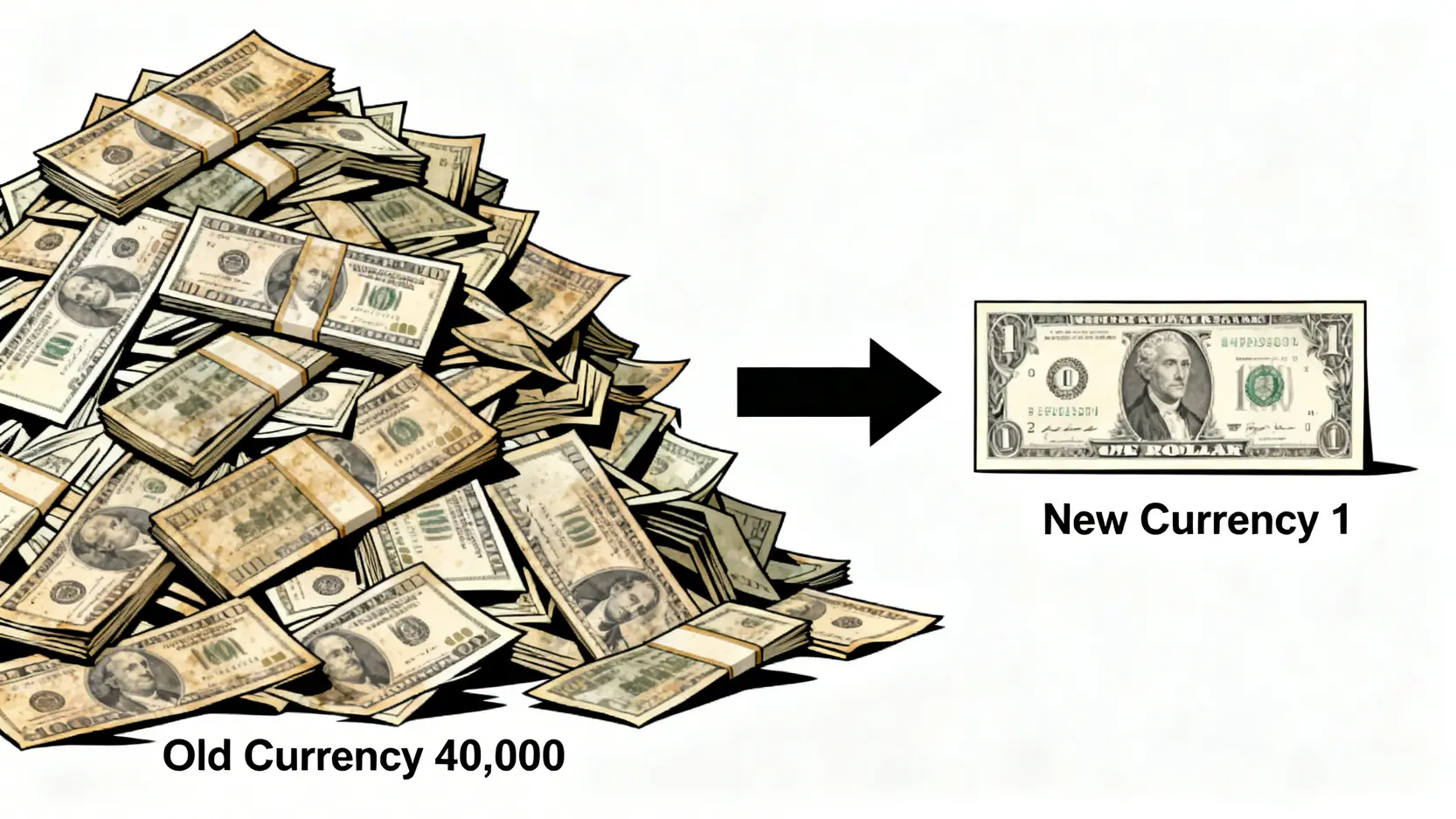
Evolution of TWD Issuance: From a regional currency to legal tender, and toward a digital future.
1949: A Key Reform to Stabilize the Financial System
As mentioned earlier, the 1949 currency reform marked the beginning of the New Taiwan Dollar. At that time, issuance was handled by the Bank of Taiwan (a provincial-level bank), with the primary goal of separating from the unstable financial system and stabilizing prices. Although named the “New Taiwan Dollar”, it was still considered a regional currency in legal terms. This phase of issuance laid the groundwork for Taiwan’s later stability and economic development.
2000: Central Bank Takes Over Issuance and Introduces Modern Anti-Counterfeiting Design
This marked the most significant transformation in the history of the New Taiwan Dollar. In 2000, the “Regulations Governing the Issuance of New Taiwan Dollar by the Central Bank” came into effect, officially transferring issuance authority to the central bank. This move carried several major implications:
- Establishing legal tender status: The New Taiwan Dollar officially became the “national currency”, no longer a regional legal tender.
- Modernized design: Newly issued banknotes shifted focus from political figures to themes reflecting Taiwan’s local identity and cultural diversity, such as education, sports, and ecological conservation.
- Enhanced anti-counterfeiting technology: Advanced security features such as holographic strips, color-shifting ink, hidden text, and windowed security threads were introduced, significantly increasing resistance to counterfeiting.
Since then, all banknotes in circulation have been issued by the “Central Bank”, while older “Bank of Taiwan” notes have gradually been withdrawn and are no longer in circulation.
Further reading (highly recommended)
“2025 Latest” Taiwan Foreign Exchange Reserves Ranking Explained in One Article
Complete Guide to Federal Reserve Rate Decisions: A Simple Breakdown to Understand 2025 Investment Opportunities!
The Future of the Digital New Taiwan Dollar: What Is Central Bank Digital Currency (CBDC)?
With the global wave of financial technology, the New Taiwan Dollar is also moving toward a digital future. The key player in this transformation is the “Central Bank Digital Currency” (CBDC).
CBDC is fundamentally different from cryptocurrencies such as Bitcoin and Ethereum:
- Issuer: CBDC is issued by the central bank, has legal tender status, and is pegged 1:1 to physical currency, offering high stability. Cryptocurrencies are mostly decentralized and highly volatile.
- Legal status: CBDC is a digital form of legal tender, equivalent to the cash in your wallet.
- Purpose: To promote financial inclusion, improve payment system efficiency, strengthen monetary policy tools, and respond to the challenges posed by private digital currencies.
Taiwan’s central bank has completed the second phase of CBDC technical trials and is currently conducting small-scale pilot programs to explore its feasibility in retail payment scenarios. Although there is no official timeline for the full launch of the “digital New Taiwan Dollar”, it is undoubtedly the next major milestone in the development of Taiwan’s currency. For more technical details, you may refer to reports published by Taiwan’s central bank.
Conclusion
In summary, the New Taiwan Dollar is not only a medium of exchange, but also a reflection of Taiwan’s economic development. From the 1949 “40,000 to 1” reform that stabilized the financial system, to the 2000 transition to central bank issuance with modern banknote designs, and now to the active exploration of a digital future through CBDC, Taiwan’s currency continues to evolve with the times. This comprehensive guide aims to provide you with a clear and in depth understanding of “what the New Taiwan Dollar is”.
Frequently Asked Questions About the New Taiwan Dollar (FAQ)
Q: What is the international currency code of the New Taiwan Dollar?
A: The ISO 4217 currency code for the New Taiwan Dollar is TWD, which stands for Taiwan Dollar. This code is used in financial markets and forex trading.
Q: Can the Old Taiwan Dollar still be used or exchanged?
A: No. The Old Taiwan Dollar lost all value after the introduction of the New Taiwan Dollar in 1949. It now only has historical and collectible significance, cannot be used in circulation, and cannot be exchanged for the New Taiwan Dollar.
Q: Where can foreign tourists exchange New Taiwan Dollars most conveniently?
A: For foreign tourists, the most convenient locations are bank counters at airports (such as Taoyuan International Airport), where exchange rates are transparent. In addition, major banks in city areas and licensed money changers can also provide exchange services, but identification such as a passport is required.
Q: Which institution issues the New Taiwan Dollar?
A: Since 2000, the sole legal issuing authority of the New Taiwan Dollar has been the Central Bank of Taiwan. Prior to that, it was issued by the Bank of Taiwan.
Q: Why are NT$200 and NT$2000 banknotes rarely seen in circulation?
A: This is mainly due to usage habits. NT$100, NT$500, and NT$1000 banknotes already meet most daily transaction needs, and ATMs typically dispense these denominations. As a result, NT$200 and NT$2000 banknotes have lower circulation, although they remain legal tender and can be used normally.