Hong Kong TWD Exchange: Bank vs Money Changer Rates

Updated: 2026/03/24  |  CashbackIsland

香港換台幣攻略:銀行vs找換店匯率比較,富邦銀行換錢教學

Hong Kong TWD Exchange Guide: Bank vs Money Changer Rate Comparison, Fubon Bank Currency Exchange Tutorial

Planning a trip to Taiwan and want to exchange TWD cash in Hong Kong, but unsure whether to use a bank or a money changer? The most common question is: which offers a better deal, banks or money changers? Last-minute exchanges may result in “expensive” TWD and affect your travel experience. This article provides an in-depth analysis of exchange rates from major Hong Kong banks (including Fubon Bank TWD rates) and popular money changers, offering a one stop comparison and practical tips to help you find the most cost effective way to exchange currency and save more!


Exchanging TWD Cash in Hong Kong: A Complete Analysis of 3 Main Channels

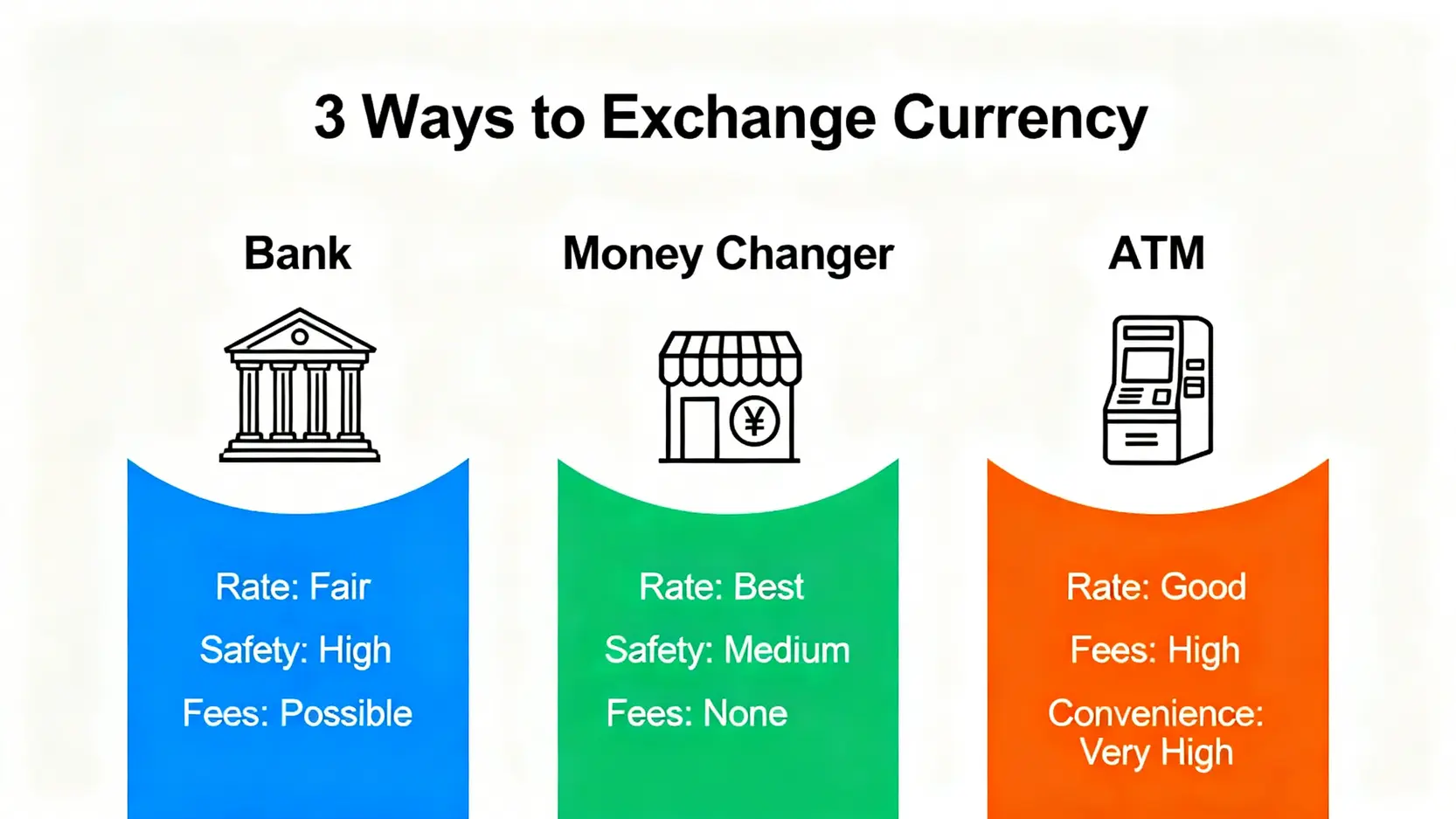
In Hong Kong, there are three main ways to exchange TWD cash: traditional banks, street money changers, and an increasingly popular option — withdrawing cash directly from ATMs in Taiwan. Each method has its own pros and cons, suitable for different types of travelers.

三大換台幣渠道比較圖,分析銀行、找換店及ATM提款在匯率、安全性及手續費上的優劣。

Illustration: Bank vs Money Changer vs ATM, a complete comparison of the three exchange channels.


Exchanging TWD at Traditional Banks: Safe and Reliable but Not Always the Best Rate

Exchanging TWD at traditional banks such as HSBC, Bank of China, and Fubon Bank offers maximum safety and reliability. You do not need to worry about counterfeit notes, and branches are widely available across Hong Kong, making it convenient. For large cash exchanges, banks are often the preferred option. However, there are notable drawbacks:

  • Wider spreads: Due to higher operating costs, banks typically offer less favorable exchange rates, meaning you receive fewer TWD.
  • Possible service fees: Some banks may charge fees for non account holders.
  • Limited availability: TWD is not a major currency, and branches may not have sufficient stock. Large exchanges often require advance booking.


Exchanging TWD at Popular Money Changers: Attractive Rates but Choose Carefully

Money changers such as “Pak Nin” in Central and “Fat Tat Bird” in Sham Shui Po are popular among savvy Hong Kong residents. Their biggest advantage is competitive rates, especially for Asian currencies like TWD, JPY, and THB, often outperforming banks. However, there are a few considerations:

  • Concentrated locations and queues: The best rate shops are usually located in specific areas and often have long queues.
  • Risk of counterfeit notes: While reputable money changers in Hong Kong rarely have issues, always choose licensed and well established shops to avoid potential financial scams.
  • Uncertain business hours: Some money changers close on weekends or public holidays, so check in advance.


Withdrawing TWD from ATMs in Taiwan: A Convenient Alternative

If you have a debit or credit card that supports international withdrawals (such as PLUS or Cirrus), withdrawing TWD directly from ATMs in Taiwan is a very convenient option. You can withdraw cash immediately upon arrival at the airport without carrying large amounts of cash.

Pros:

  • Highly convenient: ATMs are widely available in convenience stores across Taiwan and operate 24/7.
  • Transparent rates: Usually based on the bank’s telegraphic transfer rate on the transaction day, with relatively small spreads.

Cons:

  • High fees: Hong Kong issuing banks typically charge a fixed fee (around HKD 20–50), and Taiwanese banks may also impose additional charges.
  • Daily withdrawal limits: Your bank card may have a daily overseas withdrawal limit, which may not suit trips requiring large amounts of cash.


Further reading (highly recommended)

2026 Beginner Forex Trading Guide: Master Risk Management and Broker Selection for Stable Profits!


Practical Comparison: Bank vs Money Changer Exchange Rates

Instead of theory, actual comparison is key. To determine the best option, you must first understand how to read exchange rate quotes and account for hidden costs.


Understanding Exchange Rates: Cash Selling Rate vs Telegraphic Transfer Rate

When checking bank exchange rates, you will see “buying rates” and “selling rates”. Remember a simple rule: banks always price from a “profit” perspective.

  • Cash Selling Rate: This is the rate at which the bank “sells” foreign currency to you. The lower the number, the more TWD you get for the same amount of HKD, making it more favorable. This is the key rate when exchanging cash!
  • T/T Selling Rate: This rate applies to bank transfers and is usually better than the cash rate, but not relevant for cash exchange.
  • Cash Buying Rate: This is the rate at which the bank buys foreign currency from you. When converting leftover TWD back to HKD after your trip, this is the rate to consider.


Fubon Bank vs Money Changer TWD Rate Comparison Table

To help you clearly see the differences, below is a simulated comparison table (note: rates fluctuate daily and are for reference only). Assume you are exchanging HKD 5,000.

Exchange Channel Cash Selling Rate (HKD to TWD) TWD Received

Remarks

Fubon Bank (Hong Kong) 4.05 5000 * 4.05 = 20,250 Stable rates, but check whether any service fees apply. You can check Fubon Bank’s official exchange rates here.
Pak Nin Money Changer 4.12 5000 * 4.12 = 20,600 Highly competitive rates, but queues may be required.
Fat Tat Bird Money Changer 4.11 5000 * 4.11 = 20,550 Online booking required, with transparent rates.

*The above data is hypothetical. Actual exchange rates are subject to official announcements.


Hidden Costs: A Full Breakdown of Fees Across Channels

Beyond quoted rates, hidden costs are a key factor in determining your total expense:

  • Banks: If you are not an account holder, some banks may charge a fee of HKD 50–100. Always confirm before exchanging.
  • Money changers: Most reputable money changers do not charge additional fees, as their profit is already built into the exchange rate spread.
  • Taiwan ATM withdrawals: This option carries the most hidden costs. Typically, it involves “Hong Kong bank fee (around HKD 20–30) + Taiwan bank fee (around TWD 100)”. The more withdrawals you make, the higher the total cost.


Before Exchanging TWD: 3 Money-Saving Tips and Key Considerations

After understanding the basics, the following practical tips can help you save more and exchange more efficiently.

Best Timing: How to Assess Exchange Rate Trends?

For most travelers, accurately predicting exchange rates like forex trading is nearly impossible. A more practical approach is:

  1. Monitor in advance: Start observing rates one to two weeks before departure to understand recent highs and lows.
  2. Exchange in batches: If you are concerned about fluctuations and need a large amount, split your exchange into one or two transactions to spread risk.
  3. Avoid holidays: Rates at banks and money changers are usually less favorable before or after weekends and long holidays. Try to exchange on weekdays.


Small vs Large Amount Strategy: How to Exchange More Efficiently?

The amount you exchange directly affects your optimal strategy:

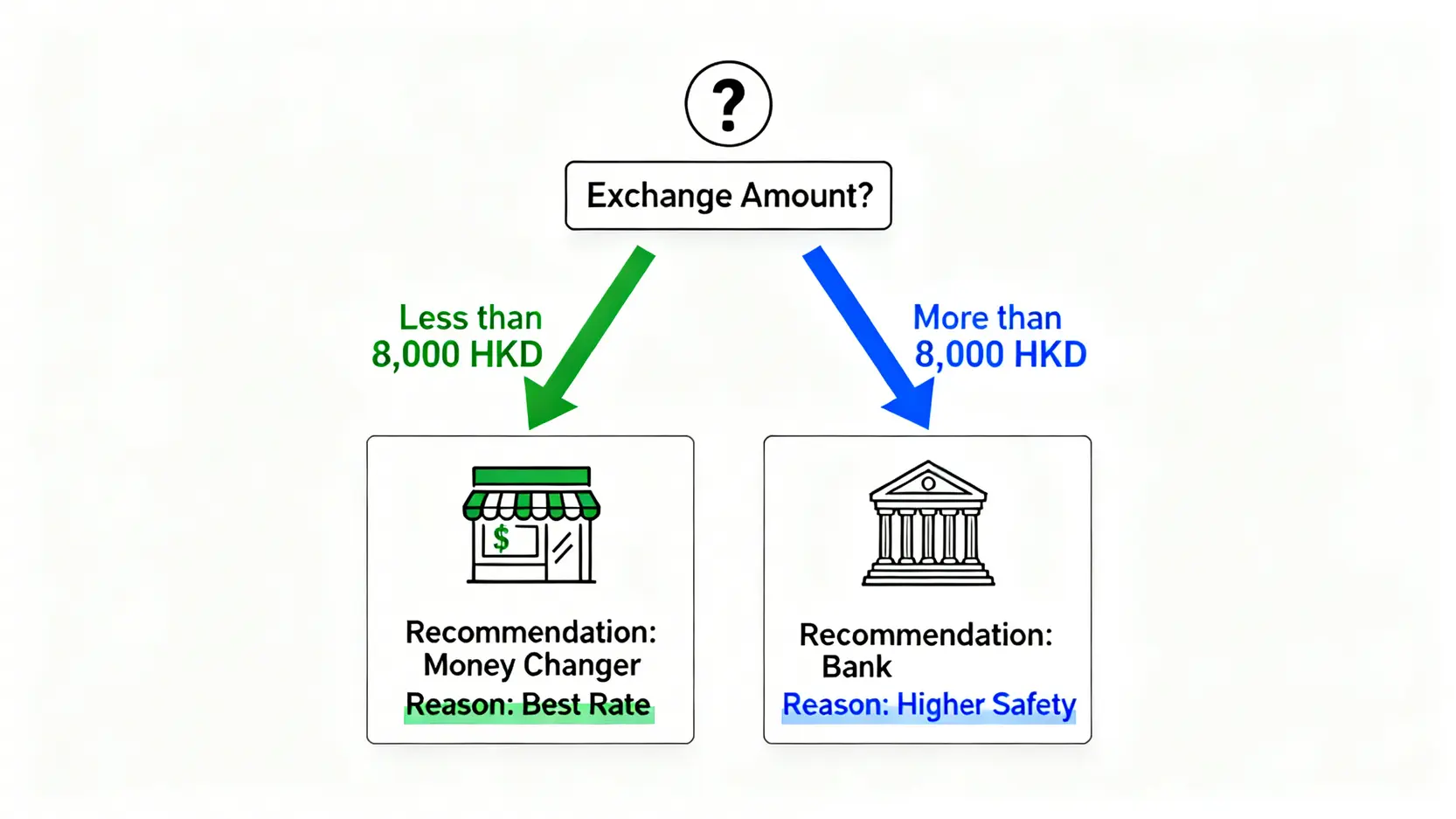
換台幣金額決策流程圖,指南根據兌換金額是多於還是少於8000港元來選擇銀行或找換店。

The amount you exchange directly affects your optimal strategy:

  • Small amounts (below HKD 8,000): Choose reputable money changers. The amount is manageable, and the benefit of better rates is more significant.
  • Large amounts (above HKD 8,000): Prioritize safety and consider large banks such as Fubon Bank. Although rates may be slightly worse, you avoid the risk of carrying large amounts of cash and receive official receipts. You may exchange most funds at a bank and top up a small amount at a money changer.


Booking and Business Hours: Preparation Before Exchanging

Nothing is more frustrating than finding a place closed. Before you go:

  • Call and reserve: Whether using a bank or a money changer, if exchanging a larger amount (e.g. above HKD 10,000), call ahead to check availability and reserve.
  • Check business hours: Especially for weekends and public holidays.
  • Use online tools: Some money changers offer online booking systems to lock in rates and avoid queues.


FAQ

Q: What documents are required to exchange TWD in Hong Kong?

A: Generally, you only need your Hong Kong ID (HKID). For larger amounts (usually tens of thousands of HKD or more), banks or money changers may request additional documents such as proof of address under anti-money laundering regulations.

Q: Is it better to exchange in Hong Kong or at Taiwan airport?

A: Strongly recommended to exchange in Hong Kong. Airport rates worldwide are typically unfavorable, and Taiwan airports are no exception. Airport exchange counters have higher operating costs, resulting in wider spreads. Only exchange small amounts for emergencies such as transport.

Q: Why do money changers usually offer better rates than banks?

A: There are two main reasons. First, money changers have lower operating costs (for example rental and man power) compared to large banks. Second, their business model focuses on currency exchange, allowing them to offer more competitive rates while earning through volume.

Q: Do I need to make a reservation to exchange TWD at Fubon Bank?

A: For small amounts (a few thousand HKD), reservations are usually not required. However, for amounts above HKD 10,000, it is strongly recommended to call the branch in advance to check TWD availability and make a reservation.

Q: Is it cost-effective to use a credit card in Taiwan?

A: Credit card payments are widely accepted at large merchants and restaurants in Taiwan. Exchange rates are generally reasonable, but most cards charge around 1.95% foreign transaction fees. The total cost may be similar to ATM withdrawals, but it offers greater convenience. Consider using cards with fee waivers or high overseas spending rewards.

Conclusion

In summary, there is no one-size-fits-all answer when exchanging TWD cash in Hong Kong. The best choice depends on your personal needs. If you are looking for the most cost-effective bank vs money changer rates and are exchanging smaller amounts, reputable money changers are the best option. If you prioritize safety, convenience, or need to exchange large sums, checking Fubon Bank’s TWD rates and visiting a branch is a more secure choice. The smartest approach is to combine multiple methods, such as exchanging part of your funds at a money changer in Hong Kong and carrying a card with low overseas withdrawal fees as backup, ensuring a smooth and cost-efficient trip!

编者
Evan Lin

Evan Lin

我是Evan Lin,从大学时期开始接触外汇交易,至今已有多年实战经验,熟悉技术分析与EA策略,热衷于研究市场脉动与风险管控,喜欢分享实战经验和交易技巧,和大家一起学习、一起进步!

If you liked this article, please share it!

Related Articles

  • US Oil Inventories Fall 13 Weeks: Will Prices Surge?
    US Crude Oil Inventories Fall for 13 Consecutive Weeks: Are Oil Prices About to Soar? Complete Analysis of the Latest Market Impact in 2026 International oil prices have recently shown signs of rising. Are you also worried about higher living costs? This is closely related to the major news that...
    2026 年 7 月 20 日
  • WTI Crude Oil at $80: 5 Key Drivers and Strategies
    Understanding the US$80 WTI Crude Oil Threshold: Five Core Factors Influencing Oil Prices and the Latest Investment Strategies Recently, global market attention has once again turned to the energy market, with WTI crude oil prices repeatedly fluctuating around the US$80 threshold as bulls and bears engage in an intense battle....
    2026 年 7 月 20 日
  • NOK/USD Analysis: How Energy Prices Drive the Krone
    NOK/USD Energy Market Analysis: How Do Oil and Natural Gas Prices Drive the Norwegian Krone? The Norwegian krone (NOK) is one of the currencies most heavily influenced by energy prices worldwide, and its exchange rate against the US dollar (USD) is often closely linked to international oil and natural gas...
    2026 年 7 月 20 日
返回顶部