Yen Intervention Trading: BOJ Reversal Timing Guide

Updated: 2026/06/03  |  CashbackIsland

jpy-intervention-reversal-trading

Timing for Reverse Trading During Japanese Yen Intervention: Capturing the Profit Turning Point of Bank of Japan Intervention

When the Bank of Japan and the Japanese government jointly intervene in the foreign exchange market, severe market volatility often follows. Historical experience shows that when artificial intervention moves against fundamental trends, it often becomes “bait” in the eyes of short sellers. How to accurately capture timing for reverse trading during Japanese yen intervention has become an essential lesson for forex traders. Recently, reversals in capital flows triggered by carry trade unwinding have demonstrated the butterfly effect that yen appreciation can create, even directly leading to extreme Japanese stock market crashes. This article begins with the historical timing of Bank of Japan foreign exchange interventions, deeply analyzing how yen appreciation triggers global asset sell-offs while exploring practical trading logic to help you capture profit turning points amid extreme volatility. 

The Historical Timing of Bank of Japan Foreign Exchange Intervention: Understanding Policy Floors and Warning Signals

Foreign exchange intervention has never been an impulsive decision. Instead, it is a carefully calculated policy tool. The first step in identifying timing for reverse trading during Japanese yen intervention lies in understanding the operational logic of Japan’s Ministry of Finance, which formulates policy, and the central bank, which executes policy. Official intervention usually involves a buildup of sentiment and economic considerations. Investors who can identify these signals in advance are able to position themselves more calmly for future trading opportunities.


Key Indicators for Distinguishing Verbal Intervention From Actual Market Action

Foreign exchange intervention generally occurs in two stages: verbal warnings and actual market operations. When exchange rates experience rapid and one-sided depreciation, Japanese officials typically release statements of varying intensity. The market categorizes these warnings into several levels:

  • Initial attention: “We are closely monitoring foreign exchange market fluctuations.” This is usually viewed as routine commentary and receives a muted market reaction.
  • Stronger warning: “Exchange rates should reflect economic fundamentals, and excessive volatility is undesirable.” Speculators may temporarily slow their activity.
  • Highest alert: “We do not rule out any options and are prepared to take appropriate action at any time.” This represents a strong indication that actual intervention could occur at any moment.

日本央行外匯干預警告級別示意圖

Escalation Stages of Bank of Japan Foreign Exchange Intervention Warnings

However, to accurately identify true reverse trading opportunities, traders must monitor indicators of actual intervention. One important signal is the Bank of Japan conducting “rate checks” with major commercial banks, which often serve as a precursor to real intervention activity. Looking back historically, Japanese authorities attempting to support the yen frequently launch surprise interventions during periods of lowest market liquidity, such as the late New York session or early Asian session, in order to maximize market shock effects.


The Fundamental Conflict Between US-Japan Interest Rate Differentials and Japan’s Fiscal Policy

Ultimately, exchange rates reflect the relative strength of two economies’ fundamentals. The primary reason for prolonged yen weakness has been the large interest rate differential between the US and Japan. Even though the Bank of Japan gradually normalized monetary policy between 2024 and 2026, exiting negative interest rates and even resuming rate hikes, the yen’s role as a low-yield currency has not fundamentally changed relative to the high-interest-rate environment maintained by the Federal Reserve.

When authorities conduct direct intervention without simultaneous significant tightening of Japan’s domestic fiscal and monetary policies, simply selling foreign exchange reserves to buy yen usually produces only temporary appreciation. This explains why many experienced forex traders view official intervention to support the yen as an excellent opportunity for reverse positioning by shorting the yen again, effectively buying USD/JPY. Once intervention-driven sentiment fades, capital flows typically return toward higher-yield assets, causing exchange rates to resume their original depreciation trend after a temporary pullback.


Further Reading (Highly Recommended)

Beginner’s Guide to Japanese Government Foreign Exchange Intervention: Conditions, History, and Market Impact Explained

Does Bank of Japan Yen Intervention Work? Understanding the Effects of Intervention and the Future Direction of the Yen


Carry Trade Unwinding Risks and Chain-Reaction Effects

Beyond simple currency speculation, official intervention conceals deeper structural market risks, particularly the risks associated with Japanese yen carry trade unwinding. Once triggered, the effects extend far beyond the foreign exchange market and rapidly impact global stock and bond markets. 

How Rapid Yen Appreciation Triggers Global Asset Sell-Offs

For many years, global hedge funds, multinational institutions, and even the famous Japanese retail investor group known as “Mrs. Watanabe” have borrowed low-interest-rate yen to invest in higher-yield overseas assets, such as large US technology stocks, emerging market high-yield bonds, or high-dividend investment products. This carry trade strategy, which involves borrowing cheaply to buy higher-yielding assets, is highly profitable when exchange rates remain stable or the yen continues weakening. However, the entire strategy depends on the assumption that the yen will not appreciate sharply.

When the Bank of Japan intervenes unexpectedly, or when global macroeconomic data, such as weak US nonfarm payroll numbers, trigger expectations of aggressive Federal Reserve rate cuts, causing the yen to surge rapidly within a short period, the funding costs of carry trades rise dramatically. To prevent severe foreign exchange losses and avoid margin call pressures, institutions are forced to buy back yen to repay their debts, creating the feared carry trade unwind.

This process creates a dangerous “yen appreciation spiral”: yen appreciation triggers stop-losses and forced unwinding, institutions sell overseas liquid assets to buy back yen, which further strengthens the yen. This liquidity squeeze is one of the key drivers of global financial turbulence.

日元升值引發的套利平倉循環流程圖

The Carry Trade Unwinding Spiral Triggered by Yen Appreciation


How US and Japanese Equities Are Impacted During Carry Trade Liquidation Waves

During these indiscriminate liquidation waves, the assets hit hardest are usually those with the best liquidity and the strongest prior gains. When hedge funds aggressively withdraw capital, major US technology stocks often become the primary “cash machines”, leading to sharp pressure on the US technology sector. However, the Japanese domestic market often suffers even more severely.

For Japanese equities, yen depreciation has historically served as a major profit engine for export-oriented companies and a core reason for foreign capital inflows into Japanese stocks. Once the yen appreciates sharply, these two support pillars collapse instantly. Future earnings forecasts and currency translation gains for multinational corporations are revised sharply downward, while foreign investors accelerate capital outflows due to exchange rate volatility concerns. This often becomes the direct trigger for Japanese stock market crashes. Therefore, when evaluating reverse trading opportunities, investors must not focus solely on exchange rates, but also closely monitor the breakdown of cross-market asset correlations. 

Further Reading (Highly Recommended)

Is a Yen Carry Trade Unwinding Wave Coming? Understanding the Causes of Rapid Yen Appreciation and Its Global Impact

USD/JPY Breaks Above 160! A Complete Analysis of Japanese Government Intervention Triggers and Trading Strategies


Practical Trading Framework: Reverse Strategies and Entry Points for Shorting Japanese Stocks and Going Long on the Yen

After understanding the macroeconomic background and institutional behavior patterns, the next step is to establish a practical trading framework. Precisely utilizing reverse strategies involving short Japanese equities and long yen positioning is a powerful tool many experienced traders use to generate excess returns during extreme market conditions. However, success depends entirely on proper timing. 

Emotional Price Explosions During the Initial Intervention Phase and Avoiding Premature Entries

When official foreign exchange intervention begins, exchange rates often experience violent moves of hundreds of pips within a very short period. At this stage, market sentiment becomes extremely tense and liquidity evaporates instantly, causing market makers to widen spreads aggressively. Blindly chasing momentum by shorting USD/JPY or attempting to catch falling knives through aggressive buying carries extremely high risk and can easily result in stop-losses being triggered. The wiser approach is to remain patient, allow the initial emotional reaction to unfold, and wait for the market to reestablish a new supply-demand equilibrium.


Positioning for Shorts After Confirming Weak Rebounds

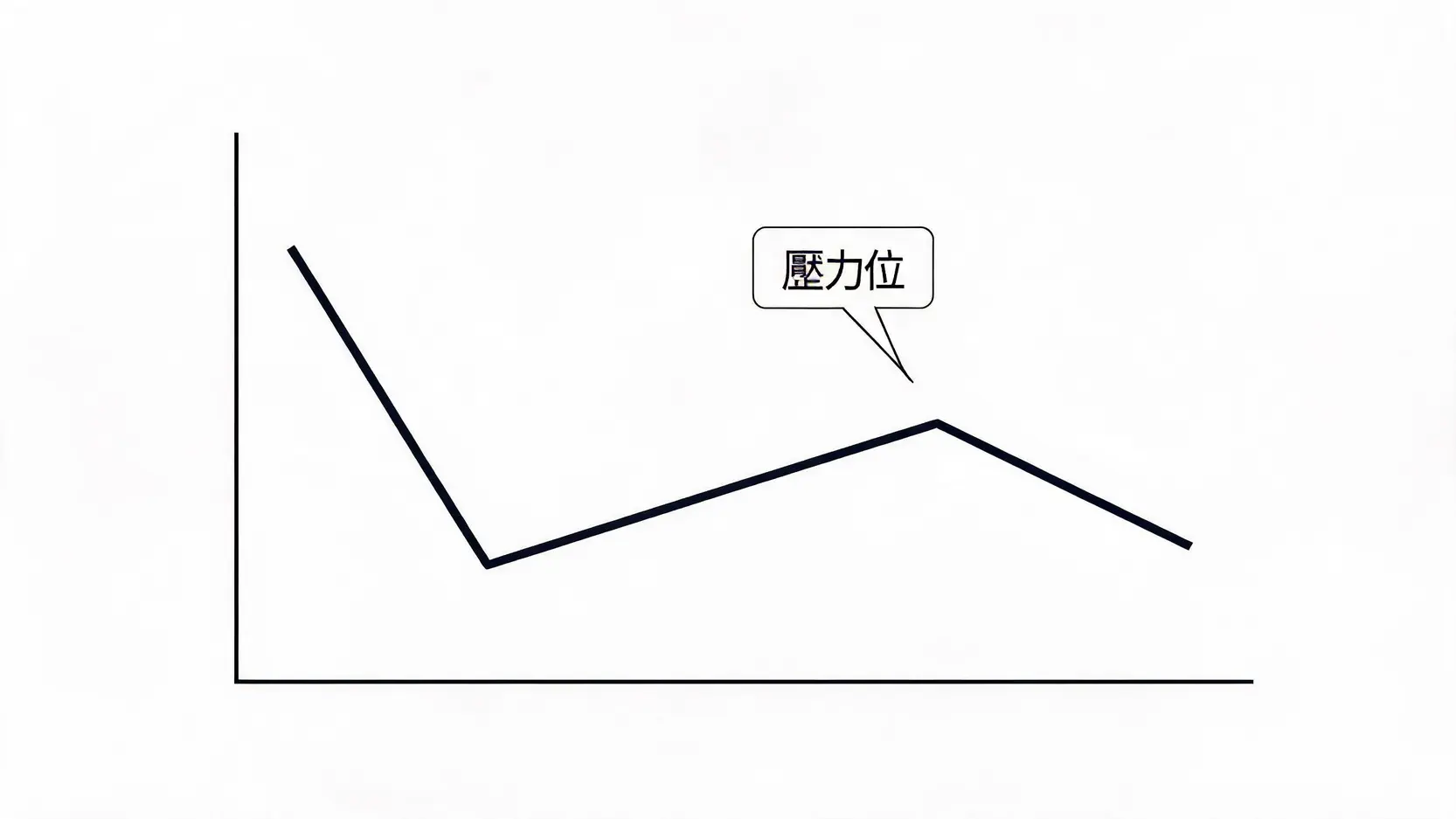
The true timing for reverse trading during Japanese yen intervention usually emerges within 24 to 72 hours after intervention occurs. If the intervention is fundamentally counter-trend, meaning that broader economic conditions and interest rate differentials do not support sustained yen strength, USD/JPY often begins gradually recovering after the sharp initial decline. If the exchange rate rebounds toward the 50% or 61.8% Fibonacci retracement levels of the intervention-driven decline while showing clear overhead resistance and declining trading volume, this creates an excellent entry opportunity. At this stage, investors can position themselves by once again shorting the yen through long USD/JPY positions, betting that exchange rates will return to their fundamental trend.

日元干預後反彈無力的做空時機示意圖

Technical Positioning Opportunities After Post-Intervention Rebounds Lose Momentum

Conversely, if the intervention coincides with a genuine shift in central bank monetary policy while global markets simultaneously experience large-scale carry trade unwinding, traders should decisively reverse their thinking. In such scenarios, adopting a strategy of going long the yen while simultaneously shorting Japanese stock index futures becomes more appropriate in order to capitalize on the dual-collapse effects caused by massive foreign capital outflows.

To distinguish between these market environments more clearly, investors may refer to the following comparative indicators:

Evaluation Aspect Short-Term Artificial Intervention

Genuine Trend Reversal

US-Japan Interest Rate Differential Remains Widely Divergent With No Significant Narrowing The Federal Reserve Begins Rate Cuts or Japan Implements Sustained Rate Hikes
Capital Flows Carry Trades Rapidly Resume After Temporary Risk Aversion Large-Scale Carry Trade Unwinding and Structural Foreign Capital Outflows Emerge
Exchange Rate Technical Structure Sharp Appreciation Followed by a Gradual Reversal of Most Gains

Breaks Through Key Moving Averages and Forms a Stable Downtrend Channel


Using Forex Options to Control Reverse Trading Risks

During extreme market conditions, risk management is always the top priority. Directly trading spot positions or using highly leveraged margin trading can result in excessive losses caused by slippage due to liquidity shortages. In such situations, forex options become an extremely powerful investment tool that combines both hedging and offensive capabilities. By purchasing call options or put options, investors can strictly limit maximum losses to the premium paid while retaining unlimited profit potential from participating in major market volatility.


Frequently Asked Questions (FAQ): How Retail Investors Can Avoid Short Squeeze Traps and Capture Timing for Reverse Trading During Japanese Yen Intervention

When does the Bank of Japan usually conduct actual intervention?

Japanese authorities apply strong tactical considerations when selecting intervention timing, preferring to act during periods of lower market liquidity, such as the early Asian opening session or the late New York session, in order to maximize market impact with minimal capital deployment. In addition, if exchange rates move aggressively in one direction over a short period and reach major psychological round-number levels, the probability of official intervention increases significantly.

How can investors determine whether yen appreciation represents a genuine trend reversal or merely short-term intervention?

This requires adopting a broader perspective and examining the long-term direction of monetary policy in both countries. If the Federal Reserve maintains high interest rates while the Bank of Japan merely conducts intervention through the consumption of foreign exchange reserves, the impact is usually temporary. Only when the Federal Reserve clearly enters a rate-cutting cycle while the Bank of Japan firmly advances monetary normalization does yen appreciation truly possess the conditions for a long-term trend reversal.

What tools can ordinary investors use to participate in reverse yen trading?

There are various tools available in the market. The most direct methods include forex margin trading and forex futures. For investors unfamiliar with margin mechanisms, currency ETFs, such as long or inverse yen ETFs, may also be considered. Investors seeking exposure to declines in Japanese equities may consider shorting Nikkei 225 futures or purchasing inverse Japanese equity ETFs. Regardless of the tool used, leverage must always be managed strictly.


How Should Investors Adjust Equity Positions in Response to Carry Trade Unwinding Risks?

When the market shows clear signals of carry trade unwinding and large-scale capital outflows, investors should immediately reassess their portfolios and moderately reduce exposure to high price-to-earnings technology stocks and Japanese equities with high levels of foreign ownership. Investors may consider reallocating capital toward defensive utility sectors, high-grade short-duration government bonds, or increasing cash positions while patiently waiting for liquidity conditions to stabilize.


Conclusion: Achieving Stable Profits During Global Asset Sell-Offs Triggered by Yen Appreciation

The battle within foreign exchange markets resembles a war without gunfire. Capturing timing for reverse trading during Japanese yen intervention is not simply about guessing the precise level of official defense lines. Instead, it requires comprehensive evaluation of the fundamental divergence between US and Japanese monetary policies, as well as the hidden capital flows associated with carry trade unwinding beneath the surface. History has repeatedly proven that while artificial market intervention can trigger short-term chaos and speculative shakeouts, asset pricing ultimately remains governed by macroeconomic fundamentals.

For mature and rational traders, the most sophisticated strategy is to avoid blindly confronting extreme market emotions during intervention events themselves. Learning to wait for panic to subside, for positions to redistribute, and for trends to become clearer before entering trades based on disciplined risk-reward analysis is the true long-term path toward avoiding short squeeze traps and achieving consistent profitability. When facing the potential threat of global asset sell-offs and simultaneous collapses in equities and currencies, maintaining calm analytical judgment and highly flexible strategic planning will be the greatest key to emerging successfully from financial market turbulence.

编者
Evan Lin

Evan Lin

我是Evan Lin,从大学时期开始接触外汇交易,至今已有多年实战经验,熟悉技术分析与EA策略,热衷于研究市场脉动与风险管控,喜欢分享实战经验和交易技巧,和大家一起学习、一起进步!

If you liked this article, please share it!

Related Articles

  • US PPI Misses Forecast: Is Inflation Cooling?
    US PPI Comes in Below Expectations: Is Inflation Cooling? Understand the Impact on the Stock Market, Interest Rate Hikes, and Your Wallet The recently released US Producer Price Index (PPI) once again came in below market expectations, sparking optimism that inflation is cooling. What exactly does this key US PPI...
    2026 年 7 月 21 日
  • PPI vs CPI: What Rising Inflation Means for Your Money
    PPI and CPI Surge: Is the Inflation Monster Coming? Understand the Two Key Indicators and Protect Your Wallet! Have you recently felt that your money is worth less and less, with the price of everything rising except your salary? Everyone is talking about “inflation”, but where exactly does this monster...
    2026 年 7 月 21 日
  • Oil Prices and Currency Pairs: Which Currencies Benefit?
    When Oil Prices Rise, Which Currencies Benefit? Understanding Investment Strategies for Crude Oil Currency Pairs What Are Crude Oil Currencies? Uncovering the Relationship Between Oil Prices and Forex As volatility in the global energy market intensifies, every movement in crude oil prices affects the foreign exchange market. For perceptive investors,...
    2026 年 7 月 21 日
返回顶部