HK Market Maker Guide: HKEX Rules & Quoting Hours

The Complete Guide to Hong Kong Market Makers: Understanding HKEX Requirements, Core Responsibilities, and Quoting Hours in One Article
In Hong Kong, an international financial center, every smooth transaction in the financial market is supported by a group of unsung heroes behind the scenes, “market makers” (Market Maker), commonly known as “dealers”. They are the heart of market vitality, ensuring the liquidity of assets. However, behind this role lies strict market maker responsibility (Market Maker Obligation). Do you clearly understand what Hong Kong Exchanges and Clearing market maker requirements must be met to become a qualified market maker? And how the “dealer quotation time” they must comply with operates? This article will provide a comprehensive analysis of the core responsibilities, application qualifications, and key quotation rules of Hong Kong market makers, as well as their irreplaceable importance to the market, helping you gain a deeper understanding of the core framework of how the Hong Kong financial market operates.
What Is a Market Maker? The Role and Importance in the Hong Kong Market
A market maker, literally speaking, is someone who “creates the market”. They are exchange-recognized participants, usually securities firms or financial institutions with strong capital. Their core task is to simultaneously provide a bid price and an ask price for specific financial products (such as stocks, ETFs, options, and others), thereby creating continuous trading opportunities for the market.
Definition: The Fundamental Difference Between Market Makers and Ordinary Investors
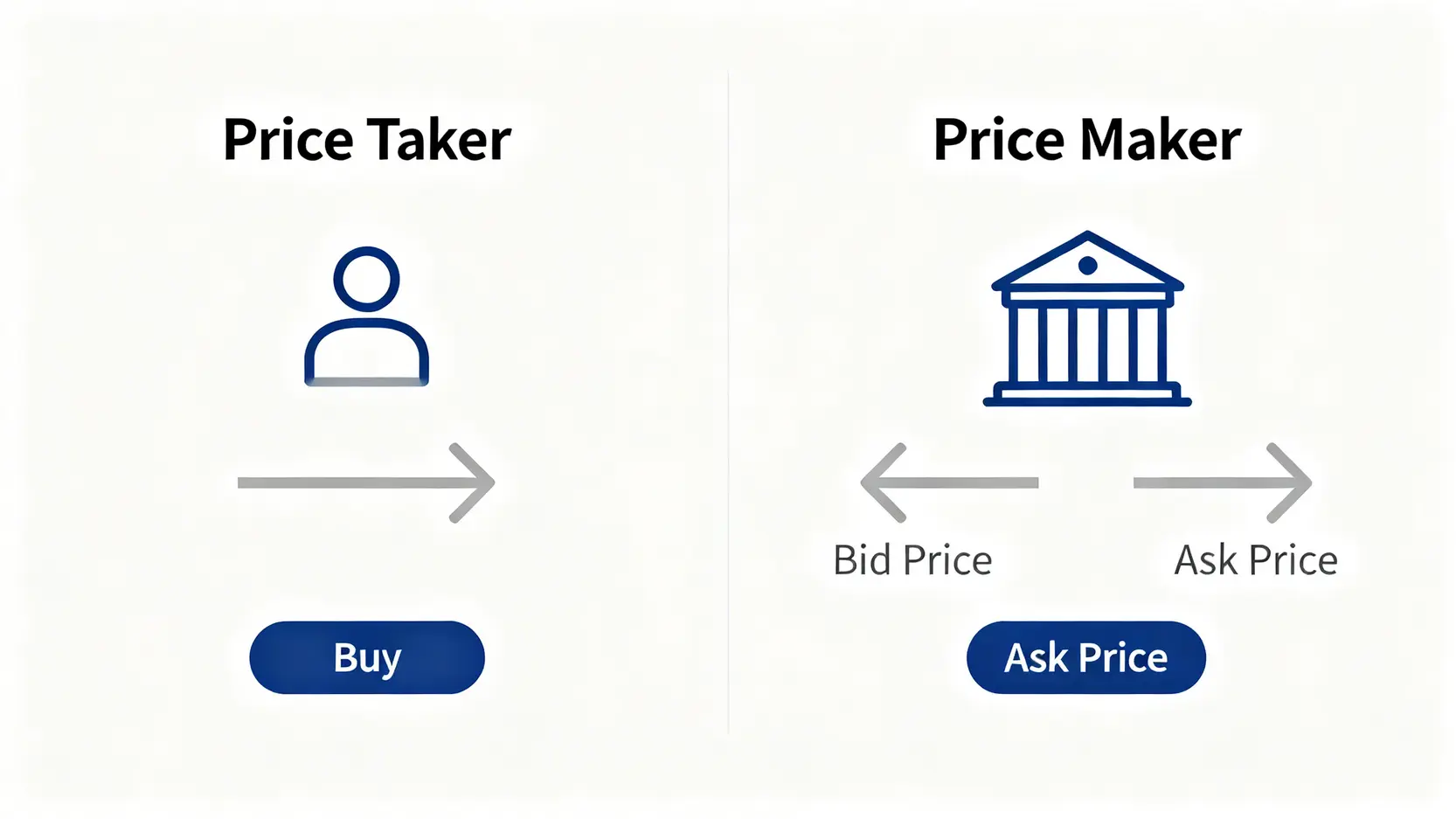
Ordinary investors enter the market with a one-sided objective: either to buy or to sell. Their trading behavior is passive, waiting for a suitable counterparty to appear in the market. Market makers are completely different. They are active participants in the market, and the fundamental difference lies in their obligation to provide two-sided quotes.
- Ordinary investors: Decide when and at what price to buy or sell based on their own judgment and act as “price takers”.
- Market makers (dealers): Regardless of market conditions, they must simultaneously post bids and ask quotes and act as “price makers”. They cannot refuse a trade. As long as their quoted price is accepted by the market, they must fulfill the trading obligation.

You can imagine a market maker as a currency exchange shop. Whether you want to exchange Hong Kong dollars for US dollars or US dollars for Hong Kong dollars, they are always ready to provide a quote and complete the transaction. This constant readiness forms the basic liquidity of the market.
Why Does the Market Need Market Makers? The Key to Improving Market Liquidity and Stability
A market without market makers is like a gear without lubricant, making operations extremely stiff. Especially for products with relatively low trading activity, investors may face the situation of “unable to buy when wanting to buy and unable to sell when wanting to sell”. The existence of market makers solves this problem.
- Improve market liquidity: their continuous quotes ensure there is always a tradable counterparty in the market, allowing investors to buy and sell at any time and greatly reducing waiting costs.
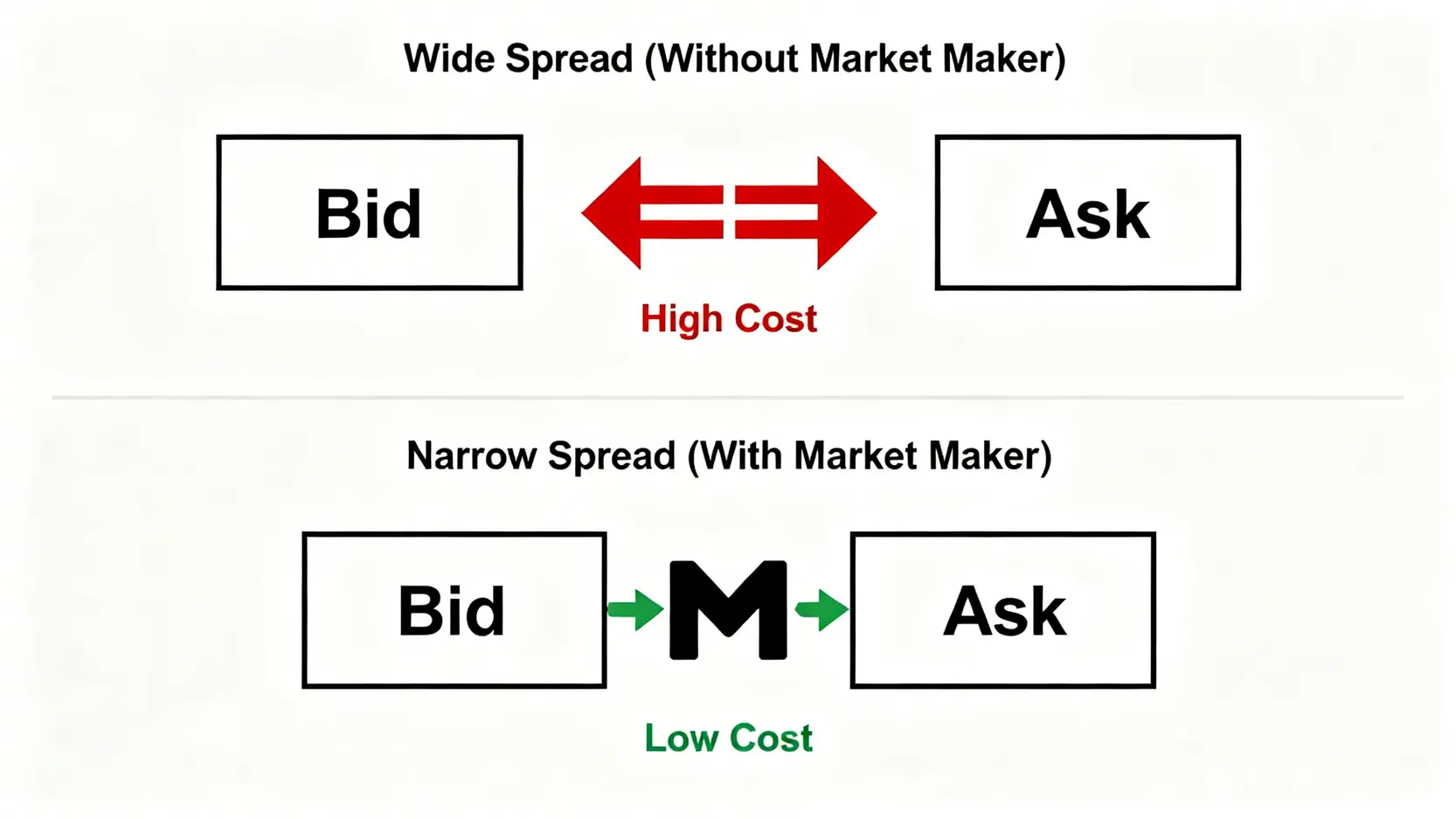
- Narrow the bid-ask spread: competition among market makers encourages them to provide more attractive quotes, naturally narrowing the difference between bid and ask prices and reducing investors’ transaction costs.
- Stabilize market prices: when panic selling or irrational buying occurs, the two-sided quoting obligation of market makers helps absorb part of the buying or selling pressure, preventing drastic and disorderly price fluctuations and acting as a “stabilizing force”.

Further Reading (Highly Recommended)
What Is the S&P500? Beginner Investment Guide: Understanding Components, ETFs, and How to Buy
Core Responsibilities of HKEX Market Makers (Market Maker Obligation Hong Kong)
In Hong Kong, becoming an HKEX-approved market maker is not easy. Institutions must undertake a series of strict legal and contractual responsibilities collectively known as “Market Maker Obligation”. These responsibilities ensure that market makers truly contribute to the market rather than simply engaging in speculation.
Continuous Quoting Responsibility: Key “Dealer Quoting Hours” and Frequency Requirements
This is the most critical responsibility of a market maker. They cannot quote prices or leave the market at will. HKEX has clear rules regarding this.
- Quoting hours: Market makers must continuously provide two-sided quotes during the “dealer quoting hours” specified by the exchange. This period usually covers most of the trading session, for example from five minutes after market open until market close.
- Quoting frequency: During this period, market makers must maintain their quotes in the market for more than a certain percentage of time, such as 95 percent or higher. This means they cannot withdraw orders or remain offline for long periods.
- Quote size: Quotes must not only exist but must also reach a certain minimum quote size, ensuring that a certain level of trading demand can be met.
These strict time and frequency requirements ensure that the market always maintains basic liquidity and form the foundation of fulfilling “market maker responsibility”.
Maintaining a Reasonable Spread: Ensuring Fair Trading in the Market
If a market maker posts an excessively large bid-ask spread, for example if a stock priced at 10 dollars has a bid of 9 dollars and an ask of 11 dollars, such “liquidity” becomes meaningless to investors because the trading cost is extremely high. Therefore HKEX requires market maker quotes to remain within a “reasonable spread” range.
- Maximum spread limit: The exchange sets a maximum allowable spread for different products. Market maker quotes cannot exceed this limit.
- Price linkage: Market maker quotes must closely follow the actual market transaction price or the underlying asset price movement and cannot deviate from the market.
This obligation ensures that the liquidity provided by market makers is of “high quality”, truly reducing investors’ transaction costs and maintaining fairness in the market.
Differences in Responsibilities for Different Financial Products (such as ETFs, options, and derivatives)
For different types of financial products, HKEX market maker requirements also differ because their characteristics and complexity vary:
| Financial Product Type | Core Market Maker Responsibility |
Challenges and Difficulties |
| Equity Index ETF | Ensure That the Market Trading Price of the ETF Closely Tracks Its Net Asset Value (NAV), Preventing Significant Discounts or Premiums. |
Need to Monitor the Price Movements of a Basket of Component Stocks in Real Time and Efficiently Conduct Creation and Redemption Operations to Manage Inventory. |
| Stock Options | Provide Continuous Two-Sided Quotes for Option Contracts With Different Expiry Dates and Different Strike Prices. | Involves Complex Pricing Models (Such as the Black-Scholes Model) and Risk Hedging (Greeks), With Extremely High Requirements for Computing Capability and Risk Management. |
| Derivative Warrants / Callable Bull Bear Contracts | Provide Liquidity and Ensure That Prices Reflect the Price Movements of the Underlying Assets and the Intrinsic Value of the Product. |
High Leverage Effects and Intense Price Volatility Pose Significant Challenges to the Reaction Speed and Risk Control of Market Makers. |
How to Become an HKEX-Approved Market Maker? Qualification Requirements and Application Process
Becoming a dealer on HKEX has an extremely high threshold. This is not only a test of capital strength but also a comprehensive review of technology, risk control, and professional capability. This ensures that only the most reliable institutions can undertake this critical market responsibility.
Capital and Financial Requirements: The Basic Threshold to Become a Dealer
This is the most rigid indicator. Market makers must use their own capital to bear market risk and maintain inventory, therefore they must possess strong capital strength.
- Minimum capital requirement: HKEX requires applicant institutions to maintain a certain minimum level of paid-up capital and liquid funds to ensure sufficient risk resistance capability.
- Stable financial record: applicants must submit detailed financial reports to demonstrate sustainable profitability and a healthy financial structure.
Technology and System Requirements: Essential Trading Infrastructure
Modern market making operations rely heavily on technology. Manual quoting has long become history, replaced by complex algorithms and high-speed trading systems.
- Low-latency trading systems: Quoting speed is measured in milliseconds or even microseconds. Market makers must possess top-level technical infrastructure capable of rapidly receiving market data, executing algorithms, and sending orders to the exchange.
- Strict risk management systems: The system must be able to calculate position risk in real time, monitor risk exposure, and automatically trigger risk control measures when extreme market volatility occurs (such as widening the spread or reducing quote size).
- Reliable exchange connectivity: Institutions must maintain stable and high-speed dedicated connections to the HKEX trading system to ensure smooth execution of quotes and trading instructions.
Overview of the HKEX Application and Approval Process
The entire process is rigorous and lengthy and usually includes the following steps.

- Submit application: Prepare detailed application documents, including company background, financial status, technical plans, risk control manuals, compliance policies, and key personnel profiles.
- Qualification review: HKEX conducts due diligence on all aspects of the applicant institution to assess whether it meets all mandatory and qualitative requirements.
- System testing: The applicant institution’s trading system must connect with the HKEX simulation environment for comprehensive functional and stress testing to ensure technical stability and reliability.
- Interview and evaluation: The exchange committee may conduct interviews with the applicant institution’s core team to evaluate professional knowledge and market understanding.
- Agreement signing and approval: After passing all reviews, both parties sign the market maker agreement and the institution is officially granted market maker status.
FAQ: Frequently Asked Questions About Hong Kong Market Makers
Q: How Do Market Makers (Dealers) Profit in the Hong Kong Market?
A: The profit model of market makers is diversified and mainly comes from:
1. Bid-Ask Spread: This is the primary source of profit. They buy at a lower bid price and sell at a higher ask price, earning the difference in between. As long as trading volume is large enough, small gains accumulate into significant profit.
- Exchange rebates or fee reductions: To encourage market makers to provide liquidity, HKEX may offer trading fee reductions or volume-based rebates.
3. Inventory appreciation: If the value of assets held in inventory rises, market makers can also profit from it, although this is accompanied by the risk of inventory depreciation.
Q: What Rewards or Exemptions Exist for Fulfilling Market Maker Obligation?
A: In addition to the trading fee reductions and rebates mentioned above, fulfilling market maker obligations may also bring other advantages. For example, under certain market rules, market makers may be exempt from some trading restrictions (such as short-selling tick rules). In addition, becoming an official market maker of the exchange is itself a demonstration of reputation and strength, which helps expand other business opportunities.
Q: What Happens if a Market Maker Fails to Fulfill Its Quoting Responsibilities?
A: HKEX continuously monitors the performance of market makers. If a market maker fails to meet requirements regarding quoting time, spread, or quote size, it will face a series of penalties. Initial penalties may include warnings or fines. If violations continue or are severe, HKEX may suspend or even revoke its market maker qualification. This would be a serious reputational and business impact for any financial institution.
Q: What Is the Difference Between a Market Maker and a Broker?
A: These are two completely different roles. A broker acts as the agent of investors, executing buy and sell orders on behalf of clients and earning commissions without bearing position risk. A market maker acts as the counterparty to trades, using its own capital and inventory to trade with other investors in the market, earning the spread and bearing the risk of price fluctuations.
Conclusion
In summary, becoming a successful market maker in Hong Kong requires not only strong capital and advanced technology but also a deep understanding and strict compliance with the market maker obligation set by HKEX. From continuous dealer quoting hours to maintaining market order and fair spreads, these strict HKEX market maker requirements together form the foundation of Hong Kong as a stable, efficient, and vibrant top-tier financial market. They are the unsung heroes of the market, ensuring that every ordinary investor can enjoy a highly liquid and smooth trading environment.
Related Articles
-
In-Depth Review of Intelligent Order Flow Detection Tools: Understanding Institutional Activity and Identifying Real Market Buying and Selling Pressure What Is Order Flow, and Why Is It a “Leading Indicator” for Price Prediction? Candlestick charts and technical indicators can be misleading, but the real-money "Order Flow" within the market cannot....2026 年 6 月 4 日
-
Social Sentiment Quantitative Indicators: Mining PTT and Dcard Discussions to Predict Stock Prices What Are Social Sentiment Quantitative Indicators, and Why Are They Becoming Increasingly Important? In an era of information overload, financial markets are no longer driven solely by cold financial statements and macroeconomic data. The "Shipping King" phenomenon...2026 年 6 月 4 日
-
Avoid Fraudulent Platforms! A Visual Guide to Taiwan FSC Licensed Futures Merchant Verification and Scam Prevention In recent years, driven by heightened volatility in global financial markets and the impact of monetary easing policies worldwide, more investors have begun seeking diversified investment instruments. However, underground futures operators and overseas fraudulent...2026 年 6 月 4 日