HK Market Makers List: Yuanta, KGI & Dealer Guide

Updated: 2026/03/19  |  CashbackIsland

hk-market-maker-list

The Complete Guide to Hong Kong Market Makers: Understanding the Dealer List and the Roles and Business of Institutions Such as Yuanta and KGI in One Article

Why do some Hong Kong stocks have extremely high liquidity, with buy and sell orders always flowing in continuously? Behind this is a group of market participants known as “market makers”, commonly called “dealers”. They are not only the key to maintaining market activity, but their movements may also influence your investment decisions. Want to know where to find the complete Hong Kong market maker list? Want to understand the real role of institutional market makers? This article will provide you with the most comprehensive guide, offering an in-depth analysis of the market-making roles of well-known brokers such as Yuanta Hong Kong and KGI, allowing you to fully understand this powerful force that stabilizes the market.


What Are Hong Kong Market Makers (Dealers)? Breaking Down the Core Role of Institutional Market Makers

Before discussing the specific Hong Kong market maker list, it is necessary to understand the “intermediary” role they play in the financial ecosystem. They are the lubricant of the market, ensuring that trading can proceed smoothly, and are especially indispensable for securities or derivative financial products with lower liquidity.

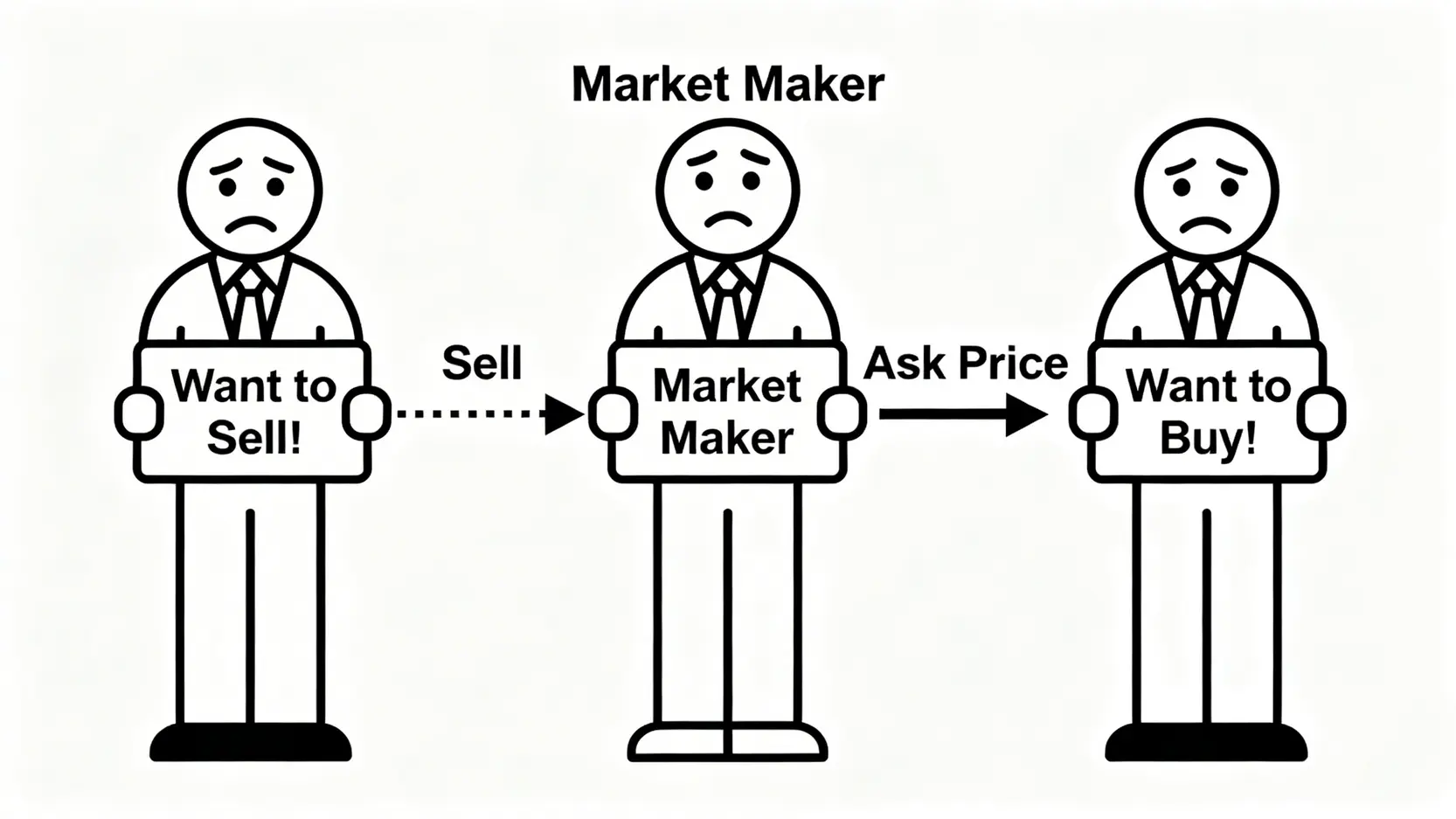
做市商作為市場中間人的概念圖,展示其如何連接買家和賣家,提供買賣報價以創造流動性。

The core role of market makers: acting as a bridge in the market, ensuring that buyers and sellers can always find a trading counterparty.


Official Definition of Market Makers: Why Must They Be “Institutions”?

A market maker, under the formal regulatory framework in Hong Kong, refers to a securities firm or financial institution recognized by the exchange and possessing specific qualifications. Their core task is to continuously provide bid and ask quotes for specific financial products (such as certain stocks, ETFs, warrants, or options).

Why must they be “institutions” rather than individuals? The reasons are mainly three:

  • Capital requirements: Market making requires substantial capital strength to hold inventory and absorb market volatility risk, which individual investors cannot bear.
  • Risk management: Institutional entities possess more complete risk control systems and professional teams capable of dealing with complex market environments.
  • Regulatory compliance: Exchanges impose strict regulatory requirements on market makers, including quote continuity and spread ranges. Only institutional entities can ensure systematic compliance with these requirements.


Main Responsibilities: Providing Liquidity, Stabilizing Prices, and Facilitating Trading

The responsibilities of institutional market makers go far beyond simple quoting. They are crucial to the healthy operation of the market.

  • Providing liquidity: This is the most critical responsibility. When the market lacks buyers or sellers, market makers step in to take the other side of the trade, ensuring that investors can buy when they want to buy and sell when they want to sell, preventing the market from stagnating.
  • Stabilizing prices: By continuously posting bid and ask prices, market makers narrow the bid-ask spread, helping prevent prices from fluctuating violently due to a single large transaction and thereby stabilizing the market.
  • Facilitating trading efficiency: Investors do not need to wait for a counterparty to appear and can trade directly with market makers, greatly improving trading efficiency and execution speed.


The Difference Between “Market Makers” and “Dealers”: Stabilizing the Market or Manipulating Prices?

In Hong Kong, many investors habitually refer to “market makers” as “dealers”. Although the two terms are often used interchangeably, the meanings behind them are fundamentally different.

  • Market maker: This is a neutral official term. They are regulated and legitimate institutions whose responsibility is to maintain market order and provide liquidity. Their behavior is strictly regulated by the exchange, and their objective is to earn lawful profit from the bid-ask spread.
  • Dealer (or Bookmaker): This term carries a somewhat negative connotation in popular usage, often evoking the idea of “evil dealers” who use strong capital to manipulate stock prices and exploit retail investors. Such behavior is clearly classified as market misconduct in Hong Kong and will be subject to strict enforcement by the Securities and Futures Commission (SFC).

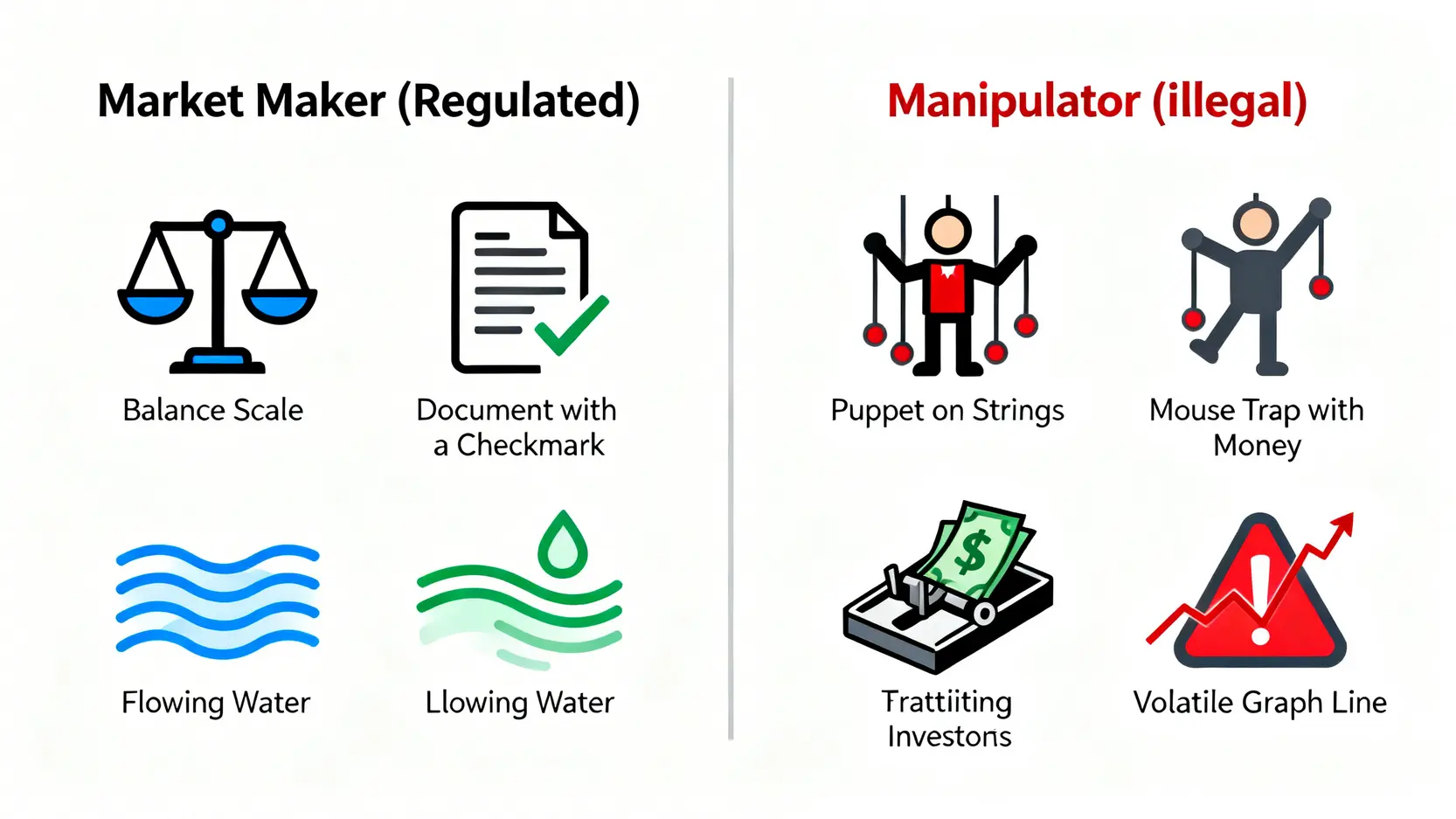
做市商與惡意莊家的對比圖,左邊是代表穩定與合規的做市商,右邊是代表操縱與風險的莊家。

Visual explanation: “Market makers” maintain market order, while “dealers” may manipulate the market.

Therefore, when referring to regulated institutions such as KGI Securities acting as a dealer, it refers to their legitimate role as a “market maker”, not illegal market manipulation. Understanding this distinction helps investors view the market more objectively.


Further Reading (Highly Recommended)

Introduction to Hong Kong Stock Investment: Learn From Zero How to Profit From Stocks (Including 2026 Popular Hong Kong Stock Account Recommendations)


The Latest Official Hong Kong Market Maker List 2026 (Continuously Updated)

Many investors want to find a complete Hong Kong market maker list, but in reality there is no single central list covering all products. Market maker qualifications are linked to specific products. The following are several major official sources for reference:


How to Check the HKEX Securities Dealer List

Hong Kong Exchanges and Clearing (HKEX) is the most authoritative source for checking market makers for most securities products, especially for exchange-traded products (ETP) such as ETFs and derivative warrants.

You can directly visit the HKEX “Exchange-Traded Product Securities Dealers” page, which provides the latest dealer list and detailed information about related programs. This list clearly shows which brokers are qualified to provide market-making services for specific ETFs or products. 

Which “Bond Connect” Market Makers Are Designated by HKMA

For the bond market, particularly the “Bond Connect” mechanism linking mainland China and Hong Kong, market makers are designated by the Hong Kong Monetary Authority (HKMA). These institutions are mainly large local and international banks responsible for providing liquidity for “Northbound” and “Southbound” trading.

The latest “Bond Connect” market maker list is usually published in official announcements by HKMA or Bond Connect Company Limited. These institutions include HSBC, Standard Chartered Bank, Bank of China (Hong Kong), and others.


Market Maker Lists and Inquiry Channels for Other Products

In addition to stocks and bonds, derivatives such as futures and options also have corresponding market maker systems. Relevant dealer lists can likewise be found in the “derivatives products” section of HKEX. Each type of product (such as Hang Seng Index futures or stock options), may have different dealers, and investors need to check accordingly.


Case Study: Understanding the Business Layout of Major Institutional Market Makers in Hong Kong

After learning how to check the list, let us examine several institutional market makers active in the Hong Kong market and analyze their business focus and market strategies.


Yuanta Securities / Futures: Business Layout in Hong Kong and Market-Making Role

Yuanta Securities (Hong Kong) and its futures business are important bases of Yuanta Financial Holdings in the Asia-Pacific region. Yuanta Hong Kong’s business is highly diversified, with market-making services being one of its strengths, especially in the ETF and warrant issuance sectors.

  • ETF market making: Yuanta is one of the leading ETF issuers in Hong Kong. For ETF products it issues itself (such as ETFs tracking the Taiwan stock market), Yuanta naturally acts as the primary market maker to ensure product liquidity and attractiveness.
  • Warrant issuance and market making: Yuanta is also an active warrant issuer. After issuing warrants, the issuer is obligated to provide quotes for them, which itself constitutes a form of market making.
  • Strategic focus: Leveraging its leading position in the Taiwan market and product development capabilities, Yuanta replicates its successful experience in Hong Kong, focusing on providing products linked to the Greater China market while supporting them with stable liquidity.


KGI Securities: Discussion of the Dealer Role and Market Strategy

KGI Securities (KGI) is another major broker originating from Taiwan that has been deeply established in the Hong Kong market for many years. When discussing the dealer role of KGI Securities, the market generally believes it is particularly active in market making for derivatives and certain small and mid-cap stocks.

  • Derivatives expertise: KGI has extensive experience in structured products such as warrants and callable bull bear contracts. Its market-making team is known for rapid response and proactive quoting.
  • Liquidity provision for small and mid-cap stocks: In addition to officially designated market-making responsibilities by the exchange, large brokers like KGI sometimes provide informal liquidity support for certain small and mid-cap stocks with relatively lower liquidity but potential, facilitating institutional client transactions.
  • Market strategy: KGI’s strategy focuses more on leveraging strong trade execution capability and derivatives pricing models to capture spread opportunities in rapidly changing markets while providing necessary market depth.


Introduction to Other Active Institutional Market Makers

As an international financial center, Hong Kong has many active institutional market makers beyond those mentioned above. The market also includes many top global participants:

  • CLSA: As a leading Chinese securities firm, it has strong capabilities in market making and trade execution for Hong Kong stocks.
  • Flow Traders: A top global electronic market maker from the Netherlands specializing in using advanced technology and algorithms to provide highly competitive quotes for thousands of ETP products worldwide.
  • Optiver / Jane Street: These are internationally renowned proprietary trading firms and major global market makers in options and ETFs, famous for their complex quantitative models.


Conclusion

In Summary, Understanding the Operating Model of Hong Kong Market Makers and the Main Participants Is a Required Lesson for Every Hong Kong Stock Investor. These Institutional Entities Are Not Only the Lubricant of the Market, but Their Strategic Deployment Also Reflects the Depth and Breadth of the Market. From the Official Hong Kong Market Maker List to the Specific Business of Yuanta Hong Kong or the Dealer Strategies of KGI Securities, Their Irreplaceable Role in Maintaining Market Stability and Efficiency Can Be Clearly Seen. It Is Hoped That This Detailed Analysis Will Help You Develop Sharper Insight on Your Investment Journey and Understand the Real Operators Behind the Market. 

Frequently Asked Questions (FAQ)

Q: How Do Market Makers (Dealers) Make Money?

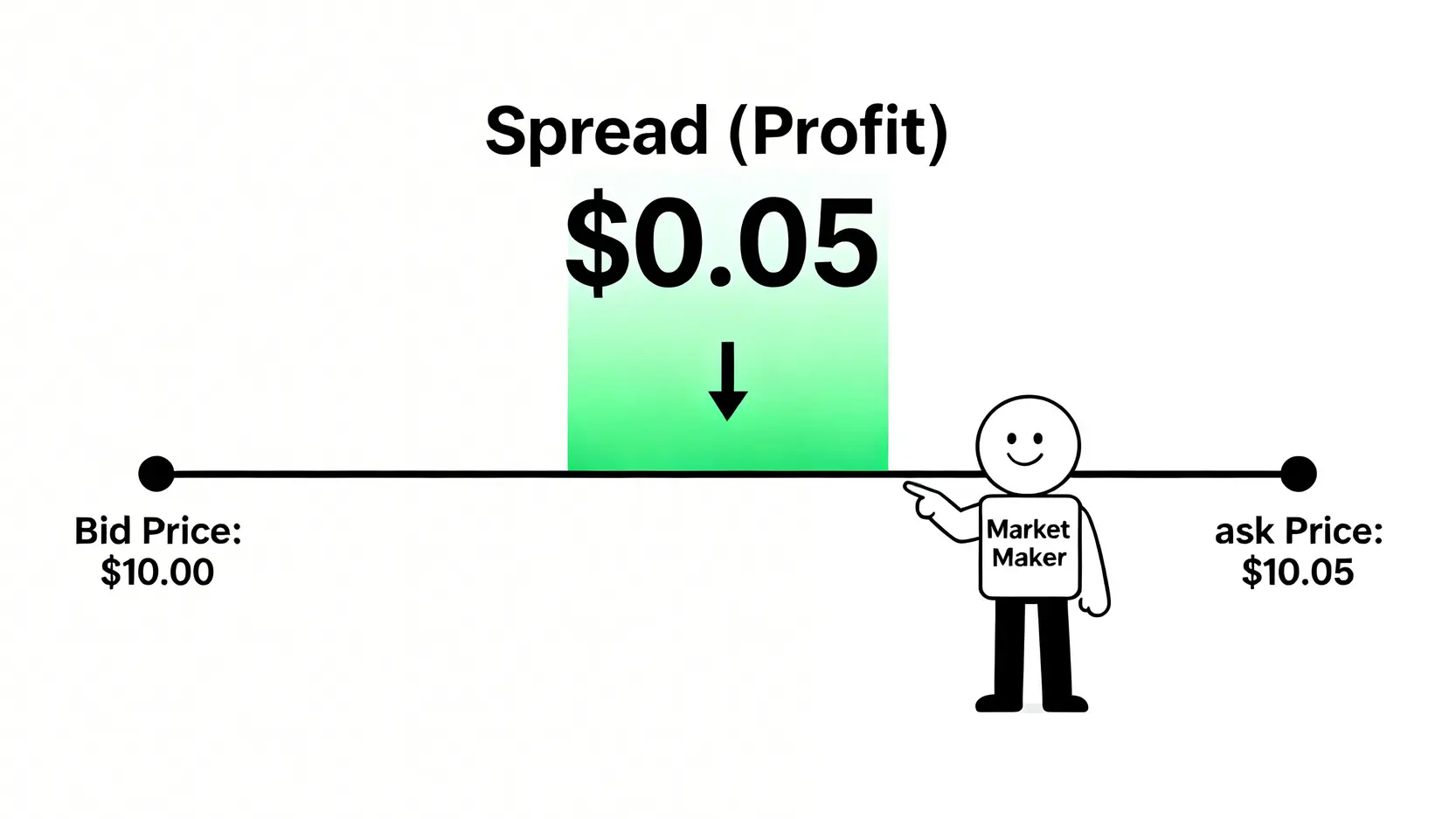
A: The primary source of profit for market makers comes from the “bid-ask spread”. They place orders in the market at a lower bid price and simultaneously place orders at a higher ask price, profiting from the small difference between the two. In addition, they may also generate profits through inventory management (buying low and selling high), exchange fee rebates (rebates), and hedging strategies.

做市商通過買賣價差賺錢的示意圖,顯示了買入價與賣出價之間的利潤空間。

The core profit of market makers: earning the small spread between the bid price and the ask price.

Q: Do All Securities Listed in Hong Kong Have Market Makers?

A: No. Generally, only products with lower liquidity or more complex structures require exchange-designated market makers, such as most ETFs, derivative warrants, callable bull bear contracts, and some newly listed companies or stocks with low trading activity. For highly active blue-chip stocks such as Tencent and Alibaba, the market itself already has sufficient buy and sell orders, therefore designated market makers are not required.

Q: How Can Retail Investors Obtain Useful Information From Market Maker Quotes?

A: Retail investors can observe the behavior of market makers from several aspects to assist their judgment:
1. Observe the spread size: The smaller the bid-ask spread, the better the liquidity and the lower the trading cost.
2. Observe order book depth: The larger the quantity posted by market makers on the bid and ask sides, the stronger the market’s ability to absorb large transactions.
3. Observe quote stability: During market volatility, if market makers can still provide stable quotes, it indicates that the product has a relatively solid market foundation.

Q: What Impact Do Market Maker Quotes Have on the Market?

A: Market maker quotes directly influence trading costs and the price discovery function of the market. Their quotes provide a reference benchmark for market prices, helping other investors judge reasonable trading levels. At the same time, their active two-sided quoting behavior absorbs short-term supply and demand imbalances in the market, reducing drastic price fluctuations and acting as a “stabilizer”.

If you liked this article, please share it!

Related Articles

  • Order Flow Analysis Tools: Track Institutional Activity
    In-Depth Review of Intelligent Order Flow Detection Tools: Understanding Institutional Activity and Identifying Real Market Buying and Selling Pressure What Is Order Flow, and Why Is It a “Leading Indicator” for Price Prediction? Candlestick charts and technical indicators can be misleading, but the real-money "Order Flow" within the market cannot....
    2026 年 6 月 4 日
  • Social Sentiment Indicators: Predicting Stock Trends
    Social Sentiment Quantitative Indicators: Mining PTT and Dcard Discussions to Predict Stock Prices What Are Social Sentiment Quantitative Indicators, and Why Are They Becoming Increasingly Important? In an era of information overload, financial markets are no longer driven solely by cold financial statements and macroeconomic data. The "Shipping King" phenomenon...
    2026 年 6 月 4 日
  • Taiwan FSC Futures Broker Verification Guide
    Avoid Fraudulent Platforms! A Visual Guide to Taiwan FSC Licensed Futures Merchant Verification and Scam Prevention In recent years, driven by heightened volatility in global financial markets and the impact of monetary easing policies worldwide, more investors have begun seeking diversified investment instruments. However, underground futures operators and overseas fraudulent...
    2026 年 6 月 4 日
返回顶部