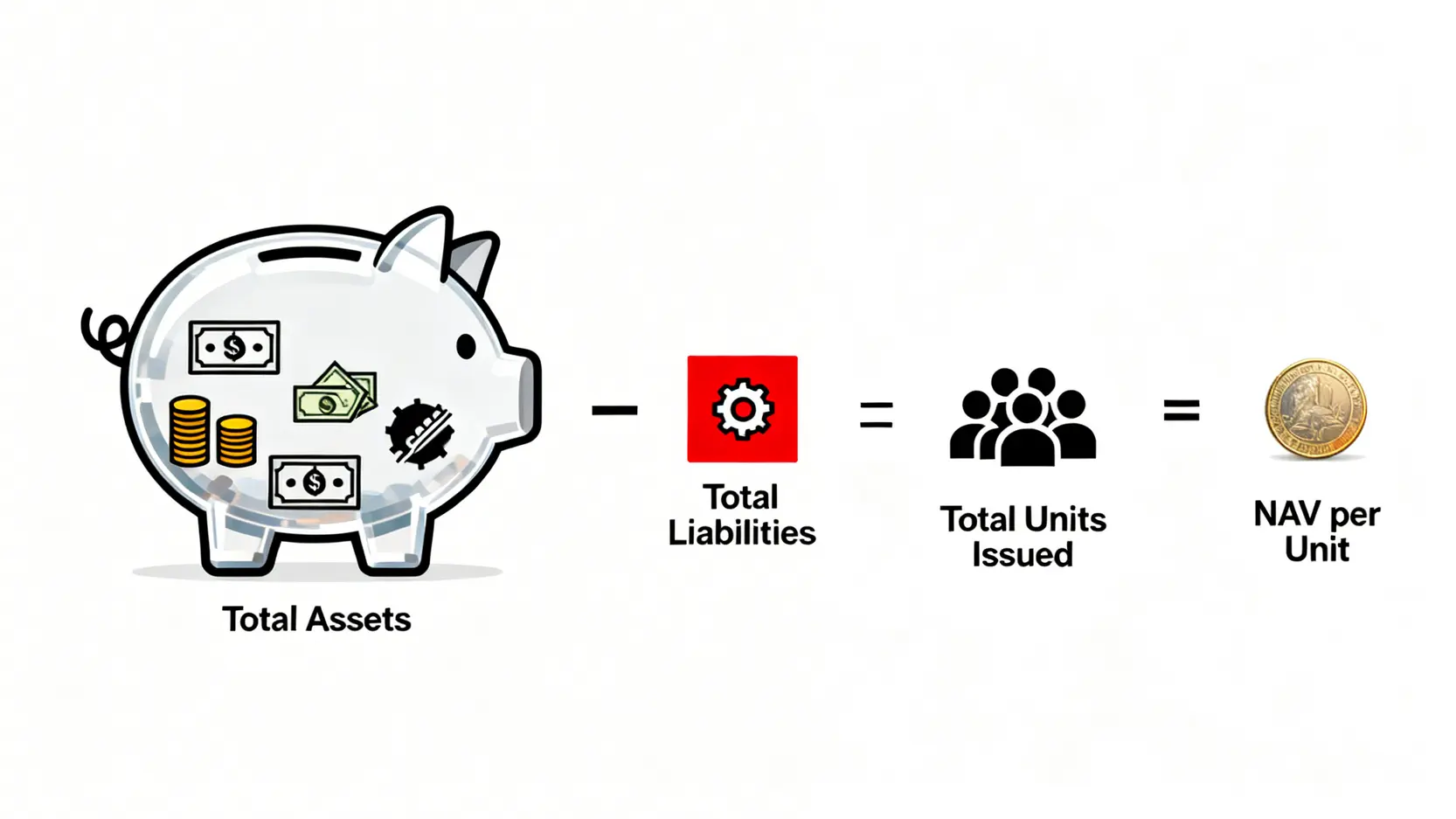
NAV Level vs. Growth Potential: Growth Rate Is the Key Metric
As seen from the table above, Fund B’s NAV (110 yuan) is much higher than Fund A (15 yuan), but in terms of growth potential, Fund A has clearly performed better. Therefore, do not judge a fund solely based on its NAV level.
Misconception 2: Buying Low-NAV Funds Means Greater Future Appreciation Potential?
The answer is: not necessarily.
This is a typical “cheap stock” mindset misconception. Investors believe that funds with lower NAV are “more affordable” and have greater upside potential. However, a low NAV can be caused by various reasons:
- Newly established funds: At the beginning of operation, NAV usually starts at 10 yuan or 1 yuan, which is normal.
- Poor historical performance: The fund’s portfolio has suffered continuous losses, causing NAV to decline.
- Dividend distribution: The fund distributes profits to investors in cash, leading to a corresponding decrease in NAV.
A fund with an NAV of only 2 yuan may very well be a poorly performing “zombie fund” rather than a potential opportunity. To assess a fund’s potential, you should focus on its investment strategy, the background of the fund manager, portfolio holdings, and long-term performance. Learning how to select funds requires a comprehensive evaluation of multiple factors, rather than relying on a single NAV figure.
How to Easily Conduct Fund NAV Inquiry? 3 Practical Channels Recommended
After understanding the basic concept of fund NAV, where can you conveniently and quickly check it? The following are three of the most commonly used channels:
Professional Fund Information Platforms
This is the best way to obtain comprehensive fund information. These platforms not only provide daily NAV, but also historical NAV charts, fund ratings, portfolio analysis, expense ratios, and other in-depth data to help you conduct a more thorough analysis. Well-known platforms include:
- Morningstar: A globally authoritative fund rating and research institution, offering detailed and highly professional data.
- MoneyDJ: Provides extensive financial information with a powerful fund center.
- FundClear: A platform focused on fund trading, making both inquiry and transactions very convenient.
Your Bank or Brokerage App
If you have already purchased funds through a bank or brokerage account, the most direct way to check is by logging into your online banking or mobile app. You can easily view the latest NAV, units held, and total market value of your funds, making it highly convenient.
Fund Company Official Websites
Each fund company (such as Fidelity, BlackRock, and AllianceBernstein) publishes the daily NAV and related reports of all its funds on its official website. This is the most authoritative and accurate first-hand source of information. If you are interested in a specific fund, it is a good practice to check directly on its official website.
Further Reading (Highly Recommended)
Fund Buying Guide: A Beginner’s Complete Guide From Account Opening, Subscription to Redemption Procedures
A Complete Guide to S&P 500 Annual Returns: Data Analysis of Historical Returns and the Best US Equity ETF Investment Strategies
Frequently Asked Questions About Fund NAV (FAQ)
Q: When is fund NAV updated each day?
A: Most funds calculate NAV once per day. Typically, after the stock market closes on each trading day, fund companies begin calculating the total market value of assets for that day, and then publish the latest NAV in the evening or the following business morning. Therefore, if you place a subscription or redemption order today, the transaction price will be the NAV calculated after market close on that day. This is known as “forward pricing”.
Q: What is the relationship between fund NAV and fund return rate?
A: Fund NAV is the “price” at a specific point in time, while the return rate reflects the “performance” over a period. The return rate is calculated based on changes in NAV. For example, if you buy at an NAV of 10 at the beginning of the year and it rises to 12 by the end of the year, your capital appreciation return is 20%. Therefore, NAV is the basis for calculating investment returns, but NAV itself is not equal to the return rate.
Q: Why do some funds have negative NAV?
A: For traditional equity or bond funds, NAV cannot be negative because the lowest value of the assets they hold is zero. If a negative NAV occurs, it is usually associated with highly leveraged derivative financial instruments, such as futures or certain hedge funds. For most mutual funds that ordinary investors encounter, there is no need to worry about NAV becoming negative.
Q: What is the difference between fund NAV and market price?
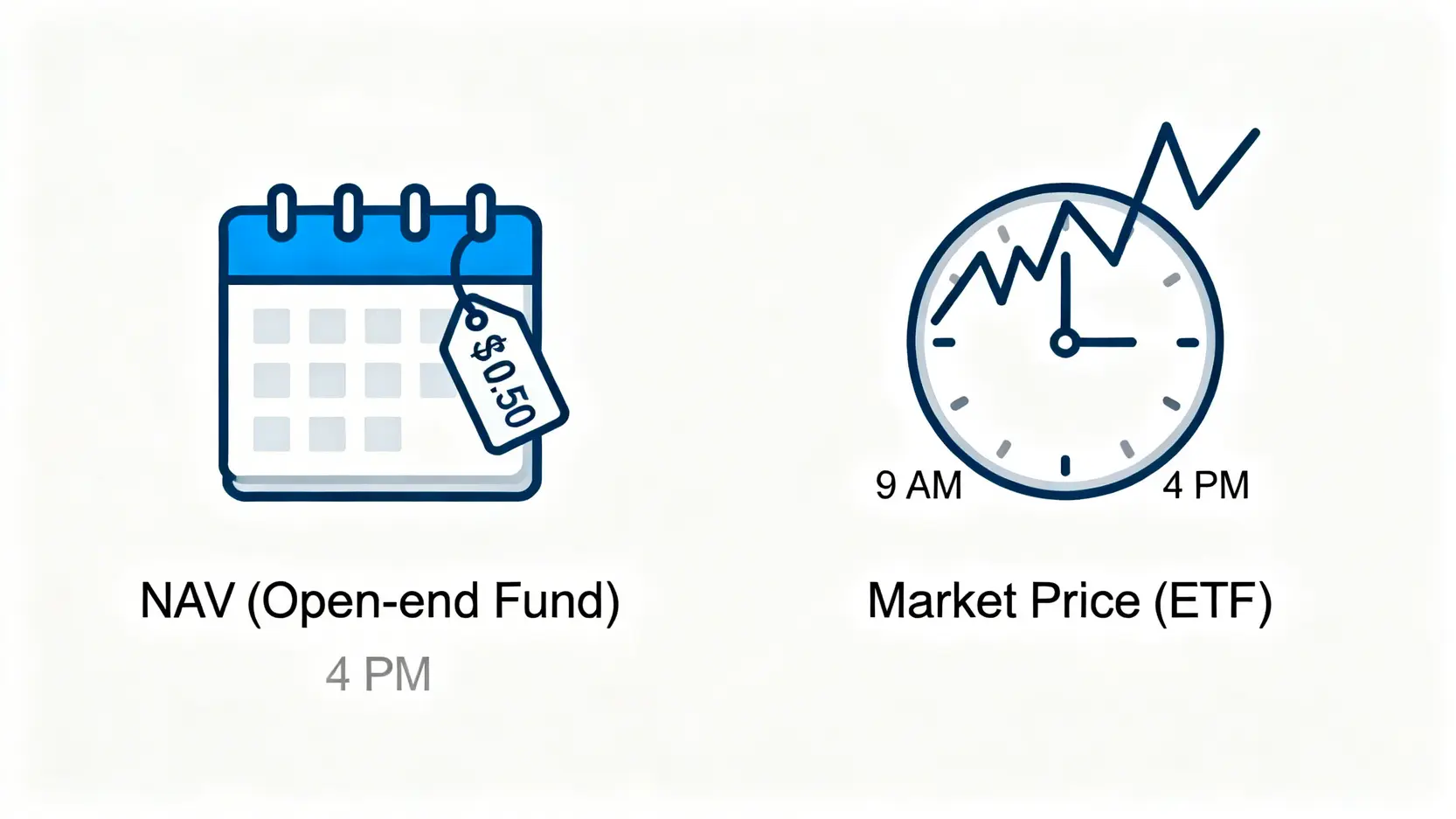
A: For traditional open-end funds, the price at which you buy or sell is the fund NAV. However, for funds traded on exchanges, such as exchange-traded funds (ETFs) or closed-end funds, in addition to a daily calculated “NAV”, there is also a “market price” that fluctuates in real time during trading hours. The market price is determined by supply and demand in the market and may trade above (premium) or below (discount) its actual NAV.