Hawkish Fed Weighs on Gold: How Could Rising Rate Hike Expectations End the Gold Bull Market?
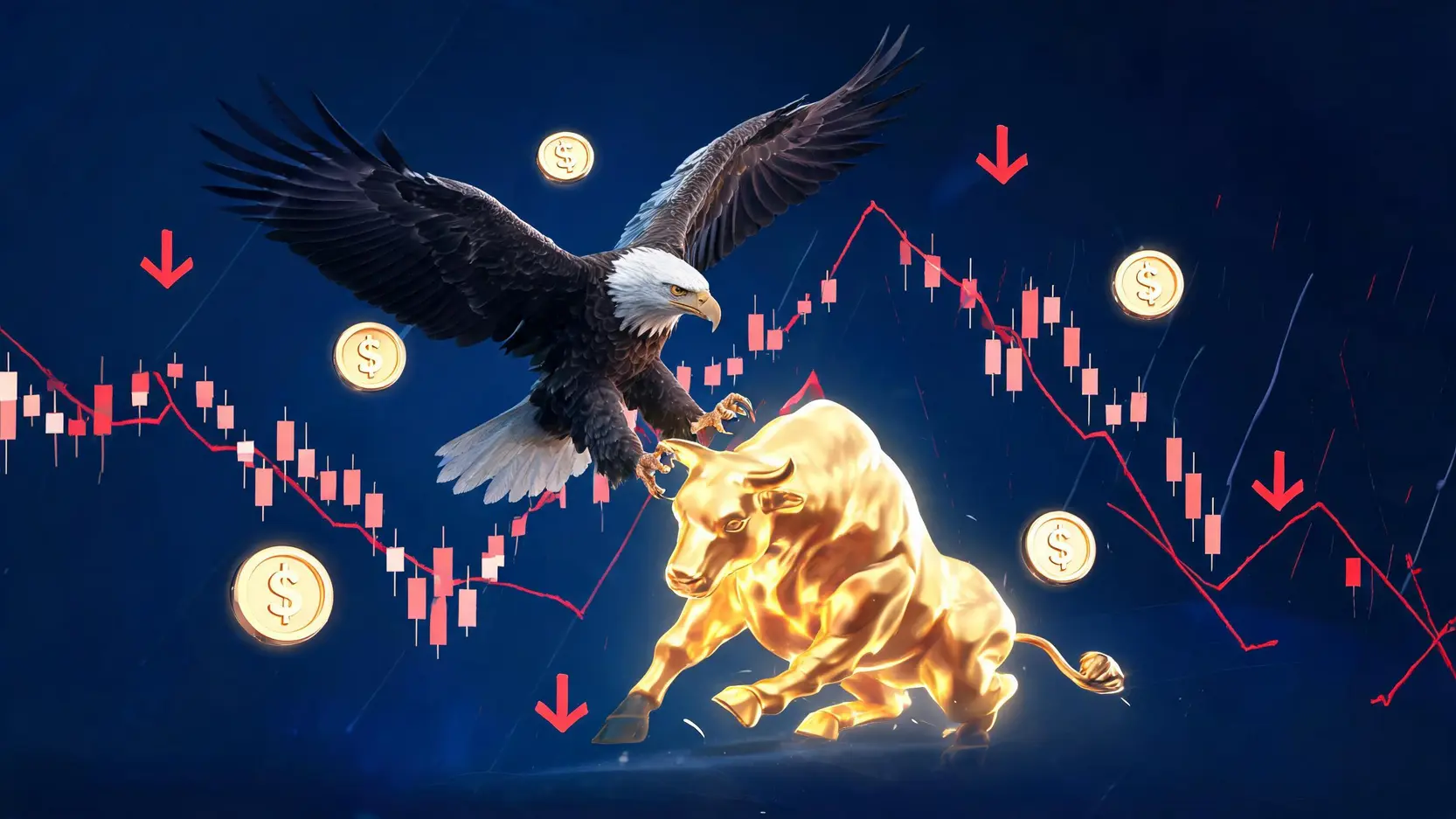
Every statement from the Federal Reserve affects the nerves of global capital markets. Recently, the phenomenon of a hawkish Fed weighing on gold has become especially evident. As rate hike expectations rise, a strong dollar and high interest rate expectations are becoming the biggest obstacles for gold prices. For investors in Taiwan, Malaysia, and other regions, understanding the impact of a stronger dollar on gold and mastering the relationship between monetary policy and gold prices are key to adjusting asset allocation in 2026. In the current macroeconomic environment, the performance of safe-haven assets such as gold is facing unprecedented challenges.
Understanding the Basic Logic of a Hawkish Fed Weighing on Gold and Monetary Policy
What Is the Fed’s Hawkish Stance?
Before discussing how a hawkish Fed weighs on gold, we must first clarify the definition of “hawkish”. A hawkish Fed usually means being highly alert to inflation and inclined to curb price increases by raising the federal funds rate (namely rate hikes) and reducing its balance sheet (quantitative tightening). In contrast, this type of tight monetary policy will drive the US dollar exchange rate higher. Since gold is an asset priced in US dollars, when the dollar appreciates, the cost of buying gold increases for investors outside the dollar zone, thereby weakening market purchasing interest. This is also the initial transmission mechanism through which a hawkish Fed weighs on gold.
The Inverse Relationship Between Real Interest Rates and Gold Prices
Beyond the exchange rate effect, the deeper logic lies in “real interest rates”. Real interest rates are the yield after deducting inflation expectations from nominal interest rates. Since gold itself does not generate yield, when the Federal Reserve shows a strong hawkish stance and sharply pushes up real interest rates, the appeal of holding risk-free yield-bearing assets such as US Treasuries will significantly exceed that of gold. This rise in holding costs is the core reason gold faces waves of selling. Investors can observe that during each phase when rate hike expectations heat up, gold prices often face significant pullback pressure. To learn more about international market dynamics, refer to Reuters’ related reports on Federal Reserve interest rates and gold.
Further Reading (Highly Recommended)
In-Depth Analysis of Fed Rate Cut Expectations and Gold Price Trends
Gold Investment Risks and Safe-Haven Strategies in the High Interest Rate Era
Recent Hawkish Signals From Fed Meetings and the Impact of a Stronger Dollar
The Link Between Inflation Data and the Rate Hike Path
Entering 2026, a series of inflation data and employment indicators released by the US Department of Labor have become key references for the Federal Reserve in adjusting monetary policy. When core PCE (the Personal Consumption Expenditures Price Index), shows stickiness or even signs of rebounding, Federal Reserve officials often issue intensive hawkish remarks, reiterating that rates will remain at “higher levels for a longer period”, Higher for Longer. This extension of the rate hike path directly reinforces the market consensus that a hawkish Fed is weighing on gold, causing funds going long on gold to withdraw rapidly in the short term.
The Direct Impact of the US Dollar Index Reaching New Highs on Gold Prices
Driven by expectations of hawkish policy, the US Dollar Index (DXY) has repeatedly challenged periodic highs. A strong dollar not only puts depreciation pressure on emerging market currencies but also becomes a nightmare for gold bulls. When seeking safety, macro funds are more inclined to choose US dollar assets that offer excellent liquidity and high interest returns, rather than gold. Therefore, the impact of a stronger dollar on gold is immediate. On days when the US Dollar Index surges, gold prices often experience sharp plunge-like declines. When allocating this type of investment tool, investors must treat the US Dollar Index as one of the most important forward-looking indicators.
Historical Review: Market Patterns During Periods When a Hawkish Fed Weighed on Gold
Gold’s Performance During the Past Three Rate Hike Cycles
Looking back over the past several decades of financial history, we can see that a hawkish Fed weighing on gold is nothing new. During the past three significant rate hike cycles (such as 2015 to 2018 and the aggressive rate hike wave that began in 2022), gold usually experienced the sharpest declines from the formation of rate hike expectations to the first actual rate hike. However, markets always contain expectation gaps. Once rate hikes are implemented, or once the market believes the rate hike cycle is nearing its end, gold often sees a recovery rebound.
Characteristics of the Gold Price Recovery Period After Hawkish Policy Is Implemented
Interestingly, after the Fed’s hawkish policy is truly implemented and maintained for a period of time, the negative impact of high interest rates on the real economy will gradually emerge. Rising corporate default rates, slowing economic growth, and even recession concerns will reignite market safe-haven sentiment. At this point, even if the Federal Reserve has not yet shifted toward monetary easing (such as rate cuts), gold can still rely on its risk-resistant attributes to develop an independent recovery trend. This is also why experienced investors do not blindly sell into a sharp drop in gold prices caused by hawkish pressure, but instead look for opportunities to position on the left side.
How to Use the Macro Cycle to Predict Gold Turning Points
For investors hoping to grasp gold price movements in 2026, merely focusing on the surface phenomenon of a hawkish Fed weighing on gold is not enough. We need to combine this with the macro cycle and closely track forward-looking indicators such as US nonfarm payrolls, the unemployment rate, and PMI. When these indicators show that downward economic pressure is greater than inflationary pressure, it marks a potential turning point for Federal Reserve monetary policy, as well as an important opportunity for gold to enter a new bull market.
Frequently Asked Questions (FAQ)
When Will Fed Rate Cuts Arrive?
The timing of rate cuts depends on whether US inflation can steadily fall back to the 2% target range and the extent to which the labor market cools. If economic data remains strong, rate cuts may be delayed until the end of the year or even the following year. If the economy experiences a worse-than-expected recession, the Fed may begin defensive rate cuts earlier.
How Long Will Hawkish Signals Continue to Pressure Gold?
The pressure is usually most obvious during the phase when rate hike expectations are building. Once the market has fully priced in hawkish expectations, or the Fed signals that rate hikes have peaked, the effect of a hawkish Fed weighing on gold will gradually diminish, and gold prices will look for bottom support.
Besides the Fed, What Other Factors Affect Gold Prices?
Besides the Fed’s monetary policy and the trend of the US dollar, geopolitical conflicts (such as the situation in the Middle East), global central banks’ gold reserve purchases, and physical gold consumption demand are all important factors affecting medium- to long-term gold prices.
Is Now a Good Time to Buy Gold?
This depends on your investment horizon. For short-term speculation, risks are relatively high amid the current strong hawkish Fed atmosphere. For long-term asset allocation, buying safe-haven gold in batches on dips remains an effective strategy for diversifying portfolio risk.
Conclusion
In summary, the core mechanism behind a hawkish Fed weighing on gold lies in a strong dollar and high real interest rates, both of which significantly weaken gold’s appeal as a non-yielding asset. However, monetary policy is cyclical, and the end of rate hikes will ultimately be rate cuts. Investors are advised to closely monitor US inflation data and employment indicators amid the macro shifts of 2026, and to view each Fed policy statement rationally. Under the premise of risk management, they should adjust asset allocation in a timely manner, avoid severe losses in extreme market conditions, and patiently wait for the next clear macro turning point in the gold market.