Is an Emerging Market Storm Coming? 3 Strategies to Handle External Debt Pressure and Capital Outflow Risks
Risk Identification: Understanding the Two “Achilles’ Heels” of Emerging Market Investing
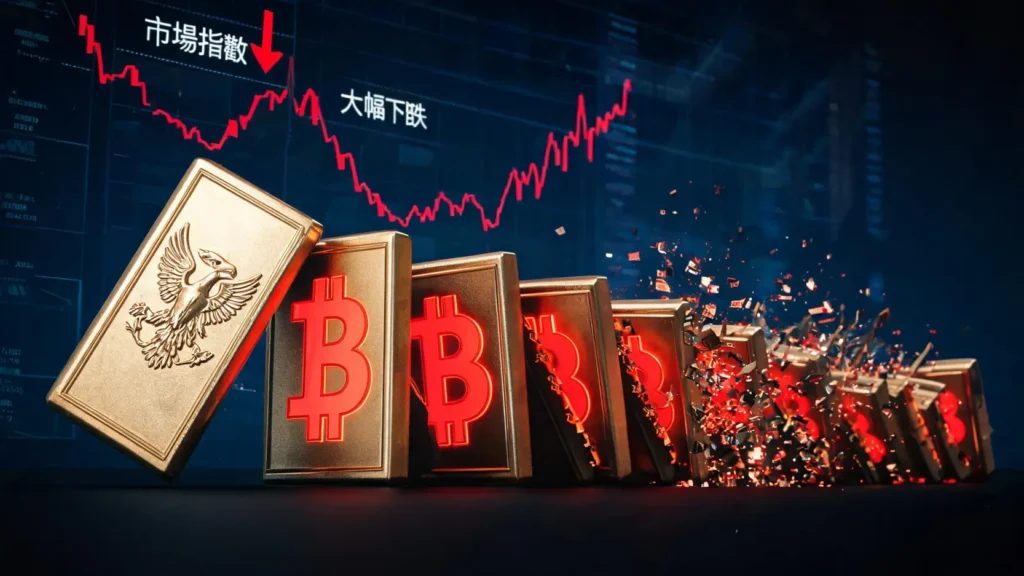
For investors pursuing higher returns, emerging markets are undoubtedly filled with opportunities. However, higher returns are often accompanied by intense volatility. Especially in 2026, with growing global economic uncertainty, unclear Federal Reserve policy direction, and rising geopolitical tensions, two major risks hidden within emerging markets — external debt pressure and capital outflows are becoming increasingly dangerous for investors. This article is not telling you to completely exit emerging markets. Instead, it provides a systematic hedging guide that deeply analyzes current emerging market investment risks while teaching you how to remain stable during financial turbulence and protect your hard-earned capital.
Risk 1: External Debt Pressure — A US Dollar-Denominated Time Bomb
Many emerging market countries borrow heavily from overseas (primarily in US dollars) during their development stages to fund infrastructure projects and stimulate economic growth. During stable economic periods, this may accelerate growth without issue. However, this creates a US dollar-denominated “time bomb” that can explode once two conditions are met:
- US Dollar Appreciation: When the Federal Reserve raises interest rates and the US dollar strengthens, local currencies weaken relative to the dollar. This means those countries must use far more “depreciated” local currency to repay the same amount of US dollar debt. Debt burdens suddenly surge, similar to a mortgage rate unexpectedly doubling overnight.
- Weak Domestic Economy: If the country heavily depends on raw material exports (such as oil or minerals), global demand slowdowns can sharply reduce export revenues, shrink foreign exchange reserves, and weaken debt repayment ability.
When a country struggles to repay debt obligations, sovereign debt crises may erupt, triggering currency collapses, stock market crashes, and massive foreign capital flight. Sri Lanka in 2022 serves as a painful example. Therefore, monitoring a country’s “external debt-to-GDP ratio” and “foreign exchange reserve adequacy” becomes a critical first step in evaluating risk.
Risk 2: Capital Outflows — Who Gets Exposed When the Tide Recedes?
“Hot money” refers to short-term international speculative capital seeking high returns. When developed markets such as the US maintain ultra-low interest rates and loose monetary policies, hot money floods into emerging markets offering higher interest rates and stronger growth potential, driving local stock markets, property prices, and currencies sharply higher.
However, this prosperity is ultimately borrowed. Once the environment changes, such as when the US begins raising interest rates and dollar assets become more attractive, speculative capital rapidly exits emerging markets and flows back into the US. This process is known as capital outflow. It creates three major consequences for emerging economies:
- Currency Collapse: Investors dump local currencies and rush into US dollars, causing exchange rates to plunge.
- Asset Price Crashes: Stock markets, bond markets, and property markets lose liquidity support, triggering panic selling and steep price declines.
- Liquidity Tightening: Money supply suddenly contracts, borrowing costs soar, and economic activity may slow dramatically.
As Warren Buffett famously said: “Only when the tide goes out do you discover who’s been swimming naked.” Capital outflows expose countries overly dependent on foreign capital or suffering from weak economic fundamentals.
Further Reading (Highly Recommended)
How to Reduce Investment Risk? 5 Risk Management and Diversification Strategies
[Forex Beginner Guide] Learn Forex Trading From Zero to One
Proactive Hedging Strategies: How to Adjust Your Investment Portfolio Against Risk
When emerging market risks begin intensifying, passively waiting is not an option. Proactively adjusting your portfolio is like reinforcing your house before a major storm arrives. Below are three practical proactive hedging strategies.
Strategy 1: Increase Exposure to Safe-Haven Currencies Such as the US Dollar and Japanese Yen
This is one of the most direct and effective hedging methods. During periods of global market turbulence and rising risk aversion, investors seek safe havens, and the US Dollar (USD) and Japanese Yen (JPY) remain the two classic defensive currencies.
- US Dollar (USD): As the world’s dominant reserve currency, the US dollar remains difficult to replace during crises. Holding more US dollar cash or investing in US dollar-denominated assets (such as US Treasuries or US equities) can directly hedge against emerging market currency depreciation.
- Japanese Yen (JPY): Japan remains the world’s largest net creditor nation. Combined with its long-term low interest rate environment, the Japanese Yen becomes a preferred funding currency during financial instability. When markets panic, investors unwind Yen-funded trades and buy back Yen, driving its value higher.
Within your asset allocation strategy, moderately increasing safe-haven currency exposure can provide a powerful “airbag” for your overall portfolio.
Strategy 2: Choose Economically Healthy Countries and Avoid Markets With High Debt and Weak Reserves
Emerging markets are not a single homogeneous group. Economic fundamentals vary significantly between countries. Rather than avoiding all emerging markets entirely, investors should learn to identify and avoid the weakest economies. Financially healthier countries typically possess the following characteristics:
| Evaluation Indicator |
Ideal Condition ✅
|
Warning Signal ❌ |
| External Debt-to-GDP Ratio |
Below 50%, indicating a healthy debt structure |
Excessively high ratios, especially with large amounts of short-term external debt |
| Foreign Exchange Reserves |
Able to cover at least 3 months of imports and short-term external debt |
Foreign exchange reserves are being depleted rapidly |
| Current Account Balance |
Long-term surplus or balanced payments
|
Persistent massive deficits relying heavily on foreign capital inflows |
| Political Stability |
Stable political environment with strong policy continuity |
Political instability, election disputes, and severe corruption |
Before investing, spending time researching these macroeconomic indicators can help you effectively avoid potential financial landmines.
Strategy 3: Use Inverse ETFs or Short Futures to Hedge Risk
For investors with higher risk tolerance and more trading experience, derivative instruments can provide more precise hedging tools. (Important: The following instruments are complex and carry extremely high risks. They are not suitable for beginners.)
- Inverse ETFs: These ETFs aim to deliver the opposite daily return of the index they track. For example, if you buy an inverse ETF tracking the MSCI Emerging Markets Index, and the index falls by 1%, the ETF should theoretically rise by 1%. This offers a way to short the market without opening a futures account.
- Short Futures Positions: Investors can use futures markets to sell stock index futures or currency futures related to emerging markets. If the market declines as expected, investors can repurchase contracts at lower prices to profit, helping offset losses in spot positions.
Once again, these instruments are double-edged swords. Leverage amplifies both gains and losses. Only consider using them after fully understanding their mechanics and risks.
Passive Defensive Toolbox: Hedging Methods That Don’t Require Constant Monitoring
For most investors, constantly monitoring markets and executing complex active strategies is unrealistic. Fortunately, several traditional passive defensive tools can still provide strong protection during market turmoil. The core logic behind these tools lies in their “negative correlation” with risk assets.
Gold: The Traditional Ultimate Safe-Haven Asset
For centuries, gold has been viewed as the ultimate defense against chaos and inflation. In financial markets, its safe-haven appeal comes from several key characteristics:
- Store of Value: Gold itself does not generate interest, but when paper currencies lose value due to inflation or declining government credibility, gold tends to preserve purchasing power.
- Negative Correlation: Historical data shows that when stock markets (especially emerging markets), crash during periods of panic, capital often flows into gold, pushing prices higher and creating a seesaw effect.
- Borderless Asset: Gold belongs to no country and is not directly controlled by any single government policy, making it an ideal refuge during geopolitical instability.
Allocating 5% to 10% of a portfolio to gold (either through gold ETFs or physical gold) acts like an insurance policy for your investments.
US Treasuries: The Global Safe Haven for Capital
If gold is considered the traditional safe-haven asset, then US Treasuries are widely regarded as the officially recognized “world’s safest asset”. Backed by the credit of the US government, their default risk is generally viewed as near zero. During periods of global economic slowdown or emerging market crises, international capital seeking safety often flows heavily into US Treasuries, especially medium- and long-term bonds, driving bond prices higher.
Diversification: Never Put All Your Eggs in One Emerging Market Basket
This is one of the most fundamental yet most overlooked investment principles. Many investors who are optimistic about emerging markets often heavily concentrate their positions in a single country or region, such as only investing in India-focused funds or Latin America-focused funds. This approach carries extremely high risk because it fully exposes your portfolio to country-specific or regional risks (including political elections, policy shifts, or downturns within a single industry).
A more stable asset allocation strategy includes:
- Cross-Regional Diversification: Simultaneously allocate investments across different emerging market regions such as Asia, Latin America, and Eastern Europe.
- Global Allocation: More importantly, emerging market exposure should only represent part of your overall portfolio. Assets from developed markets (such as the US and Europe) should serve as the portfolio’s stable core, complementing the higher volatility of emerging markets.
True diversification means comprehensive allocation across asset classes (stocks, bonds, gold), countries (developed and emerging markets), and regions (Asia, the Americas). This helps ensure that problems within one market do not create catastrophic damage to your total portfolio.
FAQ About Emerging Market Risks
Q: How Can I Determine Whether an Emerging Market Economy Is Healthy?
A: You can evaluate it using four key macroeconomic indicators: 1. External Debt-to-GDP Ratio: Generally considered safer when below 50%. 2. Foreign Exchange Reserve Adequacy: Reserves should be sufficient to cover at least three months of imports plus all short-term external debt. 3. Current account condition: Countries that maintain long-term surpluses or remain close to balance demonstrate that their ability to “generate income” is sufficient to cover expenses, reducing the need to rely excessively on external capital. 4. Political Stability: Stable governments and predictable policy environments form the foundation for attracting long-term investment rather than speculative hot money.
Q: What Is CDS (Credit Default Swap), and Can It Reflect Country Risk?
A: A CDS (Credit Default Swap) can be understood as a type of insurance contract against debt default. The buyer pays a premium, while the seller agrees to provide compensation if the debt (such as a country’s government bonds) defaults. Therefore, higher CDS prices indicate that markets perceive greater default risk, making debt insurance more expensive. Monitoring changes in CDS spreads provides a highly valuable real-time indicator of market sentiment regarding sovereign risk.
Q: Should Ordinary Dollar-Cost Averaging Investors Stop Investing Because of These Risks?
A: That depends on your investment horizon and risk tolerance. For long-term investors with horizons exceeding ten years, short-term market volatility can actually create opportunities to accumulate more shares at lower prices. Abruptly stopping regular investments may result in missing attractive market bottoms. However, investors may consider balanced approaches: 1. Review Fund Holdings: Confirm whether your global or emerging market funds are overly concentrated in financially vulnerable regions. 2. Reduce Contribution Amounts: If you feel uncertain about future market conditions, temporarily lowering monthly investment amounts can provide greater flexibility over time. 3. Pair With Defensive Assets: While continuing regular investments, allocate part of your portfolio into defensive assets (such as gold or US Treasury ETFs) to balance overall risk.
Q: Why Does a Strong US Dollar Always Impact Emerging Markets So Severely?
A: There are two major reasons behind this phenomenon. First is the “external debt pressure” mentioned earlier. Many emerging market governments and corporations borrow in US dollars, so when the dollar strengthens, debt repayment costs rise sharply. Second is the “reversal of carry trades”. When US interest rates remain low, international investors borrow cheap US dollars and invest in higher-yielding emerging markets to capture interest rate spreads. However, when the Federal Reserve raises rates and the US dollar strengthens, these spreads narrow or disappear entirely, causing capital to flow out of emerging markets and back into the US.
Conclusion
When investing in emerging markets, investors should not focus solely on their high-growth potential while ignoring the accompanying risks of external debt pressure and capital outflows. Effective hedging strategies do not mean completely exiting the market and missing future opportunities. Instead, they involve building a more resilient investment portfolio through thorough risk identification, flexible asset allocation, and diversified hedging tools. Only by surviving market storms and successfully controlling downside risks can investors fully enjoy the rewards of the next wave of emerging market growth once conditions recover.