Ultimate Guide to Black Swan Hedging: Why Traditional Diversification Fails? Master 4 Strategies to Protect Your Assets
When markets are booming, most people choose to ignore the existence of risk. But history has repeatedly proven that unpredictable “black swan events” always strike when least expected, instantly destroying countless seemingly robust portfolios. Have you ever worried that your lifetime savings could vanish in the next unknown crisis? Many investors rely on Black Swan Hedging strategies, yet these may prove fragile under extreme conditions. This article will provide an in-depth analysis of the misconceptions surrounding traditional Portfolio Diversification, reveal how top institutions apply “correlation risk management”, and introduce effective hedging tools to help you stay resilient in financial storms and protect your assets.
What Exactly Is a Black Swan Event
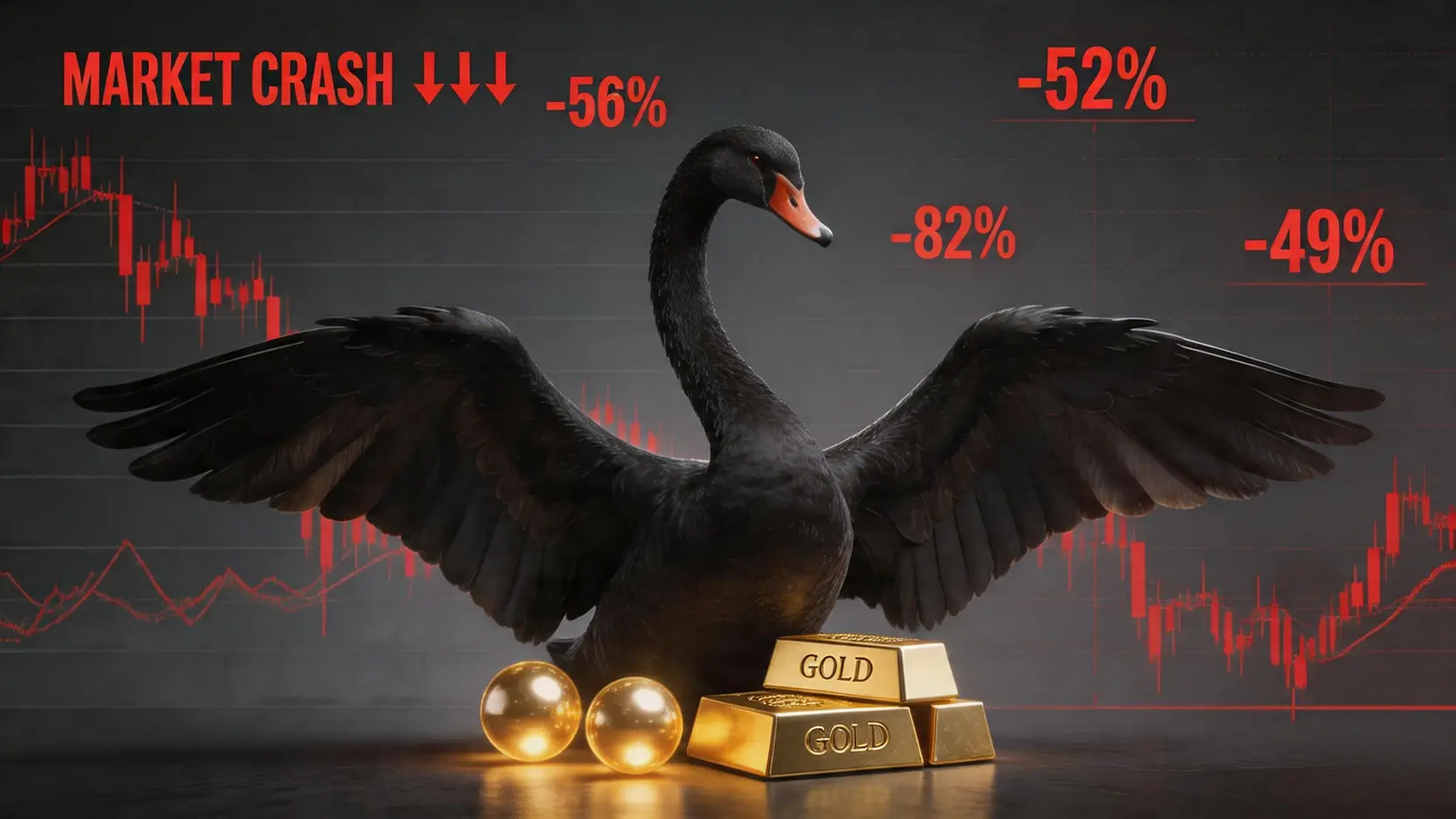
The term “black swan” was popularized by former trader and scholar Nassim Nicholas Taleb in his book “The Black Swan”, used to describe events that are extremely rare, highly impactful, and only rationalized after the fact.
Not Just Unpredictable: The Three Key Characteristics of Black Swans
To be defined as a black swan event, it generally needs to meet the following three core characteristics:
- Extreme Rarity (Outlier): It lies completely outside the realm of normal expectations, with historical data offering no basis for prediction.
- Extreme Impact: Once it occurs, it causes devastating and disruptive effects on society, the economy, financial markets, or individual lives.
- Retrospective Predictability: After the event occurs, people can always find reasons and clues to explain its inevitability, creating the illusion that “it should have been anticipated”, when in fact it was unpredictable beforehand.
Notable Black Swan Event Examples That Changed the World
Throughout history, there have been many unexpected black swan events that profoundly reshaped the world:
- The 9/11 Terrorist Attacks in 2001: Prior to this, no one anticipated that terrorists would hijack commercial airplanes and crash them into the World Trade Center. The attacks not only resulted in thousands of deaths, but also triggered a global aviation downturn, heightened geopolitical tensions, and initiated the ongoing global war on terror.
- The 2008 Global Financial Crisis: Triggered by the US subprime mortgage crisis, it evolved into a global financial disaster. The collapse of Lehman Brothers and the near-bankruptcy of AIG saw institutions once considered “too big to fail” crumble, sending global stock markets into freefall. Its ripple effects continue to shape the global economic structure today.
- The 2020 COVID-19 Pandemic: A sudden global outbreak that led countries worldwide to impose lockdowns, disrupting global supply chains and halting economic activity. This public health crisis brought unprecedented changes to the global economy, social lifestyles, and even individual work patterns.
Black Swan vs. Grey Rhino: What Are the Key Differences
Many people confuse “black swans” with “grey rhinos”, but the two concepts are fundamentally different. Understanding the distinction is crucial for risk management.
| Characteristics |
Black Swan |
Gray Rhino |
| Predictability |
Extremely low, almost impossible to predict |
High, with clear warning signals and a noticeable probability of occurrence |
| Nature |
Unknown unknowns |
Known unknowns |
| Examples |
9/11 terrorist attacks, the emergence of the internet |
Climate change, real estate bubbles (with many warnings before they burst) |
| Response Approach |
Build systemic resilience, adopt hedging strategies |
Acknowledge the problem and take preventive measures early |
Simply put, a gray rhino is a massive threat that is clearly visible from afar but collectively ignored, while a black swan is a deadly attack that you do not even know exists, suddenly emerging from the shadows.
Why Traditional Portfolio Diversification Fails During Crises
“Do not put all your eggs in one basket” is a golden rule in investing. The traditional theory of portfolio diversification suggests that investors allocate funds across different asset classes such as stocks, bonds, and real estate, with the expectation that when some assets fall, others will rise or remain stable, thereby stabilizing overall portfolio performance. However, in the face of true black swan events, this strategy often proves fragile.
The Fatal Correlation Risk: When All Assets Collapse Simultaneously
The core assumption of traditional diversification is that different asset classes have low or negative correlation. However, markets experience what is known as “correlation risk” during periods of extreme panic where nearly all risky assets move in the same direction, collapsing simultaneously.
Taking the 2008 Global Financial Crisis as an example, not only did global equities crash, but corporate bonds, emerging market currencies, commodities, and even real estate prices also fell sharply. Investors panic-sold all liquid assets and rushed into what was perceived as the safest haven, US dollar cash and US government bonds. In such a scenario, what you thought were 10 different “baskets” of eggs were actually placed on a single runaway truck, all crashing together.
Review Your Portfolio: What Looks Diversified May Actually Be Highly Concentrated Risk
Many retail investors believe they have achieved diversification, but in reality, they may have the following blind spots:
- Pseudo-Diversification: Holding 10 different technology stocks, or both Taiwan 50 ETF and S&P 500 ETF. Although the instruments differ, they are all heavily concentrated in large-cap equities and move in the same direction under global macroeconomic conditions.
- Hidden Correlations: Your portfolio may include both banking stocks and real estate investment trusts (REITs). They may appear unrelated in normal times, but during a financial crisis, tightening bank credit directly impacts real estate markets, creating unexpected strong correlations.
True portfolio management techniques are not just about diversifying instruments, but about deeply understanding the underlying correlations between different assets under various market conditions.
Further Reading (Highly Recommended)
What Are ETF Risks? A Full Analysis of ETF Risk Levels and Investment Management Strategies
Swiss Franc Exchange Rate Full Guide: 2026 CHF Outlook and HKD Investment Strategy
Advanced Defense: How to Build a Black Swan Hedging Strategy
Since traditional diversification fails under extreme risk conditions, how can we protect our assets? This is where Black Swan Hedging, also known as “Tail Risk Hedging” comes in. The core idea of this strategy is to pay a small cost during normal times (similar to buying insurance), in exchange for potentially massive returns during market crashes, offsetting losses in the main portfolio.
Strategy 1: Use Options and Futures to Build Low-Cost Protection Positions
Options are one of the most direct hedging tools. A common approach is to purchase out-of-the-money put options to insure your equity portfolio.
- Mechanism: You pay a relatively small premium to obtain the right to sell a specific index (such as the S&P 500) at a predetermined price within a certain period.
- Effect: If the market remains stable or rises, your maximum loss is limited to the premium paid. However, if the market crashes significantly below the strike price, the value of the put option can increase multiple times, even dozens of times, offsetting losses in your equity holdings.
- Advantages: Controlled cost, high potential return, significant leverage effect.
- Disadvantages: Time decay of options means continuous cost if no market crash occurs, which can erode returns over time. Precise timing and strategy management are required.
Strategy 2: Include True Safe-Haven Assets (Such as Gold and VIX Index)
Allocating assets with genuine negative correlation is key to managing correlation risk. These assets often rise during market panic.
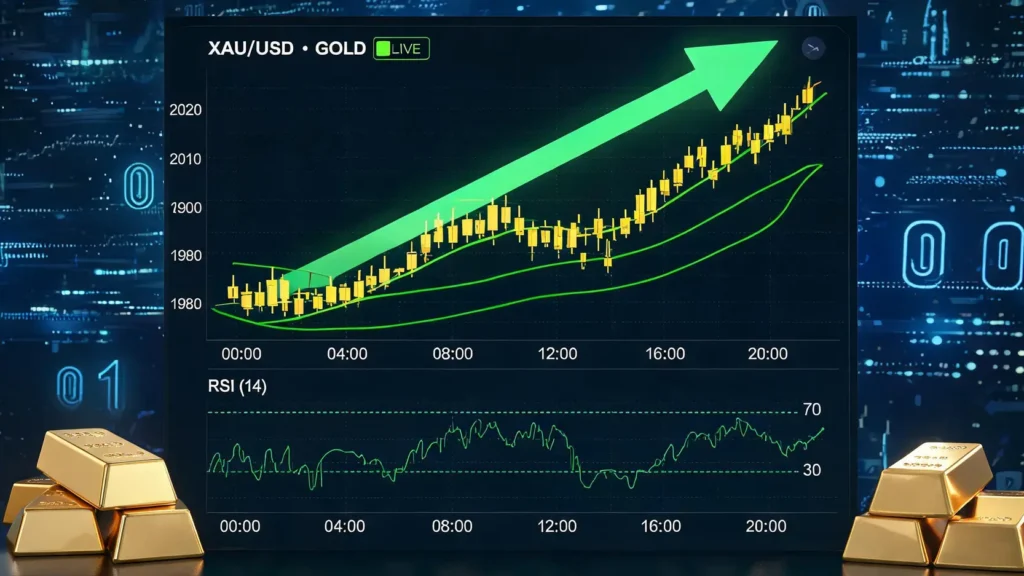
- Gold: Historically considered the ultimate safe-haven asset. It carries no counterparty risk and is not dependent on any government credit. It performs particularly well during global instability and currency depreciation.
- VIX Index Futures/ETFs: The VIX index, also known as the “fear index”, measures expected volatility over the next 30 days. When markets crash, fear spikes and the VIX surges. By buying VIX-related futures or ETFs, investors can profit during market downturns. However, VIX products carry high long-term holding costs and are not suitable for long-term holding, functioning more as short-term speculative or precise hedging tools.
- Strong Currencies: Such as the US dollar, Swiss franc, and Japanese yen, which tend to attract capital inflows and appreciate during regional or global crises due to their safe-haven status.
Strategy 3: Understand Dedicated Tail Risk Hedging Funds
For high-net-worth individuals or institutional investors, allocating capital to dedicated tail risk hedging funds is another option. These funds (such as Universa Investments where Nassim Nicholas Taleb serves as advisor) use complex derivative models to maintain positions that generate significant returns during market crashes.
These funds typically experience small losses most of the time (similar to paying insurance premiums) but during the critical 5% of crisis events, they can deliver extraordinary positive returns, providing strong protection for the overall portfolio.
Conclusion
In summary, in an increasingly complex and uncertain global financial market, relying solely on traditional portfolio diversification is no longer sufficient to withstand potential black swan events. Understanding the destructive impact of correlation risk and learning to use tools such as options, VIX, and gold to implement effective black swan hedging is an essential skill for every serious investor. This is not only about seeking higher returns, but also about preserving capital during unforeseen storms and surviving market cycles. It is time to review your asset allocation and begin building a more resilient portfolio capable of withstanding extreme risks, preparing for the next unknown challenge in the market.
FAQ
Q:Black Swan events are really completely unpredictable?
A:By definition, black swan events cannot be predicted in advance by existing models or historical data. Their occurrence fundamentally disrupts existing cognitive frameworks. What we can do is not to predict the next black swan, but to acknowledge its inevitability and build a resilient portfolio that can survive even under black swan shocks.
Q:Is Black Swan hedging suitable for retail investors?
A:Yes, but it requires caution and sufficient understanding. For retail investors, the simplest approach is to allocate a certain proportion of physical gold or gold ETFs within the portfolio. If using derivatives such as options or VIX, one must fully understand their mechanisms, risks, and costs. It is recommended to start with a small amount of capital and strictly treat it as “insurance expense” rather than a speculative tool.
Q:Is the cost of implementing Black Swan hedging strategies high?
A:The cost can be high or low depending on the tools and strategies used. Long-term purchase of out-of-the-money options will continuously incur costs, similar to paying insurance premiums. Allocating to gold does not involve time value decay, but it may incur opportunity cost (as its gains in a bull market may be lower than those of stocks). The key is to find a balance between cost and protection, treating hedging costs as a necessary insurance expense rather than a burden.
Q:Are there examples of black swan events outside financial markets?
A:Yes. The emergence of the internet was a disruptive black swan event for traditional media and retail industries. Similarly, sudden serious illness or accidents in personal life also carry black swan characteristics, as they are difficult to foresee and have severe impacts. This also highlights why insurance, emergency funds, and personal financial planning are essentially forms of hedging against black swan events in life.