US Stock Bull Market Guide: History & 2026 Outlook

Updated: 2026/03/11  |  CashbackIsland

us-stock-bull-market-analysis

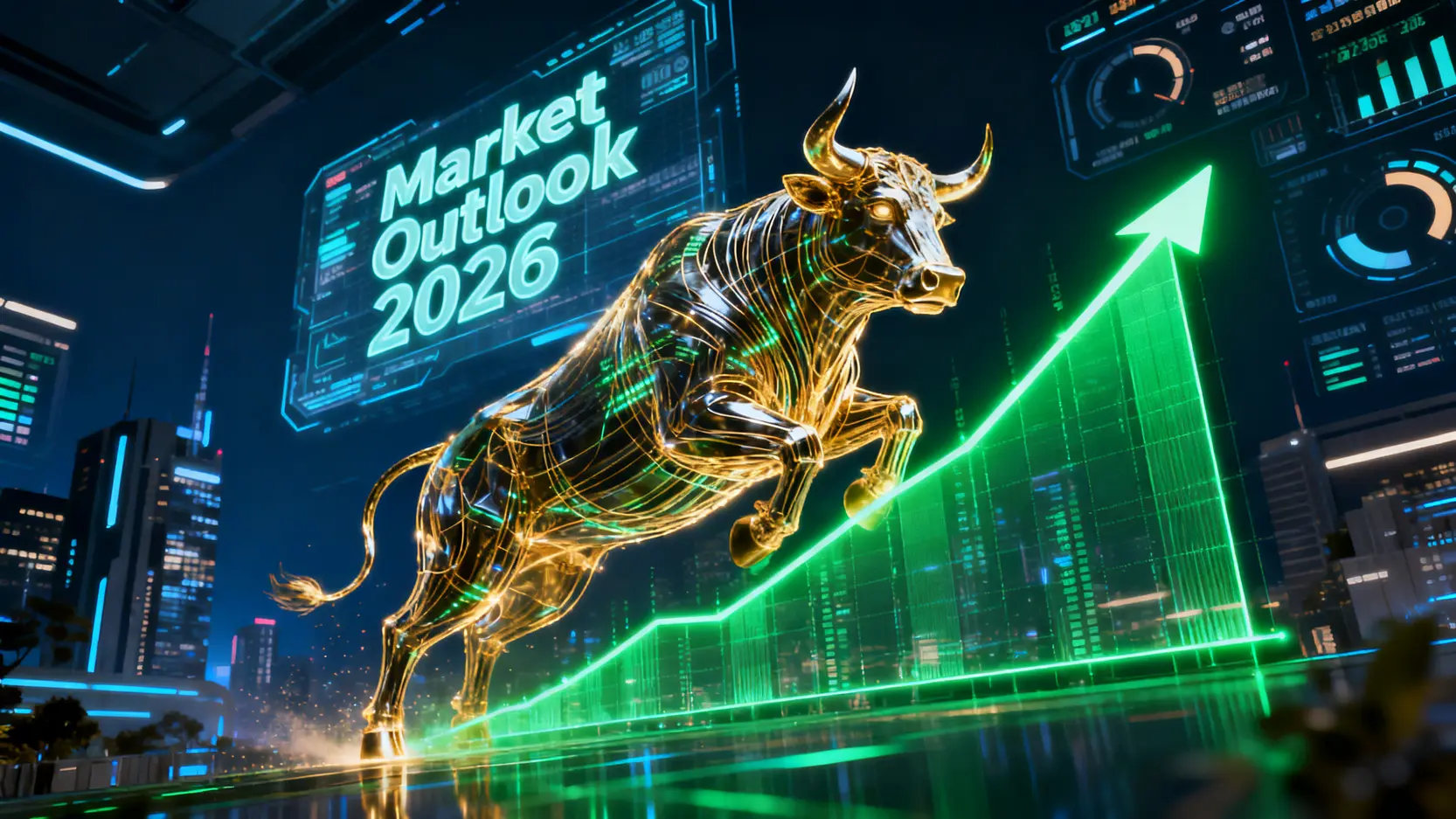
The US stock market has recently continued to reach new highs, and investor sentiment remains broadly optimistic. However, one common question inevitably arises: how long can this US stock bull market driven by the AI wave continue? To navigate the market steadily, blindly chasing highs is not a wise strategy. This article takes you through a comprehensive review of US bull market history, revealing the secrets behind the longest bull market on record through data, and combining current trends to provide a professional US stock outlook analysis for 2026, helping you make more informed investment decisions amid constantly shifting market conditions. 


What Exactly Is a US Stock Bull Market?

Before entering the market, it is important to first understand the rules of the game. People often talk about a “bull market”, but what is its precise definition? Understanding its characteristics and how it differs from a bear market is the first step in building the correct investment mindset.


The Official Definition of a Bull Market and Its Three Key Characteristics

Generally speaking, the most widely accepted technical definition of a “bull market” is when a major market index (such as the S&P 500 Index), rises more than 20% from its most recent low and does not fall again by more than 20%, marking the beginning of a bull market.

In addition to this 20% quantitative indicator, bull markets are usually accompanied by the following three major macro characteristics:

  • Optimistic market sentiment: Investor confidence is generally strong, expectations for the future are positive, and investors are more willing to take risks. Capital continues to flow into the market, while media coverage is often dominated by positive news, creating a reinforcing cycle.
  • Strong economic fundamentals: Bull markets are often accompanied by steady economic growth, relatively low unemployment, and continued growth in corporate earnings. Strong economic data provides a solid foundation for rising stock markets.
  • Rising corporate earnings: During a bull market, the sales and profits of most companies are increasing. Improved profitability directly drives stock prices higher and is a core force sustaining the bull market.


What Are the Key Differences Between a Bull Market and a Bear Market?

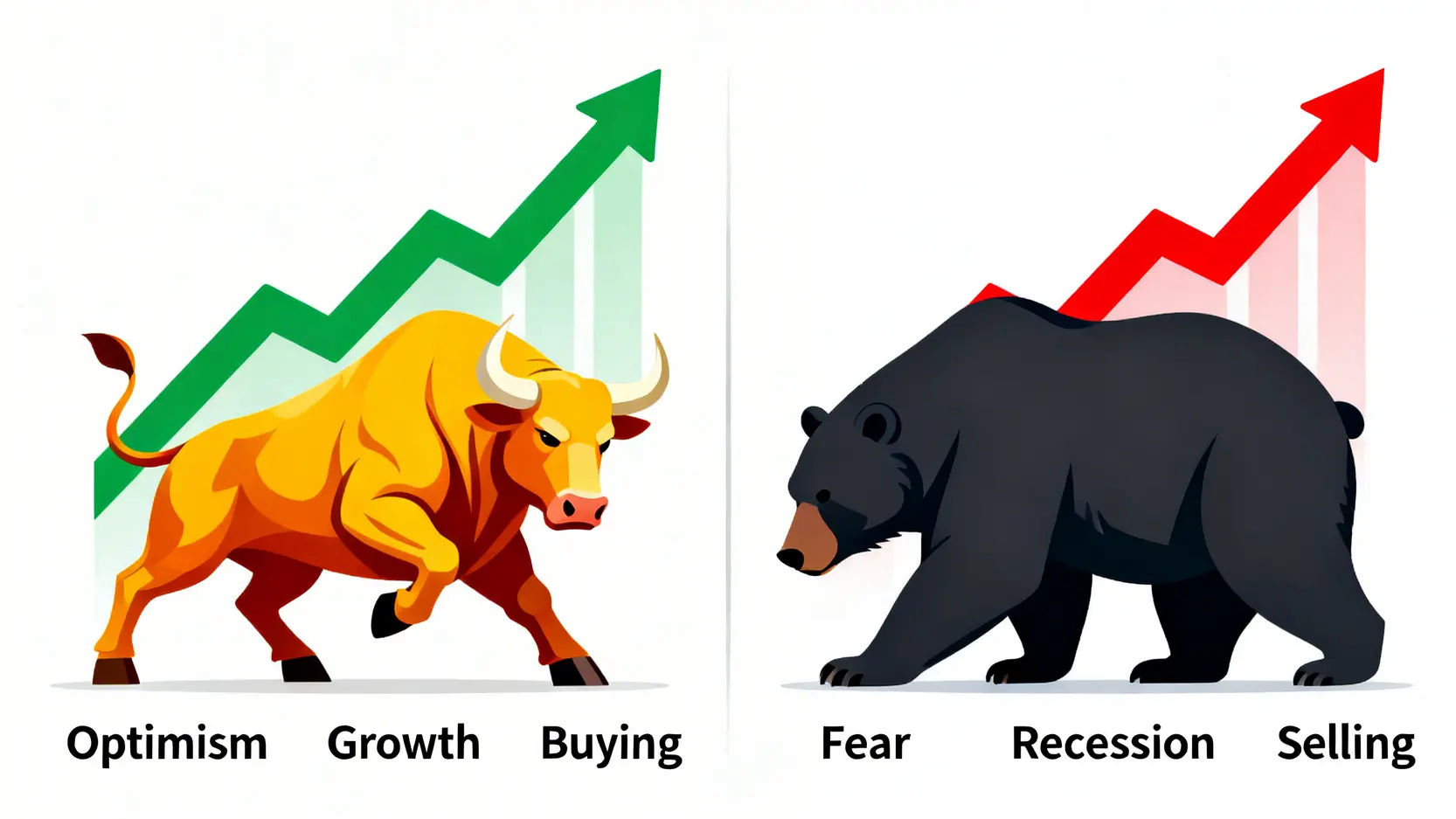
Bull markets and bear markets represent two opposite extremes of market trends and sentiment. Understanding their differences is essential. The following is a simple comparison table:

牛市與熊市的視覺化對比圖,左邊是代表上漲的公牛,右邊是代表下跌的黑熊。

Bull Market and Bear Market: Two Completely Different Faces of the Market.

Comparison Items

Bull Market

Bear Market
Market Direction Continuous Upward Trend Continuous Downward Trend
Technical Definition Rises More Than 20% from the Recent Low Falls More Than 20% from the Peak
Investor Sentiment Optimistic, Greedy, FOMO (Fear of Missing Out) Pessimistic, Fearful, Selling
Economic Environment Economic Growth, Low Unemployment, Strong Corporate Earnings Economic Recession, High Unemployment, Poor Corporate Earnings
Capital Flow Continuous Capital Inflows into the Stock Market Capital Flows Out of the Stock Market and into Safe Haven Assets

In simple terms, a bull market is a golden period for wealth growth, while a bear market is a time that tests investors’ patience and risk management. The two alternate with each other and together form a complete market cycle.


Further Reading (Highly Recommended)

What Is a Hedge Fund? Revealing the Four Core Strategies and Potential Risks of Top Funds


Reviewing US Bull Market History: The Golden Eras That Set Records

History does not repeat itself exactly, but it often rhymes. Looking back at the history of US bull markets helps us understand how markets operate and provides important reference points for analyzing the outlook of US stocks today. As the world’s largest economy, the US stock market has experienced several remarkable bull market cycles. 

Chart Analysis: The Duration and Average Returns of Past US Bull Markets

Since World War II, the US stock market has experienced more than ten major bull markets. Although the background and driving forces behind each cycle were different, they all demonstrated remarkable wealth creation effects. The following is a simplified data review of several notable bull markets (using the S&P 500 Index as an example).

Bull Market Period Duration (Approx.) Cumulative Return (Approx.)

Main Driving Factors

August 1982 – August 1987 5 Years +229% Reaganomics, Interest Rate Decline
October 1990 – March 2000 9.5 Years +417% Internet Revolution, Technology Bubble
October 2002 – October 2007 5 Years +101% Real Estate Boom, Financial Innovation
March 2009 – February 2020 10.9 Years +400% Monetary Easing, Rise of Technology Giants
March 2020 – January 2022 1.9 Years +114% Post Pandemic Recovery, Unlimited QE

*Note: The above data is a historical review and does not represent future performance.


Revealed! A Detailed Look at the Longest Bull Market in US History

As shown in the table above, the longest bull market in US history occurred from March 2009 to February 2020. This super bull market, lasting nearly 11 years, began amid the ruins of the global financial crisis and ended before the black swan event of the COVID pandemic.

The starting point of this bull market was extremely low, with market confidence collapsing. Yet it was precisely in this atmosphere of despair that opportunity quietly emerged. Under the Federal Reserve’s unprecedented monetary easing policies (QE) and near zero interest rate environment, abundant liquidity flowed into the capital markets. At the same time, technology giants represented by FAANG (Facebook, Apple, Amazon, Netflix, Google) seized the wave of mobile internet and cloud computing. Their earnings and market capitalizations grew exponentially, becoming the core engine driving index gains. The success of this period provided investors with valuable insight: major opportunities are often born during crises.


Three Key Factors Driving Historic Bull Markets

Looking across the history of US bull markets, although the driving forces behind each cycle differ in emphasis, they ultimately revolve around three main factors:

  1. Loose monetary policy: A low interest rate or even zero interest rate environment reduces borrowing costs for companies and stimulates investment and consumption. At the same time, abundant market liquidity provides a continuous flow of capital into the stock market.
  2. Revolutionary technological innovation: From the internet to mobile devices and now artificial intelligence (AI), every major technological revolution has created new industry leaders, delivering massive productivity improvements and profit potential. This becomes the most enduring fuel for bull markets.
  3. Stable macroeconomic environment: Moderate inflation, sustained economic growth, and relatively stable geopolitical conditions provide an important foundation for corporate development and investor confidence.

驅動牛市的三大關鍵因素示意圖,包含寬鬆貨幣政策、科技創新與穩定經濟三個齒輪共同推動市場上漲。

Loose monetary policy, technological innovation, and a stable economy are the three core engines driving historic bull markets.


2026 US Stock Outlook Analysis: How Much Further Can the Bull Market Go?

At present, the new bull market driven by AI technology stocks appears unstoppable. However, the higher the market rises, the more questions investors have. Is this bull market just a short lived surge, or the beginning of another long period of growth? The following analysis examines the US stock outlook for 2026 from multiple perspectives.


Mainstream Views of Wall Street Analysts: Optimistic, Neutral, and Pessimistic Scenarios

Currently, Wall Street holds differing views on the future direction of US stocks, which can generally be divided into three scenarios:

  • Optimistic scenario: AI technology continues to achieve breakthroughs and is rapidly commercialized across industries, bringing about a productivity revolution that further boosts the earnings and valuations of technology stocks. At the same time, the Federal Reserve successfully achieves a soft landing for the economy, inflation remains under control, monetary policy shifts toward easing, and the bull market continues to surge forward.
  • Neutral scenario: Much of the positive impact of AI has already been reflected in stock prices, and the market needs time to digest high valuations. Economic growth slows but does not enter recession. The stock market may enter a prolonged period of consolidation or moderate growth, with greater divergence in individual stock performance.
  • Pessimistic scenario: The lagging effects of high interest rates begin to appear, corporate earnings growth falls short of expectations, or even declines. Persistent inflation pressure forces the Federal Reserve to maintain a tightening policy. Meanwhile, escalating geopolitical conflicts could trigger significant market corrections and bring the bull market to an early end.


Key Variables Influencing the Future Outlook: AI Development, Interest Rate Policy, and Geopolitics

Looking ahead, three core variables will significantly affect the accuracy of US stock outlook analysis:

  • The real progress of AI development: AI is the central narrative of this bull market. The pace of technological progress, the breadth of commercial applications, and whether it can ultimately translate into substantial corporate earnings growth will be the most critical factors determining the height and duration of the bull market.
  • The Federal Reserve’s interest rate policy path: Interest rates act as the “gravitational force” determining asset valuations. The market generally expects the Federal Reserve to enter a rate cutting cycle at some point in the future, but the timing, pace, and magnitude of those cuts remain uncertain. Any policy change that differs from expectations could trigger significant market volatility.
  • Unpredictable geopolitical risks: Election outcomes in major economies, regional conflicts, and trade disputes could all become “black swan” events that shock the market and add uncertainty to the US stock outlook.


How Should Investors Position Themselves? Investment Strategy Suggestions in the Late Stage of a Bull Market

When facing a market filled with both opportunity and risk, investors should avoid blindly chasing highs and instead adopt a more cautious and diversified bull market investment strategy. The following are several practical suggestions:

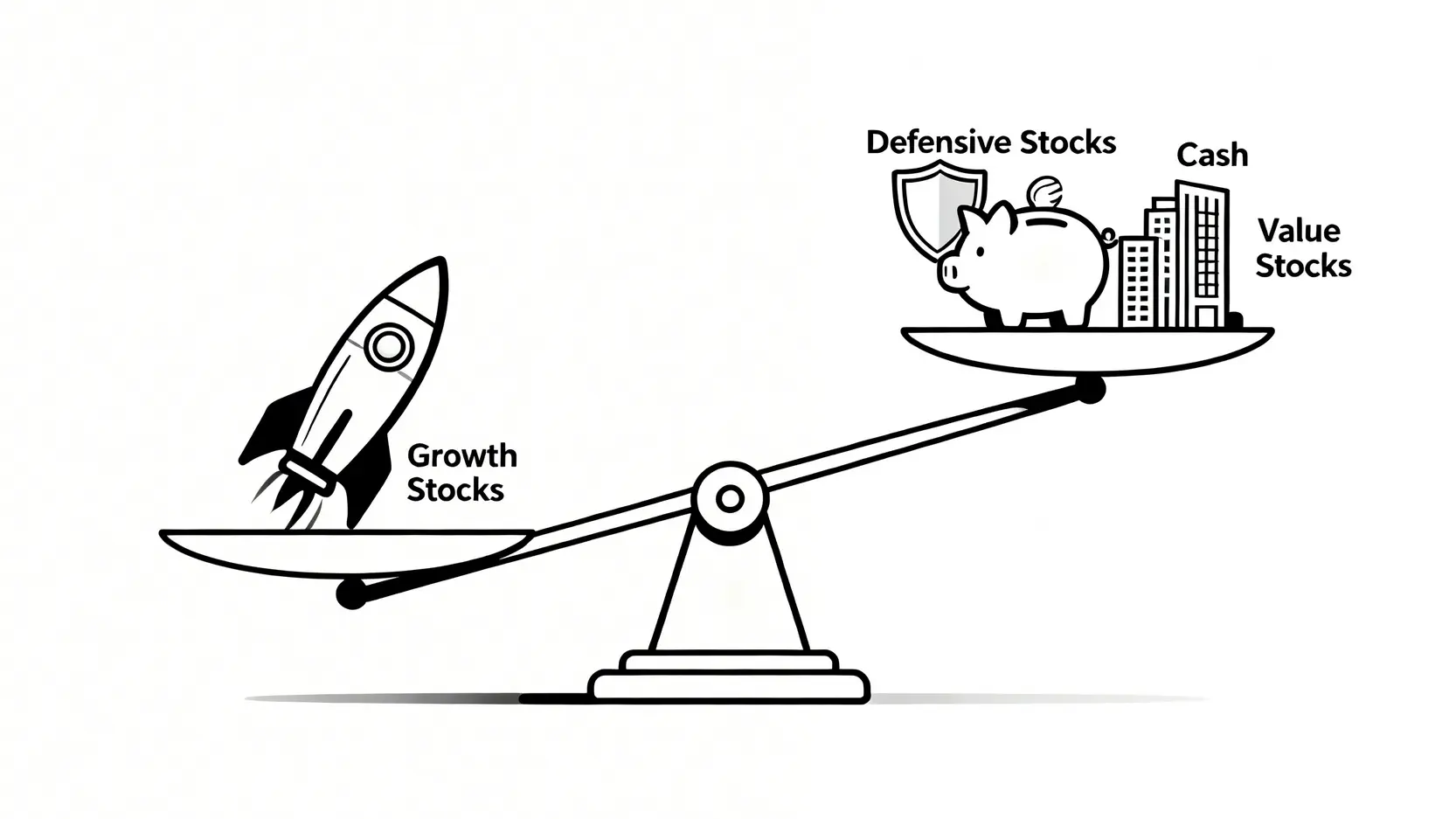
  • Maintain core allocations while diversifying: Technology growth stocks remain the main engine of the bull market, but investors may moderately increase exposure to value stocks, defensive sectors (such as utilities and consumer staples) and high quality bonds to diversify risk.
  • Focus on earnings quality rather than stories: In the later stage of a bull market, the market’s focus gradually shifts from “dreams” to “reality”. Choose companies with stable cash flow and clear profit models rather than stocks driven purely by speculative concepts.
  • Regular review and rebalancing: As the market fluctuates, the weight of different assets within a portfolio changes. Regularly reviewing and adjusting asset allocations, (such as quarterly or semi-annually), to return to the target ratio is an effective way to control risk.
  • Maintain a portion of cash: Holding a certain proportion of cash not only reduces the volatility of the overall portfolio but also ensures you have sufficient “ammunition” to seize opportunities to buy during market pullbacks.

牛市後期投資策略的平衡示意圖,天秤一端是成長股,另一端是防禦股、價值股與現金,象徵多元化配置。

In the later stage of a bull market, balancing growth and defense is the key strategy for achieving steady asset growth.


Common Questions (FAQ)

Q: How long does a bull market usually last?

A: Based on historical data, the average duration of a US stock bull market is about 4 to 5 years, but the length varies greatly. For example, the longest bull market on record lasted nearly 11 years, while the shortest may last only one or two years. The duration of a bull market depends on many complex factors, including economic fundamentals, monetary policy, and technological innovation.

Q: Is it still a good time to enter the US stock market now?

A: There is no standard answer to this question. For long term investors, choosing quality assets and holding them for the long term is more important than trying to predict short term market tops and bottoms. Instead of asking “is it too late”, a better question is “have I found a good company worth investing in for the long term”. Adopting a phased investment approach (such as regular fixed investments) can effectively reduce the risk of buying at a single high point.

Q: How should I adjust my investment portfolio during a bull market?

A: During a bull market, investors may moderately increase allocation to growth stocks while ensuring portfolio diversification. As the bull market moves into its middle and later stages, investors may consider gradually taking profits from assets that have risen significantly and reallocating capital into relatively lagging or defensive sectors to lock in profits and reduce potential correction risks.

Q: Will the AI revolution create the longest bull market in history?

A: AI is undoubtedly a transformative technology with potential comparable to the internet revolution. This is also the main reason why the market is highly optimistic about the current bull market cycle. In theory, if AI continues to deliver major productivity improvements and significant economic benefits, it has the potential to support a long lasting bull market. However, every historical technology bubble reminds us to remain cautious about excessive market optimism and valuation bubbles.

Q: What are the signals that a bull market may be ending?

A: The end of a bull market usually does not have a single clear signal but is reflected through a combination of indicators. Common warning signs include rapid and aggressive interest rate hikes by the Federal Reserve, uncontrolled inflation, an inverted yield curve, extremely high market valuations (such as excessive price to earnings ratios), extremely greedy investor sentiment (with large inflows of retail investors) and a broad slowdown in corporate earnings growth.


Conclusion

In summary, deeply understanding the history of US bull markets and the factors behind the longest bull market provides a solid foundation for objectively evaluating the current US stock outlook. The current AI driven bull market holds enormous potential but also faces challenges such as high valuations and macroeconomic uncertainty. Although the future of the market cannot be predicted precisely, by understanding historical patterns, analyzing key variables, and developing sound investment strategies, investors can still navigate this opportunity filled market and steadily move toward wealth growth. Successful investing always begins with thorough research and rational planning.

编者
Evan Lin

Evan Lin

我是Evan Lin,从大学时期开始接触外汇交易,至今已有多年实战经验,熟悉技术分析与EA策略,热衷于研究市场脉动与风险管控,喜欢分享实战经验和交易技巧,和大家一起学习、一起进步!

If you liked this article, please share it!

Related Articles

  • Order Flow Analysis Tools: Track Institutional Activity
    In-Depth Review of Intelligent Order Flow Detection Tools: Understanding Institutional Activity and Identifying Real Market Buying and Selling Pressure What Is Order Flow, and Why Is It a “Leading Indicator” for Price Prediction? Candlestick charts and technical indicators can be misleading, but the real-money "Order Flow" within the market cannot....
    2026 年 6 月 4 日
  • Social Sentiment Indicators: Predicting Stock Trends
    Social Sentiment Quantitative Indicators: Mining PTT and Dcard Discussions to Predict Stock Prices What Are Social Sentiment Quantitative Indicators, and Why Are They Becoming Increasingly Important? In an era of information overload, financial markets are no longer driven solely by cold financial statements and macroeconomic data. The "Shipping King" phenomenon...
    2026 年 6 月 4 日
  • Taiwan FSC Futures Broker Verification Guide
    Avoid Fraudulent Platforms! A Visual Guide to Taiwan FSC Licensed Futures Merchant Verification and Scam Prevention In recent years, driven by heightened volatility in global financial markets and the impact of monetary easing policies worldwide, more investors have begun seeking diversified investment instruments. However, underground futures operators and overseas fraudulent...
    2026 年 6 月 4 日
返回顶部