Swiss Franc Guide: Safe-Haven & Investment Risks

Swiss Franc Safe-Haven Complete Guide: Why Is the Swiss Franc a Safe-Haven Currency? 5 Investment Methods and Risks
In an environment of global economic uncertainty and rising geopolitical risks, investors are increasingly seeking safe havens for their capital. The status of the Swiss franc safe-haven currency (CHF) has once again become a market focus. But do you truly understand “why the Swiss franc is a safe haven”? This is not merely a stereotypical belief spread by hearsay; it is supported by a solid political and economic foundation. This article will provide an in-depth analysis of the real reasons why the Swiss franc has become a safe-haven currency, and offer multiple practical “investment methods for the Swiss franc” to help you allocate assets steadily in turbulent times and find a safe haven for your capital.
Why Is the Swiss Franc a Safe-Haven Currency? Revealing the 3 Pillars of Stability Behind the Swiss Franc
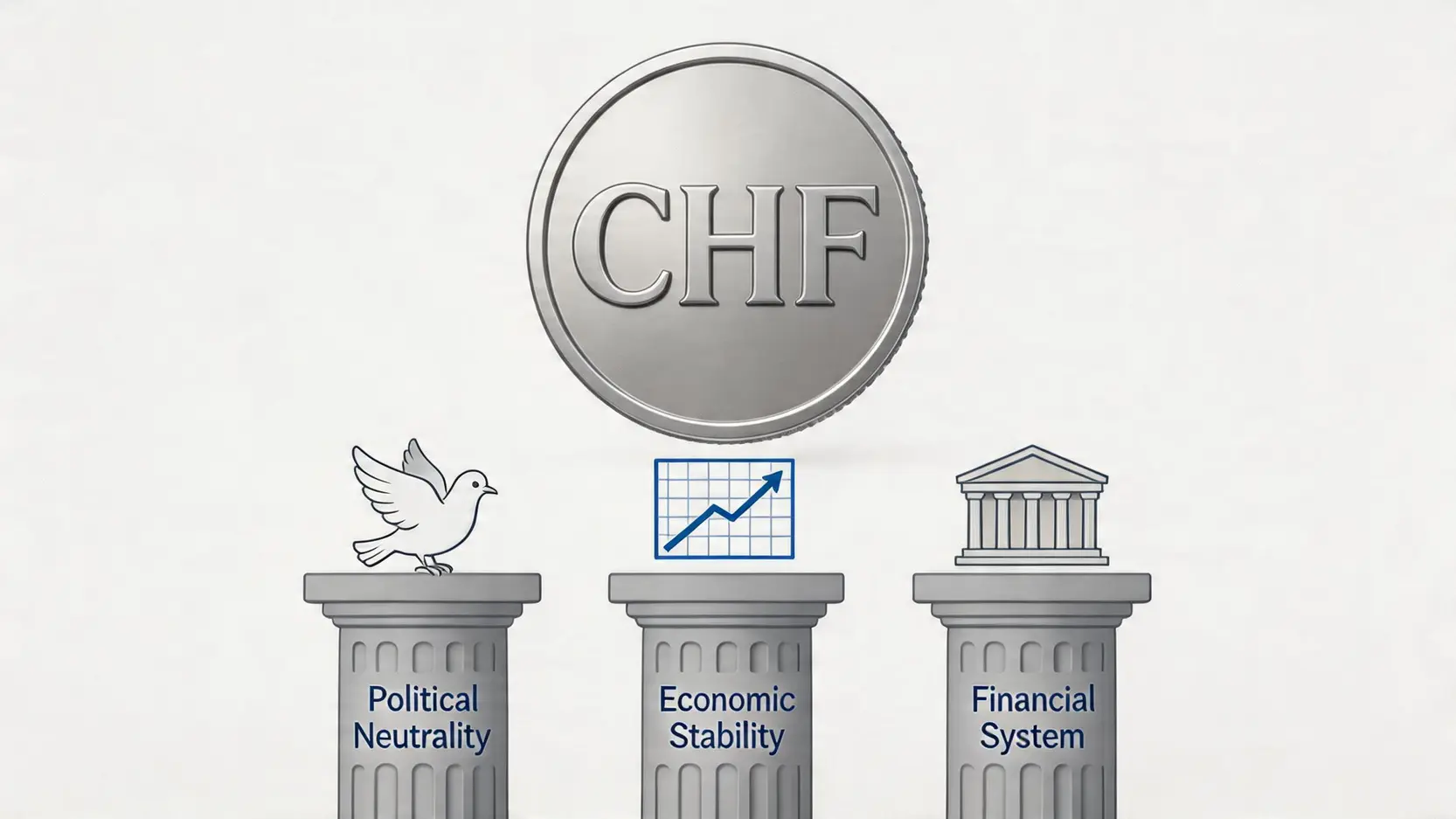
The Swiss franc’s safe-haven status is not accidental, but built on centuries of solid foundations. When markets become volatile, global capital moves like migratory birds in search of the safest destination, and Switzerland is often one of the top choices. The following three pillars are the key factors supporting the strong credibility of the Swiss franc.

The three pillars of Swiss franc stability: political neutrality, economic stability, and a strong financial system.
1. Permanent Neutrality: A Safe Haven Away from Geopolitical Conflicts
Switzerland’s status as a permanently neutral country is the core of its safe-haven characteristics. Since the 1815 “Congress of Vienna” confirmed its neutrality, Switzerland has successfully stayed out of both World Wars and multiple regional conflicts. This unique political stance has made it an extremely stable political entity. For investors, this means their assets are not exposed to risks of freezing or destruction due to wars or sudden political disputes. While other countries are engaged in geopolitical struggles, Switzerland’s stability becomes especially valuable, naturally attracting large amounts of international capital seeking safety.
2. Strong Economic and Fiscal Fundamentals: Long-Term Low Inflation and Low Debt
A currency’s value ultimately depends on its economic fundamentals. Switzerland has a highly developed and competitive economy, known for advanced manufacturing, financial services, and the pharmaceutical industry. More importantly, Switzerland has long maintained extremely low inflation and government debt levels. This is the result of prudent fiscal policies and an independent central bank, the Swiss National Bank (SNB). Compared to many major economies that frequently adopt large-scale monetary easing, Switzerland’s commitment to maintaining purchasing power gives global investors strong confidence in the long-term value of the Swiss franc. A stable economy means the currency is less likely to depreciate significantly, which is a prerequisite for becoming a safe-haven currency.
3. Strong Financial System and Currency Credibility: A Guarantee of Global Investor Confidence
Switzerland is one of the world’s major financial centers, with a mature, well-regulated, and highly reputable banking system. Although its banking secrecy rules have been adjusted in recent years under international pressure, its financial services remain among the world’s best in terms of professionalism, stability, and credibility. Massive gold reserves and foreign exchange reserves provide solid value support for the Swiss franc. Global wealthy individuals and institutional investors are willing to park their funds in Switzerland precisely because of their strong trust in its financial system. This currency credibility, built through history, institutions, and strength, is a moat that makes the Swiss franc difficult to replace.
Further Reading (Highly Recommended)
CFD What Is It? 2026 Hong Kong CFD Trading Guide: 5 Major Pros and Cons Explained
Comprehensive Comparison: Swiss Franc vs. Other Major Safe-Haven Assets
In the world of safe-haven assets, the Swiss franc is not the only option. Gold, the US dollar, and the Japanese yen are all traditional safe-haven tools. Understanding their differences helps investors make more informed allocations under different market conditions.
Swiss Franc vs. Gold: Why Is the Swiss Franc Called “Paper Gold”?
Gold is considered the ultimate safe-haven asset because it does not belong to any country’s credit system. The Swiss franc is known as “paper gold” because it shares similar safe-haven logic in certain aspects. Before 2000, the Swiss constitution required that 40% of its currency be backed by gold reserves, which established its gold-like credibility. Although this requirement has been abolished, its high credibility and low volatility characteristics have continued.
- Similarities: Both are favored during market panic, and both have relatively stable supply, making them less affected by drastic policies from a single country.
- Main Differences:
- Liquidity and transaction costs: As a currency, the Swiss franc has extremely high liquidity and relatively low transaction costs. Physical gold, on the other hand, involves storage, transportation, and insurance costs, making transactions less convenient.
- Interest: Holding gold does not generate any interest. Holding Swiss francs (for example, in a bank account) may involve negative interest rates in recent years, but it still has an interest rate concept and is influenced by central bank policies.
Swiss Franc vs. US Dollar and Japanese Yen: Differences in Characteristics and Safe-Haven Functions
The US dollar (USD) and Japanese yen (JPY) are also important safe-haven currencies, but their safe-haven logic is not exactly the same as that of the Swiss franc.
| Assets | Safe-Haven Logic | Advantages |
Disadvantages |
| Swiss Franc (CHF) | Political neutrality, economic stability, and fiscal prudence | Extremely high stability, with low correlation to risks in major global political and economic systems | Relatively small market size, easily affected by intervention from the Swiss National Bank, and long-term low or negative interest rate environment |
| US Dollar (USD) | Global reserve currency status, unmatched market depth and liquidity | During market turmoil, companies and countries need US dollars to settle debt, causing demand to surge | Directly influenced by US economic data and monetary policy (such as rate hikes or cuts), with relatively high volatility |
| Japanese Yen (JPY) | World’s largest creditor nation, extensive overseas assets, low interest rates leading to carry trade unwinding |
When global risk rises, Japanese investors tend to repatriate overseas funds and convert them into yen, pushing up the exchange rate |
Long constrained by deflationary pressure, with high unpredictability in Bank of Japan policy |

The operating logic of the three major safe-haven currencies is different.
5 Practical Methods to Invest in the Swiss Franc
After understanding the safe-haven logic of the Swiss franc, the next step is how to incorporate it into your investment portfolio. The following introduces five practical methods ranging from simple to advanced, suitable for investors with different risk preferences.
Method 1: Direct Trading via Forex Platforms (CFDs)
This is the most direct and flexible approach. Through forex brokers, you can trade currency pairs related to the Swiss franc, such as EUR/CHF and USD/CHF. Using Contracts for Difference (CFDs), investors can engage in leveraged trading and operate whether they are bullish (long) or bearish (short) on the Swiss franc. However, it is important to note that leverage amplifies both gains and losses, making this more suitable for investors with some trading experience and risk management capability. To learn more about CFD trading details, you can refer to this CFD trading guide.
Method 2: Buy Swiss Franc ETFs (Exchange-Traded Funds)
For investors familiar with stock trading, ETFs are a very convenient tool. There is no need to open a dedicated forex account, as you can trade directly through your securities account. There are ETFs that specifically track the performance of the Swiss franc, such as the Invesco CurrencyShares Swiss Franc Trust (ticker: FXF) listed in the US. Buying such ETFs is equivalent to indirectly holding the Swiss franc, with operations as simple as trading a stock.
Method 3: Open a Foreign Currency Savings Account
This is the most traditional and lowest-risk method. You can open a Swiss franc savings account at a bank that offers multi-currency services and convert your local currency into Swiss francs for deposit. The advantage of this method is its simplicity and high security. The downside is that Switzerland’s long-term low or even negative interest rate environment means holding cash may generate no interest income and may even incur account management fees. This method is suitable for investors who focus purely on capital preservation and do not seek short-term returns.
Method 4: Invest in Swiss Stocks or Bonds
This is an indirect investment approach. By purchasing blue-chip stocks listed on the SIX Swiss Exchange (such as Nestlé, Roche, Novartis) or Swiss government bonds, your assets are denominated in Swiss francs. When the franc appreciates, even if stock or bond prices remain unchanged, you may still gain foreign exchange profits when converting back to your local currency. This method not only gives you exposure to high-quality Swiss companies but also helps diversify currency risk.
Method 5: Invest in Related Thematic Funds
If you do not want to spend time researching individual stocks or bonds, you can choose mutual funds or thematic funds focused on the Swiss market. These funds are managed by professional fund managers and invest in a diversified basket of Swiss assets. This provides a convenient way to gain broad exposure to the Swiss economy while obtaining Swiss franc exposure and achieving diversification within the Swiss market.
Further Reading (Highly Recommended)
CFD What Is It? 2026 Hong Kong CFD Trading Guide: 5 Major Pros and Cons Explained
Risks and Considerations of Investing in the Swiss Franc
Although the Swiss franc is widely regarded as a safe-haven currency, all investments carry risks. Before allocating capital, it is important to understand the following potential drawbacks.
1. Swiss National Bank (SNB) Policy Intervention Risk
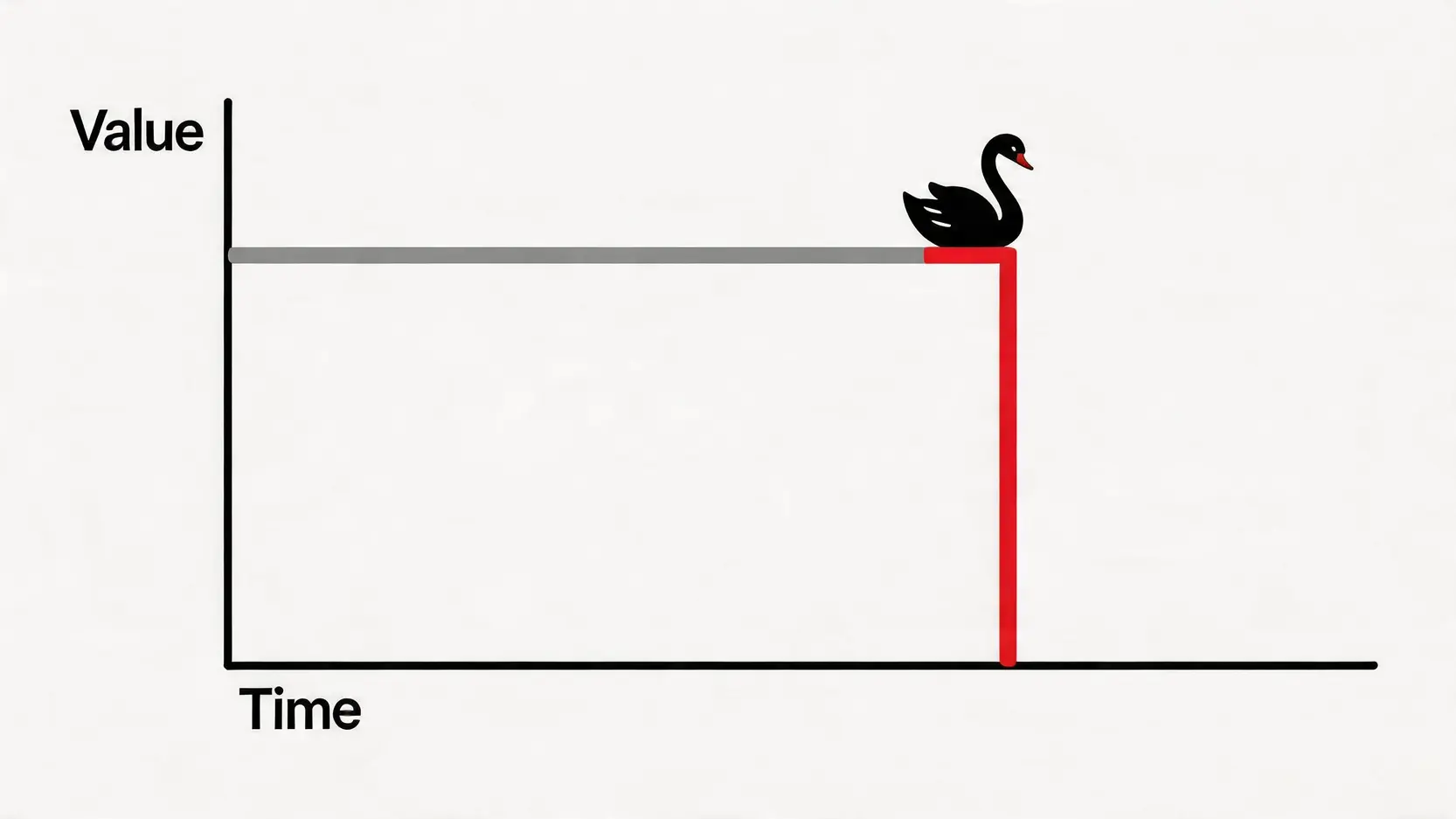
Switzerland is an export-oriented economy, and an overly strong Swiss franc can significantly harm export competitiveness. Therefore, the Swiss National Bank (SNB) sometimes intervenes in the foreign exchange market by selling Swiss francs and buying foreign currencies to suppress appreciation. The most famous example occurred in 2015, when the SNB suddenly removed the 1.20 floor for EUR/CHF, causing the franc to surge nearly 30% in a single day and triggering severe market turmoil, known as the “Swiss franc black swan event”.

Sudden central bank intervention can trigger market shocks similar to a “black swan” event.
Investors must be aware that unexpected central bank actions may cause extreme exchange rate volatility.
2. Exchange Rate Volatility Driven by Global Economic Changes
The Swiss franc’s safe-haven status is relative. When global risk sentiment improves and economic outlook becomes optimistic, investors may sell safe-haven assets and move into higher-yielding risk assets, which can weaken the franc. In addition, weak Swiss economic data or severe economic issues in major trading partners (such as the eurozone) may also negatively affect the franc’s value.
3. Impact of Low or Negative Interest Rates
To prevent excessive appreciation of the Swiss franc, Switzerland has long maintained extremely low or even negative interest rates. This means the opportunity cost of holding Swiss francs is high. When other major economies (such as the US) enter a rate-hike cycle, holding US dollars can generate attractive interest income, while holding Swiss francs may yield no interest or even incur deposit fees. For long-term investors, this is a real cost that must be considered.
Frequently Asked Questions (FAQ) About Investing in the Swiss Franc
Q: Do I need a lot of money to invest in the Swiss franc?
A: Not at all. The entry threshold depends on the method you choose. Opening a foreign currency account may only require a few hundred or a few thousand in equivalent funds. If you trade through a forex CFD platform, you can even start with tens of US dollars by using leverage. The entry requirement for ETFs is also only the price of a single share. Therefore, regardless of the amount of capital, there are suitable entry methods for everyone.
Q: Is now a good time to buy the Swiss franc?
A: There is no standard answer, as it depends on global economic conditions and your investment objectives. Generally, when geopolitical tensions rise and financial market uncertainty increases, demand for the Swiss franc as a safe haven tends to rise. Conversely, during periods of global economic expansion, its attractiveness may decline. Treating the Swiss franc as the “insurance” component of a portfolio and allocating it gradually over the long term, rather than trying to time short-term highs and lows, may be a more prudent strategy.
Q: What are the benefits of Swiss franc appreciation for my investments?
A: If your base currency is not the Swiss franc (for example, US dollars or Hong Kong dollars), when the Swiss franc appreciates, the value of your Swiss franc-denominated assets (whether cash, stocks, or ETFs) increases when converted back into your base currency, generating foreign exchange gains. This is the core logic behind how investing in safe-haven currencies helps protect asset value during market turbulence.
Q: What is the currency code and symbol of the Swiss franc?
A: The official international currency code for the Swiss franc is CHF, where CH stands for Switzerland (Confoederatio Helvetica) and F stands for Franc. Its currency symbols are typically Fr. or SFr. When trading forex or checking quotes, always recognize CHF as the correct code.
Conclusion
In summary, the Swiss franc has established its unshakable status as a global safe-haven currency due to its unique permanent neutrality, strong economic and fiscal fundamentals, and a highly trusted financial system. For investors seeking to diversify portfolio risk and preserve capital in uncertain environments, understanding and appropriately allocating to the Swiss franc is an important strategy. The five investment methods introduced in this article each have their own advantages and disadvantages. Investors should choose the most suitable tools based on their risk tolerance, investment horizon, and objectives. Before making any investment decisions, always conduct thorough research and remember that all investments involve risk.
Related Articles
-
Practical Applications of Volatility Surfaces: From Options Modeling to Advanced Skew Trading Strategies In options markets, implied volatility is never a flat line. Instead, it forms complex "smile" or "skew" surfaces. For advanced traders, mastering the practical applications of volatility surfaces is equivalent to possessing a lens that reveals market...2026 年 6 月 3 日
-
Building a Foreign Capital Flow Copy Trading Model: A Stock Market Indicator for Accurately Tracking Institutional Positioning In Asia-Pacific stock markets, foreign capital inflows and outflows often determine the direction of the index. However, simply looking at daily net buy and sell data is no longer enough. Only by building...2026 年 6 月 3 日
-
Options Buyer Strategies During Extreme Market Conditions: Black Swan Hedging and Cross-Market Arbitrage During Volatility Surges The most terrifying aspect of financial markets is not a gradual decline, but overnight flash crashes and cross-market capital withdrawals accompanied by volatility surges. In the highly unpredictable global macroeconomic environment of 2026, geopolitical...2026 年 6 月 3 日