RSI Divergence Is a Strong Reversal Signal: Bullish Divergence (Left) Indicates a Potential Rise, Bearish Divergence (Right) Indicates a Potential Decline.
Must-Read: Three Blind Spots and Key Considerations When Using RSI Overbought and Oversold
Although RSI is highly useful, it is not a universal solution. Understanding its limitations helps prevent misinterpretation of RSI overbought and oversold signals.
Blind Spot One: Indicator Passivation in Strong Trends
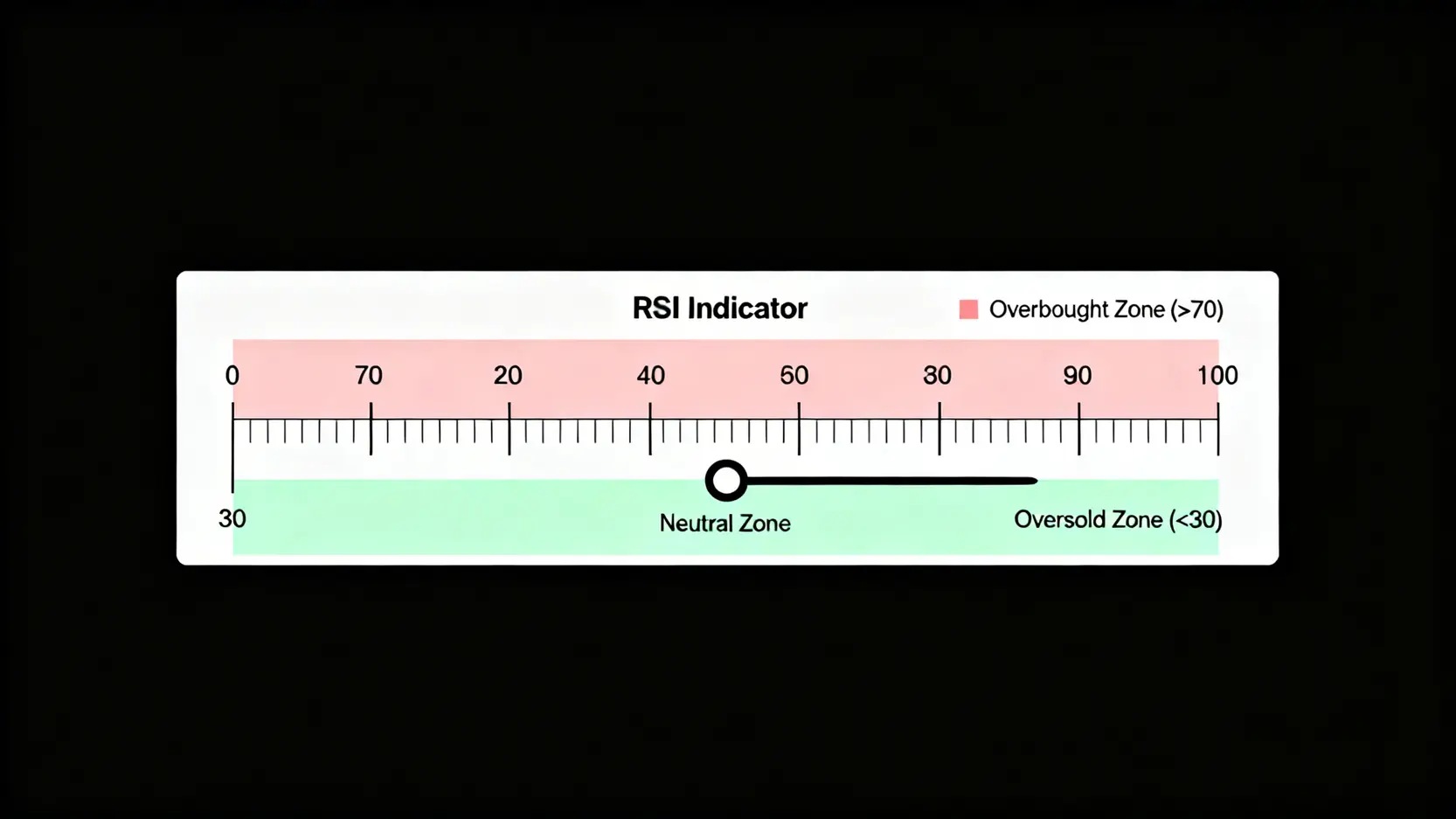
In extremely strong bull or bear markets, RSI may remain in the overbought zone (>70) or oversold zone (<30) for a prolonged period, a phenomenon known as “indicator passivation”. If you short solely because RSI is overbought, or go long solely because it is oversold, you may be overwhelmed by the prevailing market trend. Therefore, in clearly trending markets, RSI overbought and oversold signals should be used cautiously or primarily as a reference for trend-following strategies.
Blind Spot Two: The Risk of Using RSI Signals Alone
Any single technical indicator has limitations. Combining RSI with other analytical tools significantly improves decision accuracy. For example:
- Combine with Trendlines: When an RSI oversold signal appears near an ascending trendline, the probability of a successful buy increases.
- Combine with Candlestick Patterns: When bullish engulfing or hammer patterns appear and RSI is also in the oversold zone, the signal becomes more reliable.
- Combine with Moving Averages (MA): Use moving averages to determine the primary trend, and then use RSI to identify pullback entry points.
Blind Spot Three: The Impact of Different Period Parameter Settings
The standard RSI parameter is 14. If the parameter is reduced (for example to 9), RSI becomes more sensitive, generating more frequent overbought and oversold signals but also more false signals. If the parameter is increased (for example to 25), RSI becomes smoother, producing fewer but potentially more reliable signals, though with greater lag. For beginners, it is recommended to start with the standard 14-period setting and adjust according to personal trading style once familiar.
Frequently Asked Questions About RSI Overbought and Oversold (FAQ)
Q: What does it mean when RSI exceeds 80 or falls below 20?
A: This indicates that the market has entered an “extremely overbought” or “extremely oversold” condition. Generally, RSI above 80 or below 20 is a stronger signal than 70/30, suggesting a high probability of a price pullback or rebound. However, in extreme market conditions, the risk of indicator passivation also exists, and confirmation with other analytical tools is still necessary.
Q: Should you definitely sell when RSI is overbought?
A: Not necessarily. When RSI enters the overbought zone (>70), it is merely a warning that upward momentum may be weakening, but it does not mean the price will immediately decline. In a strong uptrend, the price can continue to rise even when RSI is overbought. A more prudent strategy is to wait for bearish divergence in RSI or for the price to break below key support levels before considering selling.
Q: Besides RSI, what other indicators can be used to identify overbought and oversold conditions?
A: Certainly. In technical analysis, several oscillators can be used to identify overbought and oversold conditions. Common examples include:
1. KD Indicator (Stochastic Oscillator): Also uses overbought (>80) and oversold (<20) zones for judgment and is more sensitive to price fluctuations than RSI.
2. Williams %R: Its value ranges from -100 to 0, typically considering above -20 as overbought and below -80 as oversold.
3. Bollinger Bands: When price touches or breaks above the upper band, it is considered overbought; when it touches or breaks below the lower band, it is considered oversold.
Q: Is RSI applicable to all financial instruments?
A: Yes. RSI is a highly versatile technical indicator widely applied in stocks, forex, futures, cryptocurrencies, and nearly all financial markets with price fluctuations. However, because volatility characteristics differ across markets, traders may need to fine-tune the RSI overbought and oversold thresholds based on historical data of specific markets (for example, certain high-volatility assets may be better suited to using 80/20 instead of 70/30).
Conclusion
In summary, the RSI indicator is a powerful tool for assessing market sentiment and identifying RSI overbought and oversold conditions. By thoroughly understanding the meaning behind overbought and oversold and combining trend analysis and divergence signals to capture RSI oversold signals, investors can plan entry and exit strategies more effectively. Remember that no indicator is perfect. Only by combining RSI with other analytical tools such as trendlines and moving averages, while remaining aware of the risk of indicator passivation, can you maintain an advantage in volatile markets.