Nomura Fund Review 2026: Performance & Risk Analysis

[2026 Nomura Fund Review] Is Nomura Asset Management Trustworthy? A Comprehensive Breakdown of Fund Performance and Risks
Amid the wide array of investment options in the market, Nomura Asset Management and its funds are often a key focus for investors. Is “Nomura fund performance” truly as strong as rumored? What options are available in the Hong Kong market? This comprehensive “Nomura fund review” provides an in-depth analysis, from company background and investment philosophy to the performance of its flagship funds, and explores investment strategies for Nomura funds in the Hong Kong market, helping you determine whether Nomura funds are worth including in your portfolio in 2026.
Introduction to Nomura Asset Management
To evaluate a company’s investment products, it is essential to first understand its background and philosophy. Nomura Asset Management is not only a giant in Japan’s financial industry, but its influence also extends globally.
Company Background: One of Japan’s Largest Asset Management Companies
Nomura Asset Management is a core member of Nomura Holdings. Since its establishment in 1959, it has grown into one of the leading asset management institutions in Japan and Asia. Headquartered in Tokyo, the company leverages its deep market foundation and extensive research network to manage hundreds of billions of dollars in assets. Its clients are spread across the globe, including pension funds, financial institutions, sovereign wealth funds, and individual investors, demonstrating its strong industry position and reputation.
Core Investment Philosophy and Global Presence
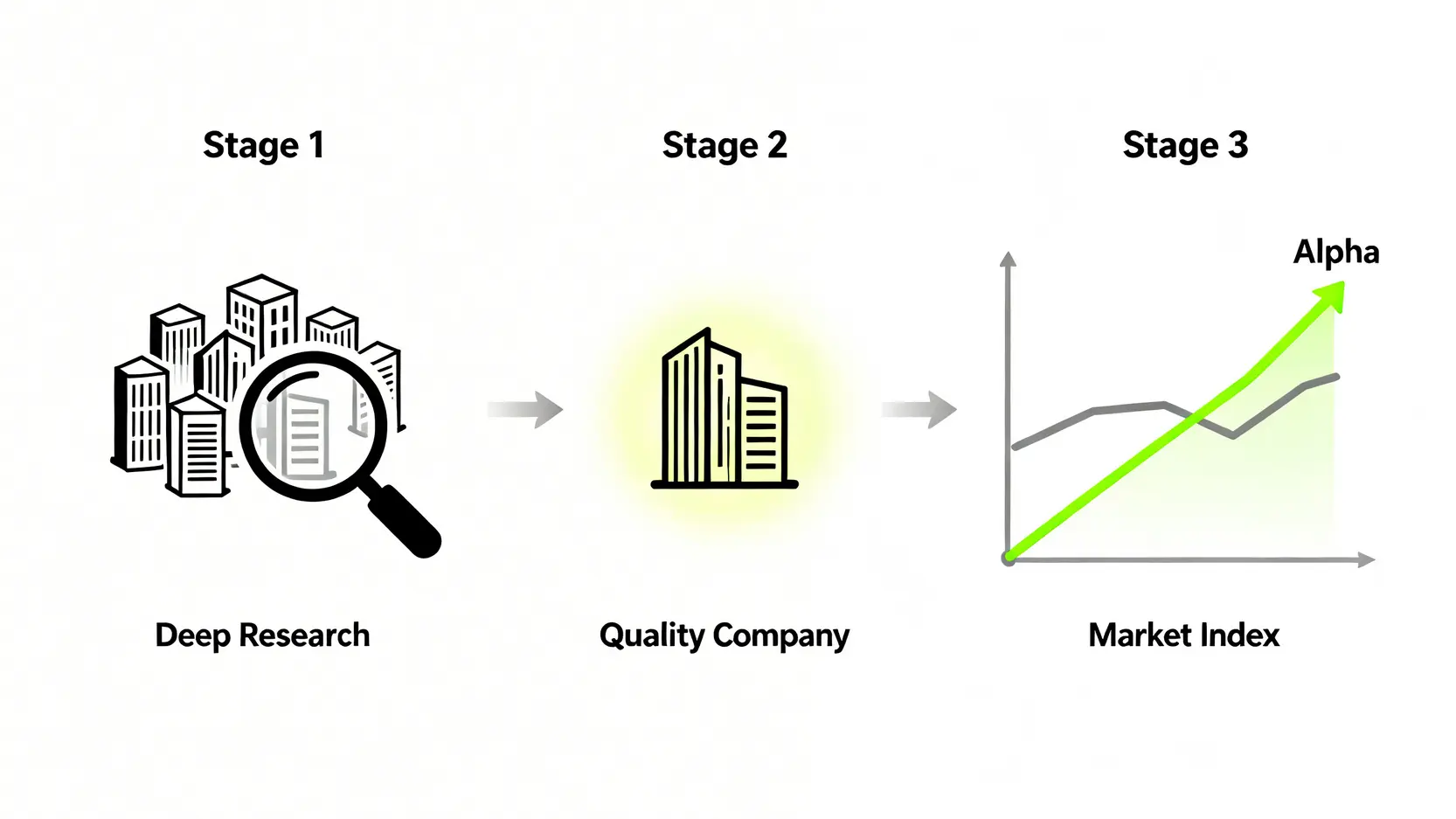
Nomura’s core investment philosophy emphasizes “active management driven by in-depth research”. They believe that through rigorous fundamental analysis and on-site research, they can identify high-quality companies with long-term growth potential. Rather than passively tracking indices, Nomura’s fund managers prefer precise stock selection to strive for “Alpha” returns that outperform the market. Currently, Nomura has more than 20 offices worldwide, including New York, London, Singapore, and Hong Kong, forming a global investment research network that ensures timely insights into major markets.

Nomura’s Core Philosophy: Generating Alpha Returns Through In-Depth Research
Further Reading (Highly Recommended)
Review of Nomura Fund Performance: A Look at Flagship Fund Results
Theory alone is not enough. To evaluate the performance of Nomura funds, the best approach is to directly analyze the long-term performance of several representative funds. Below, we examine the performance of its flagship funds across different market categories.
Taiwan Equity Fund Series: Taking the Nomura Taiwan Fund as an Example
Although Hong Kong investors tend to focus more on global markets, Nomura’s expertise in single-market investment can be seen from the performance of its Taiwan equity funds. Taking the “Nomura Taiwan Fund” as an example, this fund has long been a flagship product in the Taiwan market. It focuses on identifying companies in the Taiwan stock market with technological advantages, strong corporate governance, and long-term competitiveness. Through flexible portfolio adjustments, the fund has demonstrated relative resilience and strong upside potential across multiple bull and bear market cycles, making it an excellent case study of Nomura’s “bottom-up” stock selection strategy.
Global and Japan Funds: Analysis of Nomura Japan Strategic Value Fund
For Hong Kong investors, Nomura’s Japan and global thematic funds are more relevant. Among them, the “Nomura Japan Strategic Value Fund” is one of its flagship products. This fund focuses on identifying undervalued Japanese equities and has delivered strong performance amid the recent recovery of the Japanese stock market. The fund manager not only considers traditional valuation metrics (such as price-to-earnings ratio and price-to-book ratio), but also evaluates intangible assets and potential structural reform opportunities, reflecting Nomura’s strong research capabilities in its home market.
How Do Bond and Other Thematic Funds Perform?
In addition to equity funds, Nomura also has a comprehensive presence in the fixed income sector. Its bond fund lineup is diversified, covering global government bonds, investment-grade bonds, high-yield bonds, and more. For example, the “Nomura Global Multi Asset Income Fund” features flexible allocation across different bond types and regions, aiming to provide stable cash flow while controlling risk. Overall, its bond funds have delivered stable performance, making them suitable for investors seeking steady asset growth.
Nomura Funds in the Hong Kong Market: What Options Are Available to Investors?
After understanding fund performance, the next question is: through which channels can we invest in these funds in Hong Kong? This is also an important part of a complete Nomura fund review.
Popular Nomura Funds in Hong Kong (Platforms Such as FSMOne)
In Hong Kong, investors can subscribe to Nomura funds through multiple platforms, such as fund platforms (for example FSMOne, uSMART), banks, or brokerages. On these platforms, you can find a range of Nomura funds registered and publicly offered in Hong Kong. Common options include:
- Nomura Japan Strategic Value Fund: As mentioned above, a popular option for investing in the Japanese market.
- Nomura Global High Yield Bond Fund: Focuses on the global high-yield bond market, seeking higher interest returns.
- Nomura Asia ex-Japan Equity Fund: Captures growth potential in Asian emerging markets.
- Nomura US High Yield Bond Fund: Focuses on US dollar-denominated high-yield bonds.
The selection is quite diverse, covering different regions and asset classes to meet varying risk preferences.
How to Buy Nomura Funds in Hong Kong? Subscription Channels and Key Considerations
The purchase process is relatively straightforward:
- Choose a platform: Open an investment account with your preferred bank or fund platform.
- Search for funds: Enter “Nomura” in the platform’s fund search tool to find the relevant fund list.
- Review documents: Before subscribing, carefully read the “Fund Prospectus” and “Product Key Facts Statement” to understand investment objectives, risks, fees, and other key information.
- Place an order: Enter the amount you wish to invest and confirm the transaction to complete the subscription.
Key considerations: Be aware that subscription fees, switching fees, and platform fees may vary across platforms, so it is advisable to compare. Also pay attention to the fund’s currency denomination to avoid unnecessary exchange rate risk.
Further Reading (Highly Recommended)
Overall Evaluation: 3 Key Advantages and Potential Risks of Investing in Nomura Funds

Before investing in Nomura funds, weigh the advantages and risks
Based on the above analysis, we can summarize several key advantages and disadvantages of investing in Nomura funds to help you make a more comprehensive judgment.
| Category |
Detailed Description |
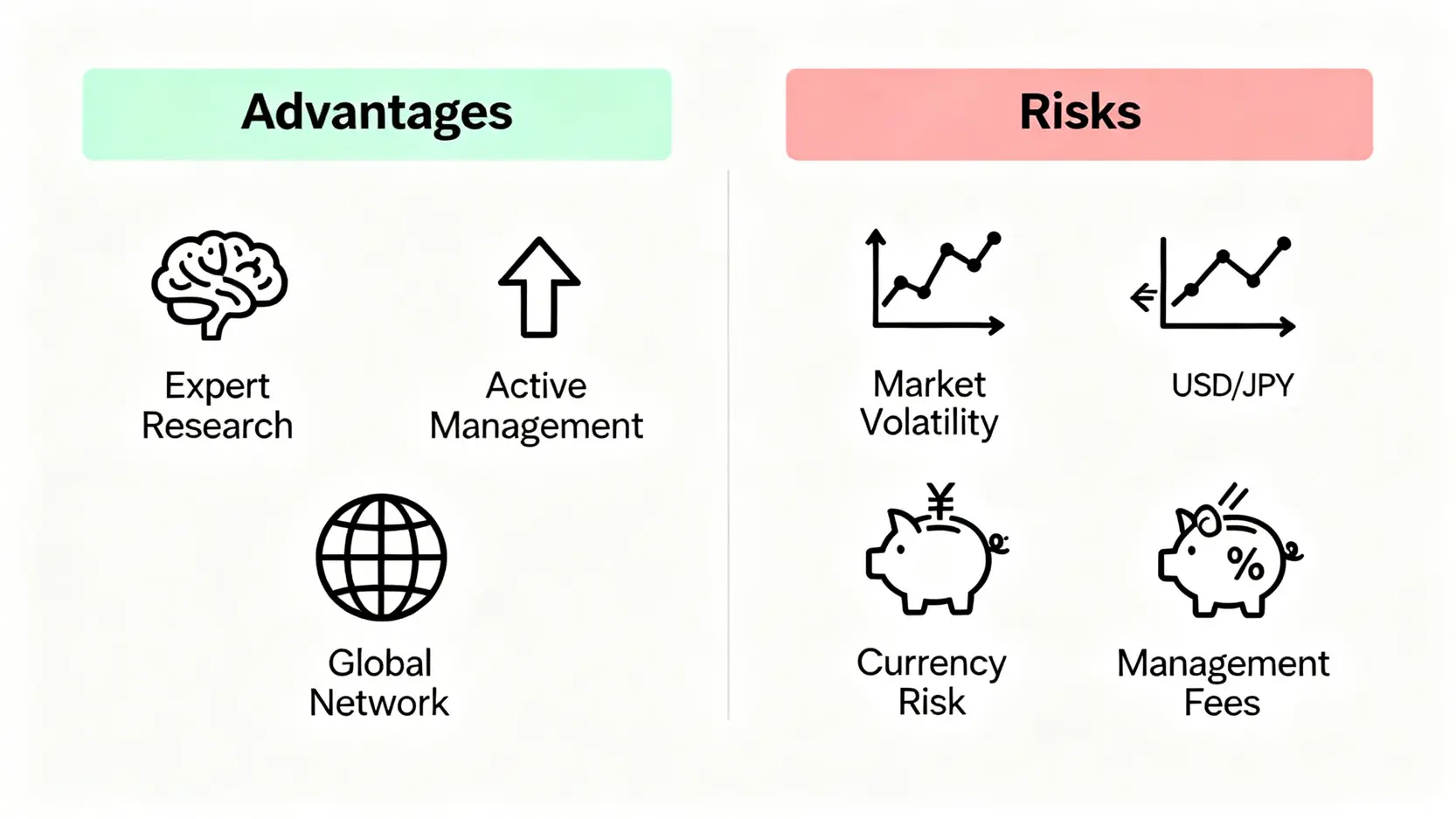
| Advantage: In-Depth Research Team | Backed by a strong global research network, it adheres to an active management strategy and strives to outperform the market through precise stock selection, with particularly strong performance in emerging markets and Japanese small- and mid-cap stocks. |
| Advantage: Active Management Capability | Rather than simply tracking indices, it identifies high-quality companies with long-term growth potential through fundamental analysis, offering strong appeal to investors who believe professional management can create value. |
| Risk: Market Volatility | No investment can avoid systematic risk. When global or regional economic downturns occur, even high-quality funds may incur losses. |
| Risk: Exchange Rate Risk | If the fund is denominated in a currency other than Hong Kong dollars, (such as Japanese yen or US dollars), currency depreciation may erode the final return even if the fund itself records a positive return. |
| Risk: Management Fees | As an actively managed fund, the management fee is usually higher than that of passive ETFs, which may affect total return over the long term. The expense ratio should be carefully compared before investing. |
Advantages Analysis: In-Depth Research Team and Active Management Capability
Nomura’s greatest strength lies in its strong global research network and its commitment to active rather than passive investment strategies. This means its funds do not simply follow market indices, but instead seek to outperform the market through precise stock selection. For investors who believe professional management can create value, Nomura offers an attractive option. In markets where information asymmetry is greater or efficiency is lower, (such as certain emerging markets or Japanese small- and mid-cap stocks), there is even more room for active management to add value.
Risk Reminder: Market Volatility, Exchange Rate Risk, and Management Fees
Investing in Nomura funds also involves risks, which investors should evaluate carefully:
- Market Risk: No investment can avoid systematic market risk. When global or regional economies enter a downturn, even high-quality funds may incur losses.
- Exchange Rate Risk: If the fund you invest in is denominated in a currency other than Hong Kong dollars (such as Japanese yen or US dollars), depreciation of these currencies against the Hong Kong dollar may erode your final return even if the fund itself records a positive performance.
- Management Fees: As actively managed funds, Nomura funds usually charge higher management fees than passive ETFs. These fees are deducted directly from the fund’s assets and may affect total return over the long term. Before investing, you should carefully compare the expense ratio.
FAQ: Common Questions About Nomura Funds
Q: Overall, do Nomura funds perform well?
A: Overall, Nomura funds are known for their in-depth research and active management capability, with particularly strong performance in specific markets such as Japan and Taiwan, and in areas (such as value investing). They have several flagship funds with excellent long-term performance. However, like all actively managed funds, not every product can consistently outperform the broader market, so investors should make independent judgments based on the performance, strategy, and their own risk tolerance for each individual fund.
Q: Which Nomura fund is the most popular or best known?
A: Popular funds vary by market. In the Taiwan market, the “Nomura Taiwan Fund” and the “Nomura Small Cap Fund” are both highly well known. In the Hong Kong and international markets, the “Nomura Japan Strategic Value Fund” and certain global bond funds attract more attention, as they fully demonstrate Nomura’s professional investment capabilities in specific areas.
Q: What fees should be considered when investing in Nomura funds?
A: Investing in Nomura funds mainly involves the following fees: 1. Subscription fee (paid once at the time of purchase); 2. Annual management fee (Deducted daily from the fund’s net asset value, and the largest ongoing fee); 3. Redemption fee (Which some funds may charge); 4. Platform fee (Depending on the bank or fund platform you use). Before investing, be sure to review the fee details in the fund prospectus.
Q: What type of investors are Nomura funds suitable for?
A: Nomura funds are more suitable for investors who recognize the value of “active management” and are willing to pay higher management fees in exchange for potential excess returns. At the same time, because its product range is broad, covering everything from aggressive growth equity funds to stable income bond funds, investors with different risk preferences may find investment tools that suit them.
Conclusion
In summary, Nomura Asset Management holds an important position in the fund market thanks to its long history, professional research team, and outstanding active management capability. Through this article’s in-depth analysis of Nomura fund performance, investment strategies, and options in the Hong Kong market, you should now have a clearer understanding of its investment value. Nomura’s strengths lie in its ability to develop deep expertise in specific markets and its potential to generate excess returns, but investors must also recognize the accompanying market risks, exchange rate fluctuations, and relatively higher management fees. Before making a final decision, it is recommended to take your own financial situation and risk tolerance into account, and carefully study the detailed information of individual funds before making a prudent assessment.
Related Articles
-
US Crude Oil Inventories Fall for 13 Consecutive Weeks: Are Oil Prices About to Soar? Complete Analysis of the Latest Market Impact in 2026 International oil prices have recently shown signs of rising. Are you also worried about higher living costs? This is closely related to the major news that...2026 年 7 月 20 日
-
Understanding the US$80 WTI Crude Oil Threshold: Five Core Factors Influencing Oil Prices and the Latest Investment Strategies Recently, global market attention has once again turned to the energy market, with WTI crude oil prices repeatedly fluctuating around the US$80 threshold as bulls and bears engage in an intense battle....2026 年 7 月 20 日
-
NOK/USD Energy Market Analysis: How Do Oil and Natural Gas Prices Drive the Norwegian Krone? The Norwegian krone (NOK) is one of the currencies most heavily influenced by energy prices worldwide, and its exchange rate against the US dollar (USD) is often closely linked to international oil and natural gas...2026 年 7 月 20 日