[Anti-Fraud Guide] How to Identify Scam Trading Platforms? Experts Break Down Online Investment Scam Tactics and 5 Deadly Characteristics
Online investment scams are emerging one after another, and many people lose everything because they do not know how to identify scam trading platforms. Are you also worried about falling into traps carefully set by fraudsters? Facing a wide variety of online investment scam tactics, learning to identify the key characteristics of scam trading platforms is the top priority in protecting your assets. This article will provide an in-depth analysis of the latest scam scripts and offer a clear guide to help you detect scams at the source and safeguard your hard-earned money.
What Are Scam Trading Platforms? Why Can They Make Your Investments Disappear?
Before investing your hard-earned savings, you must first understand what “scam trading platforms” are. These platforms exist solely to defraud investors, rather than to provide a fair trading environment.
Definition: Unregulated Fake Trading Platforms Designed for Fraud
Scam trading platforms refer to fake brokers that are not authorized or regulated by any legitimate financial regulatory authorities (such as Hong Kong SFC, UK FCA, Australia ASIC, etc.). They usually exist in the form of websites or mobile apps, attracting investors to open accounts and deposit funds through sophisticated packaging and appealing slogans. However, their servers and company registration locations are highly concealed. Once issues arise, investors often have nowhere to turn for help, which highlights the importance of financial regulation.
The Deadly Risks of Scam Trading Platforms: Slippage, Freezing, Withdrawal Failure
The ultimate goal of scam trading platforms is to swallow your principal. To achieve this, they carry out various malicious operations in the background, making it seem as though you are trading in a real market, when in fact your funds never enter the market at all. Common risks include:
Severe slippage (Slippage): The price at which you place an order differs greatly from the actual execution price, resulting in unjustified losses.
Malicious freezing (Freezing): During periods of high market volatility, the platform deliberately delays or blocks your trades, causing you to miss the best trading opportunities.
Withdrawal failure (Withdrawal Failure): This is the most critical issue. When you try to withdraw profits, the platform will reject your request with various excuses (such as system maintenance or requiring additional deposits/taxes), eventually disappearing with your funds.
5 Key Characteristics of Scam Trading Platforms You Must Watch Out For
Although scam tactics continue to evolve, the core patterns remain the same. As long as you understand the following prominent characteristics of scam trading platforms, you can significantly reduce the risk of being deceived.
Characteristic Number
Characteristic Name
Detailed Explanation and Countermeasures
Characteristic One
Regulatory Information Is Vague or Forged
Legitimate brokers must clearly display regulatory licenses. Scam trading platforms often do not mention regulation, use offshore island licenses, or fabricate license numbers. Countermeasure: Always verify the company name and central registration number on the official regulator’s website (such as Hong Kong SFC).
Characteristic Two
Promises Guaranteed Profits and Zero Risk
Claims such as “guaranteed profits” and “20% monthly returns” are all lies. All investments carry risk, and no one can guarantee 100% profit. Never trust such claims.
Characteristic Three
Smooth Deposits but Difficult Withdrawals
They accept various non-standard channels for deposits and provide enthusiastic customer service during deposit, but delay withdrawals, impose high fees, create obstacles, or disappear entirely when you try to withdraw.
Characteristic Four
Social Media Relationship-Based Inducement
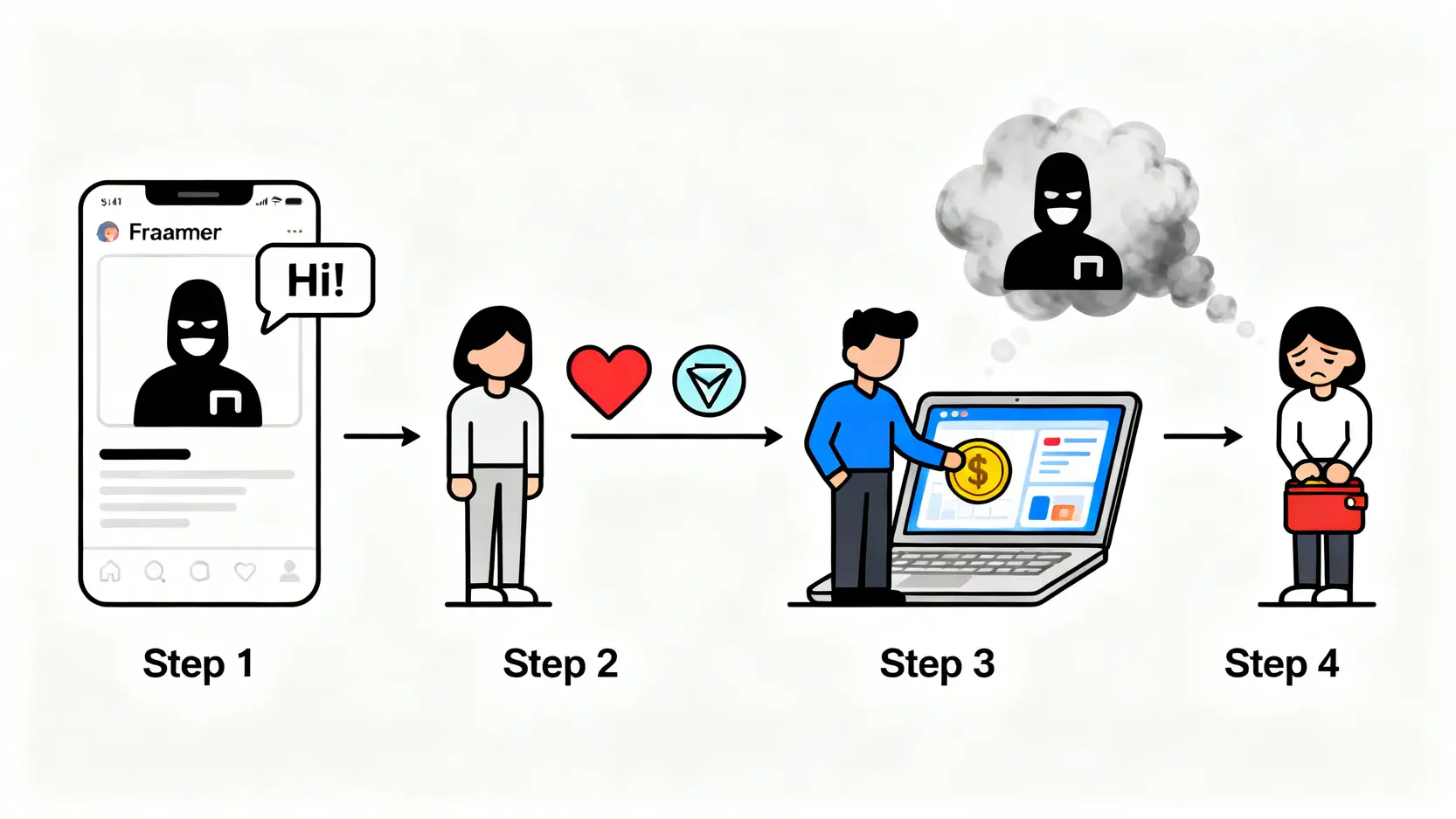
Commonly known as “pig butchering scams”. Fraudsters disguise themselves as romantic partners or experts, build trust, then lure you into investing on a designated platform before disappearing with your funds.
Characteristic Five
Poorly Made Websites or Misappropriated Information
The website is filled with typos, fake contact information, or closely imitates legitimate platforms (by slightly altering the domain). They may even misuse the logos and regulatory numbers of legitimate brokers.
Detailed Explanation of Characteristic One: Regulatory Information Is Vague or Forged (The Most Critical Point)
A legitimate broker will always clearly display its regulatory authority and license number in a prominent position on its official website. Scam trading platforms do the exact opposite: they either do not mention any regulatory information at all, use licenses from obscure offshore island jurisdictions (such as Vanuatu or Saint Vincent) to mislead investors, where regulatory enforcement is extremely weak and practically ineffective, or directly fabricate or misuse the license numbers of legitimate brokers.
Countermeasure: Personally verify on the official website of the regulatory authority. For example, if a platform claims to be regulated by the Hong Kong Securities and Futures Commission, you must check the SFC Public Register of Licensed Persons to confirm that the company name, Central Entity Number (CE No.), and regulated activities match exactly.
Detailed Explanation of Characteristic Two: Promises of Unrealistic “Guaranteed Profits” and “Zero Risk”
“Expert-led trading signals with guaranteed profits”, “fixed monthly returns of 20%”, “invest 100,000 and turn it into 200,000 next month”… When you hear such claims, raise an immediate red flag! All legitimate investments carry risk, and financial markets change rapidly. No one can guarantee 100% profit. Scam trading platforms exploit human greed by presenting unrealistic returns to lure you in.
Detailed Explanation of Characteristic Three: Exceptionally Smooth Deposit Process but Extremely Difficult Withdrawal
To get you to deposit funds quickly, scam trading platforms usually offer a wide range of deposit channels, even accepting transfers through personal bank accounts, cryptocurrencies, and other non-standard methods. Customer service is extremely enthusiastic before you deposit. However, once you request a withdrawal, problems begin:
Delays: Processing is postponed with various excuses.
Fees: High fees, security deposits, or even “personal income tax” are demanded.
Obstacles: You are required to submit excessive and complicated documentation.
Disappearance: Your account is blocked, and customer service vanishes.
Detailed Explanation of Characteristic Four: Using Social Media and Dating Apps to Build Relationships and Induce Investment
This is currently one of the most rampant online investment scam tactics, commonly known as “pig butchering scams”. Fraudsters pose as wealthy, attractive individuals or caring romantic partners on major social media platforms (Facebook, Instagram) or dating apps (Tinder, Coffee Meets Bagel). After building trust through daily conversations and emotional engagement, they casually mention having “insider information” or that a “relative is a trader”, and lure you into investing on a designated scam trading platform. Once you invest a large sum, they disappear immediately.
Common “Pig Butchering Scam” Process
Detailed Explanation of Characteristic Five: Poor Website and App Interface or Direct Misuse of Legitimate Platform Information
Many scam trading platform websites are poorly designed, filled with typos and grammatical errors, and even use fake company addresses and contact details. Another more deceptive approach is to closely imitate the websites of well-known legitimate brokers, making only slight changes to the domain name (for example, replacing “o” with “0” or “l” with “1”). They may even misuse the logos, promotional materials, and regulatory numbers of legitimate brokers, making them extremely difficult to detect.
Comprehensive Analysis of Common Online Investment Scam Tactics
After understanding the characteristics of scam trading platforms, let’s take a closer look at how fraudsters gradually lure you into their schemes. Below are several typical online investment scam scenarios.
Tactic One: Impersonating Investment Experts or KOLs and Operating “Signal Groups”
Fraudsters create groups on LINE, Telegram, or WhatsApp and plant numerous accomplices within them. They pose as investment experts, sharing seemingly professional market analysis and fake profit screenshots daily to create the illusion that everyone in the group is making money. Once you are tempted and follow the “expert’s” instructions to place trades on a designated platform, you may initially see small profits to lower your guard and encourage larger investments. When the time is right, they execute a malicious “signal” that causes you to blow up your account instantly and lose everything.
Tactic Two: Counterfeit MT4/MT5 Trading Apps With Backend Data Manipulation
MT4/MT5 are internationally recognized legitimate trading platforms, but scam trading platforms provide you with a pirated and tampered version of the app. The interface looks identical to the official version, but all data is controlled by the fraudsters in the backend. In other words, the candlestick charts, price movements, profits, and losses you see are all fabricated. Your funds never enter any real market from the very beginning and are only circulating within a fake digital system.
Tactic Three: Using Emerging Investments Such as Cryptocurrency and NFTs as a Pretext to Induce Deposits
With the rise of cryptocurrencies, NFTs, and the metaverse, fraudsters have adapted accordingly. They exploit the public’s lack of understanding of emerging technologies and desire for quick wealth by packaging seemingly high-tech, high-return investment projects. They usually require you to convert funds into virtual currencies such as USDT and transfer them to designated wallet or platform addresses. Due to the anonymity of blockchain, once the funds are transferred, recovering them becomes extremely difficult.
Learn How to Identify Scam Trading Platforms in Three Steps and Become a Smart Investor
To prevent online investment scams, instead of passively waiting for fraud to occur, it is better to take the initiative and learn a complete verification process. By following the three steps below, you can filter out 99% of scam trading platforms in the market.
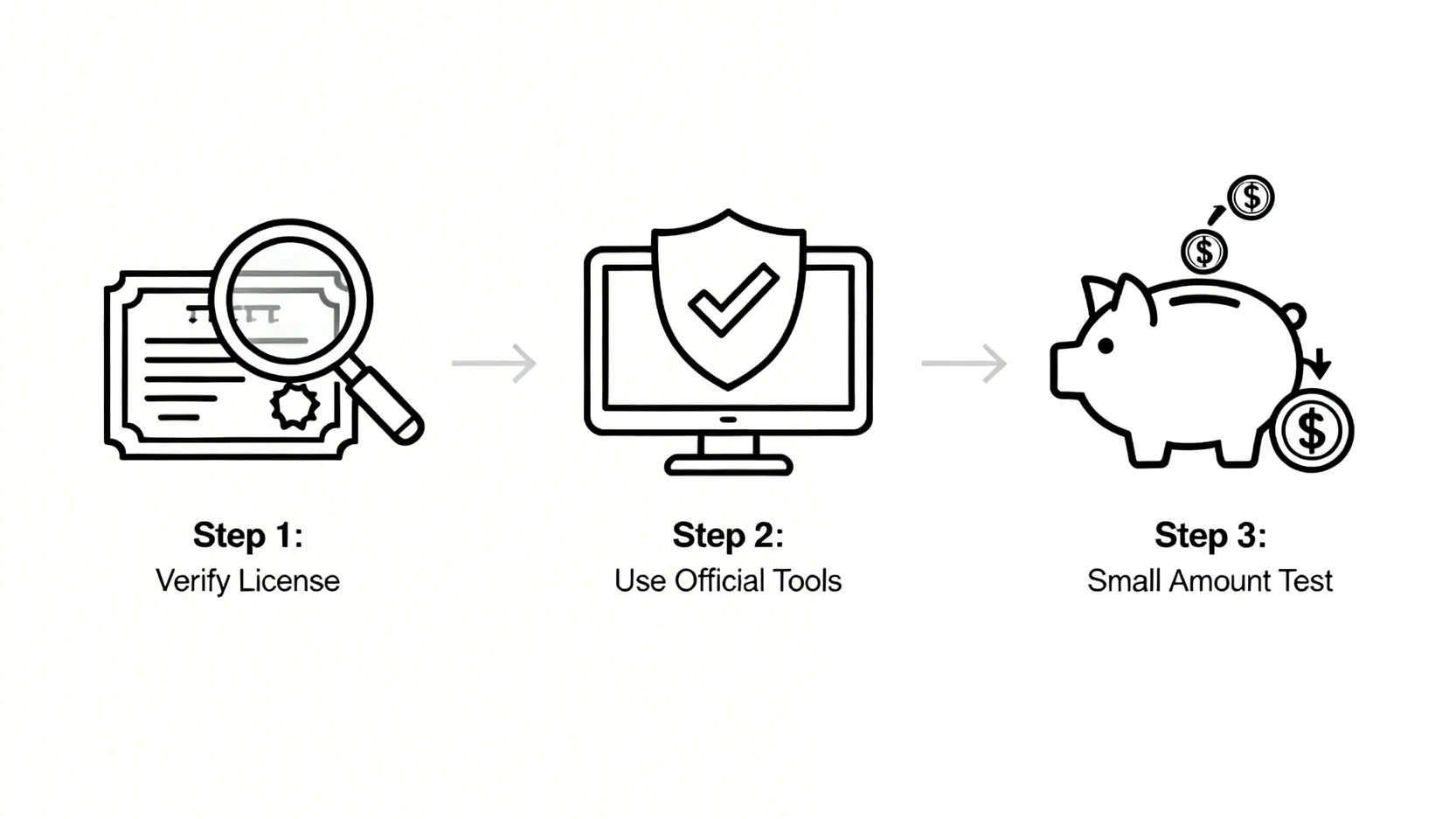
Three-Step Verification Method to Easily Filter Out Scam Trading Platforms
Step One: Check the Regulatory License – Verify It Yourself on the Official Regulator’s Website
This is the most critical and effective step. Do not rely solely on the platform’s self-promotion on its website. Be sure to visit the official website of the relevant regulatory authority yourself and search using the platform’s claimed name or license number. Confirm whether the license is genuine and valid, whether it is still active, and whether the scope of authorized business includes the type of investment you intend to make.
Step Two: Use Official Tools – Check the Platform Website and Receiving Account With the “Scameter”
Law enforcement agencies in many regions have launched anti-fraud search tools, such as the Hong Kong Police Force’s “Scameter”. By entering the platform’s website URL, receiving bank account number, phone number, or virtual asset wallet address, the system can instantly assess its fraud and cybersecurity risk. Before making any transfer, it is a very good habit to run a check using tools like this.
Step Three: Conduct a Small-Amount Test – Try Depositing and Withdrawing a Small Amount to Verify Whether the Process Is Smooth
If you still have doubts about a platform, after completing all verification steps, you can first invest a very small amount of money, one that would not be painful to lose, for testing purposes (such as US$100). The key is to go through the full deposit and withdrawal process once. Observe whether the withdrawal is smooth, whether the arrival time is reasonable, and whether customer service creates obstacles. If even a small withdrawal is full of difficulties, that is definitely a sign of a scam trading platform.
Conclusion
In summary, the key to avoiding the trap of online investment scams is to stay vigilant at all times and verify proactively. Before investing any funds, be sure to learn how to identify scam trading platforms and carefully examine their characteristics. Never trust any claims of guaranteed profits, and make good use of official regulator websites and anti-fraud tools to verify whether a platform is genuine. Remember, a cautious mindset is your strongest weapon in protecting your assets. In the world of investing, safety always comes first.
FAQ About Identifying Scam Trading Platforms
Q: If I have already deposited funds into a scam trading platform, is there still a chance of recovering the money?
A: Frankly speaking, the chances of recovery are extremely slim. This is because the servers and funds of scam trading platforms are usually located overseas and have been transferred and laundered through complex methods. Once you realize you have been scammed, you should immediately stop making any further deposits, keep all conversation records with the platform and proof of transfers, and report the case to the local police immediately. Although recovery is difficult, filing a report is the only possible way to pursue legal action.
Q: How can I check whether a broker is regulated by the Hong Kong Securities and Futures Commission (SFC)?
A: You can visit the official website of the Hong Kong Securities and Futures Commission directly and search the “Public Register of Licensed Persons and Registered Institutions” page by entering the broker’s company name or Central Entity Number (CE No.). The results will clearly show the company’s licensing status, address, contact details, and the regulated activities it is authorized to carry out. Be sure to verify that all information matches the platform you are dealing with exactly.
Q: Is an investment platform recommended by a friend or romantic interest online definitely safe?
A: Absolutely not. This is exactly the core tactic of “pig butchering scams”. Fraudsters may spend weeks or even months building a deep relationship of trust with you, making you believe they genuinely care about you. No matter who the recommender is, you must independently and objectively follow the above three steps to strictly review the platform’s compliance. When money is involved, personal verification is an essential step.
Q: Why do scam trading platforms let me make money at the beginning, and even allow small withdrawals?
A: This is a typical “bait, build, and trap” strategy. Letting you enjoy some early gains is meant to earn your trust and make you believe the platform can really help you make money. Once you successfully withdraw a small profit, you let down your guard and are encouraged by the platform to invest a much larger amount. Once you have invested what they consider enough money, they close the trap, and at that point, you will no longer be able to withdraw any funds.
Forex Blacklist July 2026: 17 Platforms Warned by FCA, ASIC & Other Regulators At CashBack Island, we always put fund security first. According to the latest industry monitoring data, during the period from July 6 to July 12, 2026, financial regulators worldwide once again took action by issuing public warnings...
Week Two of June Blacklist: 17 Platforms Named by Regulators, FCA, BCSC, and Others Issue Warnings According to the latest industry monitoring data, from June 8 to June 14, 2026, global financial regulators stepped up their crackdown on illegal trading platforms. This week, a total of 17 trading platforms were...
May Forex Scam Broker Alert: 30 High-Risk Platforms Exposed, CashBack Island Reminds You to Stay Away From the Traps In forex and CFD trading, choosing a regulated broker is the first line of defense for protecting your funds. Recent industry monitoring data shows that another 30 suspected scam brokers were...