Minor Currency Pairs Guide: Cross FX Explained

What Are Minor Currency Pairs? Cross Currency Trading Guide (With Popular Examples and Analysis of Advantages and Disadvantages)
Looking to find trading opportunities beyond the US dollar in the forex market? While most people are still focusing on major currency pairs such as EUR/USD, experienced traders have already begun uncovering potential in “minor currency pairs”. So what exactly are minor currency pairs? How are they related to what we often hear as cross currency pairs? This article will provide an in-depth explanation, along with a variety of examples, to help you fully understand their unique trading advantages and potential risks, expand your investment perspective, and capture more market movements.
What Are Minor Currency Pairs?
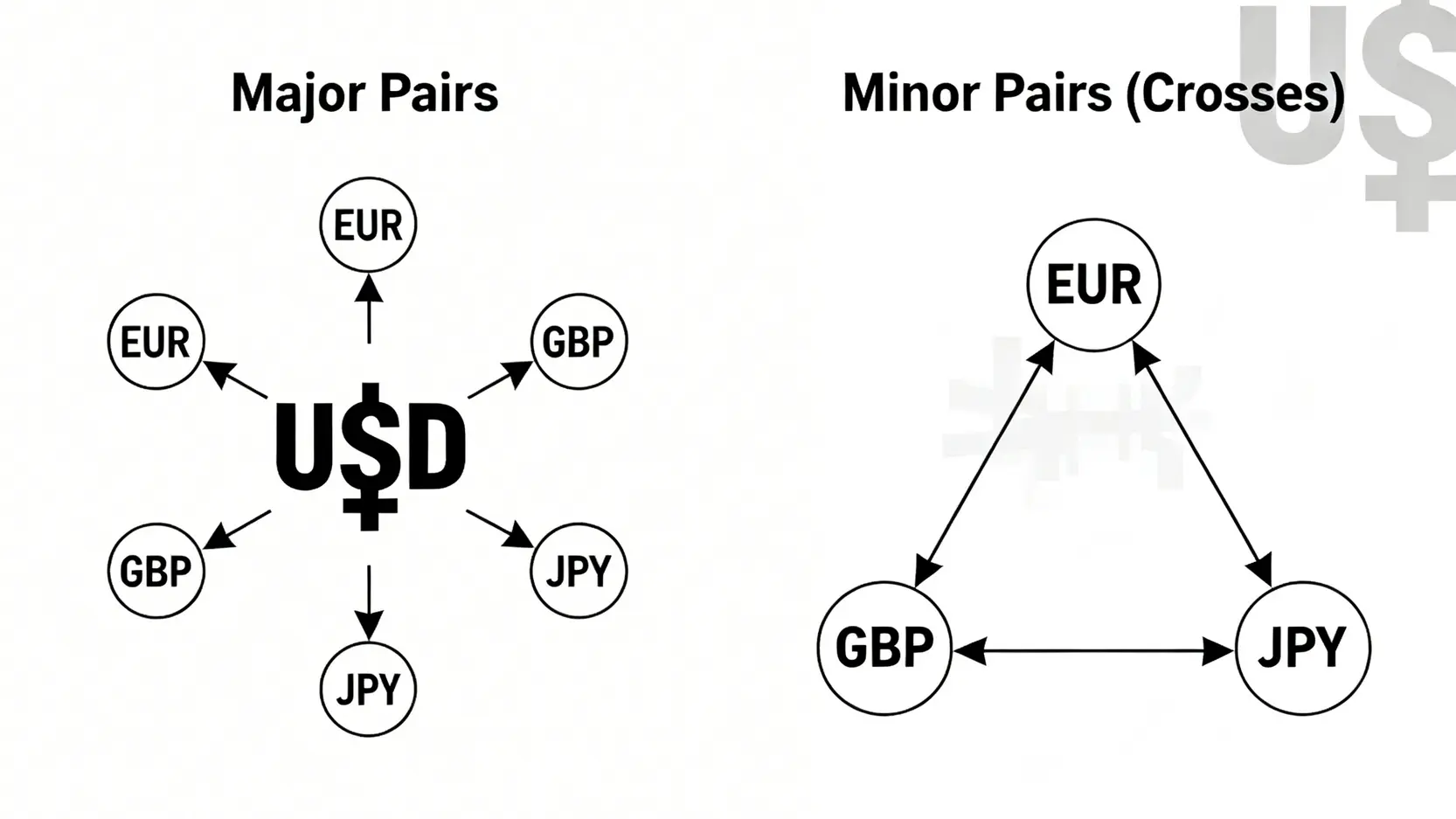
Before understanding minor currency pairs, we need to first know the “big players” of the forex market, major currency pairs. Major currency pairs refer to any currency paired with the US dollar (USD), such as EUR/USD, GBP/USD, or USD/JPY. They are the most traded and most liquid currency pairs in the world. Minor currency pairs are an extension of this concept.
Definition of Minor Currency Pairs: Why Do They Not Include the US Dollar?
Minor currency pairs, also known as “cross currency pairs” or “crosses”, are defined at their core as currency pairs that do not involve the US dollar (USD). They are formed by directly combining two “major currencies” (such as the euro (EUR), British pound (GBP), Japanese yen (JPY), and Australian dollar (AUD)). For example:
- EUR/GBP (euro/British pound)
- GBP/JPY (British pound/Japanese yen)
- AUD/CAD (Australian dollar/Canadian dollar)
These currency pairs do not include the US dollar because they provide a direct way to evaluate the relative strength of two non-US currency economies. For instance, when a trader believes that the economic outlook of the eurozone will outperform that of the UK, they can directly trade EUR/GBP without needing to consider the impact of US dollar fluctuations in the process. This approach makes analysis more straightforward and direct.

Major Currency Pairs vs. Minor Currency Pairs: The US Dollar as the Key Divider
Minor vs. Major Currency Pairs: Understand the Core Differences at a Glance
For both beginners and experienced traders, understanding the core differences between minor and major currency pairs is crucial, as it directly affects your trading strategy and cost control. The following table clearly illustrates the distinctions between the two:
| Comparison Items | Major Currency Pairs (Majors / Direct Pairs) | Minor Currency Pairs (Minors / Cross Currency Pairs) |
| Composition | Must include the US dollar (USD) | Do not include the US dollar (USD) |
| Examples | EUR/USD, USD/JPY, GBP/USD | EUR/GBP, GBP/JPY, AUD/NZD |
| Liquidity | Extremely high | Moderate to relatively low |
| Trading Spread | Very low (low trading costs) | Relatively high (higher trading costs) |
| Volatility | Relatively stable, heavily influenced by global macroeconomic factors | May be higher, with more pronounced trends |
| Analytical Focus | Requires analysis of both the respective country’s economy and the US economy | Focus on the direct comparison between two non-US currency economies |
Further Reading (Highly Recommended)
[Forex Tutorial 2024] Ultimate Beginner Investment Guide: Master Forex Trading Skills From 0 to 1!
Understanding Cross Currency Pairs: Why Are Minor Currency Pairs Also Called Crosses?
The terms “minor currency pairs” and “cross currency pairs” are often used interchangeably, but the name “crosses” actually reveals the historical origin and operating mechanism of these currency pairs. Understanding the meaning of crosses can help you gain a deeper understanding of the structure of the forex market.
Origin and Mechanism of Cross Currency Pairs
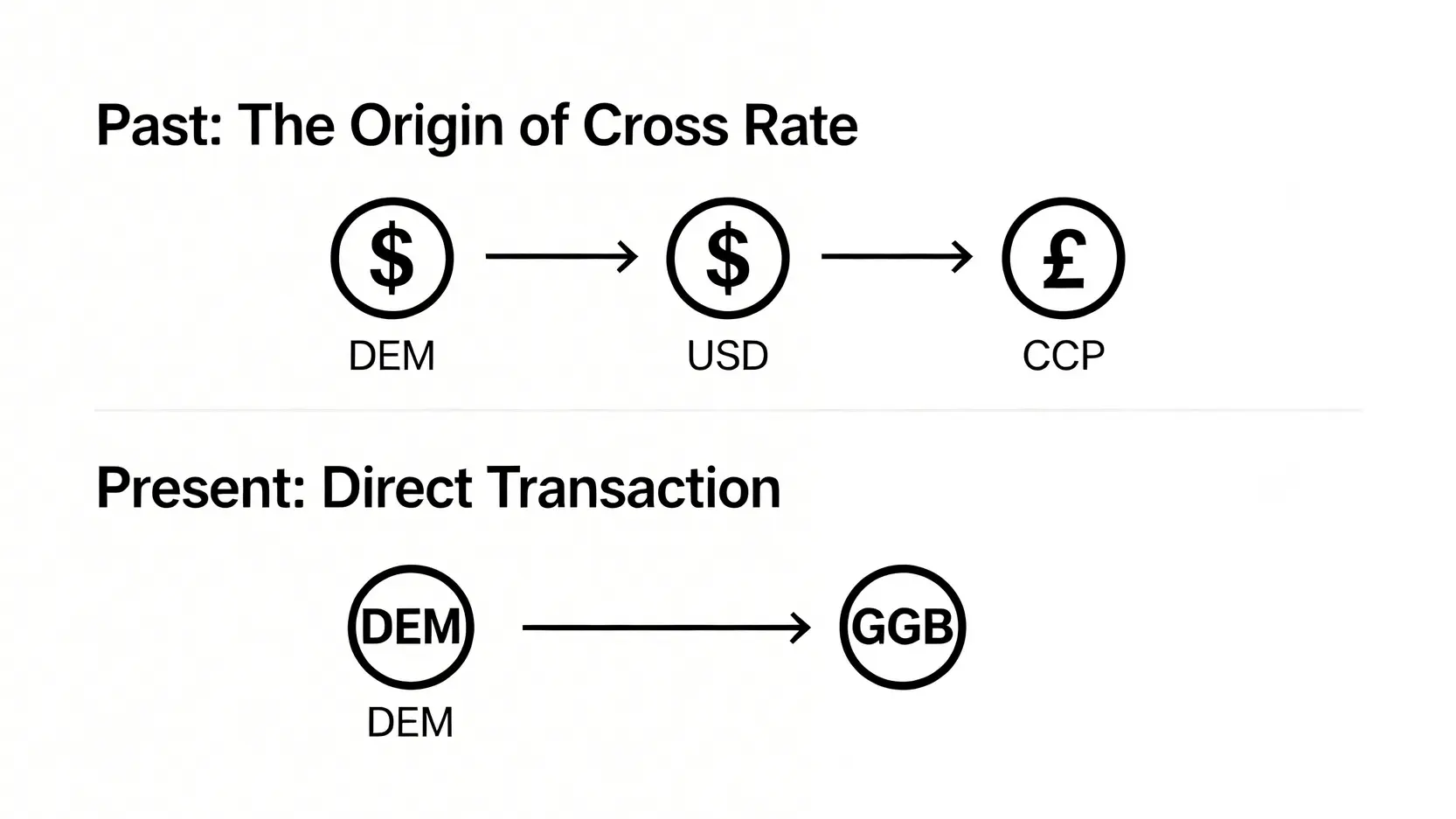
Before the widespread adoption of electronic trading, if someone wanted to exchange Deutsche marks (the predecessor of the euro) for British pounds, banks could not complete the transaction directly. At that time, the US dollar was the global reserve currency and trading intermediary. Therefore, the transaction had to be completed in two steps:
- First, exchange Deutsche marks for US dollars.
- Then, exchange the obtained US dollars for British pounds.
This process was like conducting a “cross” exchange through the US dollar, hence the name “cross rate”. Although modern electronic trading systems now allow direct quotations and trading between any two currencies, the historical term “crosses” has been retained and has become synonymous with minor currency pairs. Even today, when we can directly trade EUR/GBP, its quotation is still essentially derived from the exchange rates of EUR/USD and GBP/USD.

The Historical Evolution of Crosses: From US Dollar Intermediation to Direct Trading
Most Popular Minor Currency Pair Examples: Euro, Yen, and Pound Cross Combinations
There are many types of crosses in the market, but some are particularly popular due to the influence of the economies behind them. Below are some of the most popular examples of minor currency pairs:
- Euro Crosses
- EUR/JPY (euro/Japanese yen): Considered one of the indicators of market risk sentiment. When risk aversion rises, the Japanese yen typically strengthens, causing this pair to decline.
- EUR/GBP (euro/British pound): Directly reflects the comparison between the economic conditions of the eurozone and the UK, and is heavily influenced by interest rate decisions of both central banks.
- EUR/AUD (euro/Australian dollar): Combines Europe’s industrial economy with Australia’s commodity-driven economy, and its movements are often linked to global commodity prices.
- Yen Crosses
- GBP/JPY (British pound/Japanese yen): Known for its high volatility, often referred to by traders as the “beast” or “widow maker” due to its sharp price movements.
- AUD/JPY (Australian dollar/Japanese yen): A typical carry trade currency pair. Since Australia’s interest rates are usually higher than Japan’s, buying this pair may allow traders to earn overnight interest.
- CAD/JPY (Canadian dollar/Japanese yen): Canada is an oil-exporting country while Japan is an oil-importing country, so oil price fluctuations have a significant impact on this pair.
- Pound Crosses
- GBP/AUD (British pound/Australian dollar): Highly volatile, suitable for short-term traders seeking large price swings.
- GBP/CHF (British pound/Swiss franc): Combines the UK’s financial hub status with the Swiss franc’s safe-haven characteristics.
Advantages and Risks of Trading Minor Currency Pairs
Like any investment instrument, trading minor currency pairs has both unique attractions and unavoidable risks. Before committing capital, it is essential to weigh the pros and cons.

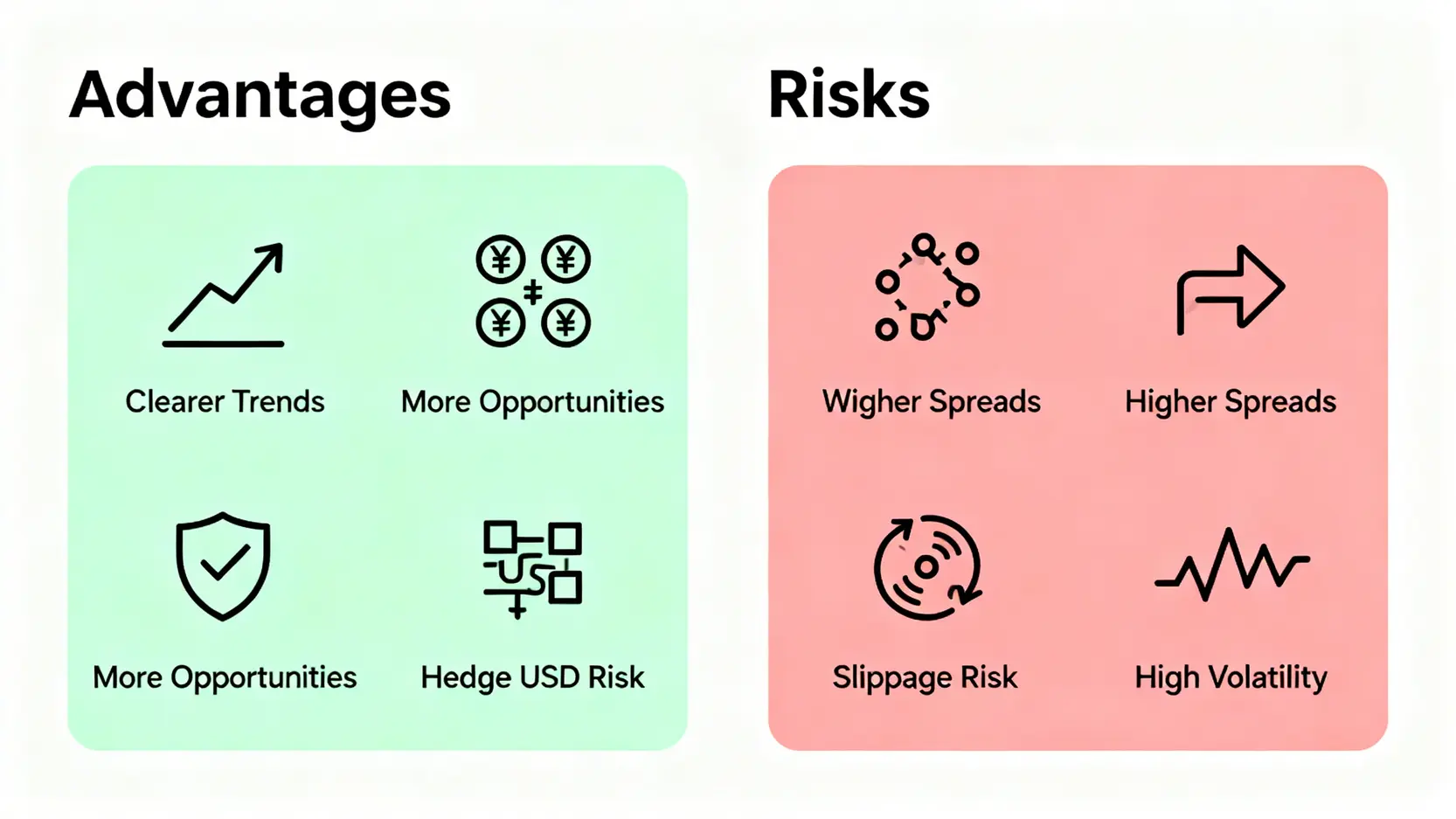
Opportunities and Challenges: Balancing the Pros and Cons of Trading Minor Currency Pairs
Advantages: Discover More Trading Opportunities and Hedge US Dollar Risk
The most attractive aspect of trading crosses lies in the diversity of opportunities:
- More pure trends: When you believe one country’s economy will outperform another (for example, Australia’s economy strengthening due to mineral demand compared to New Zealand), trading AUD/NZD allows you to profit directly from this view without being affected by unexpected fluctuations in the US dollar.
- More trading choices: The forex market is not only about the US dollar. Crosses far outnumber major currency pairs, providing traders with a broader range of opportunities and a higher chance of finding pairs in clear trends.
- Hedging US dollar risk: If your portfolio already contains a large amount of US dollar-denominated assets, trading crosses can serve as an effective hedge, diversifying the systemic risk of a single currency (the US dollar).
Risks: How High Spreads and Low Liquidity Affect Your Trading Costs
Behind opportunities lie challenges, especially for beginners:
- Higher trading costs: This is the most significant risk. Due to lower trading volume (liquidity), brokers offer wider bid-ask price difference (spreads) compared to major currency pairs. This means the price must move further in your favor before you can start making a profit.
- Increased slippage risk: During periods of rapid market movement (such as after major economic data releases), low liquidity may result in “slippage”, where your order is executed at a worse price than expected, increasing trading costs or losses.
- Volatility as a double-edged sword: While higher volatility may offer greater profit potential, it also implies higher risk of loss. For pairs like GBP/JPY, sharp price movements can easily trigger stop-loss orders.
How to Start Trading Minor Currency Pairs?
The analytical methods for trading minor currency pairs are largely similar to those for major currency pairs, mainly focusing on both fundamental and technical analysis, though with different emphasis.
Fundamental Analysis: Focus on the Relative Strength of Two Economies
The core of fundamental analysis for crosses lies in “relative value”. You no longer need to focus heavily on the Federal Reserve but instead concentrate on the central bank policies, inflation data (CPI), employment reports, and gross domestic product (GDP) of the two countries forming the currency pair. For example, when trading EUR/AUD, you should ask whether the European Central Bank’s next move will be more “hawkish” or more “dovish” than that of the Reserve Bank of Australia.
Technical Analysis: Identify Trends and Breakout Opportunities
All technical analysis tools you use for major currency pairs, such as moving averages, RSI, MACD, and support and resistance levels, are equally applicable to minor currency pairs. Many experienced traders favor crosses precisely because they can sometimes exhibit clearer and more sustained trends than major pairs. Due to lower trading volume, once a breakout occurs, price movements may be more rapid. However, it is also important to be cautious of “false breakouts” caused by insufficient liquidity.
Common Questions About Minor Currency Pairs and Crosses (FAQ)
Q: Are minor currency pairs and crosses exactly the same thing?
A: In modern forex trading, these two terms are generally interchangeable and both refer to currency pairs that do not include the US dollar. Strictly speaking, “crosses” emphasize the calculation mechanism of the quotation, while “minor currency pairs” are a classification relative to “major currency pairs”.
Q: Are the trading costs (spreads) of minor currency pairs always higher?
A: In most cases, yes. Because they have fewer market participants and lower liquidity than major currency pairs, brokers tend to offer wider spreads to hedge risk. However, for heavily traded crosses such as EUR/JPY and EUR/GBP, spreads are significantly lower than those of less popular crosses (like NZD/CHF).
Q: Are minor currency pairs suitable for beginners to start trading?
A: Generally not recommended. Beginners should first start with major currency pairs that have the highest liquidity and lowest spreads (such as EUR/USD) to become familiar with market rhythm and risk management. Once you have a deeper understanding of forex trading and can consistently control risk, you can gradually include minor currency pairs in your watchlist and trading strategy, which is a more stable progression path.
Q: Do you need to pay attention to US economic data when trading crosses?
A: Although crosses do not directly include the US dollar, the overall strength of the US dollar can indirectly affect all currencies through its influence on global capital flows. For example, major US non-farm payroll releases often trigger volatility across the entire forex market, and crosses are no exception. Therefore, it is still important to stay attentive to global macroeconomic events.
Conclusion
In summary, minor currency pairs (also known as crosses) provide forex traders with a unique opportunity to bypass the US dollar and directly assess the relative strength of two major economies. Although they have lower liquidity and potentially higher trading costs, they also offer richer potential trends. Understanding the meaning of crosses and learning how to analyze their characteristics is an essential step for every forex investor to advance. It is recommended to start with a demo account, become familiar with the minor currency pair examples you are interested in, then develop your own trading strategy to steadily expand your forex trading landscape.
Related Articles
-
How to Get Started with Bitcoin? The Complete 2026 Bitcoin Buying Guide for Beginners After watching Bitcoin repeatedly reach new highs in recent years and successfully pass spot ETF reviews in the US and Hong Kong in 2024, officially entering mainstream financial markets, many investors have turned their attention to...2026 年 7 月 20 日
-
Is Gold’s V-Shaped Rebound a Bottom-Fishing Signal? A Complete Guide to Trading Strategies Amid “$100 Price Swings” What Is a Gold V-Shaped Rebound? More Than Just a Technical Pattern The gold market has recently experienced sharp rises and falls, with prices frequently displaying dramatic “gold V-shaped rebounds”. Single-day “$100 price...2026 年 7 月 20 日
-
What Is PPI Data? 2026 Latest Analysis: Understand the Differences from CPI and How It Affects Stock Market Trends With market information constantly changing, do you always hold your breath while waiting for CPI data to be released? But did you know that a more forward-looking inflation indicator, PPI data...2026 年 7 月 20 日