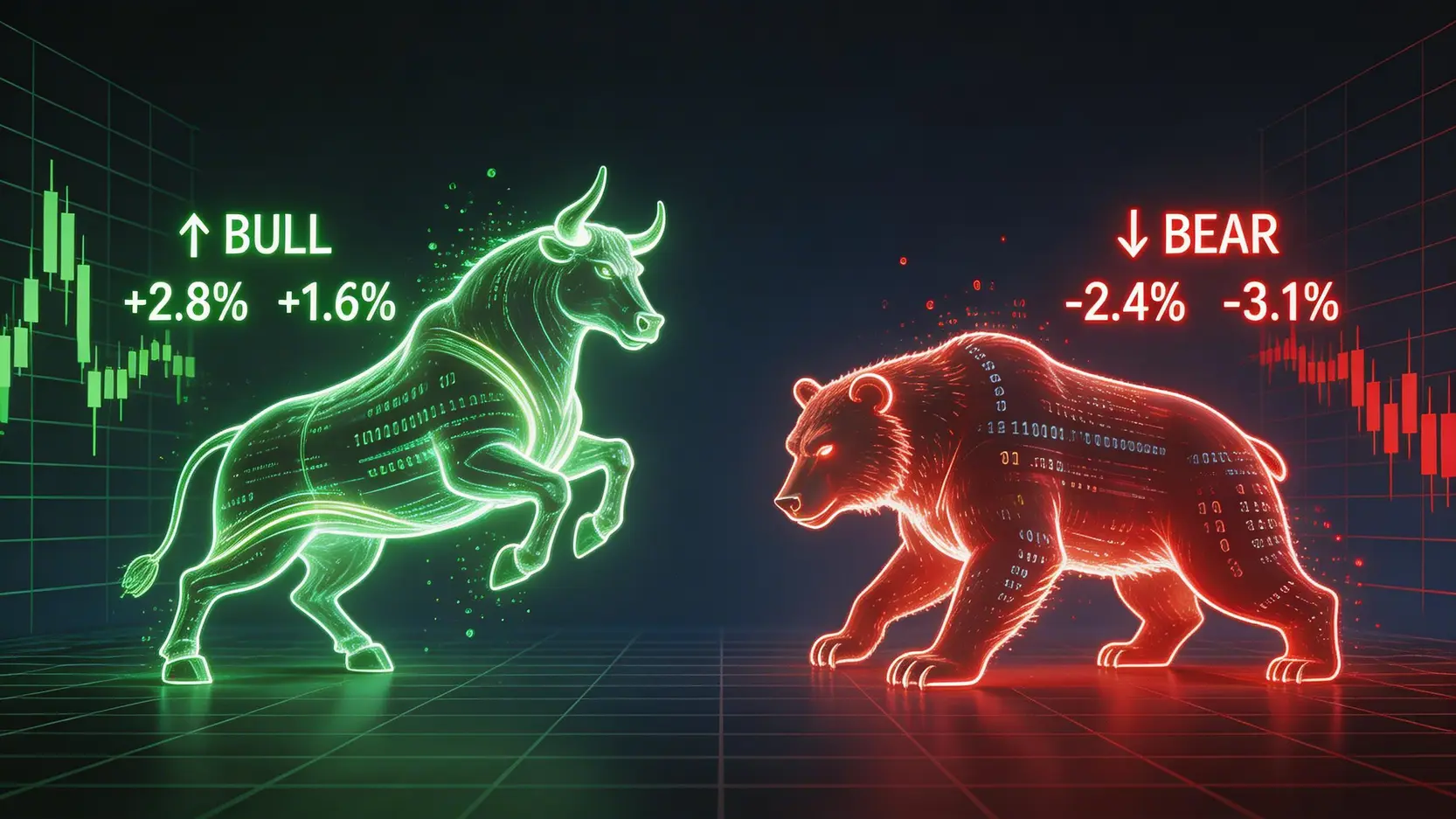
[Beginner Stock Market Tutorial] Understand “Bull and Bear” vs. “Long and Short Positions” in One Article! Learn How to Go Long and Short in 5 Minutes
You often hear financial news mention “bullish rebound” or “bears exiting”, or see forum discussions about “opening long positions” or “going short”. However, do you truly understand what these stock market terms mean? For investment beginners, not knowing the meaning of bull and bear markets or the difference between long and short positions is like trying to run before learning to walk. It’s hard to stand firm in a volatile market. This article will explain these core concepts in the most approachable way and provide beginner-friendly guidance on going long and short, helping you lay the first cornerstone of your investing journey and develop your trading mindset.
Core Concepts: What Are Bull (Bull Market) and Bear (Bear Market)?
Before diving into long and short trading strategies, you must first understand the two basic market states: bull and bear. These terms vividly describe the overall market sentiment and price trends.
Bull Market Explained: Why Optimism Is Called “Bull”?
A bull market refers to a period when the market broadly expects asset prices to rise. Investors feel optimistic about the economy and believe stocks, indices, or other assets will continue to increase, so they actively buy and hold. The term “bull” is used because a bull attacks by thrusting its horns upward, symbolizing an upward price trend. In a bull market, you will notice:
- Most stock prices steadily climb.
- Trading activity is lively, and investor sentiment is strong.
- Investor confidence is high, and more capital is deployed into the market.
Bear Market Explained: Why Pessimism Is Called “Bear”
Conversely, a bear market refers to a period when the market broadly expects asset prices to decline. This usually occurs alongside economic downturns, declining corporate profits, or major negative news. Investors feel pessimistic and sell assets to avoid losses. The term “bear” is used because a bear attacks by swiping downward with its paws, perfectly depicting falling prices. Bear markets are characterized by:
- Stock prices generally and continuously decline (usually a drop of more than 20% from a peak).
- The market is filled with pessimism and fear.
- Investors become conservative, withdrawing funds and turning to cash or safe-haven assets.
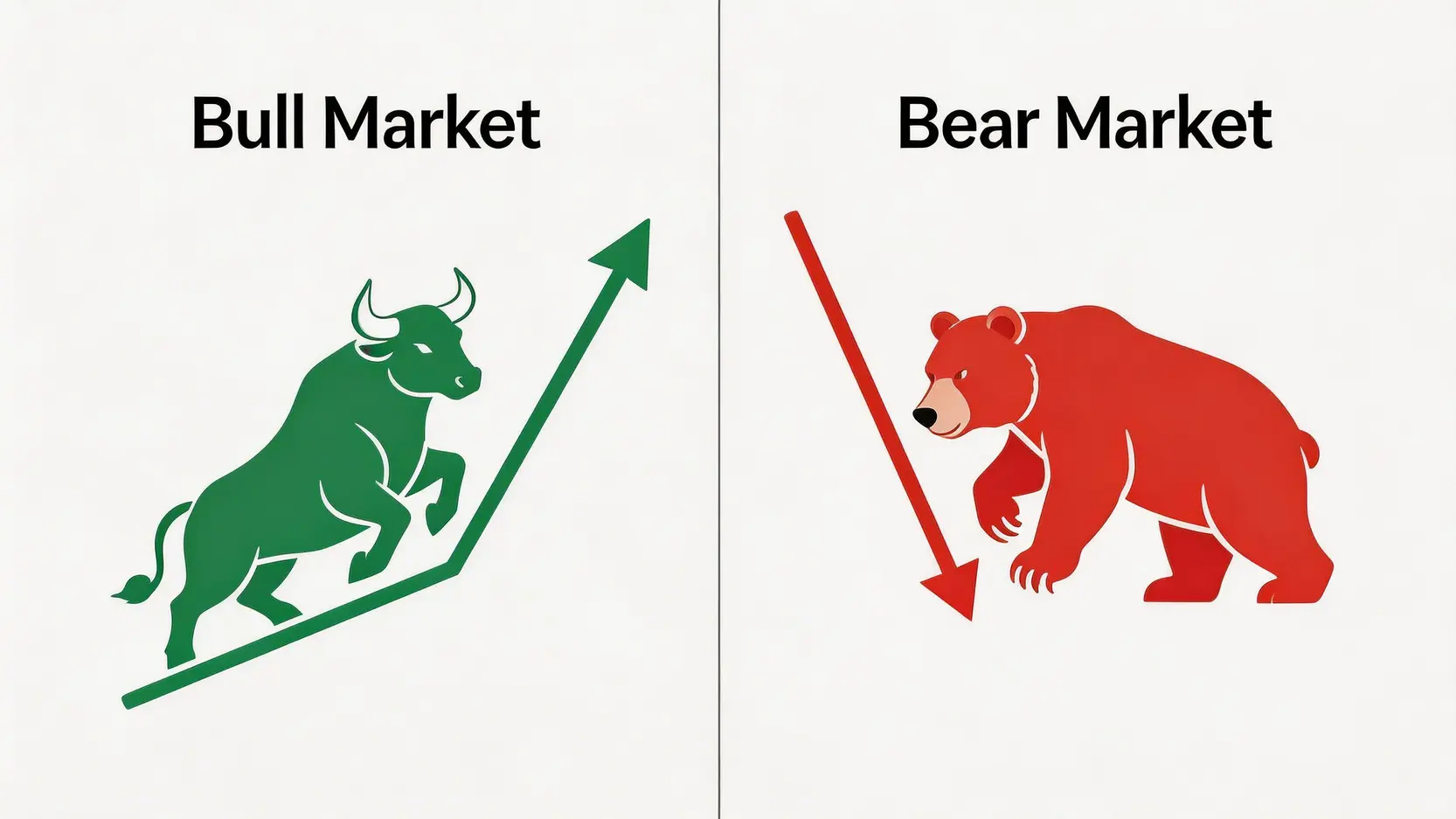
A Visual Overview of Bull vs. Bear Market Characteristics
To make the difference clearer, the following is a simple comparison table:
| Characteristics |
Bull Market |
Bear Market |
| Price Trend |
Continuous Uptrend |
Continuous Downtrend |
| Investor Sentiment |
Optimistic, Greedy, Confident |
Pessimistic, Fearful, Hesitant |
| Economic Background |
Strong Economic Growth, Low Unemployment |
Economic Recession or Slowdown, Rising Unemployment |
| Trading Strategy |
Buy and Hold |
Sell, Hold Cash, or Short Sell |
Stock Market Terms: What’s the Difference Between a “Long Position” and a “Short Position”?
After understanding the macro concepts of bulls and bears, let’s look at how these views translate into individual trading actions “long position” and “short position”. These are very common stock market terms.
Long Position Explained: More Than Just Buying to Appreciate
Opening a long position (also called “going long” or “building a long”) means an investor buys an asset expecting its price to rise in the future so they can sell it at a higher price for profit. This is the most traditional and widely known investment method. When you buy a stock, a unit of a fund, or a futures contract, you are holding a “long position” in that asset.
Example: You believe the price of Company A’s stock will rise from the current HK$100, so you buy 1,000 shares. You now hold a “long position” in Company A. Your goal is to sell when the price reaches HK$120, capturing the difference as profit.
Short Position Explained: How to Profit in a Falling Market?
Opening a short position (also called “going short” or “building a short”) is more complex but also a powerful trading strategy. It refers to expecting an asset’s price to drop, so you “sell first, buy later” to earn the difference. The process is:
- Borrow the asset: Borrow shares you don’t own from your broker.
- Sell high: Sell the borrowed shares at the current higher market price.
- Buy low: Wait for the price to drop as expected, then buy the same number of shares at the lower price.
- Return the asset: Give the shares back to the broker. The profit is the price difference minus interest and fees.
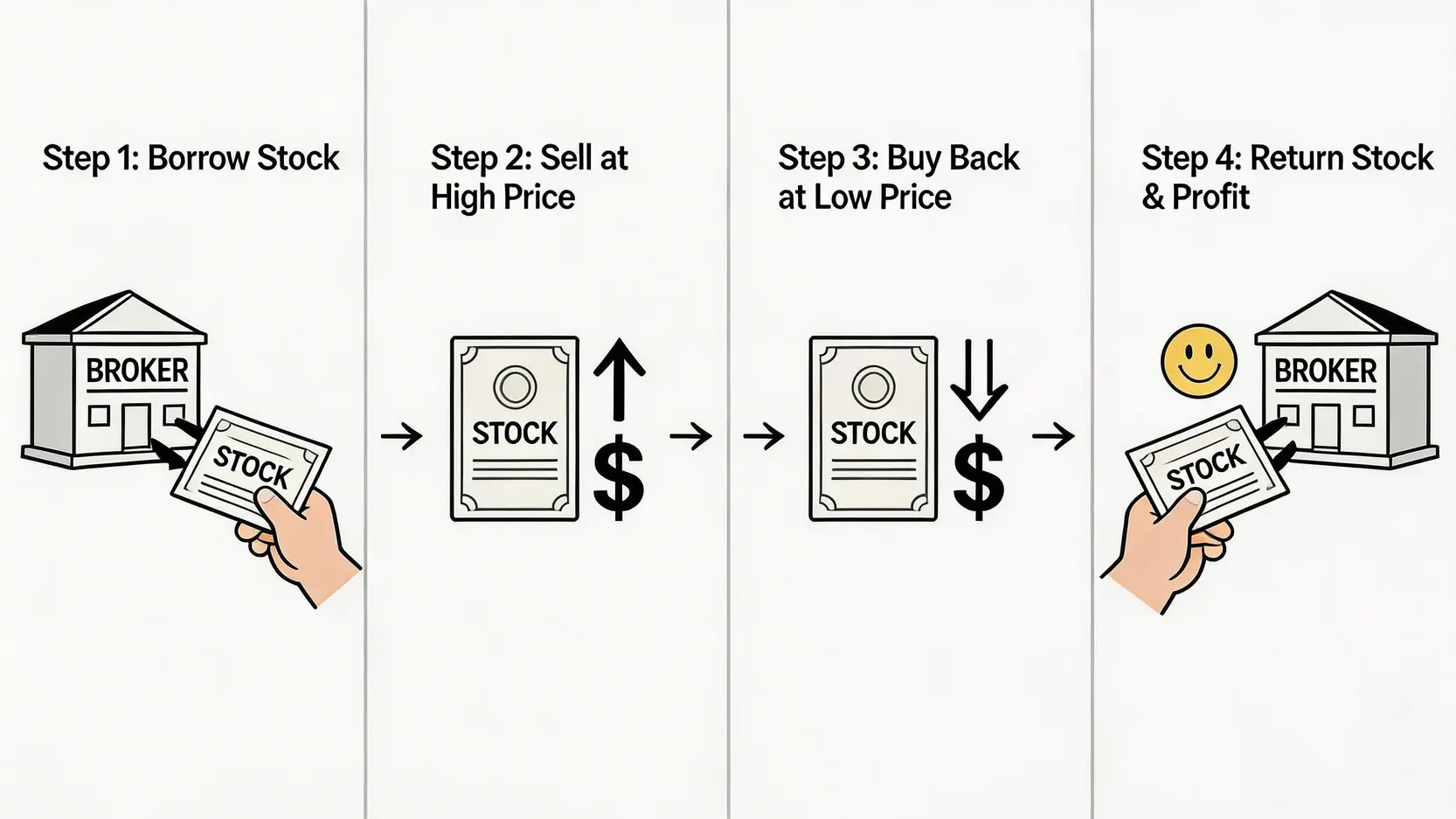
This process is also called “short selling”. For detailed steps, see the guide: “Short Selling Tutorial”: 5 Steps to Master Shorting Stocks with Risk Management.
Extended Reading (Highly Recommended)
Short Selling Tutorial: 5 Steps to Master Shorting Stocks with Risk Management
How to Reduce Investment Risk? 5 Key Risk Management Strategies and Diversified Investment Tutorial
Key Comparison: Long vs Short Different Operations, Risks, and Timing
“Long and short positions” are completely opposite strategies, with vastly different risk structures and optimal timing. Understanding the difference between a long and short position is crucial for building your trading strategy.
| Comparison Items |
Long Position |
Short Position / Selling Short |
| Operation Logic |
Buy First, Sell Later |
Sell First, Buy Later (Borrowing Required) |
| Profit Conditions |
Asset Price Rises |
Asset Price Falls |
| Maximum Profit |
Theoretically Unlimited (Stock Price Can Rise Indefinitely) |
Limited (Stock Price Can Fall to Zero at Most) |
| Maximum Loss |
Limited (Up to the Total Invested Capital) |
Theoretically Unlimited (Stock Price Can Rise Indefinitely, Leading to Unlimited Repurchase Cost) |
| Suitable Timing |
During a Bull Market or an Uptrend of Individual Assets |
During a Bear Market or a Downtrend of Individual Assets |
Beginner’s Guide: Practical Teaching for Long and Short Positions
After learning theoretical knowledge, the next step is practice. To successfully go long or short, the key lies in judging market trends. This section on long and short positions will provide some basic methods.
How to Determine Whether the Market Is Bullish or Bearish? Two Basic Indicators
Although no one can predict the market with 100% accuracy, we can use some indicators to improve judgment:
- Major Market Indexes: This is the most intuitive thermometer. For example, observe the US S&P 500, Hong Kong HSI, or Taiwan TAIEX. If the index continuously reaches new highs, it is generally considered a bull market; conversely, if it falls more than 20% from the peak, it technically enters a bear market.
- Moving Average: This is a very popular technical indicator that smooths price fluctuations and shows long-term trends. Commonly used are the 50-day and 200-day lines. Simply put:
- Golden Cross: When the short-term moving average (e.g., 50-day line) crosses above the long-term moving average (e.g., 200-day line), it is usually considered a buy signal, indicating a potential bull market
- Death Cross: When the short-term moving average crosses below the long-term moving average, it is considered a sell signal, indicating a potential bear market.
Timing and Basic Strategies for “Long Positions”
When the above indicators suggest the market is or is about to enter a bull market, it is a good time to consider a “long position”. Basic strategies include:
- Gradual Buying: Do not invest all funds at once. After the market confirms an upward trend, positions can be established in batches to reduce the risk of buying at a high point.
- Choosing Strong Stocks: In a bull market, usually “the strong get stronger”. Select leading stocks that break through first and have strong performance, as they often outperform the broader market.
- Setting Stop-Loss Points: Even in a bull market, pullbacks can occur. Setting a stop-loss for each trade (e.g., sell if the stock falls 10%) is an important discipline to protect capital.
Operation Methods and Potential Risk Warnings for “Short Positions”
A short position or selling short is a more advanced strategy, especially suitable for finding opportunities in a bear market. However, the risks are extremely high, and beginners must exercise extreme caution before trading
Operation Methods:
- Identify Weak Stocks: When the market weakens, look for stocks with deteriorating fundamentals that have fallen below key support levels as targets
- Strict Risk Control: Since theoretical losses are unlimited, risk management for short positions is more important than for long positions. A “buy stop” must be set; if the stock price rises instead of falling and reaches the default price, close the position immediately to control losses
Risk Warning: The biggest nightmare of short selling is a “short squeeze”. When a large number of short sellers have taken positions at low prices, the stock price may suddenly surge due to favorable news, forcing short sellers to buy back at high prices. This buying further drives up the stock price, creating a vicious cycle that can cause huge losses in a short time. Therefore, do not attempt short selling without fully understanding its risks. Effective investment risk management is the foundation of all trading strategies.
Common Questions About Bull and Bear Markets and Long and Short Positions
Q: Can beginners directly take a short position (sell short)? What are the risks?
A: Theoretically yes, but it is strongly not recommended. The main risk of a short position is “unlimited loss, limited profit”. There is no ceiling on stock price rises, and if the price rises after a short, your loss could be several times your capital. In addition, there is the risk of a “short squeeze” and interest costs for borrowing stocks. Beginners should start with long positions, fully understand the market, and then consider learning short positions.
Q: Do “bull market” and “long position” mean exactly the same?
A: Not exactly, but the concepts are related. Bull market usually describes the overall market trend and sentiment, a macro-level state. A “long position” refers to a specific trade or position held in your personal account. You can say “the market is bullish, so I opened a long position”; the first is a market judgment, the second is a personal operation.
Q: Are there other trading strategies besides long and short positions?
A: Of course. The market is not always rising or falling; often it is in a “sideways” or “range-bound state”. In such conditions, investors may use range trading strategies such as “buy low, sell high”, or use more complex financial instruments like options. But for beginners, mastering the basic trend-following strategy (go long in a bull market, consider short in a bear market) is the most important first step.
Q: What are “bull traps” and “bear traps”?
A: A “bull trap” refers to a temporary price rebound during a downtrend, leading investors to mistakenly believe the bear market has ended and a bull market has begun, causing them to buy, only for prices to continue falling and trap them. A “bear trap” is the opposite: a temporary price drop during an uptrend leads investors to mistakenly think the bull market is over, causing them to sell or short, only for prices to rebound quickly and reach new highs. Both scenarios test an investor’s ability to judge the true market trend.
Conclusion
In summary, understanding the meaning of “bull and bear markets” and the distinction between “long and short positions” is a required lesson for anyone entering the investment field. A bull market and long positions indicate a positive market outlook, buying assets in anticipation of price increases, while a bear market and short positions indicate a negative outlook, expecting prices to fall and profiting from it. Learning the basic “long and short position practices” and trend judgment methods can help you respond more flexibly in different market environments. This explanation of stock market terminology aims to lay a solid foundation for your investment journey. Start applying this knowledge now, observe market trends, and gradually build your own trading strategy.