2026 Yen Forecast: Exchange Strategy for H2 2026

[Second Half of 2026] Complete Japanese Yen Outlook Forecast: The Ultimate Currency Exchange Strategy for Investors and Travelers
Following record-breaking market interventions, the future outlook for the Japanese yen is filled with both uncertainty and opportunity. Will the yen regain its strength, or will it fall to new lows? This question is not only a focal point for global financial markets, but also one that directly affects the finances of individuals and businesses alike. Whether you are planning a trip to Japan and considering a currency exchange strategy, an investor evaluating opportunities in the Japanese market, or a business owner with exposure to the yen, accurately assessing the future direction of the currency is crucial. This article provides forward-looking analysis and practical strategies to help you navigate the uncertainty and make informed decisions.
The Two Key Variables That Will Shape the Future of the Japanese Yen
Forecasting the direction of the yen in the second half of 2026 requires more than focusing on a single factor. The currency can be viewed as a ship navigating the global economic ocean, influenced by two powerful forces: external macroeconomic conditions and Japan’s domestic policy decisions. Understanding these two variables is the foundation of any yen-related strategy.
External Factor: The Federal Reserve’s Rate-Cut Path and the Global Economic Outlook
The Japanese yen often acts as a “mirror image” of the US dollar. When the Federal Reserve (Fed) adopts a hawkish monetary policy stance and the dollar strengthens, the yen typically comes under pressure, and vice versa. Markets generally expect the Fed to begin a rate-cutting cycle in the second half of 2026, but the key question is the pace and magnitude of those cuts.
- Rapid Rate Cuts: If US inflation cools quickly and economic growth begins to slow, the Fed may adopt a more aggressive easing approach. This would significantly narrow the interest rate differential between the US and Japan, potentially triggering the unwinding of carry trades and encouraging capital to flow from the dollar into the yen, resulting in a substantial rebound in the Japanese currency.
- Gradual Rate Cuts: If inflation remains persistent and the US economy continues to demonstrate resilience, the Fed may adopt a more cautious, data-dependent approach. In this scenario, the interest rate gap between the two countries would likely remain elevated, limiting the yen’s appreciation potential.
In addition, the overall health of the global economy remains an important factor. When global growth expectations are strong, investors tend to favor higher-risk, higher-return assets, reducing the appeal of the yen as a safe-haven currency. Conversely, concerns over geopolitical risks or economic recession often increase demand for the yen’s traditional safe-haven characteristics.
Internal Factor: The Bank of Japan’s Next Policy Move
After bringing an end to its long-standing negative interest rate policy, the Bank of Japan (BOJ) remains at the center of market attention. Investors are closely watching whether the BOJ will continue raising interest rates or begin reducing the size of its massive balance sheet (i.e., balance sheet reduction).
- Clear Signals of Further Rate Hikes: If wage growth and inflation continue to exceed expectations, the BOJ may adopt a more explicitly hawkish stance. Should markets begin to anticipate a series of rate hikes, the yen could receive strong domestic support.
- A Wait-and-See Approach: On the other hand, Japan’s economic recovery remains fragile. If policymakers fear that tighter monetary policy could undermine growth or place pressure on small and medium-sized enterprises, the BOJ may choose to maintain accommodative conditions for an extended period. Such a dovish stance would likely limit the yen’s upside potential and could even lead to renewed weakness.
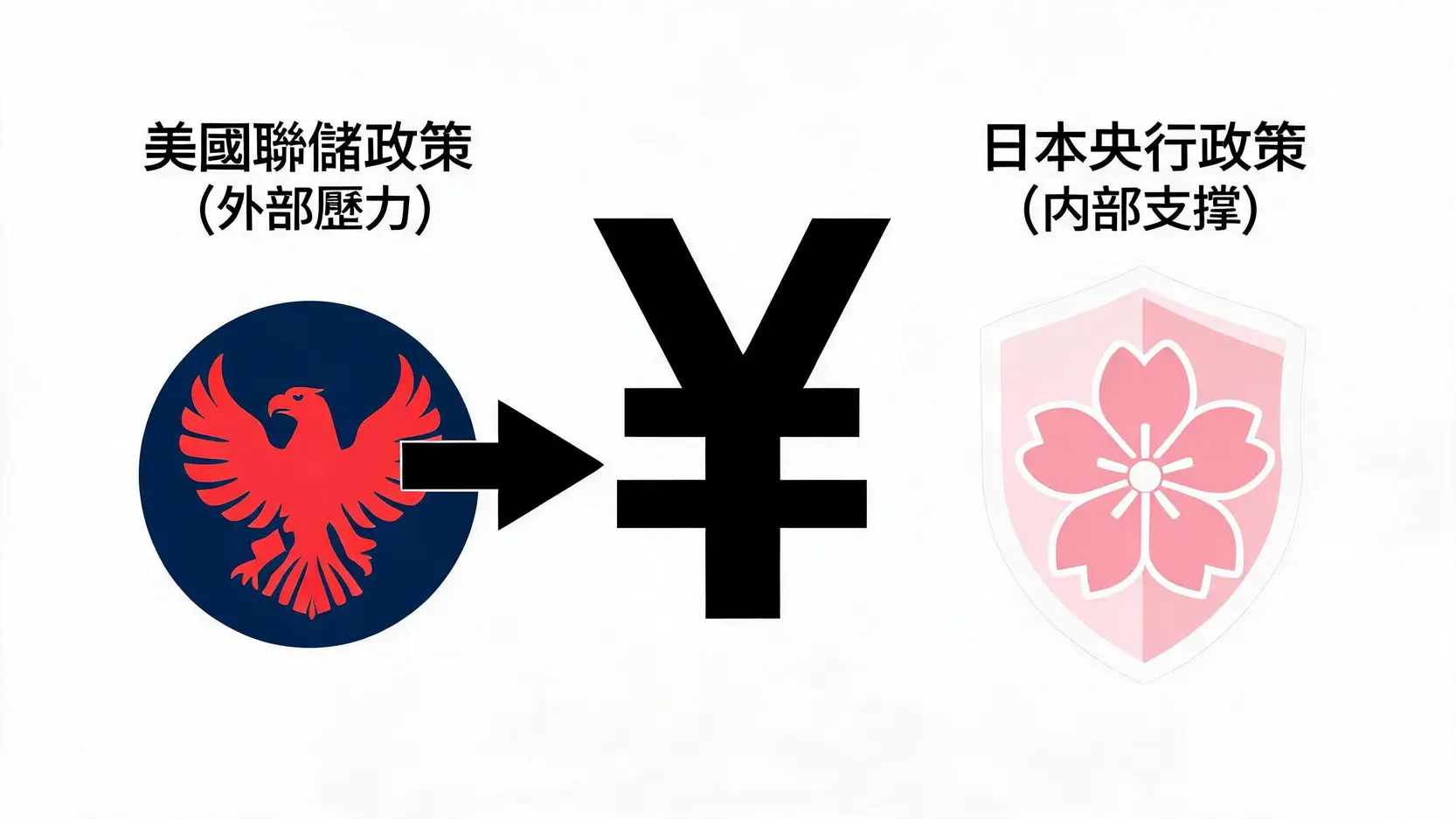
In summary, the future of the Japanese yen is a contest between the “US spear” and the “Japanese shield”. The spear’s offensive power (the extent of Federal Reserve rate cuts) and the shield’s defensive strength (the Bank of Japan’s determination to tighten policy) will jointly determine the direction of the battlefield.

The Tug-of-War in the Yen Exchange Rate: US Policy vs. Japanese Policy
Further Reading (Highly Recommended)
2026 Guide to Overseas Brokerage Investing: From Basics to Placing Your First Trade
Three Possible Scenarios for the Future Outlook of the Japanese Yen
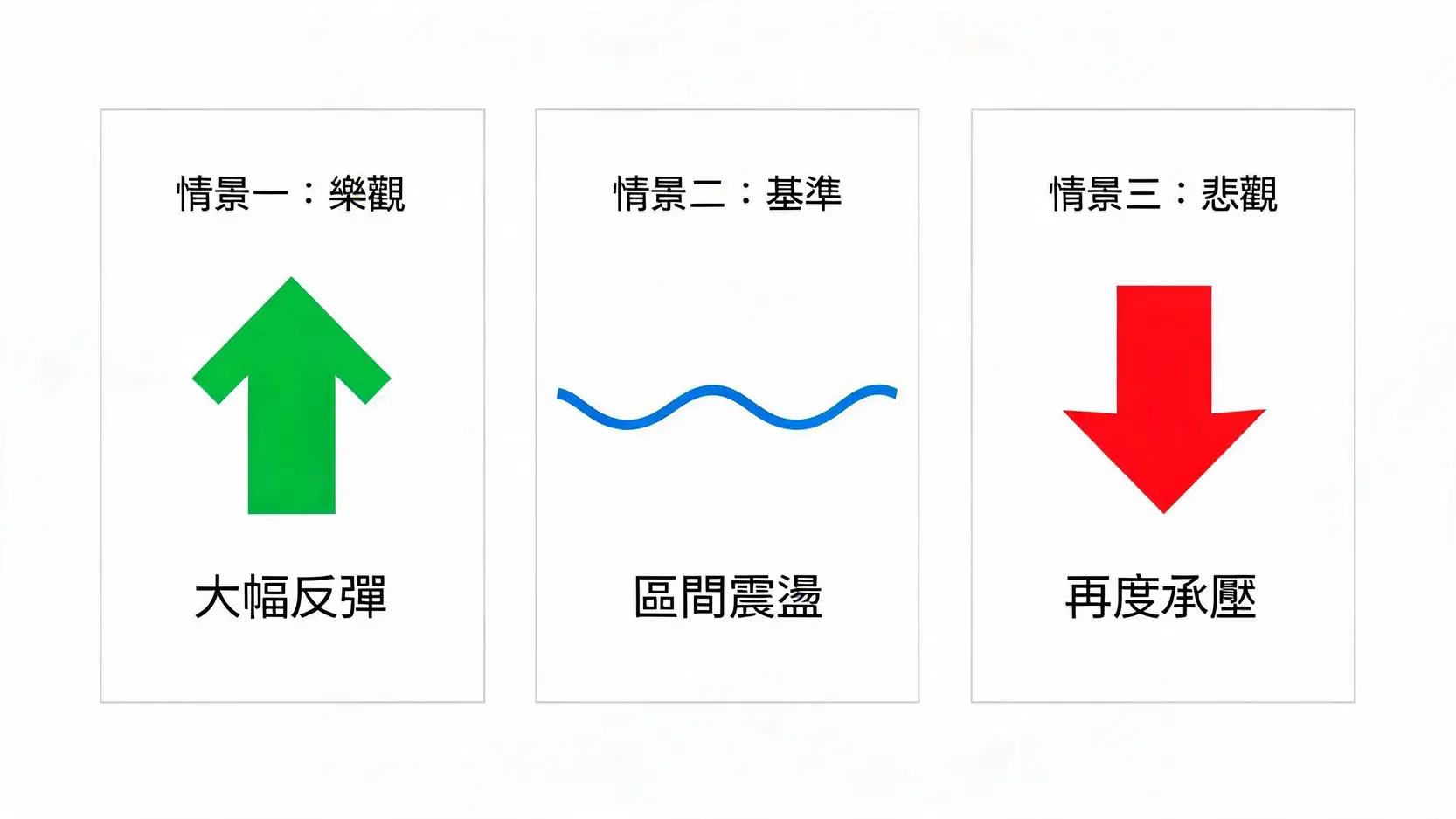
Based on the internal and external factors discussed above, we can outline three possible scenarios for the Japanese yen in the second half of 2026. These are not crystal-ball predictions, but rather a strategic framework designed to help different market participants prepare for a range of outcomes.

Three Possible Paths for the Japanese Yen
Scenario 1 (Bullish): Federal Reserve Rate Cuts + Bank of Japan Rate Hikes = Strong Yen Rebound
This is the most favorable scenario for yen bulls. If a cooling US economy prompts the Federal Reserve to cut rates aggressively while stable inflation in Japan encourages the Bank of Japan to continue tightening monetary policy, the interest rate differential between the two countries could narrow rapidly. This may trigger large-scale short covering in the yen and encourage new long positions.
- Trigger Conditions: US CPI inflation falls below 2% year-over-year; Japan’s “annual spring” wage negotiations deliver results significantly above expectations, while core inflation remains sustainably above 2%.
- Market Impact: USD/JPY could fall sharply from the 150-160 range toward 135 or even lower.
- Potential Consequences: Import costs decline significantly for Japanese businesses, while export-oriented companies face pressure on profit margins. Travel expenses for visitors to Japan increase substantially.
Scenario 2 (Base Case): Gradual Federal Reserve Rate Cuts + Bank of Japan Maintains Current Policy = Range-Bound Yen Trading
This represents a more neutral scenario. The Federal Reserve adopts a gradual easing cycle, while the Bank of Japan pauses after a single rate increase and avoids tightening too aggressively. With neither central bank providing a strong directional signal, markets may remain indecisive.
- Trigger Conditions: US inflation declines slowly but remains sticky; Japanese economic growth remains modest, leading the BOJ to maintain a cautious policy stance.
- Market Impact: USD/JPY fluctuates within a broad trading range, such as 145-155. Both verbal and actual intervention by Japanese authorities become more frequent as they seek to stabilize the exchange rate.
- Potential Consequences: Increased volatility creates opportunities for short-term traders, while long-term investors and corporate decision-makers face greater uncertainty.
Scenario 3 (Bearish): US Inflation Reaccelerates + Japanese Economic Weakness = Renewed Pressure on the Yen
This is the scenario most favorable for yen bears. If US inflation unexpectedly rebounds, forcing the Federal Reserve to delay or even cancel planned rate cuts, while Japan’s domestic demand weakens and economic indicators deteriorate, the Bank of Japan may have little justification for further tightening.
- Trigger Conditions: Rising energy prices drive inflation higher in the US, while core services inflation remains persistent; Japan experiences negative GDP growth and declining business confidence.
- Market Impact: The interest rate differential between the US and Japan remains wide or expands further, potentially pushing USD/JPY back above the 160 level.
- Potential Consequences: Japan faces higher imported inflation and rising living costs. At the same time, travel and shopping in Japan become increasingly attractive for foreign visitors.
Strategy Guide by Investor Profile: How Different Participants Can Respond
Given the complexity of the yen’s future outlook, simply attempting to “predict whether the currency will rise or fall” is rarely the most effective approach. A better strategy is to develop a flexible plan based on your specific objectives and circumstances. Whether you are a traveler, investor, or business owner, there are practical approaches available.
For Travelers and International Students: How to Build an Effective Currency Exchange Plan
For individuals with a genuine need for yen, the goal is to secure favorable exchange rates while minimizing timing risk.
- Gradually Exchange Currency Over Time: Instead of trying to identify the perfect exchange rate, consider “converting funds in stages” over several months before your departure. For example, when USD/JPY reaches a level you consider relatively attractive (such as above 155), you can exchange part of your planned allocation. This helps average out your costs and reduces the risk of exchanging all funds at an unfavorable rate.
- Use Digital Tools to Compare Rates: Do not rely solely on a single bank’s quoted rates. Compare exchange rates across multiple banks, apps, and online platforms, while paying attention to the difference between cash rates and spot rates. In some cases, online currency exchange services combined with airport cash pickup can provide better value than exchanging currency at a branch.
- Combine Credit Cards and Cash: In Japan, credit cards are widely accepted in major cities, and overseas spending rewards may offset part of the foreign exchange transaction fees. A recommended strategy is to “use credit cards for large purchases and cash for small payments”. Exchanging sufficient cash in advance is generally enough to cover transportation, small shops, and other situations where card payments may not be accepted.
- Set Target Exchange Levels: Establish both an “ideal” exchange rate and an “acceptable” exchange rate. Once the market reaches your target level, exchange the majority of your required funds rather than attempting to optimize every last fraction of the rate.
For Investors: How to Position Japanese Assets Amid Currency Volatility
For investors, exchange rate movements can be a major determinant of returns from Japanese assets. Effective asset allocation should incorporate currency risk as a core consideration.
- Equities (Nikkei 225 / TOPIX)
- Unhedged ETFs: If you are optimistic about Japanese companies but expect the yen to weaken, an unhedged ETF tracking the Nikkei 225 or TOPIX may be appropriate. Even if the yen depreciates, gains in the underlying equities may still generate attractive returns when converted back into your home currency.
- Currency-Hedged ETFs: If your primary investment thesis centers on Japanese equities but you are concerned about exchange rate fluctuations affecting returns, a currency-hedged ETF may be more suitable. These products use derivatives to reduce or eliminate foreign exchange risk.
- Real Estate: A weaker yen can make Japanese real estate appear more “affordable” when priced in US dollars or New Taiwan dollars. However, investors should also consider that future yen appreciation may affect rental income and overall returns when converted back into their home currency. Japanese real estate should generally be viewed as a long-term investment focused on rental income and capital appreciation rather than short-term currency speculation.
- Direct Forex Trading: Investors with a higher risk tolerance may choose to participate directly in the USD/JPY market through forex margin trading. However, leverage introduces significant risk. Traders should establish stop-loss levels, understand the macroeconomic factors influencing exchange rates, and maintain strict risk management discipline.
For Importers and Exporters: Managing Yen Exchange Rate Risk Effectively
For companies with significant yen-denominated revenue or expenses, exchange rate fluctuations can have a direct impact on profitability. Effective hedging can help create greater financial stability.

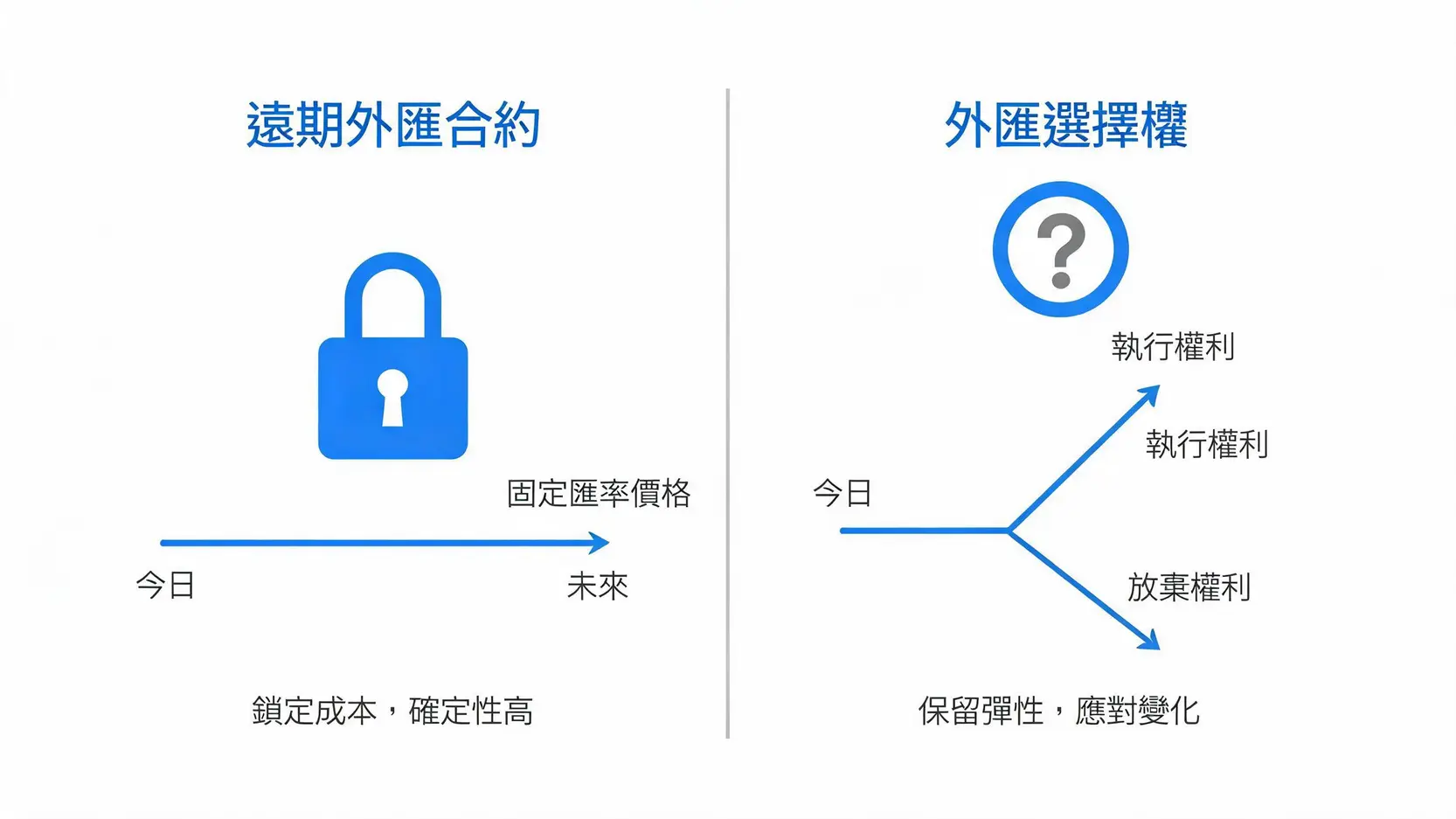
Corporate Hedging Toolkit: Forward Contracts vs. Currency Options
- Forward Contracts: This is one of the most commonly used hedging instruments. Companies can agree with a financial institution to buy or sell yen at a fixed exchange rate on a future date. This approach effectively locks in future costs or revenues, eliminating uncertainty and simplifying financial planning.
- Currency Options: Options provide a “right” rather than an “obligation”. For example, an importer can purchase a yen call option to establish a maximum exchange rate for future purchases. If market rates move favorably, the company can simply let the option expire and transact at the better market rate. If rates move unfavorably, the option can be exercised to protect against adverse currency movements. Although options require the payment of a premium, they offer considerably greater flexibility.
Further Reading (Highly Recommended)
Expert Views: Year-End USD/JPY Forecasts from Major Investment Banks
Forecasts from leading investment banks can serve as useful indicators of broader market sentiment, but it is important to remember that even the most respected institutions are not always correct. The following summarizes the views of several major financial institutions based on recent market (reports as of May 2026), for reference only.
| Institution | USD/JPY Forecast for the End of 2026 | Core Rationale |
| JPMorgan | 160 or Higher | Believes the US-Japan interest rate differential will remain elevated, while the Bank of Japan’s policy normalization process will proceed at a very gradual pace. |
| Bank of America | 150-160 | Expects USD/JPY to peak at around 160 in early 2026 before gradually retreating as the Federal Reserve shifts its policy stance. |
| Commerzbank | 147-150 | Expects the US dollar to strengthen moderately in 2026, while the Japanese yen avoids any extreme depreciation. |
| HSBC | 142-145 | The base-case scenario is that Federal Reserve rate cuts will become the dominant market driver, pushing USD/JPY lower by year-end. |
Note: The views above are compiled from publicly available market reports and do not constitute investment advice.
Analysis of the Core Logic and Assumptions Behind These Forecasts
As the table illustrates, there is a significant divergence of opinion among major financial institutions. These differences largely stem from varying assumptions regarding several key issues:
- Assessment of the Federal Reserve’s Policy Path: Institutions that are bullish on USD/JPY (such as JPMorgan), generally believe that the market is overly optimistic about the pace and magnitude of future Federal Reserve rate cuts. They remain more concerned about the persistence of US inflation.
- Evaluation of the Bank of Japan’s Willingness to Act: Institutions that are bearish on USD/JPY (such as HSBC), believe that when conditions are appropriate, the Bank of Japan possesses both the determination and the policy tools necessary to support the yen. They also argue that the Japanese government has limited tolerance for excessive currency depreciation.
- Importance of Safe-Haven Demand: Some analysts believe that as global economic uncertainty increases during the second half of 2026, the yen’s traditional safe-haven appeal will regain prominence. This could provide meaningful support for the currency beyond what interest rate models alone would suggest.
Reporting from Bloomberg has also highlighted that bearish sentiment toward the yen remains prevalent in certain segments of the market, primarily due to concerns that the Bank of Japan may continue to follow a cautious policy normalization path. This serves as a reminder that investors should not ignore the most pessimistic scenarios when developing their strategies.
Frequently Asked Questions (FAQ)
Q: If I buy Japanese yen now and it appreciates in the future, where can I sell it?
A: You can realize profits from selling Japanese yen through various channels. The most common method is to return to the bank where you originally purchased the yen and exchange it back into your local currency through a “spot sell” or “cash sell” transaction. If you traded through a forex margin trading platform, you only need to close the position on the platform. In addition, some foreign currency ATMs also offer foreign currency deposit services. Regardless of the method used, you should pay attention to the bid-ask spread and any applicable fees.
Q: Can investing in Japanese equity ETFs hedge against yen depreciation?
A: Not necessarily. The answer depends on the type of ETF you own. If you invest in an “unhedged” Japanese equity ETF, a weaker yen may offset some or even all of the gains generated by the underlying stocks when returns are converted back into your home currency. If your objective is to gain exposure to Japanese equities while minimizing currency risk, you should consider ETFs that are specifically designated as “currency-hedged” products.
Q: Is the Japanese yen still a safe-haven currency over the long term?
A: This traditional view is being challenged. In the past, because Japan was the world’s largest creditor nation and maintained extremely low interest rates, overseas capital would flow back into Japan during periods of geopolitical turmoil, driving up the yen and reinforcing its status as a safe-haven currency. However, in recent years, the yen’s safe-haven characteristics have weakened due to Japan’s massive government debt burden, sluggish economic growth, and the widespread popularity of carry trades. In some situations (such as periods of surging global energy prices), the yen has even displayed characteristics of a “risk currency”. Therefore, while it still retains certain safe-haven qualities, it should no longer be regarded as the only, or the most reliable, safe-haven option.
Q: Can Japanese government intervention change the long-term trend of the yen?
A: Most market participants believe that intervention alone cannot reverse a long-term trend driven by fundamental interest rate differentials. Intervention can increase the cost of speculative short positions and trigger sharp short-term rallies, but if the underlying interest rate gap between the US and Japan remains unchanged, market forces will eventually reassert themselves. Intervention functions more like a “brake” or “shock absorber”, designed to manage the pace of currency depreciation rather than alter its long-term direction. A sustained reversal in the yen’s trend is more likely to require a meaningful shift in monetary policy from either the Federal Reserve or the Bank of Japan.
Conclusion
Looking ahead to the second half of 2026, the direction of the Japanese yen will be determined by the interaction of both bullish and bearish forces. US inflation data, Federal Reserve interest rate decisions, Japan’s domestic economic performance, and policy signals from the Bank of Japan all have the potential to trigger significant market reactions. Rather than simply attempting to predict whether the currency will rise or fall, investors should develop strategies that reflect their specific objectives and circumstances. For travelers and international students, exchanging currency gradually and utilizing multiple channels can help reduce costs. For investors, the challenge lies in balancing currency risk against asset valuation while making effective use of hedging tools. For businesses, managing exposure through forward contracts or options remains a cornerstone of prudent financial management. By understanding the broader macroeconomic landscape and preparing for multiple scenarios, market participants can navigate an unpredictable currency market with greater confidence and discipline.
Related Articles
-
How Significant Is the Impact of the Geopolitical Risk Premium on Taiwan Stocks? Understanding the Risks, Opportunities, and Investment Strategies In an increasingly globalized world, Taiwan's stock market is influenced not only by economic fundamentals but is also constantly exposed to complex geopolitical risks. From tensions in cross-strait relations to...2026 年 6 月 5 日
-
The Fourth Largest Net Buy in History! Foreign Investors Snap Up NT$62.7 Billion of Taiwan Stocks, Revealing Three Key Signals Behind Stocks and the Currency Rising in Tandem Taiwan's stock market staged a stunning rally, surging more than 900 points in a single day with trading volume reaching extraordinary levels....2026 年 6 月 5 日
-
New Taiwan Dollar Surges to Close at 31.46! A Complete Guide to How Taiwan Dollar Appreciation Affects the Stock Market, Industries, and You The New Taiwan dollar exchange rate has recently strengthened significantly, at one point reaching a high of 31.46 against the US dollar, drawing widespread market attention. Many...2026 年 6 月 5 日