HK Fund Rankings 2026: Morningstar 5-Star Guide

[2026 Hong Kong Fund Rankings] How to Choose the Highest-Return Fund? A Complete Guide to Comparing Morningstar 5-Star Fund Performance
Facing hundreds of funds in the Hong Kong market, how should you choose to find a truly high-potential “highest-return fund” among so many options? Is simply referring to Hong Kong fund ranking lists enough? Many beginner investors tend to focus only on impressive past returns while overlooking potential fees, risk factors, and comprehensive fund performance comparisons, leading to significantly reduced actual returns. To make smart investment decisions, you need a clearer and more comprehensive analytical framework.
This article will break down the core secrets of fund selection, starting with the interpretation of key performance indicators. It will teach you how to combine authoritative Morningstar fund ranking data to intelligently screen funds that best match your personal investment goals, helping you avoid common pitfalls and steadily move toward wealth growth.
Step One in Fund Selection: Interpret Key Performance Indicators to Understand the True Value of a Fund
In a vast sea of funds, to quickly identify potential winners, you must first learn to read several key indicators. These data points are like a “health report” for a fund, helping you understand its true condition rather than just surface-level return figures.
Cumulative Return vs Annual Return: How to Evaluate Long-Term Growth Potential?
Many platforms highlight “annual return”, which may be eye-catching but can also be misleading. For example, a fund may have delivered a 50% return this year, but if it fell 40% last year, its overall performance over time may not be ideal. Cumulative return calculates the total return over a longer period (such as 3 years, 5 years, or since inception) and better reflects the fund’s long-term growth trend and stability. A solid investment portfolio should prioritize sustained long-term growth rather than short-term spikes.
Sharpe Ratio: How Much Return Do You Get for Each Unit of Risk Taken?
High returns are often accompanied by high risk, but is the risk you take worthwhile? The Sharpe ratio is an excellent tool for measuring this “risk-return efficiency”. Although its formula is complex, the concept is simple: the higher the ratio, the greater the excess return a fund generates for each unit of risk taken.
- Sharpe ratio > 1: Indicates strong performance with a favorable risk-return profile.
- Sharpe ratio < 1: Indicates the risk taken exceeds the return, resulting in poor efficiency.
When comparing two funds with similar returns, the one with a higher Sharpe ratio is usually the more stable choice.

A higher Sharpe ratio indicates a more ideal return for each unit of risk taken.
Fund Expense Ratio: The Often Overlooked Hidden Cost That Erodes Your Returns
The fund expense ratio represents the annual administrative and management costs deducted from the fund’s assets. It is a “hidden cost” in your investment. Even a difference of 1% to 2%, when compounded over time, can have a significant impact on your total returns. When comparing fund performance, especially for long-term investors, choosing a fund with a lower expense ratio means gaining an advantage from the start. Do not underestimate this figure, as it directly affects your final returns.
Further Reading (Highly Recommended)
[Forex Tutorial 2024] The Ultimate Beginner’s Guide: Master Forex Trading From 0 to 1!
2026 Hong Kong Popular Fund Rankings and Performance Comparison
After understanding the evaluation metrics, let us look at some popular fund categories in the market. The following uses simulated data to demonstrate performance comparisons across different types of funds, helping you build a clearer understanding of the market. (Note: The following data are for illustrative purposes only and do not constitute any investment advice. Please refer to official platforms such as fund issuers or Morningstar for actual data.)

Different fund types have varying risk and return profiles and should be selected based on your personal risk tolerance.
[Hong Kong Equity Funds] Top 5 Fund Performance Comparison List
Hong Kong equity funds mainly invest in locally listed companies and are highly correlated with the Hang Seng Index. They are suitable for investors who are optimistic about the local market outlook. These funds tend to have higher volatility but also offer attractive return potential. When selecting, in addition to returns, you should also pay attention to whether the industry allocation is overly concentrated and to the fund manager’s investment style. You may refer to the fund buying guide to learn more about fund trading details.
|
Fund Name (Example) |
3-Year Cumulative Return | Sharpe Ratio | Expense Ratio | Morningstar Rating |
| Fund A: Hang Fu Hong Kong Growth | +45.5% | 1.35 | 1.5% | ★★★★★ |
| Fund B: Manulife Hong Kong Momentum | +42.8% | 1.21 | 1.7% | ★★★★ |
| Fund C: BlackRock Hong Kong Advantage | +39.2% | 1.15 | 1.65% | ★★★★ |
| Fund D: HSBC Hong Kong Select | +35.1% | 0.98 | 1.8% | ★★★ |
| Fund E: Bank of China Hong Kong Value | +33.7% | 1.05 | 1.4% | ★★★ |
[Global Technology Funds] Finding the Next Growth Engine: Candidates for the Highest-Return Funds
Technology stocks have been the main growth driver of global markets in recent years. Global technology funds allow you to invest in leading technology giants worldwide with a single allocation, such as Apple, Microsoft, and Nvidia. These funds offer very high return potential, but also carry the highest risk and volatility, making them more suitable for investors with a higher risk tolerance. When conducting fund performance comparisons, pay attention to whether holdings are overly concentrated in a few major companies and how the fund is positioned in emerging technology sectors (such as AI and cloud computing).
|
Fund Name (Example) |
3-Year Cumulative Return | Sharpe Ratio | Expense Ratio | Morningstar Rating |
| Fund F: Morgan Global Technology Leaders | +85.2% | 1.55 | 1.8% | ★★★★★ |
| Fund G: Fidelity Global Technology Pioneers | +81.5% | 1.48 | 1.75% | ★★★★★ |
| Fund H: Allianz Global Artificial Intelligence | +78.9% | 1.62 | 1.9% | ★★★★ |
| Fund I: Invesco Global Technology Opportunities | +72.4% | 1.39 | 1.85% | ★★★★ |
| Fund J: Schroders Global Innovation | +69.8% | 1.33 | 2.0% | ★★★ |
[Asian Bond Funds] A Stable Income Choice: Comparison of High-Dividend Fund Performance
For investors seeking stable cash flow with lower risk tolerance, Asian bond funds are an ideal choice. These funds primarily invest in bonds issued by governments and corporations across Asia, distribute interest regularly, and have significantly lower price volatility than equity funds. When selecting, attention should be paid to their credit rating distribution (such as investment-grade versus high-yield bonds), average duration (which reflects sensitivity to interest rate changes) and the stability of the distribution rate.
| Fund Name (Example) |
Average Annual Distribution Rate |
3-Year Cumulative Return | Expense Ratio | Morningstar Rating |
| Fund K: PIMCO Asian Income Bonds | ~5.5% | +15.2% | 1.2% | ★★★★★ |
| Fund L: AllianceBernstein Asian Multi-Income | ~5.2% | +14.8% | 1.3% | ★★★★ |
| Fund M: Amundi Asian High Yield Bonds | ~6.0% | +13.5% | 1.5% | ★★★ |
| Fund N: Barings Asian Investment Grade Bonds | ~4.8% | +12.9% | 1.25% | ★★★★ |
| Fund O: Ninety One Asian Bonds | ~5.0% | +12.5% | 1.4% | ★★★ |
How to Use Morningstar Ratings to Select High-Quality Funds?
Morningstar is one of the most authoritative and trusted independent fund rating agencies globally. Learning how to use its tools can make your fund selection process far more efficient. You can visit its official website to access a vast amount of free information.
Decoding Morningstar Star Ratings: What Does a 5-Star Fund Represent?
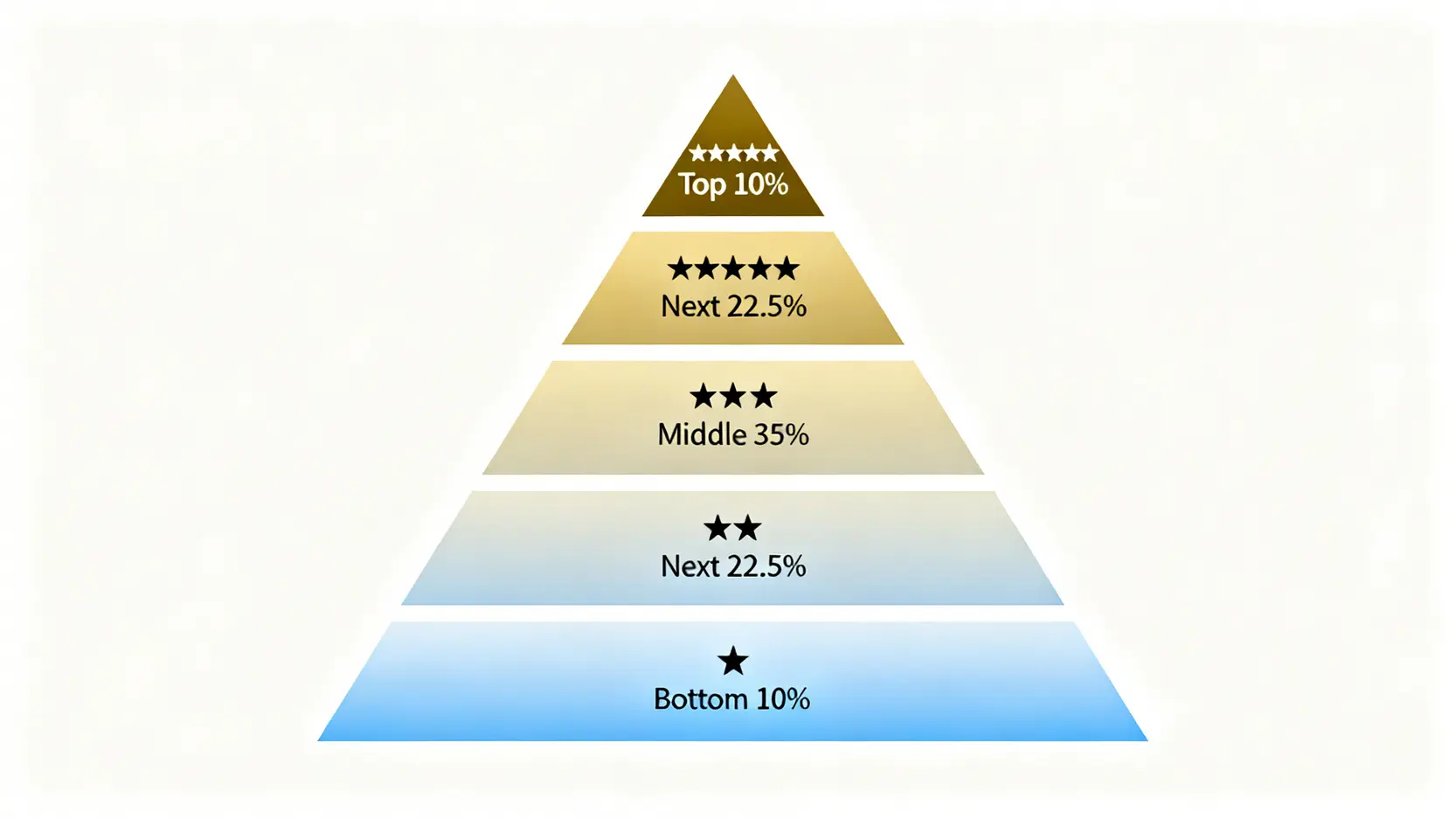
Morningstar’s star rating (from 1 to 5 stars), is based on a “fund’s risk-adjusted returns” over the past 3, 5, and 10 years, compared with funds in the same category. The rating is purely quantitative and objective.
- ★★★★★ (5 stars): Top 10% within the category
- ★★★★ (4 stars): Next 22.5%
- ★★★ (3 stars): Middle 35%
- ★★ (2 stars): Next 22.5%
- ★ (1 star): Bottom 10%

Morningstar Star Rating Distribution: The higher the rating, the better the fund’s historical performance relative to peers.
Important Note: Star ratings summarize “past performance”, not predict “future performance”. A 5-star fund indicates strong past results, but does not guarantee continued excellence. Therefore, it should serve as a “starting point” for fund selection, not the “end point”.
Practical Guide: How to Screen Top Hong Kong Funds on the Morningstar Website?
Although Morningstar websites may vary slightly by region, the core screening logic remains the same. You can follow these steps to quickly identify target funds:
- Access the Fund Screener: Locate the fund tools or similar options in the website navigation bar.
- Set Basic Criteria: Select the fund domicile as “Hong Kong”, and choose the fund category (such as “Hong Kong equity”, “technology equity”, or “Asian bonds”).
- Apply Rating Filters: Select “4 stars” and “5 stars” in the rating options to initially filter out funds with weaker historical performance.
- Compare Key Metrics: Sort and compare the filtered list by “3-year return”, “5-year return”, “Sharpe ratio”, and “expense ratio”.
- Conduct In-Depth Research: Click on funds of interest to review detailed holdings, asset allocation, and fund manager background before making a final decision.
By following this process, you can systematically identify potential investment targets that meet your criteria from among hundreds of funds.
FAQ: Common Questions About Fund Investing in Hong Kong
Q: Does the fund with the highest past returns guarantee the same performance in the future?
A: Absolutely not. The market is cyclical, and factors such as the economic environment, industry trends, and interest rate policies are constantly changing. A past “top-performing fund” may have benefited from strategies aligned with market trends at that time, but may not maintain its strength when market conditions shift. Therefore, past returns can only serve as a reference and should never be considered a guarantee of future performance.
Q: Does a 5-star Morningstar rating mean a fund is a “must-buy”?
A: No. As mentioned earlier, a 5-star rating reflects strong historical risk-adjusted performance and is a very useful screening tool, but it is not investment advice. A complete decision-making process must also consider your own investment goals, risk tolerance, investment horizon, and whether the fund’s portfolio aligns with your expectations.
Q: Besides fund rankings, what other factors should I consider?
A: In addition to rankings and performance indicators, you should also consider:
- Your investment goals: Are you investing for retirement savings, an education fund, or short-term growth? Different goals require different types of funds.
2. Your risk tolerance: Can you accept significant fluctuations in asset prices? This determines how much allocation you should have in equity funds or bond funds.
3. The reputation and size of the fund company: Large and reputable fund companies usually have more comprehensive research teams and risk control systems.
4. The experience of the fund manager: An experienced and consistent fund manager is the key figure of a fund.
Q: What types of fees are involved in fund investing?
A: In addition to the “expense ratio” (management fee) mentioned earlier, common fees include:
- Subscription Fee: A one-time fee paid when purchasing a fund, usually 1 to 5% of the investment amount.
2. Redemption Fee: A fee paid when selling a fund. Some funds charge higher fees for short-term redemption to encourage long-term holding.
3. Switching Fee: A fee charged when switching between different funds under the same fund company.
Conclusion: Build Your Personalized Fund Investment Strategy
In summary, finding the ideal highest-return fund cannot rely solely on a ready-made Hong Kong fund ranking list. Successful investors know how to combine macro analysis with micro data, conduct comprehensive fund performance comparisons, and use professional tools such as Morningstar to support decision-making. More importantly, all investment decisions should be based on your own financial situation and goals. This guide aims to help you establish a clear selection framework so you can find the most suitable fund among the many options in Hong Kong and achieve your wealth growth objectives.
Related Articles
-
US PPI Comes in Below Expectations: Is Inflation Cooling? Understand the Impact on the Stock Market, Interest Rate Hikes, and Your Wallet The recently released US Producer Price Index (PPI) once again came in below market expectations, sparking optimism that inflation is cooling. What exactly does this key US PPI...2026 年 7 月 21 日
-
PPI and CPI Surge: Is the Inflation Monster Coming? Understand the Two Key Indicators and Protect Your Wallet! Have you recently felt that your money is worth less and less, with the price of everything rising except your salary? Everyone is talking about “inflation”, but where exactly does this monster...2026 年 7 月 21 日
-
When Oil Prices Rise, Which Currencies Benefit? Understanding Investment Strategies for Crude Oil Currency Pairs What Are Crude Oil Currencies? Uncovering the Relationship Between Oil Prices and Forex As volatility in the global energy market intensifies, every movement in crude oil prices affects the foreign exchange market. For perceptive investors,...2026 年 7 月 21 日