Allianz Income & Growth Fund Review 2026

Updated: 2026/03/30  |  CashbackIsland

allianz-income-and-growth-fund-review

Is Allianz Income and Growth Fund Good? 2026 Fund Review, Dividend Record, and Full Risk Breakdown

Understanding Allianz Income and Growth Fund (Allianz Income and Growth Fund)

Before conducting an in-depth Allianz fund review, we must first understand the nature of this fund. Allianz Income and Growth Fund is a multi-asset fund, meaning it does not invest solely in equities or solely in bonds, but combines both in an attempt to achieve an ideal balance between risk and return.


Basic Fund Information: Investment Objectives and Strategy

The Allianz Income and Growth Fund has two primary objectives, as its name suggests, “Income” and “Growth”:

  • Income: By investing in convertible bonds and high-yield bonds, it provides investors with regular and attractive dividend income.
  • Growth: By investing in the US equity market, it captures corporate growth potential to achieve capital appreciation.

The core idea of this strategy is to use bonds to provide relatively stable cash flow, while allowing the equity allocation to drive long-term growth in the fund’s net asset value, thereby coping with inflation and market changes.


Core Portfolio: The Golden Allocation of Equities, Convertible Bonds, and High-Yield Bonds

To evaluate the dividend stability and growth potential of the Allianz Income and Growth Fund, it is essential to break down its investment portfolio. The fund manager dynamically adjusts the allocation among three core asset classes, but generally, its structure is as follows:

  • US equities: Primarily invests in large US companies with strong growth prospects, such as leading firms in sectors like technology, healthcare, and consumer discretionary. This is the main driving force behind the fund’s “Growth” engine.
  • Convertible bonds: This is a hybrid security that has both the characteristics of bonds (regular interest payments and principal repayment at maturity) and grants holders the right, under certain conditions, to convert the bonds into company shares. It provides flexibility to “both advance and defend”.
  • High-yield bonds: Also commonly referred to as “junk bonds”, these are issued by companies with lower credit ratings. They offer higher coupon rates to compensate for higher default risk and are the main contributors to the fund’s “Income”.

This “golden triangle” combination allows the fund to adapt to different market environments. In a bull market, equities and convertible bonds can drive net asset value growth; in a bear or sideways market, the interest from high-yield bonds provides a buffer.

安聯收益及增長基金的核心投資組合,由美國股票、可換股債券和高收益債券組成的黃金三角策略。

The “Golden Triangle” Investment Strategy of Allianz Income and Growth Fund


Allianz Fund Review: Why Is It So Popular Among Investors?

The Allianz Income and Growth Fund stands out among many investment tools, especially favored by investors seeking stable cash flow, mainly due to the following key advantages. These advantages also form the basis of its positive Allianz fund reviews.


Advantage 1: Stable Monthly Dividend Cash Flow

For retirees or investors looking to generate passive income “receiving income every month” is a highly attractive feature. Allianz Income and Growth Fund provides a monthly dividend mechanism, allowing investors to expect stable cash inflows, making it easier to plan daily expenses or reinvestment. This level of predictability is difficult to match for many pure equity investments.


Advantage 2: Equity-Bond Hybrid Strategy to Diversify Market Risk

Investing solely in equities can bring significant psychological pressure during market volatility, while investing solely in bonds may result in missed capital growth opportunities. The equity-bond hybrid strategy adopted by this fund is itself a built-in risk diversification mechanism. Under normal circumstances, equities and bonds exhibit a certain degree of negative correlation. When the equity market declines, the bond market may remain relatively stable or even rise, and vice versa. This allocation helps smooth overall portfolio volatility, allowing investors to hold their investments with greater peace of mind.


Advantage 3: Capturing the Growth Potential of the US Market

The fund’s equity allocation is mainly concentrated in the US market, which is one of the most innovative and growth-driven markets globally. Investing in it is equivalent to indirectly holding shares of many world-leading companies and sharing in their growth. For investors who want exposure to the US stock market but lack the time and expertise to select individual stocks, this fund provides a relatively convenient channel.


Must-Read Before Investing: Analysis of Potential Risks and Drawbacks

No investment is perfect. Before being attracted by the appealing dividends of the Allianz Income and Growth Fund, you must clearly understand its potential risks and drawbacks. A comprehensive Allianz fund review should not only focus on its advantages, but also require a deep understanding of the underlying concerns.


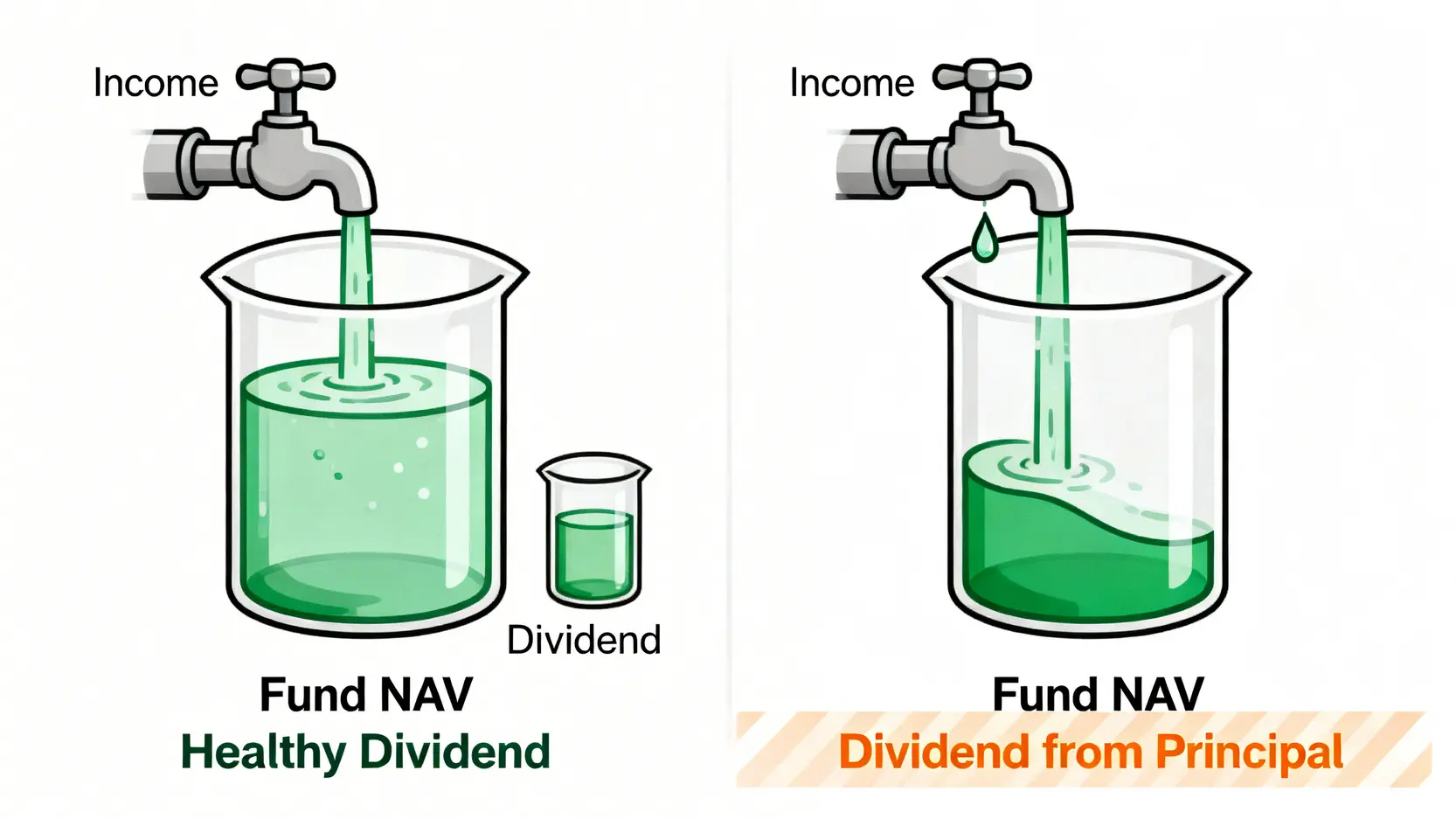
Risk 1: What Is the Truth Behind “Dividends May Be Paid Out of Capital”?

This is the biggest concern for many investors. In the fund’s official prospectus, it is usually stated that “dividends may be paid out of capital”. What does this mean?

Simply put, if the fund’s total income for the period (including dividends, bond interest, and capital gains) is insufficient to cover the predetermined dividend amount, the fund company has the right to use your “capital” (i.e., your original investment value) to pay dividends, in order to maintain a stable dividend rate.

Consequence: This will lead to a decline in the fund’s net asset value (NAV). If you only see the monthly income received but ignore the erosion of NAV, over time you may fall into the situation of “earning dividends while losing capital”. This is also why, when evaluating the Allianz Income and Growth Fund, you cannot focus solely on the dividend yield, but must also pay attention to its NAV trend.

示意圖解釋基金派息的兩種情況:正常派息與從本金中支付派息導致基金淨值下降。

Be Alert! The Operating Model of “Earning Dividends While Losing Capital”


Risk 2: Credit and Default Risk of High-Yield Bonds

In pursuit of higher “Income”, the fund allocates a significant proportion to high-yield bonds. The issuers of such bonds are usually companies with weaker financial conditions or lower credit ratings. During economic downturns or when companies face operational difficulties, their “default risk” of failing to repay interest or principal is significantly higher than that of investment-grade bonds. Once a default occurs in bonds held by the fund, it will directly impact the fund’s NAV. 

Risk 3: The Impact of Interest Rate Changes on Fund NAV

Bond prices are closely related to market interest rates and usually move in the opposite direction. When market interest rates rise (for example, when central banks increase rates), newly issued bonds offer higher yields, making existing bonds less attractive, and their market prices decline. Since this fund holds a large amount of bonds, if the market enters a rate-hiking cycle in the future, the value of its bond holdings will face pressure, thereby affecting the overall fund performance.

蹺蹺板示意圖,解釋當市場利率上升時,現有債券的價格會下跌的反向關係。

The Seesaw Effect Between Interest Rates and Bond Prices


Further Reading (Highly Recommended)

Is Allianz Global High Yield Bond Fund (South African Rand) Worth Buying? Risk, Dividends, and Allianz Fund

[2026 US High Dividend Stocks Recommendation] Selected 10 High-Yield Stock Portfolio, Must-See Dividend Dates for Passive Investors


Allianz Income and Growth Fund Dividend Record Fully Revealed

For investors focusing on this fund, “dividends” are undoubtedly the core focus. Understanding its historical dividend record helps us evaluate its stability and actual return performance.


Analysis of Dividend Yield Trend Over the Past 3 Years

To evaluate the stability of the Allianz Income and Growth Fund’s dividends, it is not sufficient to look at the annualized dividend yield of a single month, as it fluctuates with changes in the fund’s NAV. A more effective approach is to observe the historical data of “dividend per unit”. The following is a simulated dividend record table for illustration purposes (note: this is an example, not actual data):

Year/Quarter Dividend per Unit (USD) Annualized Dividend Yield at the Time (Approx.)
2025 Q4 $0.065

8.2%

2025 Q3 $0.065 8.0%
2024 Q4 $0.068 8.5%
2023 Q4 $0.070 8.8%

As can be seen from the table above, even if the annualized dividend yield appears to fluctuate, if the dividend per unit can be maintained at a relatively stable level, it indicates that the fund’s dividend policy has a certain degree of consistency.


How to Evaluate the Stability of Its Dividends?

In addition to reviewing historical data, investors should also conduct a comprehensive evaluation from the following aspects:

  • Focus on total return: Do not be misled by the dividend yield alone. You should calculate the “total return” = (ending NAV – beginning NAV + total dividends during the period) / beginning NAV). If the total return remains negative over the long term, it indicates that the dividends may be paid out of capital.
  • Pay attention to changes in fund size: If the fund size continues to shrink, it may indicate that market capital is flowing out, which will increase the difficulty of the fund manager’s operations and in turn affect future dividend-paying ability.
  • Analyze the current market environment: In a high-interest-rate environment with an uncertain economic outlook, the default risk of high-yield bonds will increase, which may pose a challenge to the fund’s source of dividends.


FAQ

What type of investors is the Allianz Income and Growth Fund suitable for?

This fund is more suitable for investors seeking stable monthly cash flow, with a moderate risk tolerance, and who hope to share in the long-term growth potential of the US market. It is especially suitable for retirees or groups that need passive income to cover daily expenses. However, it may be less suitable for speculators who cannot tolerate NAV fluctuations or who pursue high short-term returns.

Besides Allianz, what other similar dividend-paying funds are available in the market?

There are many multi-asset funds in the market that provide monthly dividends, each with different investment strategies and risk profiles. For example, some funds may place greater emphasis on investment-grade bonds to reduce risk, but their dividend yields are also relatively lower; others may focus on equities and bonds in Asian markets. Investors are advised to compare various options and choose the fund that best matches their investment objectives and risk preferences.

How should this fund be purchased through a bank or wealth management platform?

Investors can subscribe through wealth management accounts at major commercial banks, (such as HSBC and Bank of China), or through some online fund trading platforms (such as FSMone and Interactive Brokers). Subscription fees, switching fees, and custody fees may vary across platforms. It is advisable to carefully compare the fee structures of different channels before opening an account and choose the most cost-effective platform.


Conclusion

In conclusion, Allianz Income and Growth Fund with its diversified equity-bond strategy and stable monthly dividends, has successfully attracted a large number of investors seeking cash flow. Its advantage lies in providing convenient access to the growth of the US market, while also diversifying risk and generating income through its bond allocation. However, before making an investment decision, investors must fully understand the potential risks behind its high dividends, especially the clause that “dividends may be paid out of capital”, as well as the credit and default risks of high-yield bonds under certain economic conditions. When conducting a comprehensive Allianz fund review, it should be regarded as one allocation within an overall investment portfolio, rather than a single heavy position for all funds, so that while pursuing income, potential downside risks can also be effectively managed.

编者
Evan Lin

Evan Lin

我是Evan Lin,从大学时期开始接触外汇交易,至今已有多年实战经验,熟悉技术分析与EA策略,热衷于研究市场脉动与风险管控,喜欢分享实战经验和交易技巧,和大家一起学习、一起进步!

If you liked this article, please share it!

Related Articles

  • US PPI Misses Forecast: Is Inflation Cooling?
    US PPI Comes in Below Expectations: Is Inflation Cooling? Understand the Impact on the Stock Market, Interest Rate Hikes, and Your Wallet The recently released US Producer Price Index (PPI) once again came in below market expectations, sparking optimism that inflation is cooling. What exactly does this key US PPI...
    2026 年 7 月 21 日
  • PPI vs CPI: What Rising Inflation Means for Your Money
    PPI and CPI Surge: Is the Inflation Monster Coming? Understand the Two Key Indicators and Protect Your Wallet! Have you recently felt that your money is worth less and less, with the price of everything rising except your salary? Everyone is talking about “inflation”, but where exactly does this monster...
    2026 年 7 月 21 日
  • Oil Prices and Currency Pairs: Which Currencies Benefit?
    When Oil Prices Rise, Which Currencies Benefit? Understanding Investment Strategies for Crude Oil Currency Pairs What Are Crude Oil Currencies? Uncovering the Relationship Between Oil Prices and Forex As volatility in the global energy market intensifies, every movement in crude oil prices affects the foreign exchange market. For perceptive investors,...
    2026 年 7 月 21 日
返回顶部