2026 Gold Price Forecast: Can Gold Reach $4,600?

Updated: 2026/07/24  |  CashbackIsland

gold-price-forecast-investment-strategy-2026

2026 Gold Price Forecast: Is Gold Headed for a Target Price of $4,600? Experts’ Full Analysis and 5 Major Investment Strategies

Against the backdrop of rising global economic uncertainty and persistent inflationary pressure, gold has once again become a market focus as a traditional safe-haven asset. Are you wondering whether now is a good time to invest in gold? Or feeling uncertain about future gold price forecasts? This article provides an in-depth breakdown of the latest gold price trend analysis, explores the meaning behind the major institutions’ proposed $4,600 gold target price, and offers five practical gold investment strategies to help you build a stable position in a volatile market. 


Key Analysis of Gold Price Trends in 2026: Three Core Driving Factors

To accurately forecast future gold prices, it is essential to first understand the core forces driving them. While markets change rapidly, three factors consistently remain key indicators when analyzing gold price forecasts, jointly shaping the macro trend of gold prices.


Global Central Bank Interest Rate Policies: How Will US Federal Reserve Rate Cut Expectations Affect Gold Prices?

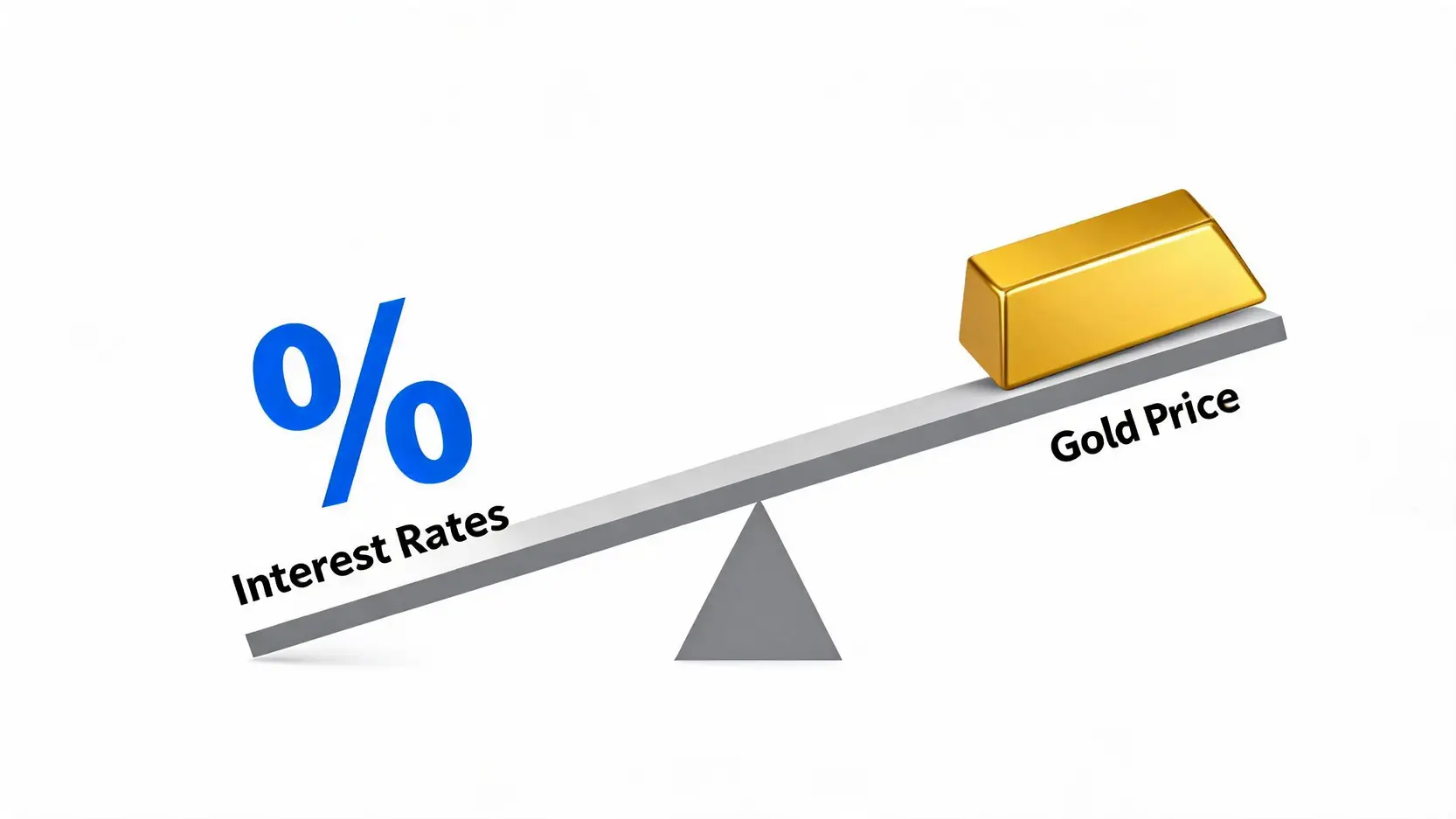
The relationship between gold and interest rates is like two ends of a seesaw. Generally speaking, when the market expects the US Federal Reserve (Fed) to cut interest rates, the attractiveness of the US dollar declines because holding dollars generates less interest income. Since gold itself does not yield interest, rate cuts reduce the “opportunity cost” of holding gold, causing capital to flow into the gold market for value preservation, thereby pushing gold prices higher. Conversely, if the Federal Reserve adopts a rate hike strategy, it will place pressure on gold prices. Therefore, closely monitoring the direction of the Federal Reserve’s interest rate policy is the primary task in analyzing gold price trends.

利率與黃金價格的蹺蹺板關係示意圖,顯示當利率下降時,金價隨之上升。

The Seesaw Effect Between Interest Rates and Gold Prices: When interest rates fall, gold becomes relatively more attractive.


Inflation Data: Will Inflation-Hedging Demand Continue to Push Gold Prices Higher?

Inflation, simply put, means “money becomes less valuable over time”. When prices continue rising, the purchasing power of cash held by the public declines. In this situation, gold, as a limited tangible asset with intrinsic value, becomes especially important for its “inflation-hedging” characteristics. Historical data shows that gold generally performs well during periods of high inflation. Therefore, as long as global inflationary pressure persists, market demand for gold as a store of value will continue to exist, becoming a powerful force supporting gold prices. According to data from the World Gold Council, central banks worldwide have continued increasing their gold reserves in recent years, reflecting their strategic consideration to hedge against fiat currency depreciation risks.


Geopolitical Risks: How Do International Conflicts Become Catalysts for Gold Prices?

Whenever major political or military conflicts emerge internationally, such as regional wars, trade disputes, or political unrest, safe-haven sentiment in global financial markets rises rapidly. In such uncertain environments, investors seek the safest “safe harbor” to protect their assets. Gold, as a “hard currency” unaffected by the credit risk of any single country, naturally becomes the preferred choice. Therefore, geopolitical risk outbreaks often act as catalysts that can drive gold prices sharply higher within a short period. A stable world may not favor gold prices, but a turbulent world is definitely a friend to gold investors.


Further Reading (Highly Recommended)

Gold Price Trend Analysis: 5 Key Factors Affecting Gold Trends and Future Investment Strategies

Silver Investment Guide: Is Investing in Silver Worth It? Full Analysis of 5 Major Advantages, Disadvantages, and Investment Channels


Full Breakdown of the $4,600 Gold Target Price: Opportunity or Challenge?

The $4,600 gold target price has recently sparked widespread market discussion. This is not just a number, but also represents market expectations for future gold price trends. But is this target price an unrealistic dream or an attainable opportunity? We need to analyze it from multiple perspectives.


What Do Top Investment Banks Think? Latest Gold Price Forecasts From Goldman Sachs and UBS

Reports from major investment banks are important references for market direction. Although their views are not entirely identical, most remain optimistic about gold’s long-term outlook. For example, analysts at Goldman Sachs and UBS have repeatedly pointed out that under multiple favorable factors such as continued central bank gold purchases worldwide, persistent geopolitical risks, and the potential start of a rate-cutting cycle, gold prices still have momentum to reach new highs. While their gold target prices may differ, the core logic behind their reports, namely gold’s strategic value under the current macroeconomic environment, remains highly consistent. These analyses provide strong fundamental support for the $4,600 target price.


Technical Analysis of the $4,600 Price Level: Key Support or Resistance?

From a technical analysis perspective, the significance of a price level depends on its position within historical charts. Currently, gold prices have not yet reached $4,600, meaning this level represents a potential “resistance level” or “target level”. Once gold successfully breaks through and stabilizes above major previous highs (such as $2,500 or $3,000), then $4,600 will become the next key psychological level for the market. Technical traders will closely monitor price and volume behavior near these major round-number levels to determine whether bullish momentum is strong enough to support further upside.


How Should Investors Evaluate the Investment Potential of $4,600 at Current Price Levels?

For ordinary investors, the $4,600 target price provides a long-term reference point, but it should not be the sole basis for short-term trading decisions. Evaluating its investment potential should be combined with one’s own investment objectives and risk tolerance.

  • Long-Term Investors: They can view this target price as a reflection of gold’s long-term appreciation potential and gradually build positions through phased buying.
  • Short- to Medium-Term Traders: They should pay closer attention to whether the events driving gold prices higher continue to persist, while setting stop-loss levels and treating $4,600 as a possible profit-taking zone.

Most importantly, investors should understand that a target price is a forecast, not a guarantee. Rational investors incorporate it into their overall gold investment strategy instead of blindly chasing higher prices.


Gold Investment Strategies for 2026: 5 Practical Methods to Position for the Future

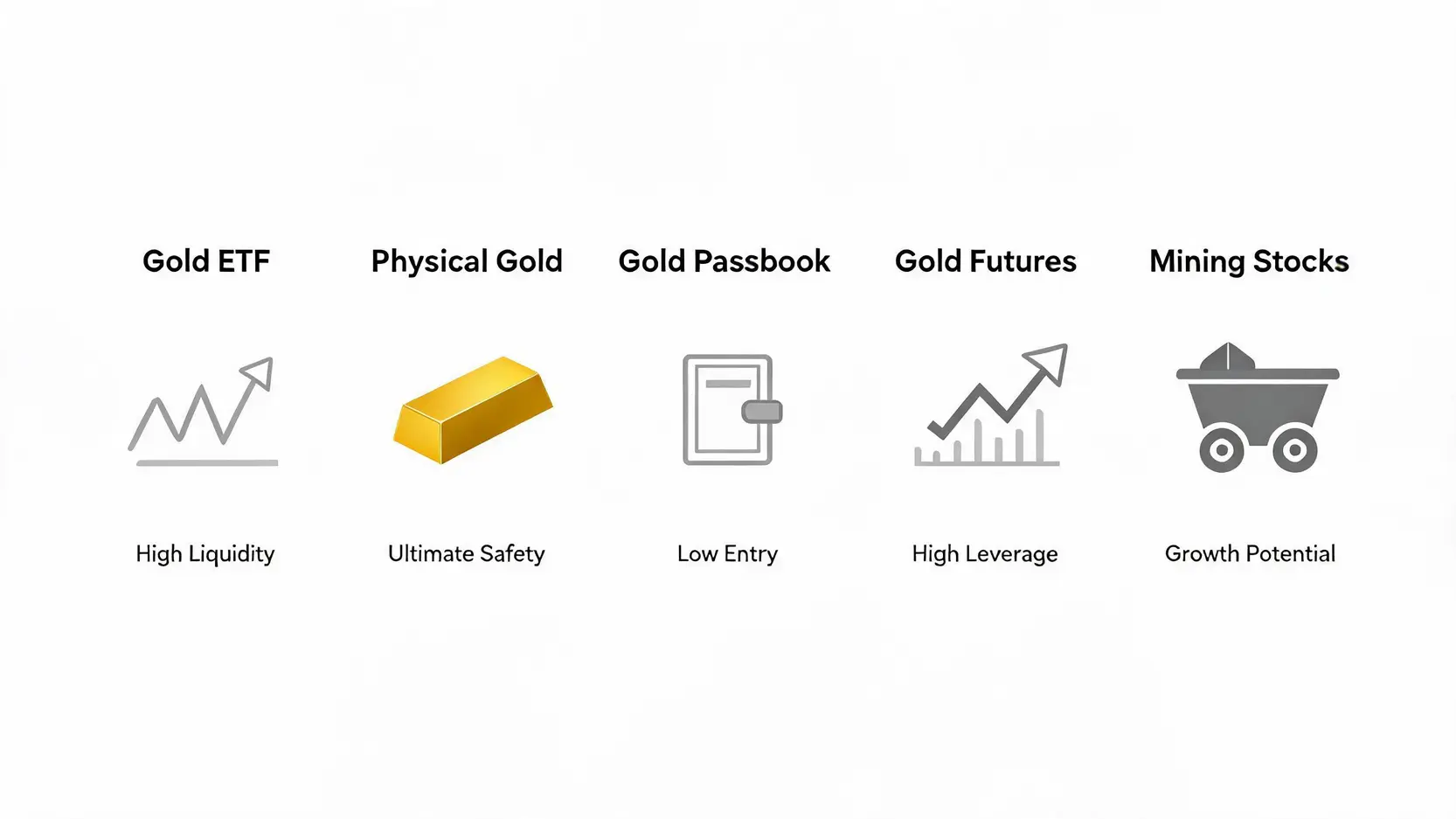
五種黃金投資策略比較圖,分別展示黃金 ETF、實體黃金、黃金存摺、黃金期貨和黃金礦業股的核心特點。

Quick Overview of the Pros and Cons of Five Gold Investment Strategies

After understanding the macro factors behind gold price trends and market target prices, the next step is choosing investment tools that suit your needs. Below are five mainstream gold investment methods, each with its own advantages and disadvantages, suitable for different types of investors.


Strategy 1: Gold ETFs (GLD, IAU) – High Liquidity for Short- to Medium-Term Trading

Gold ETFs (Exchange-Traded Funds) are financial products that track spot gold prices, allowing investors to trade them on stock exchanges as conveniently as stocks. Representative gold ETFs include GLD and IAU. Their advantages include low trading costs, extremely high liquidity, and eliminating the hassle of storing physical gold. The disadvantage is that investors do not actually own physical gold and must pay management fees. This is highly suitable for investors seeking flexible trading and price-difference profits. For more details, refer to the ETF Investment Beginner’s Guide

Strategy 2: Physical Gold (Gold Bars, Gold Coins) – The Ultimate Safe Haven for Asset Preservation

Purchasing physical gold such as gold bars and coins is the most traditional method of gold investing. The advantage lies in physically holding the asset, which provides the strongest sense of security and serves as the ultimate safeguard against extreme risks (such as wars or financial system collapses). The disadvantages include wider buy-sell spreads, storage and safekeeping challenges, and relatively lower liquidity. This method is suitable for investors pursuing ultimate asset security, inheritance, or long-term value preservation. 

Strategy 3: Gold Savings Accounts – Small-Scale Investing for Steady Wealth Accumulation

A gold savings account is a bank account that allows investors to buy and sell gold through book-entry records, usually with trading units starting from 1 gram. The advantage is its very low investment threshold, allowing investors to gradually accumulate gold assets through regular fixed investments, making it highly suitable for beginners or small-budget investors. The disadvantage is that trading hours are limited by bank operating hours, and physical gold conversion is generally unavailable, although some banks provide this service with high handling fees. 

Strategy 4: Gold Futures – A Professional Choice for High-Leverage Trading

Gold futures are standardized contracts agreeing to buy or sell gold at a specific price on a future date. Their advantage is high leverage, allowing investors to control higher-value contracts using relatively small margin deposits, creating potentially substantial profits. However, the disadvantage is that the risks are equally significant. Incorrect market judgments can result in devastating losses, and contracts also have expiration dates, making them unsuitable for long-term holding. This is an advanced tool typically used by professional traders. 

Strategy 5: Gold Mining Stocks – Sharing in Industry Growth Potential

Investing in publicly listed gold mining companies is another way to participate in the gold market. When gold prices rise, mining companies’ profitability can increase significantly, and their stock prices may outperform gold itself, creating a form of “leverage effect”. The advantage is the opportunity to achieve returns exceeding gold price appreciation, while some companies may also pay dividends. The disadvantage is that, in addition to gold price fluctuations, investors must also bear company-specific risks such as poor management or mining operation failures.


Gold Investment FAQ

Q: Is now a good time to buy gold?

A: That depends on your investment goals. If you are seeking long-term value preservation and safe-haven protection, allocating part of your funds to gold at any time is a reasonable strategy, and buying in batches can help diversify price risk. If you are a short-term trader, then you need to closely monitor real-time factors such as Federal Reserve policies, inflation data, and geopolitical developments to determine entry points.

Q: Will gold prices rise or fall in the future?

A: In the long run, gold price forecasts are generally optimistic under a macro backdrop of continuous monetary expansion and persistent uncertainty. However, short-term gold price trends will inevitably be affected by multiple factors and remain volatile. No one can predict the market with 100% accuracy. The key lies in proper asset allocation rather than attempting to predict the absolute top or bottom.

Q: Besides the US dollar, what other factors affect gold prices?

A: In addition to the US dollar and interest rates, the global supply and demand relationship for gold is also a core factor. For example, physical gold demand from countries such as India and China (especially during wedding seasons), central banks’ gold reserve policies, and technological industry demand for gold can all affect gold price trend analysis.

Q: What percentage of my total assets should be allocated to gold investments?

A: Financial experts generally recommend allocating 5% to 10% of an investment portfolio to gold or precious metals. This ratio can be moderately increased during periods of higher market risk and reduced when markets are stable. This allows gold to effectively serve its safe-haven function without excessively impacting the overall growth potential of the investment portfolio.


Conclusion

In summary, although the 2026 gold price forecast remains full of uncertainties, gold’s safe-haven value and wealth preservation function within the global financial system remain solid. Taking into account the global economic environment and experts’ gold price trend analysis, the $4,600 target is not only a specific number, but also an important indicator reflecting long-term market confidence. Investors should choose the gold investment strategy that best suits their own risk tolerance and investment horizon, whether through gold ETFs, physical gold, or gold savings accounts, in order to steadily capture wealth growth opportunities amid a market filled with both opportunities and challenges.

编者
Evan Lin

Evan Lin

我是Evan Lin,从大学时期开始接触外汇交易,至今已有多年实战经验,熟悉技术分析与EA策略,热衷于研究市场脉动与风险管控,喜欢分享实战经验和交易技巧,和大家一起学习、一起进步!

If you liked this article, please share it!

Related Articles

  • Oil Prices and USD/CAD: 2026 Correlation Trading Guide
    Bullish Oil Prices Mean You Should Short USD/CAD? A Complete 2026 Trader’s Guide to the Correlation Between the Canadian Dollar and Crude Oil Introduction When international oil prices surge and the market is filled with “bullish oil price” news, many traders instinctively react by shorting USD/CAD. But does this strategy...
    2026 年 7 月 27 日
  • Geopolitical Trading: 4 High-Probability Strategies for 2026
    Turn Crisis Into Opportunity: Four Core Strategies for High-Probability Trading Setups Amid Geopolitical Wars Global geopolitical risks have continued to intensify in 2026, from tense confrontations in Eastern Europe to sporadic conflicts in the Middle East. Any geopolitical war could instantly trigger extreme volatility in financial markets. Many investors feel...
    2026 年 7 月 27 日
  • Fuh Hwa vs. UBS Strategic Allocation Funds Compared
    【Strategic Allocation Fund Comparison】Fuh Hwa vs. UBS: Understand the Differences, Performance, and Risks of Popular Funds at a Glance! Faced with complex and ever-changing financial markets, are you still struggling with how to build an investment portfolio that can effectively diversify risk and achieve steady growth? A “Global Strategic Allocation...
    2026 年 7 月 27 日
返回顶部