Silver’s Dual Engines: Driven Simultaneously by Demand for Investment Value Preservation and Industrial Applications.
Advantage Three: Higher Volatility, Potential Returns Greater Than Gold
“High volatility” is a double-edged sword, representing both risk and opportunity. Because the silver market is much smaller in scale than the gold market, its prices are more easily influenced by capital flows, resulting in price fluctuations that are typically greater than those of gold. For investors seeking higher capital gains and with stronger risk tolerance, if market trends are well timed and purchases are made at relatively low points, the potential return of silver investment may far exceed that of gold.
Advantage Four: An Effective Safe-Haven Asset That Diversifies Portfolio Risk
Although its safe-haven appeal is not as prominent as gold’s, silver also has the ability to hedge against inflation and currency depreciation. During periods of economic turbulence or rising geopolitical risk, capital tends to seek physical assets as a refuge, with precious metals often being the preferred choice. Including a certain proportion of silver in an investment portfolio can effectively diversify the risks of holding only traditional financial assets such as stocks and bonds, achieving a more balanced asset allocation.
Advantage Five: The Gold-Silver Ratio Provides a Reference to Identify Relative Lows
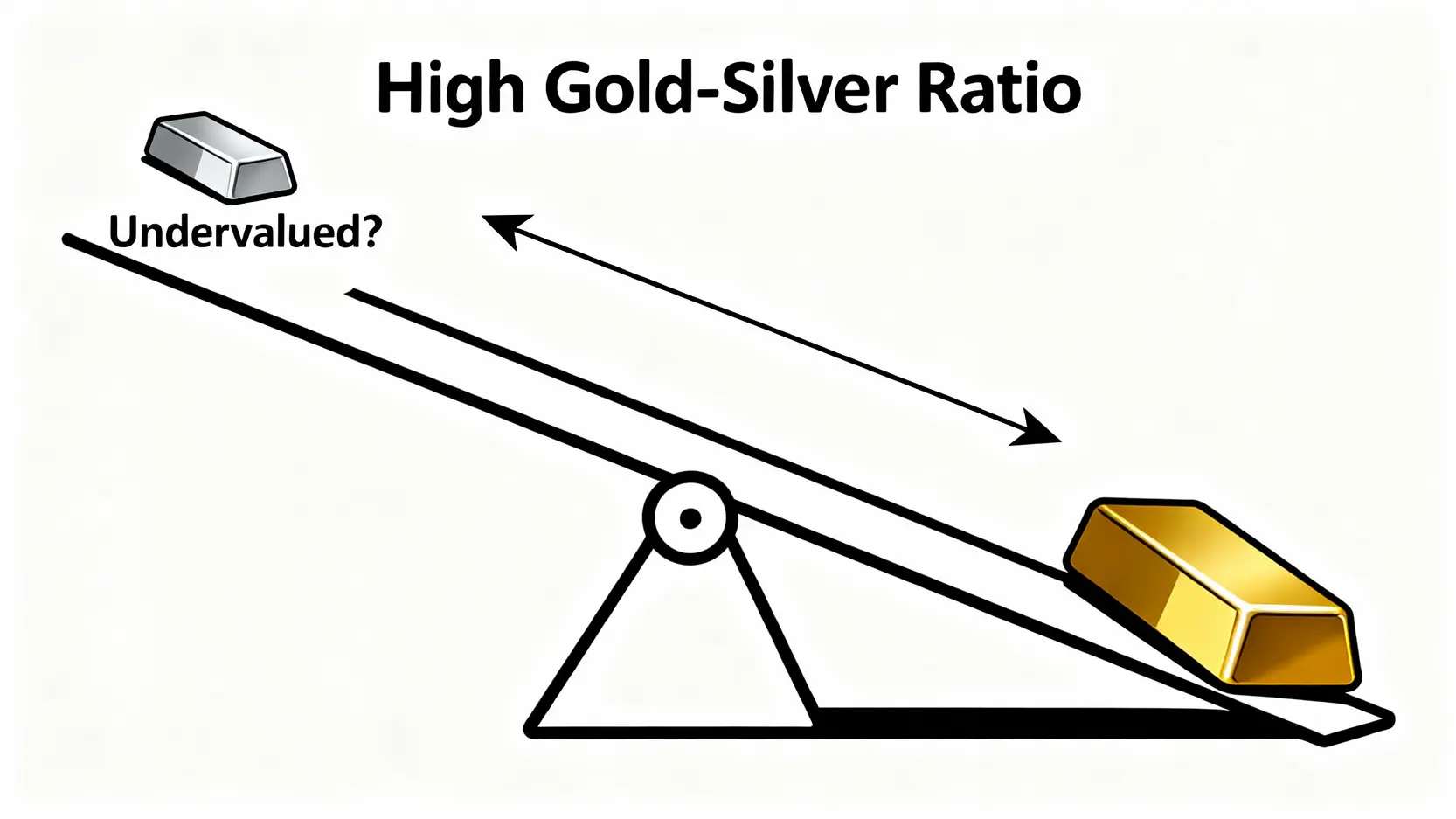
The “Gold-Silver Ratio” refers to how many ounces of silver are required to purchase one ounce of gold. This ratio is a historical indicator used to measure the relative value of the two metals. When the gold-silver ratio is at historically high levels, it may indicate that silver is undervalued relative to gold and could present a potential opportunity to buy silver. Conversely, when the ratio is at historically low levels, it may suggest that silver is relatively expensive. Many precious metal investors use the gold-silver ratio as a reference tool for long-term positioning.
Further Reading (Highly Recommended)
Gold ETF Recommendations, Gold Passbook Accounts, and Physical Gold Ultimate Comparison, A Beginner’s Investment Guide
Gold Investment Beginner’s Guide: A Complete Analysis of the Pros and Cons of Five Major Channels, Understanding Investment Benefits and Risks
Five Major Drawbacks and Risks You Must Know Before Investing in Silver
After understanding the advantages of silver investment, it is equally important to face its underlying risks. A comprehensive evaluation of the pros and cons of silver investment is essential to help you make informed decisions.
Drawback One: Intense Price Volatility and Relatively High Risk
As mentioned above, high volatility brings high return potential, but it also comes with high risk. Daily fluctuations in silver prices can be extremely sharp. If investors lack sufficient risk tolerance, or chase prices at the wrong time by buying high and selling low, significant losses can easily occur. For conservative or stability-oriented investors, the proportion of funds allocated to silver must be carefully controlled.
Drawback Two: High Storage and Safekeeping Costs for Physical Silver
If you choose to invest in physical silver (such as silver bars or silver coins), you will immediately face storage issues. Silver has a much larger volume than gold of equivalent value, making it relatively space-consuming to store. To ensure security, placing it in a bank safe deposit box incurs additional costs, while storing it at home involves the risk of theft or damage. In addition, silver is prone to oxidation and tarnishing, making condition maintenance another factor to consider.
Drawback Three: Lower Liquidity and Convertibility Compared With Gold
Although silver is also a globally traded commodity, its market depth and liquidity are far inferior to those of gold. In extreme market conditions, you may find that physical silver has a wider bid-ask spread or that it is not easy to quickly find a buyer. In contrast, gold can almost always be converted into cash quickly at jewelry shops or banks worldwide, offering greater convenience.
Drawback Four: Smaller Market Size, Easily Influenced by Large Players
The overall market capitalization of silver is relatively small, which means that the inflow or outflow of large institutional investors or significant amounts of capital can have a pronounced impact on prices. At times, sharp short-term price movements are not entirely driven by fundamentals, but rather by speculative forces in the market, making judgment more challenging for retail investors.
Drawback Five: No Yield Generation, No Dividend or Interest Income
Unlike stocks or bonds, holding precious metals does not generate cash flow. It does not pay dividends like stocks, nor does it provide interest income like bonds. The only source of profit from silver investment is the “price spread”, meaning buying low and selling high. During prolonged periods of sideways movement or decline in silver prices, investors not only earn no returns but must also bear storage costs or opportunity costs.
How to Start Investing in Silver? A Comprehensive Comparison of Four Major Channels
After understanding the pros and cons of silver investment, if you decide to enter the market, you can do so through the following common channels. Each method has its own advantages and disadvantages and is suitable for investors with different needs.
| Investment Channel |
Advantages |
Disadvantages |
Suitable Investors |
| Physical Silver (Silver Bars/Silver Coins) |
✅ A Tangible Sense of Holding the Asset in Hand ✅ No Counterparty Risk ✅ Suitable for Long-Term Collection and Value Preservation |
❌ Difficult to Store and Comes With Costs ❌ Wider Bid-Ask Spread ❌ Relatively Lower Liquidity |
Collectors or long-term investors who focus on asset value preservation and want to physically hold precious metals. |
| Silver ETF (Exchange-Traded Fund) |
✅ Low Transaction Costs ✅ Excellent Liquidity ✅ No Storage Hassles |
❌ Management Fees Apply ❌ No Physical Ownership of Silver ❌ Prices May Have Minor Tracking Errors |
Investors familiar with stock trading who pursue low costs and high liquidity. Common instruments include SLV and SIVR. |
| Silver Passbook (Paper Silver) |
✅ Extremely Low Trading Threshold (Starting From 1 Gram) ✅ Convertible Into Physical Silver ✅ Convenient Trading |
❌ Trading Hours Limited by Bank Business Hours ❌ Bid-Ask Spread Higher Than ETFs ❌ In Taiwan, Only Bank of Taiwan Offers It |
Absolute beginners or conservative groups who do not want to open a securities account and prefer to make small investments through banks. |
| Silver Contracts for Difference (CFD) |
✅ Supports Two-Way Trading (Long/Short) ✅ Leverage Available, Allowing Small Capital to Control Larger Positions ✅ 24-Hour Trading |
❌ Extremely High Leverage Risk ❌ Overnight Interest Applies ❌ Not Suitable for Beginners or Long-Term Holding |
Short-term active traders who are familiar with technical analysis and able to strictly manage risk. |
Channel 1: Physical Silver (Silver Bars, Silver Coins)
Buying physical silver bars or coins is the most traditional approach and gives a sense of security. Purchase channels include banks, bullion dealers, or reputable precious metals traders. The advantages are full ownership of the asset and no default risk from any financial institution. The drawbacks are the storage, spread, and liquidity issues mentioned earlier.
Channel 2: Silver ETFs (e.g., SLV, SIVR)
Silver ETFs are funds that track the spot price of silver. Investors can trade them on stock exchanges as conveniently as buying and selling stocks. For example, the world’s largest silver ETF is iShares Silver Trust (SLV). This method eliminates the hassle of storing physical silver, offers low transaction costs, and provides excellent liquidity. To learn more, refer to the ETF Investment Beginner’s Guide.
Channel 3: Silver Passbook (Bank of Taiwan)
Similar to a gold passbook, investors buy and sell silver by opening an account through a bank, with trading units typically in grams or ounces. Bank of Taiwan is currently the only institution in Taiwan that offers silver passbook services. Its advantages are a very low entry threshold, making it suitable for small, regular investments, and it allows you to apply to withdraw physical silver once your holdings accumulate to a certain level. The disadvantages are that the trading spread is usually higher than ETFs, and it is limited by bank business hours.
Channel 4: Silver Contracts for Difference (CFD)
CFDs are financial derivatives that allow investors to profit by predicting silver’s price movements without actually holding silver. The biggest feature of CFDs is the use of leverage, which means you can control contracts of greater value with a smaller margin, and you can trade in both directions (buying to go up or selling to go down). However, leverage amplifies gains while also magnifying losses, making the risk extremely high. It is more suitable for experienced short-term traders.
Silver Investment FAQ
Q: Which Is Better, Silver or Gold?
A: There is no absolute answer. It depends on your investment objectives and risk tolerance. Gold has lower volatility and is widely recognized as the ultimate safe-haven asset, making it suitable for stable value preservation. Silver has higher volatility and combines industrial demand with investment attributes, making it more speculative, with both higher potential returns and higher risk. Many investors allocate both and use the “Gold-Silver Ratio” to dynamically adjust their positions.
Q: How Much Money Is Needed to Invest in Silver?
A: The entry threshold is very flexible. Through the silver passbook offered by Bank of Taiwan, it may be possible to start with just a few hundred New Taiwan dollars. If you wish to purchase physical silver coins, a one-ounce silver coin is also priced at around one thousand New Taiwan dollars. If investing through ETFs or CFDs, the required amount depends on prevailing market prices and platform rules. Overall, silver is a relatively affordable choice among precious metals.
Q: What Is the “Gold-Silver Ratio”, and How Can It Be Used to Identify Buying Opportunities?
A: The “Gold-Silver Ratio” is calculated as “gold price ÷ silver price”. For example, if gold is priced at USD 2,400 per ounce and silver at USD 30 per ounce, the gold-silver ratio is 80. Historically, the average gold-silver ratio has been around 50 to 60. When the ratio is far above 80 (such as reaching 90 or 100), it indicates that silver is relatively cheap compared with gold and may be a good opportunity to gradually build silver positions. When the ratio falls to 40 or lower, it suggests that silver is relatively expensive, and investors may consider taking profits or shifting toward gold.