Futures Trading Pros and Cons Explained: 5 Major Advantages vs 3 Leverage Risks, Essential Reading for Beginners!
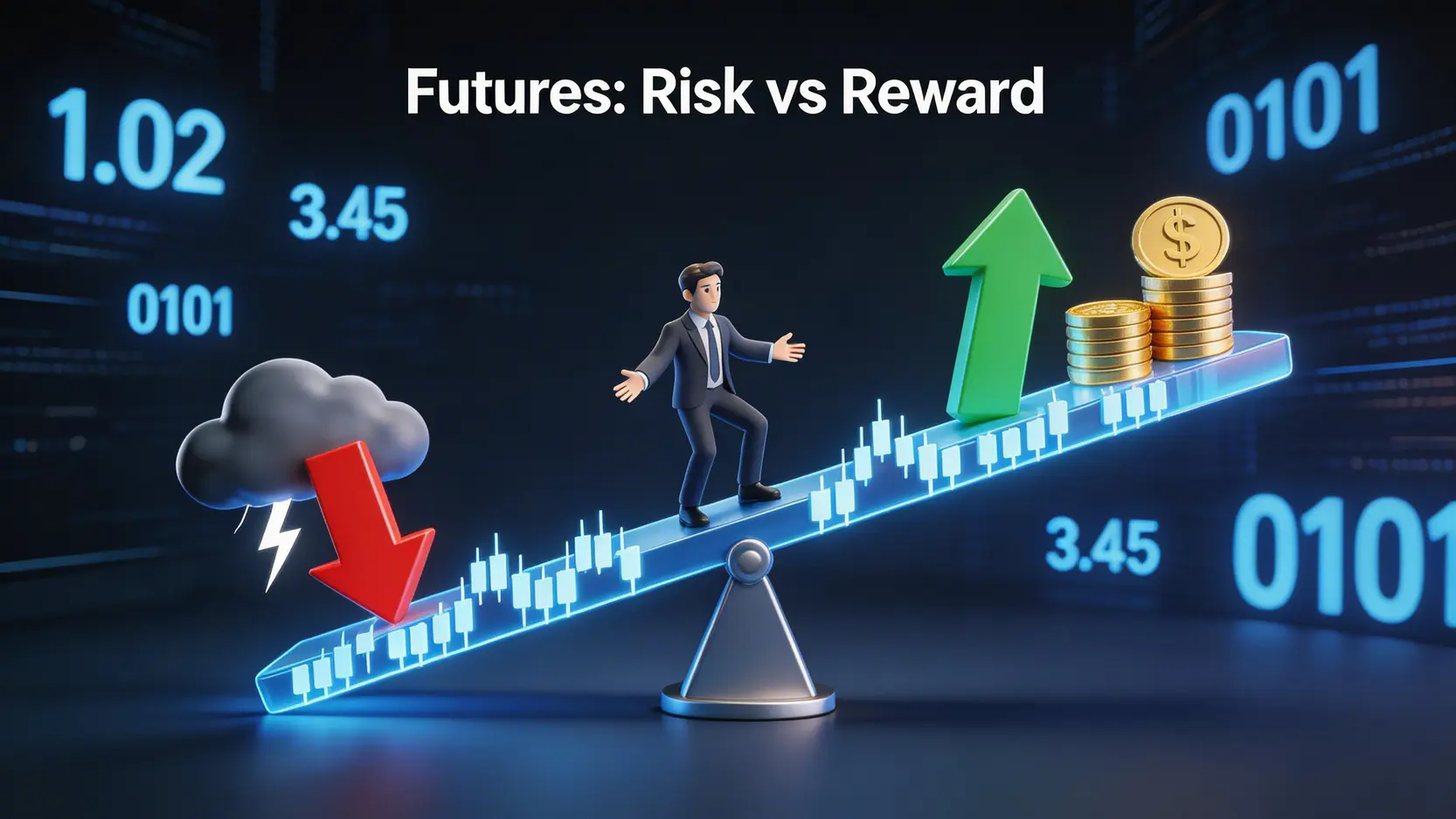
When it comes to futures trading, do you feel both attracted by its “small capital, big gains” profit potential and afraid of the hidden “leverage risks”? Many beginner investors face the same confusion. To truly understand the pros and cons of futures trading, it is necessary to comprehensively evaluate its advantages and disadvantages, especially the core issue of futures leverage risk. This article provides a complete analysis, covering both benefits and risks, helping you fully understand futures as a double-edged sword and make more informed investment decisions.
Why Choose Futures Trading? 5 Key Advantages You Must Know
Futures attract many investors for good reason. Its unique trading mechanism offers advantages that traditional stock markets do not have. For traders seeking capital efficiency and flexible strategies, understanding these benefits is the first step into the market.
Advantage 1: High Leverage Effect, Extreme Capital Efficiency
The most attractive feature of futures is “leverage”. You do not need to provide 100% of the contract value; instead, you only need to deposit a “margin” which allows you to control a contract worth far more than your initial capital. For example, to trade a futures contract worth 1,000,000, you may only need 50,000 in margin, meaning a leverage of 20 times. This mechanism greatly improves capital efficiency, allowing small capital to potentially generate high returns.
Advantage 2: Two-Way Trading, Profit Opportunities in Both Rising and Falling Markets
Unlike most stocks that only allow long positions (buy and sell later at a higher price), futures offer flexible “two-way trading”. When you expect the market to rise, you can “go long” (buy futures contracts); when you expect it to fall, you can “go short” (sell futures contracts). This means that whether in a bull or bear market, as long as your direction is correct, there is a profit opportunity, making strategies more flexible.
Advantage 3: Lower Trading Costs, a Boon for Short-Term Traders
Compared to stock trading, futures usually have lower transaction costs. The main costs are brokerage commissions and exchange taxes. In particular, the transaction tax is much lower than stock trading taxes. For frequent traders or day traders, lower costs translate into higher potential net profits, making cost control a major advantage.
Advantage 4: Longer Trading Hours, Connected to Global Markets
The futures market has extended trading hours. For example, Taiwan index futures offer both daytime trading and night sessions, totaling up to 19 hours. This allows traders to react immediately to major events or data releases in European and US markets without missing opportunities due to market closure. For investors tracking global financial news, this provides great flexibility.
Advantage 5: Powerful Hedging Function to Protect Your Assets
Futures were originally created as a “hedging tool”. For example, if you hold a large stock portfolio but expect a short-term market correction, you can short index futures to hedge risk. If the stock market falls, losses in your equity portfolio can be offset by gains in your short futures position, protecting overall portfolio value. This is an essential risk management tool for institutions and large investors.
Further Reading (Highly Recommended)
What Are Investment Risks? Full Breakdown of 5 Common Types of Investment Risk, Essential Beginner Guide
Hang Seng Index Futures Margin Guide: How Much Do Large and Small Contracts Require? Latest Exchange Margin Overview
Futures Leverage Risk: 3 Critical Disadvantages You Cannot Ignore
While enjoying the benefits of futures trading, you must not overlook its significant risks. Many beginners suffer heavy losses because they underestimate these disadvantages, especially risks caused by leverage. The following three points are essential lessons for every futures trader.
Disadvantage 1: Leverage Is a Double-Edged Sword, Losses May Exceed Your Capital
Leverage amplifies gains, but it also amplifies losses. In the previous example, using 50,000 margin to control a 1,000,000 contract, a 10% adverse market move would result in a 100,000 loss. This not only wipes out your 50,000 margin but also leaves you owing an additional 50,000. This is the most dangerous aspect of futures trading: losses can exceed your entire invested capital, leading to “debt”. This concept is the core of managing futures leverage risk.
Disadvantage 2: Margin Calls and Forced Liquidation Risk
There are two important margin levels in a futures account: initial margin and maintenance margin. When your position incurs losses and account equity falls below the maintenance margin, you will receive a “margin call” from your broker. You must top up funds to the initial margin level within a specified time. Otherwise, the futures broker has the right to carry out “forced liquidation” (also known as forced selling or stop-loss), closing your positions and realizing the losses. This mechanism is designed to protect the broker, but for traders, it often results in positions being closed at the most unfavorable point in the market.
To better understand margin systems, you can refer to futures margin education or check the official margin list from the Taiwan Futures Exchange.
Disadvantage 3: Contract Expiration and Rollover Time Pressure
Futures contracts have an “expiration date”, meaning you cannot hold them indefinitely like stocks. As the contract approaches expiry, you must either close the position or perform a “rollover”, which involves closing the expiring contract and opening a new one with a later expiry date. Rollover incurs additional trading costs and may result in price differences. This time pressure does not exist in stock investing and tests a trader’s planning and execution ability.
Futures Trading FAQ
Q: How much money do I need at minimum to start futures trading?
A: It depends on the type of contract you want to trade. Each futures contract has a specified “initial margin”, which is your minimum entry requirement. For example, the margin for mini Taiwan index futures is around several tens of thousands of New Taiwan dollars, while overseas futures such as micro gold or micro crude oil may require only a few hundred to one thousand US dollars. However, you should never enter the market with only the minimum required margin, as even small market fluctuations may expose you to margin call risks.
Q: Can futures leverage be adjusted? How can I reduce risk?
A: The leverage of futures products is fixed (contract value divided by initial margin), and traders cannot directly adjust it. However, you can reduce risk by controlling your effective leverage in two ways. First, deposit more funds than the required initial margin. For example, if the required margin is 50,000 and you deposit 200,000, your effective leverage will be reduced from 20 times to 5 times. Second, choose contracts with smaller notional value, such as trading “mini Taiwan index futures” instead of standard “Taiwan index futures”, or trading “micro Nasdaq” instead of “mini Nasdaq”.
Q: What happens if futures losses exceed the margin?
A: If your losses exceed all the margin in your account, your account equity will become negative, which is known as “negative balance” or “excess loss”. You will owe this negative amount to your broker, and it is a legally enforceable debt that the broker has the right to recover. Investors must take this risk seriously.
Q: Which is riskier, futures or stocks?
A: Futures are generally considered riskier, mainly due to leverage trading and the possibility of losing more than your principal. In stock investing, the worst-case scenario is a company going bankrupt, resulting in a total loss of your invested capital, but you will not go into debt. In contrast, futures trading can lead to losses far exceeding expectations in extreme market conditions (such as a gap down at market open). Therefore, futures require much stricter capital management and risk awareness.
Conclusion
In summary, futures trading is a double-edged sword that offers high efficiency but also high risk. Its advantages lie in high leverage, two-way trading, and low costs, providing excellent tools for both profit opportunities and hedging strategies. However, its disadvantages are equally severe, as uncontrolled leverage risk and margin call pressure can lead to rapid and significant losses. Understanding the pros and cons of futures trading is only the first step to success. Learning how to precisely control risk and develop a solid trading strategy is the key to long-term success. For beginners, it is essential to practice and gain experience through simulated trading before committing real capital, in order to navigate this market of both opportunity and risk more steadily.