HSI Futures Margin: Large & Mini Contract Guide

Hang Seng Index Futures Margin Guide: How Much Is Required for Large and Mini Contracts? Latest HKEX Margin Requirements Explained
Want to use leverage flexibly to invest in the Hong Kong market but unsure about the entry threshold for Hang Seng Index futures margin? What is the difference in margin requirements between the commonly mentioned “large contracts” and “mini contracts”, and how can you check the latest HKEX margin levels? Capital planning is the first crucial step in futures trading. Without sufficient preparation, you may face the risk of margin calls at any time. This article provides a comprehensive guide, clearly explaining the margin requirements for Hang Seng Index futures and Mini Hang Seng Index futures, along with a tutorial on checking the latest official margin levels, helping you prepare thoroughly and navigate the futures market with confidence.
What Is the Future Margin? Why Is It So Important?
Before entering the futures market, the first concept to understand is “margin”. Many beginners mistakenly treat it as a transaction fee or cost, which is a fundamental misunderstanding. Properly understanding margin is the foundation of risk control.
The Role of Margin: Entry Ticket, Not a Trading Cost
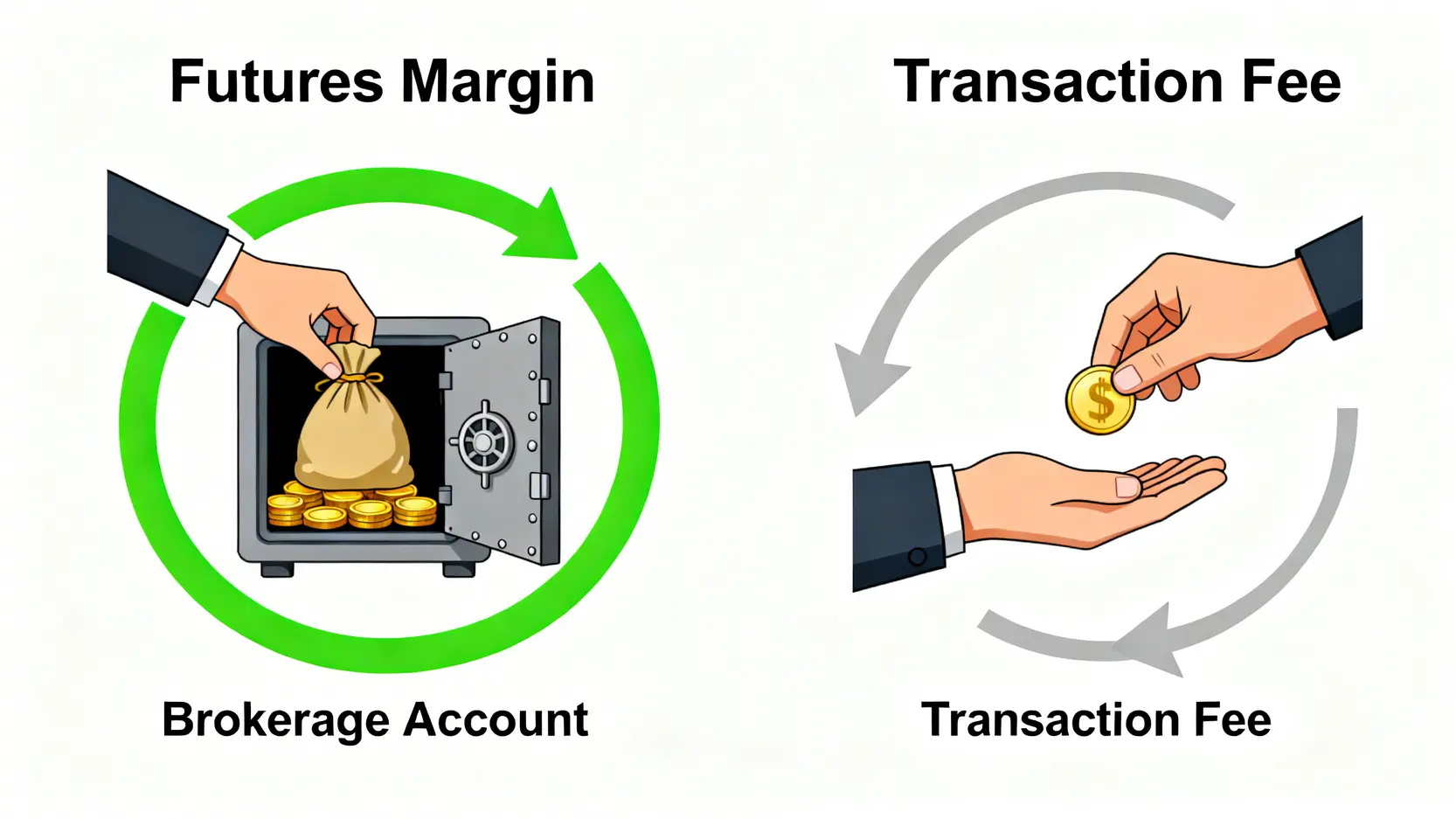
Futures margin functions more like a “performance bond” or “deposit”. When you open a futures position (whether long or short), you do not need to pay the full contract value. Instead, you only need to deposit a small portion of the contract value into your trading account as margin. Its purpose is to demonstrate to the exchange and broker that you have sufficient financial capacity to cover potential losses. This amount is not deducted as a cost; it remains your asset. After closing the position, the remaining margin, after accounting for profits, losses, and fees, will be fully returned to you.

Figure 1: Futures margin is a “deposit”, not a “fee”.
Why Does HKEX Adjust Margin Levels? The Relationship with Market Volatility
You will notice that exchanges (such as HKEX) periodically adjust margin requirements for futures contracts. This is not arbitrary, but closely related to market volatility. When significant market fluctuations are expected (such as before major economic data releases or during geopolitical events), the exchange raises margin requirements to safeguard the stability of the clearing system and protect market participants. Conversely, when markets are stable, margin levels may be reduced. Therefore, keeping track of the latest HKEX margin requirements is an essential habit for traders.
Hang Seng Index Futures vs Mini Hang Seng Index Futures: Margin Comparison
Hang Seng Index futures are one of the most popular derivatives in Hong Kong. To cater to investors with different capital levels, the exchange offers two contract sizes: “large contracts” and “mini contracts”. Their margin requirements and risk profiles differ significantly.
“Large Contract” Hang Seng Index Futures (HSI): Specifications and Margin Requirements
The Hang Seng Index futures (commonly known as “large contracts”, code HSI) are standard contracts with a contract multiplier of HK$50 per index point. This means that for every 1-point movement in the index, your profit or loss is HK$50. Due to the higher contract value, margin requirements for large contracts are also higher, making them more suitable for well-capitalized and experienced investors or institutional participants for trading and hedging.
“Mini Contract” Mini Hang Seng Index Futures (MHI): Specifications and Margin Requirements
The Mini Hang Seng Index futures (commonly known as “mini contracts” or “small HSI”, code MHI) are designed to lower the entry barrier for retail investors. The contract multiplier is HK$10 per index point, which is one-fifth of the large contract. As a result, the margin requirement for mini contracts is significantly lower, typically around 20% of that for large contracts. This allows investors with smaller capital to participate in index futures trading with more flexible capital allocation and risk management.
Further Reading (Highly Recommended)
US Futures Guide: Learn Dow and Nasdaq Futures Trading Strategies in 5 Steps (2026 Guide)
Comparison Table: Contract Value, Margin, and Risk Differences Between Large and Mini Contracts at a Glance
To help you better understand the differences, here is a detailed comparison table:
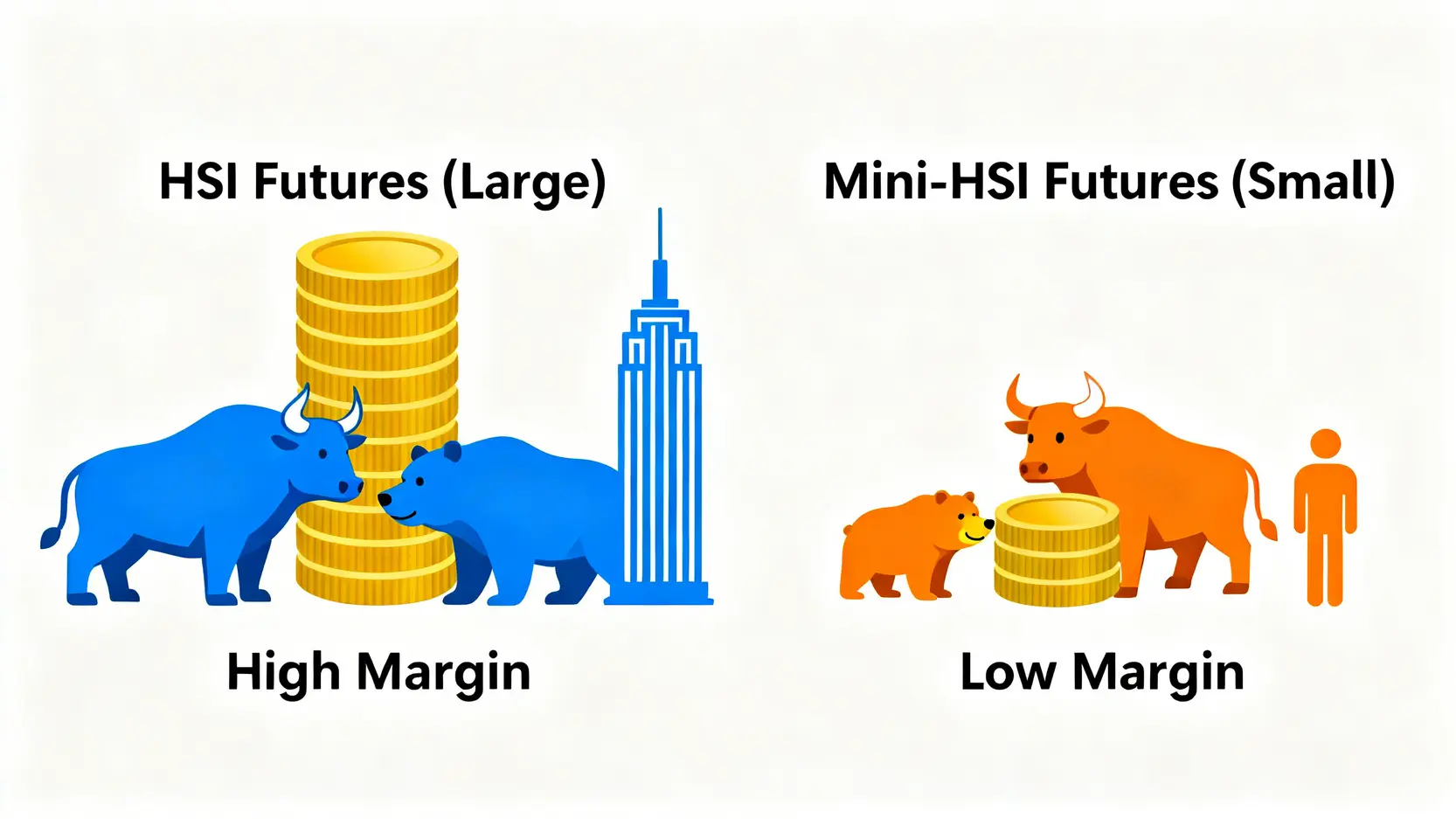
Figure 2: Key differences between “large contracts” and “mini contracts” at a glance.
| Comparison Item | Hang Seng Index Futures (Large Contract HSI) |
Mini Hang Seng Index Futures (Mini Contract MHI) |
| Product Code | HSI | MHI |
| Contract Multiplier | HK$50 per Index Point | HK$10 per Index Point |
| Contract Value (Assuming Index at 18,000 Points) | 18,000 * HK$50 = HK$900,000 | 18,000 * HK$10 = HK$180,000 |
| Margin Level (For Illustration Only) | Approximately HK$100,000 – HK$120,000 | Approximately HK$20,000 – HK$24,000 |
| Profit/Loss per Point | HK$50 | HK$10 |
| Suitable For | Well-capitalized professional investors, institutions | Retail investors, beginners, short-term traders |
Note: The margin amounts in the table above are for illustration only. Please refer to the latest figures published by the exchange for actual requirements.
How to Check the Latest Official HKEX Margin Levels? (Step-by-Step Guide)
Market conditions change rapidly, and relying on outdated information online to plan margin is highly risky. Learning how to obtain the latest and most accurate HKEX margin levels directly from official sources is essential for every futures trader. Below are the steps to check the official HKEX margin table:
Step 1: Visit the HKEX Website
First, go to the official website of Hong Kong Exchanges and Clearing. This is the most authoritative source for all information related to Hong Kong-listed products.
Step 2: Navigate to “Clearing” > “Margin Levels”
On the HKEX website, locate the “Services” or “Clearing” section from the top menu. Follow the path: “Services” > “Clearing Services” > “Derivatives Clearing” > “Risk Management” > “Margin” > “Margin Tables”. This page lists the latest margin requirements for all futures and options products.
Understanding the Margin File: Initial Margin vs Maintenance Margin
In the official documents, you will see two key margin figures:
- Initial Margin: The minimum amount of funds your account “must have” when opening a new position. If your account balance is below this level, the broker will not allow you to place an order.
- Maintenance Margin: The minimum amount of funds that “must be maintained” in your account while holding a position.
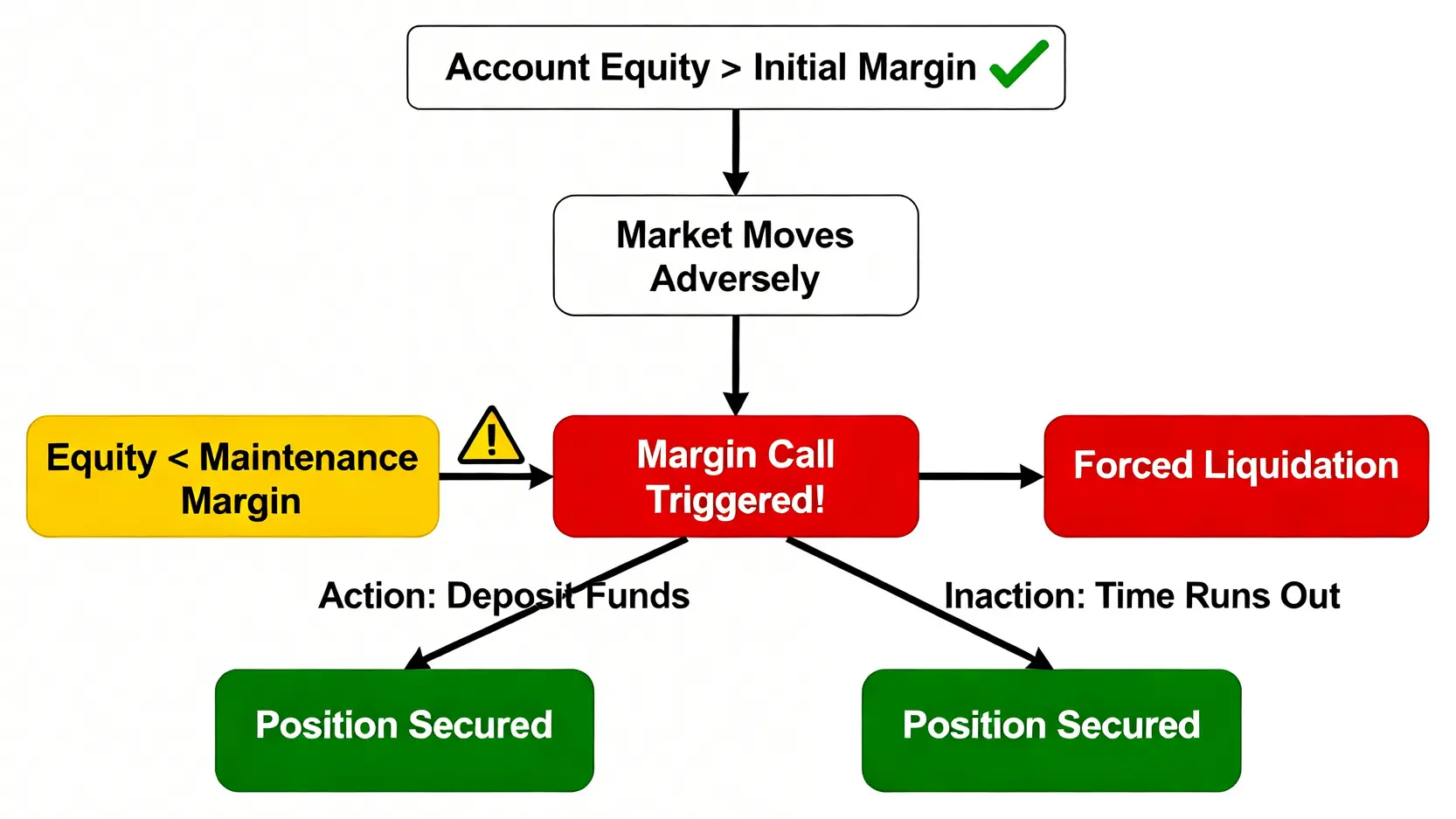
When market movements go against your position and your account equity falls below the “maintenance margin” level, the broker will issue a “call margin”. You must deposit additional funds within the specified time to restore your account to the initial margin level. Otherwise, the broker has the right to liquidate part or all of your positions without further notice to control risk.

Figure 3: Margin Call Process and Risk.
Further Reading (Highly Recommended)
US Futures Guide: Learn Dow and Nasdaq Futures Trading Strategies in 5 Steps (2026 Guide)
FAQ: Hang Seng Index Futures Margin
Q: What happens if my account margin is insufficient?
A: When your account equity falls below the maintenance margin level, a “call margin” will be triggered. You must deposit sufficient funds within the broker’s specified time to restore the account equity above the initial margin level. If you fail to do so in time, the broker has the right to forcibly liquidate part or all of your positions without further notice (commonly known as “force liquidation”) and any resulting losses will still be your responsibility.
Q: Are there other costs besides margin when trading Hang Seng Index futures?
A: Yes. In addition to margin (which is a deposit, not a fee), the actual trading costs also include broker commissions, exchange trading fees, settlement fees, as well as government-imposed stamp duty (if applicable) and regulatory levies. Although these costs are small per transaction, they should be taken into account when trading frequently.
Q: Will margin requirements change around holidays?
A: Yes, this is very common. Before long holidays (such as Lunar New Year or Christmas) or major risk events (such as US elections), market uncertainty increases during market closures. Many brokers will “temporarily raise” margin requirements to control risk, sometimes 20%–50% higher than the exchange’s standard levels or more. Therefore, if you hold positions before holidays, you should maintain a larger buffer of funds than usual.
Conclusion
In summary, thoroughly understanding the margin requirements for Hang Seng Index futures and Mini Hang Seng Index futures is the foundation for entering the index futures market. Investors should choose between “large contracts” and “mini contracts” based on their capital and risk tolerance. Before initiating any trade, it is essential to develop the habit of regularly checking the official HKEX margin levels and maintaining a buffer above the initial margin in your account to withstand normal market fluctuations and avoid unnecessary forced liquidation. Prudent position risk management is the key to long-term survival in the market. For more advanced futures trading strategies, feel free to explore our other related articles.
Related Articles
-
US PPI Comes in Below Expectations: Is Inflation Cooling? Understand the Impact on the Stock Market, Interest Rate Hikes, and Your Wallet The recently released US Producer Price Index (PPI) once again came in below market expectations, sparking optimism that inflation is cooling. What exactly does this key US PPI...2026 年 7 月 21 日
-
PPI and CPI Surge: Is the Inflation Monster Coming? Understand the Two Key Indicators and Protect Your Wallet! Have you recently felt that your money is worth less and less, with the price of everything rising except your salary? Everyone is talking about “inflation”, but where exactly does this monster...2026 年 7 月 21 日
-
When Oil Prices Rise, Which Currencies Benefit? Understanding Investment Strategies for Crude Oil Currency Pairs What Are Crude Oil Currencies? Uncovering the Relationship Between Oil Prices and Forex As volatility in the global energy market intensifies, every movement in crude oil prices affects the foreign exchange market. For perceptive investors,...2026 年 7 月 21 日