Is Mining Dead After ETH Merge? ETC Mining Guide

Is Mining Over After the Ethereum Merge? The ETC Mining Guide Every Miner Must Read
Since Ethereum (ETH) completed the historic “The Merge” upgrade, many miners have been asking the same question: “Have my mining rigs become useless? Can Ethereum still be mined?” If you have the same concerns and worry that your investment might go to waste, this article is written for you. This guide explores the reality of mining after the Ethereum Merge and introduces a practical alternative: ETC mining. From hardware selection to profitability calculations, you will learn step by step how to find a new path and allow your equipment to generate value again.
The Truth Revealed: Why Ethereum Can No Longer Be Mined After the Merge?
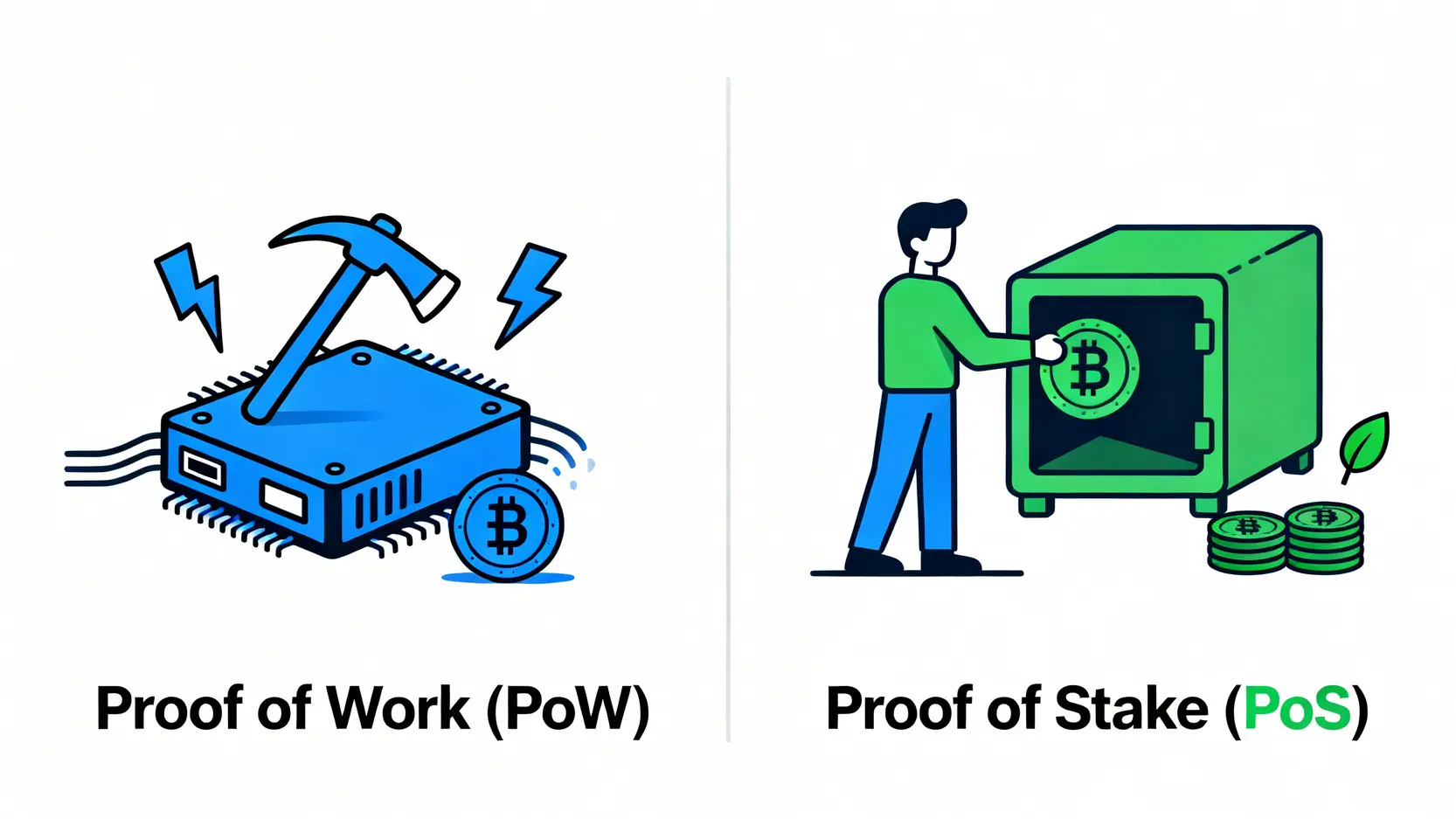
Simply put, the underlying mechanism of the Ethereum network has completely changed. Previously, when people “mined” with GPUs, they were providing computational power to the network to verify transactions and generate new blocks. This process is known as Proof of Work (PoW). After the Merge, however, everything changed.
Goodbye PoW: The Key Transition from “Proof of Work” to “Proof of Stake” (PoS)
In order to improve efficiency and reduce energy consumption, the Ethereum network has fully transitioned from the PoW consensus mechanism to “Proof of Stake” (PoS). Under the PoS model, network security no longer relies on miners competing with computational power. Instead, it is maintained by validators who stake a certain amount of ETH. Validators are randomly selected to create new blocks and verify transactions. If they perform correctly, they receive rewards. If they behave maliciously, their staked ETH may be slashed. This shift means that the traditional mining model, which required significant electricity and computational power, is no longer applicable to the Ethereum main network. To learn more about the differences between these mechanisms, you can refer to “PoS vs. PoW: Why ADA Staking Is More Energy Efficient and Effective”.

Direct Impact of The Merge on Miners: Hashrate Becomes Worthless and Mining Rewards End
The most direct impact of “The Merge” for miners is that GPU hash power on the Ethereum main network effectively became worthless overnight. All mining rewards, including block rewards and gas fees, are now distributed to validators under the PoS system. The income stream for PoW miners has officially ended. In other words, regardless of how powerful your mining rig is, you can no longer mine new tokens on the Ethereum (ETH) chain.
Further Reading (Highly Recommended)
Cardano ADA Staking Guide: Earn 5 Percent Passive Income in Five Simple Steps!
A New Opportunity for Miners: The Complete Guide to Mining Ethereum Classic (ETC)
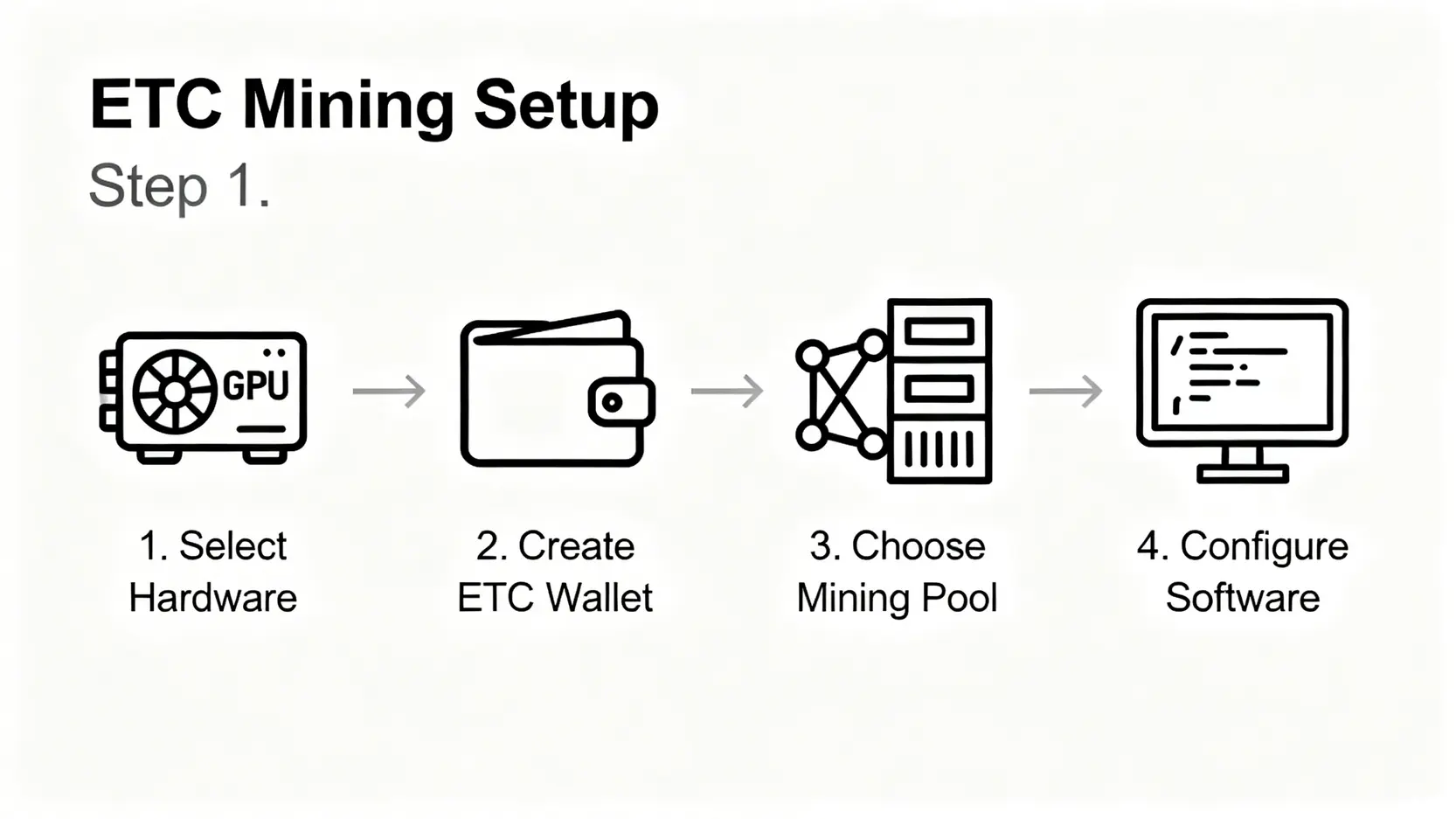
Although the Ethereum main network (ETH) is no longer mineable, this does not mean your mining equipment must sit idle. Many experienced miners have already transitioned to a project closely related to Ethereum: Ethereum Classic (Ethereum Classic, ETC). ETC originated from the original Ethereum chain following the DAO hard fork in 2016. Unlike Ethereum, it continues to use the PoW consensus mechanism. This makes it one of the most natural alternatives for miners after the Ethereum Merge. Below is a step by step ETC mining tutorial.

Step One: Choose Your Mining Hardware
The good news is that most devices previously used to mine ETH can be easily redirected to mine ETC, since both networks use the Ethash algorithm. The hardware requirements mainly include:
- GPU: The graphics card should have at least 4GB of VRAM. Popular options include NVIDIA RTX 30 and 40 series, as well as AMD RX 5000, 6000, and 7000 series. The larger the VRAM, the better it can handle future DAG file growth.
- ASIC Miner: If you want maximum hash power, you may consider ASIC miners designed specifically for the Ethash algorithm, such as the Antminer E9 Pro. However, ASIC machines are more expensive and less flexible than GPUs.
- Other Components: A stable motherboard (sufficient power supply), CPU, RAM, and a reliable internet connection are all essential.
Step Two: Create an ETC Wallet (to Secure Your Assets)
The ETC you mine must be stored in a secure wallet. Never mine directly to a cryptocurrency exchange deposit address, because frequent small deposits may be flagged as abnormal activity by exchanges. It is recommended to use a non custodial wallet instead:
- Software Wallets: MetaMask, Trust Wallet, and Exodus Wallet all support ETC. Simply create a new wallet and switch the network to Ethereum Classic.
- Hardware Wallets: If you plan to hold a large amount of ETC for the long term, hardware wallets such as Ledger or Trezor offer the highest level of security because your private keys never connect to the internet.
Regardless of the wallet you choose, the most important step is to carefully back up your seed phrase and store it in a secure offline location!
Step Three: Choose the Right Mining Pool (to Maximize Earnings)
Mining alone (known as solo mining), has a probability of discovering a block that is almost like winning a lottery. Therefore, most miners join mining pools, combining computational power and sharing rewards according to their contributions. When choosing a mining pool, consider the following factors:
- Fee: Usually between 1 percent and 3 percent. Lower fees are generally preferable.
- Payment Scheme: Common models include PPLNS and PPS+, which affect the stability and amount of your rewards.
- Server Location: Choose a server close to your geographical location to reduce latency and improve effective hash rate.
- Minimum Payout Threshold: The lower the payout threshold, the faster you will receive your mined ETC.
Popular ETC Mining Pools to Consider:
| Pool Name | Fee | Features |
| Ethermine | 1% | One of the largest mining pools globally, known for high stability and a user-friendly interface. |
| F2Pool | 2.5% | A long-established comprehensive mining pool that supports mining for multiple cryptocurrencies. |
| Poolin | 2% PPS+ | Offers multiple payment schemes with relatively stable earnings. |
Step Four: Download and Configure Mining Software (Beginner Guide)
Mining software acts as the bridge connecting your mining rig to the mining pool. Different GPUs often perform best with different software. Common options include:
- NVIDIA (NVIDIA GPUs): T-Rex Miner, Gminer
- AMD (AMD GPUs): lolMiner, TeamRedMiner
- General-purpose: lolMiner, Gminer
The setup process is generally similar across software. Usually, you only need to modify a .bat or .sh file. Below is a generic Gminer configuration example (using the Ethermine pool as an example):
miner.exe –algo etchash –server asia1-etc.ethermine.org:4444 –user YOUR_ETC_WALLET_ADDRESS.YOUR_WORKER_NAME
pause
You need to replace YOUR_ETC_WALLET_ADDRESS with your own ETC wallet address. YOUR_WORKER_NAME can be anything, for example Rig001. After saving the file, double-click to run it. If you see many green “Accepted share” messages, congratulations, your mining operation has successfully started!
ETC Mining Profit Outlook and Cost Analysis
The ultimate goal of switching to ETC mining is profitability. However, before getting started, you should carefully evaluate both costs and potential returns to determine whether it is a worthwhile investment opportunity.

How to Calculate Expected Profit (With Useful Tools)
Manual calculations can be complicated? Fortunately, many professional mining profitability calculators are available online. You simply need to input several key parameters:
- Your total hashrate: For example 500 MH/s
- Total power consumption: For example 800W
- Your electricity cost: For example $0.15/kWh
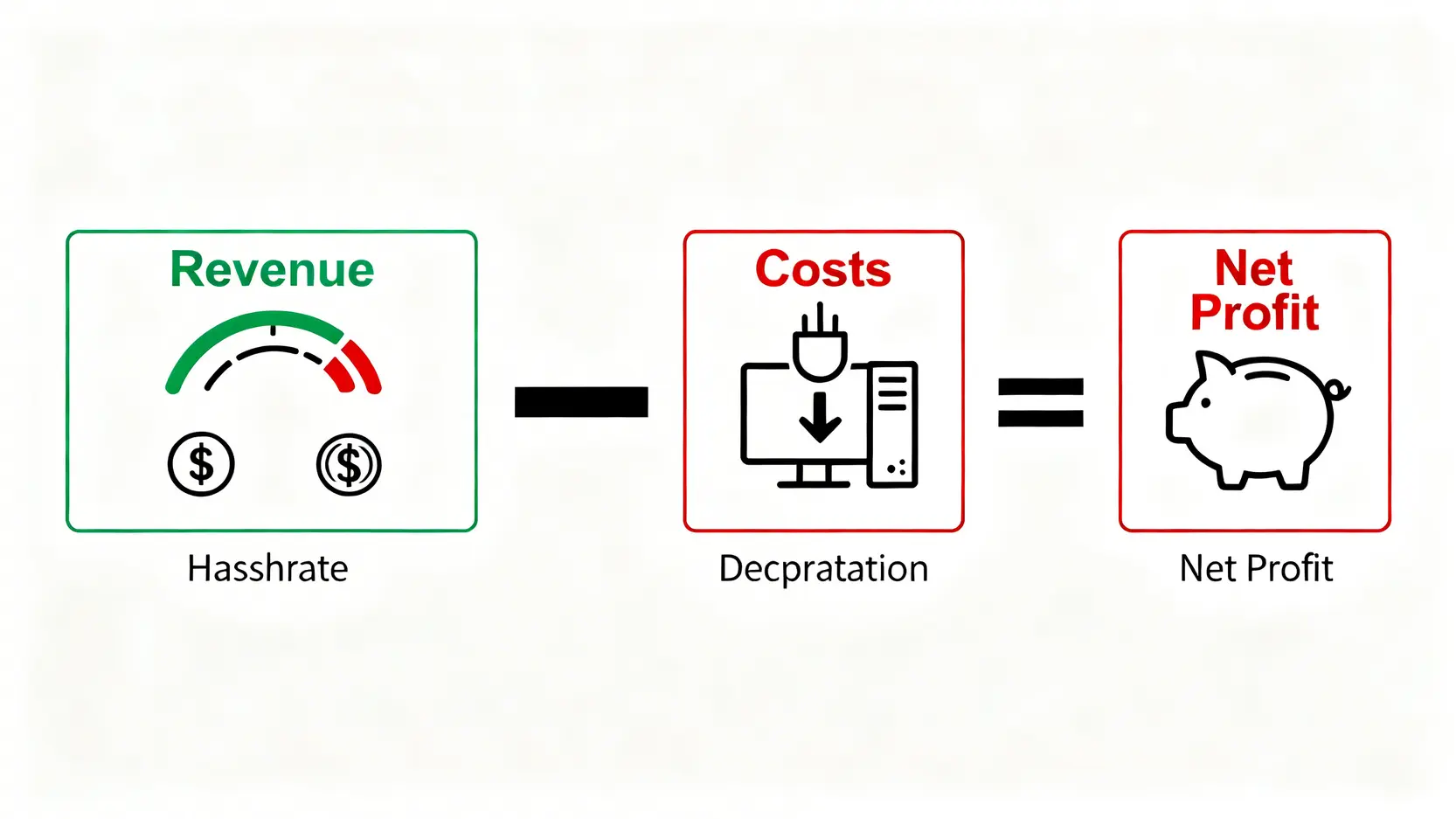
The tool will then calculate estimated daily, weekly, and monthly gross revenue, electricity expenses, and final net profit based on the current ETC price, network difficulty, and block rewards.
Common Mining Profitability Tools:
- WhatToMine: A well-established and authoritative website that provides detailed comparisons.
- MinerStat: A modern platform that not only calculates mining profitability but also offers mining monitoring software.
Hidden Costs and Risks You Should Not Ignore
Mining profits are not always as attractive as they appear. Several hidden costs and risks must be considered:
- Electricity Costs: This is the largest ongoing expense. The lower your electricity cost, the higher your profit margin. Industrial electricity is typically cheaper than residential electricity, which is why large mining farms have an advantage.
- Hardware Depreciation: Mining rigs run continuously, so wear and tear are inevitable. GPU fans and ASIC hash boards are consumable components. The hardware purchase cost should be spread across its expected lifespan.
- Market Risk: Cryptocurrency prices are extremely volatile. If the price of ETC drops significantly, your profitability may quickly turn negative. In addition, changes in global network hashrate affect mining difficulty, directly influencing your output.
Frequently Asked Questions (FAQ)
Q: Can the GPUs I previously used to mine ETH still be used to mine ETC
A: Absolutely! As long as your GPU has at least 4GB of VRAM, it can mine ETC without issues. Since both ETH and ETC use the Ethash algorithm (or its variant Etchash), your hardware can transition almost seamlessly. You only need to change the wallet address and mining pool configuration.
Q: Besides ETC, are there other cryptocurrencies worth mining
A: Yes. After the Ethereum Merge, a large amount of mining power was needed to find new networks. In addition to ETC, several PoW cryptocurrencies have absorbed part of that hashrate, such as Ravencoin (RVN), Flux (FLUX), and Ergo (ERG). However, these projects generally have smaller market capitalization and weaker consensus compared with ETC, which means higher risk. It is recommended to use tools like WhatToMine to compare mining profitability across different coins based on your hardware.
Q: What is the difference between ASIC miners and GPUs when mining ETC?
A: The main differences lie in efficiency, cost, and flexibility. ASICs (Application-Specific Integrated Circuits) are machines designed for specific algorithms, so their efficiency in mining ETC (hashrate-to-power ratio) is much higher than that of GPUs. However, the drawback is that they are expensive, and once ETC mining is no longer profitable, the machine has almost no other practical use. In contrast, although GPUs are less efficient, they offer greater flexibility. If they are no longer used for mining, they can still be resold to gamers or used for other computing tasks, giving them stronger value retention.
Q: Do miners need to pay taxes on mining income?
A: This depends on the laws and regulations of your country or region. In many jurisdictions, cryptocurrency obtained through mining is treated as income and may be subject to income tax. When you later sell the cryptocurrency, the profit may also be subject to capital gains tax. It is strongly recommended to consult a local tax professional to understand your legal obligations.
Conclusion
Although the golden age of Ethereum mining has ended after the Merge, this does not mean the end for miners who still own PoW equipment. Instead, it marks the beginning of a new chapter. Through this detailed ETC mining tutorial, you can see that switching to Ethereum Classic is a practical and viable option. With proper research and careful evaluation of costs and risks, your mining journey can continue in the post-Merge era while still capturing opportunities in the blockchain ecosystem.
Related Articles
-
Complete Guide to Virtual Asset Trading Platform (VASP) License Applications: A 2026 Hong Kong Web3 Compliance Practical Guide At the pivotal moment of 2026, as global financial digitization accelerates at an unprecedented pace, Hong Kong has firmly established itself as a leading Web3 compliance hub in Asia and around the...2026 年 6 月 3 日
-
2026 Offshore Renminbi Range-Bound Arbitrage Trading Guide: Mastering the CNH-CNY Spread and a Profit Guide to Hedging Through Two-Way Volatility Against the combined influence of global macroeconomic developments and international trade policies, the foreign exchange market in 2026 has become increasingly complex. The Renminbi exchange rate often exhibits a pattern...2026 年 6 月 3 日
-
Friday Taiwan Index Options Buyer Strategies: Precisely Capturing Explosive Market Moves From Non-Farm Payroll Data Many investors often complain that options buyers have low win rates, frequently predicting the direction correctly but ultimately losing to time decay. However, under the new dual-settlement system, short-term volatility and event-driven trading have created...2026 年 6 月 3 日