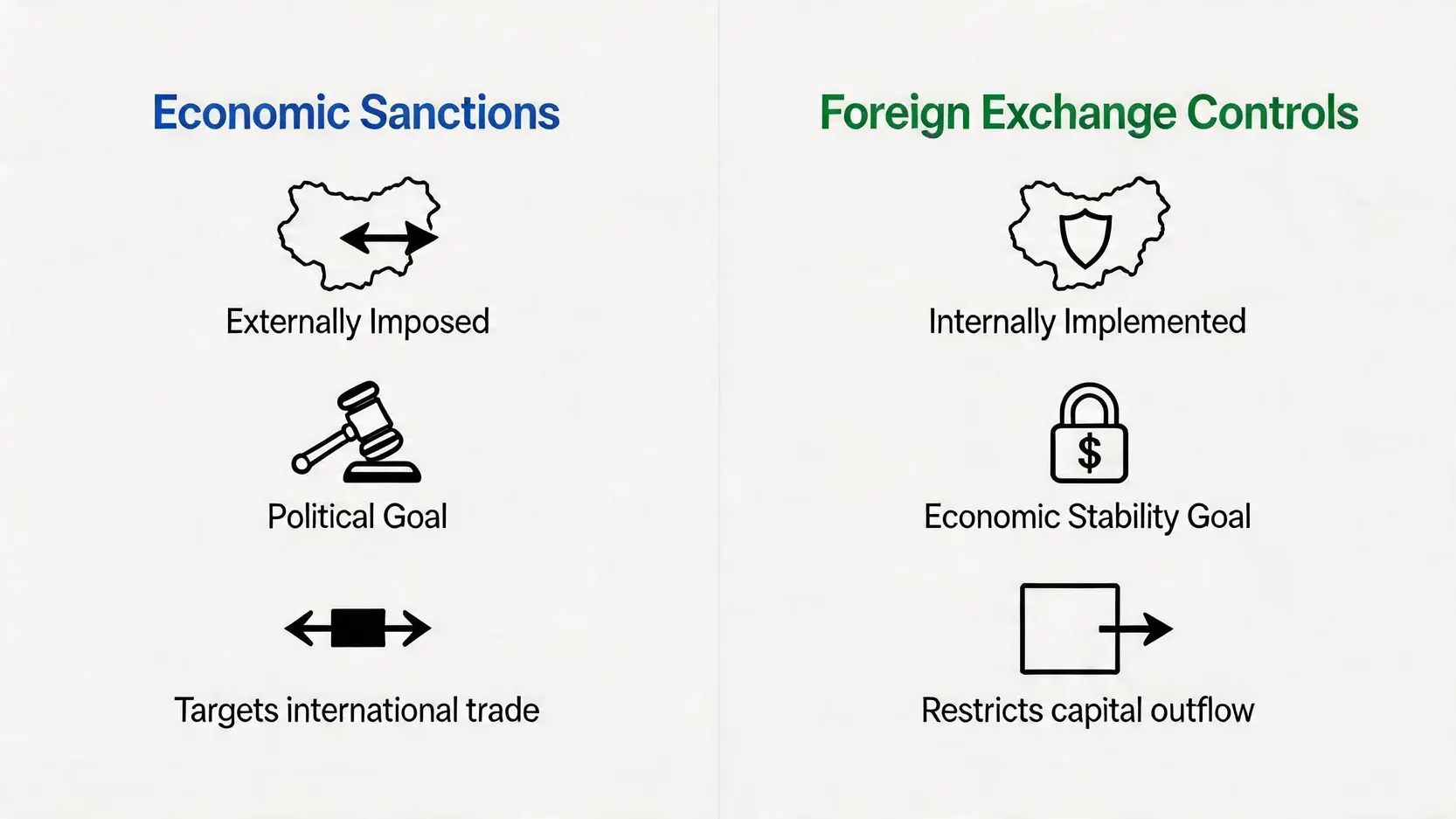
A clear comparison: External “economic sanctions” vs internal “foreign exchange controls”.
Further Reading (Highly Recommended)
Comprehensive Analysis of Geopolitical Premium: Comparison of 5 Major Safe-Haven Asset Types and Their Advantages and Disadvantages, the Ultimate Guide to Navigating Market Turbulence
【2025 Euro Investment Guide】Is It a Good Time to Buy? Expert Analysis of Optimal Entry and Exit Timing and Three Major Investment Strategies
Analysis of the Devastating Consequences of Sanctions and Capital Controls
Whether external economic sanctions or internal foreign exchange controls, their impact ultimately cascades through multiple layers, spreading from a country’s macroeconomic conditions to the daily lives of businesses and individuals, forming a devastating chain reaction.
The Impact of Economic Sanctions: From National Decline to Social Hardship
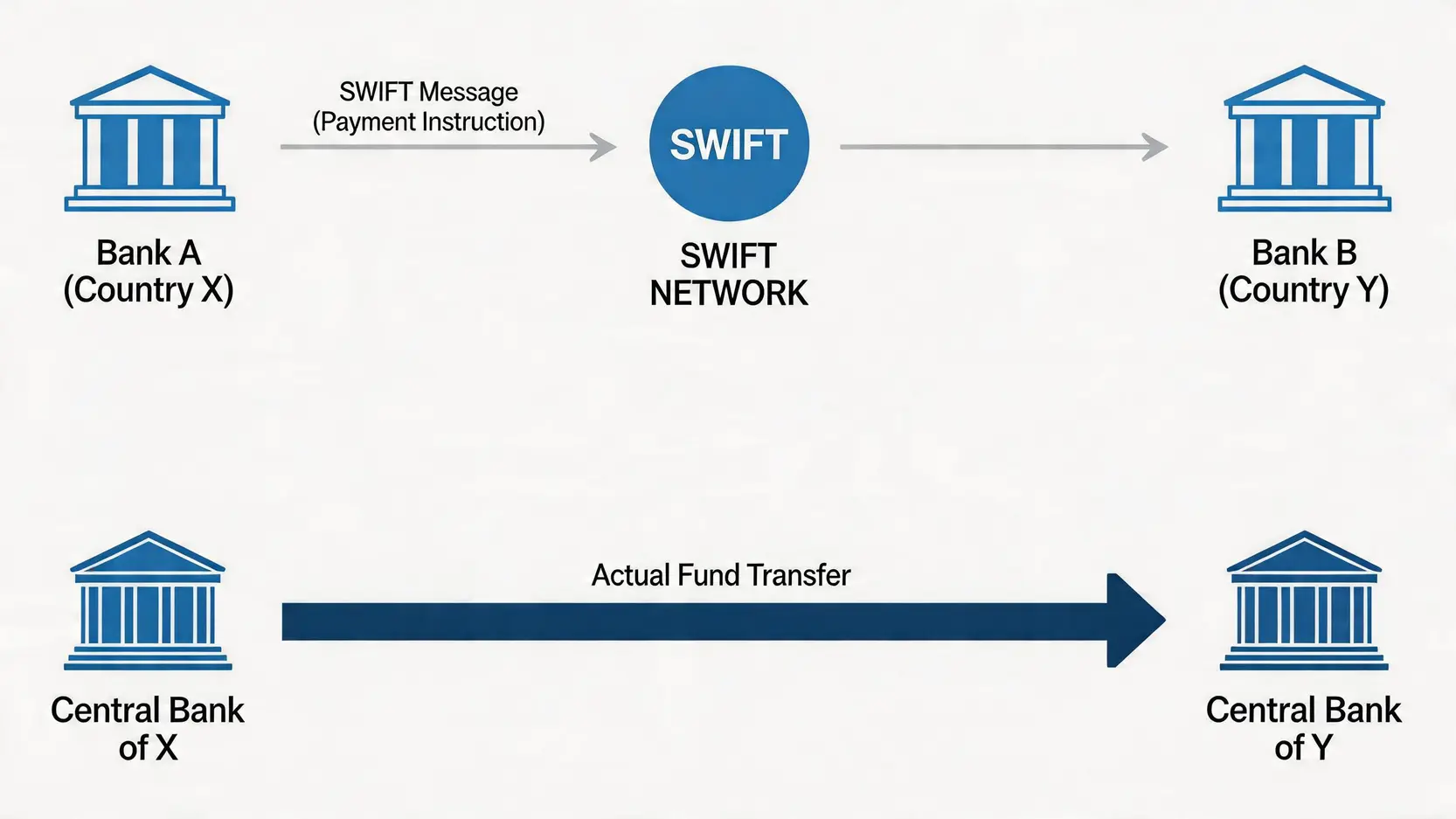
When a country is subjected to comprehensive economic sanctions, especially after being removed from the SWIFT system, the impact is immediate and far-reaching. Taking Russia as a recent example of severe sanctions:
- Currency collapse and hyperinflation: Sanctions caused the ruble to sharply depreciate against the US dollar, import prices surged, and severe inflation emerged domestically, significantly eroding purchasing power.
- Severe GDP contraction: International trade stalled, energy exports were disrupted, and foreign companies withdrew, leading to a sharp contraction in overall economic activity.
- Supply chain breakdown: Many key industries (such as aviation, automotive, and technology) rely heavily on imported components and technology. Sanctions disrupted supply chains, forced factory shutdowns, and led to mass unemployment.
- Shortages of essential goods: From pharmaceuticals and medical equipment to daily consumer goods, shortages emerged due to import restrictions, severely affecting living standards.
This type of economic shock driven by geopolitical risk ultimately evolves into profound social consequences, undermining national stability.
The Consequences of Capital Controls: How Businesses Collapse and Personal Wealth Is Erased?
Even without external sanctions, domestic capital controls alone can be extremely destructive. The consequences of capital controls are directly reflected in the loss of liquidity, with an impact comparable to direct asset freezing.
- For businesses:
- Inability to pay for imports: Many manufacturing and retail businesses rely on imported raw materials or goods. Foreign exchange controls prevent payments, disrupting supply chains and ultimately forcing production stoppages or closures.
- Withdrawal of foreign partners: Foreign partners or parent companies are unable to repatriate profits, leading to a loss of confidence and eventual market exit.
- Financing difficulties: Companies lose access to international financing channels, while domestic financial conditions deteriorate, making survival increasingly difficult.
- For individuals:
- Sharp asset depreciation: Funds are trapped domestically while the local currency rapidly loses value due to inflation, effectively eroding wealth invisibly.
- Loss of overseas opportunities: Individuals are unable to pay for overseas education, make foreign investments, or even travel abroad, all of which become extremely difficult.
- Rise of black market trading: With official channels unable to facilitate foreign exchange, people are forced into underground markets with poor exchange rates and high risks, further worsening financial instability.
Prolonged capital controls suppress economic vitality and can trap a country in a self-isolating cycle. For investors, understanding whether a region carries capital control risk is a critical factor that must be assessed before global asset allocation decisions.
Conclusion
In summary, economic sanctions, SWIFT bans, and foreign exchange controls are extremely powerful tools in modern international politics and economics. Their impact is far-reaching and highly interconnected. From macro-level national economic recessions to micro-level corporate survival crises and personal asset erosion, the destructive power of these financial weapons should not be underestimated. Understanding these mechanisms not only helps us interpret global events, but also raises awareness of potential financial risks. Whether for business operators or individual investors, in the face of uncertain geopolitical environments, a deep understanding of the impact of economic sanctions and the consequences of capital controls is a critical step in protecting assets and making sound decisions.
FAQ: Common Questions About Sanctions and Foreign Exchange Controls
Q: How are individuals affected by economic sanctions?
A: Individuals can be affected in multiple ways. The most immediate impacts include rising prices (inflation), increased unemployment risk, and shortages of imported goods. If an individual is placed on a sanctions list (usually officials or related persons), their overseas assets may be frozen and international travel may be restricted. For ordinary citizens, even if not directly targeted, currency depreciation and economic recession can still significantly reduce savings and overall wealth.
Q: Are there alternative methods for international transfers after SWIFT sanctions?
A: In theory, alternatives exist, but they are highly limited. Transfers may be routed through banks in non-sanctioned countries, but the process is complex, costly, and inefficient. Some countries are developing alternative cross-border payment systems (such as China’s CIPS or Russia’s SPFS), but their scale and global acceptance are still far behind SWIFT and cannot fully replace it. In some cases, transactions may shift to cryptocurrencies or traditional barter systems, but these cannot support large-scale international trade.
Q: Can funds completely leave a country under foreign exchange controls?
A: Not entirely, but it becomes extremely difficult and costly. Official channels are strictly restricted, and individuals and companies must submit extensive documentation for approval, usually only granted for essential purposes (such as importing necessary goods). This leads to the emergence of underground financial networks and black markets, but exchange rates in these markets are often significantly worse than official rates and carry high legal and fraud risks. For large amounts of capital, legal and compliant outflow is almost impossible.
Q: Will Hong Kong implement foreign exchange controls?
A: Hong Kong currently operates under a linked exchange rate system, pegging the Hong Kong dollar to the US dollar, with free capital movement in and out of the territory. This is a core foundation of its status as an international financial center. In theory, any move to change this system or impose foreign exchange controls would severely undermine its financial position. Although no scenario can be ruled out under extreme geopolitical pressure, it is generally considered that the likelihood of Hong Kong implementing foreign exchange controls in the foreseeable future is extremely low, as it contradicts its core economic interests.