CCASS Guide: Track Institutional Holdings Easily

Updated: 2026/03/31  |  CashbackIsland

ccass-stock-analysis-guide

【CCASS Tutorial】How to Use Central Clearing and Settlement System Holdings Data to Analyze Shareholding Distribution and Track Major Investors?

In an information-asymmetric stock market, retail investors often struggle to understand the movements of major capital. In fact, the CCASS holdings records provided by the Hong Kong Exchange are a free and powerful tool that can help you analyze shareholding distribution and track major investors. This guide will walk you through how to use CCASS data for professional analysis, so you no longer follow blindly and can gain real insight into market movements.


What Is CCASS Holdings Data Retail Investors Must Know

CCASS (Central Clearing and Settlement System) is an electronic securities settlement system established by HKEX. In simple terms, after investors buy or sell Hong Kong stocks, the shares are not settled in physical form but are recorded through this system. The “CCASS shareholding records” are a publicly accessible database that shows, for a specific stock on a given date, which brokers (or participants) hold the shares, along with their quantities and proportions.


How CCASS Works Why It Reveals Major Investor Activity?

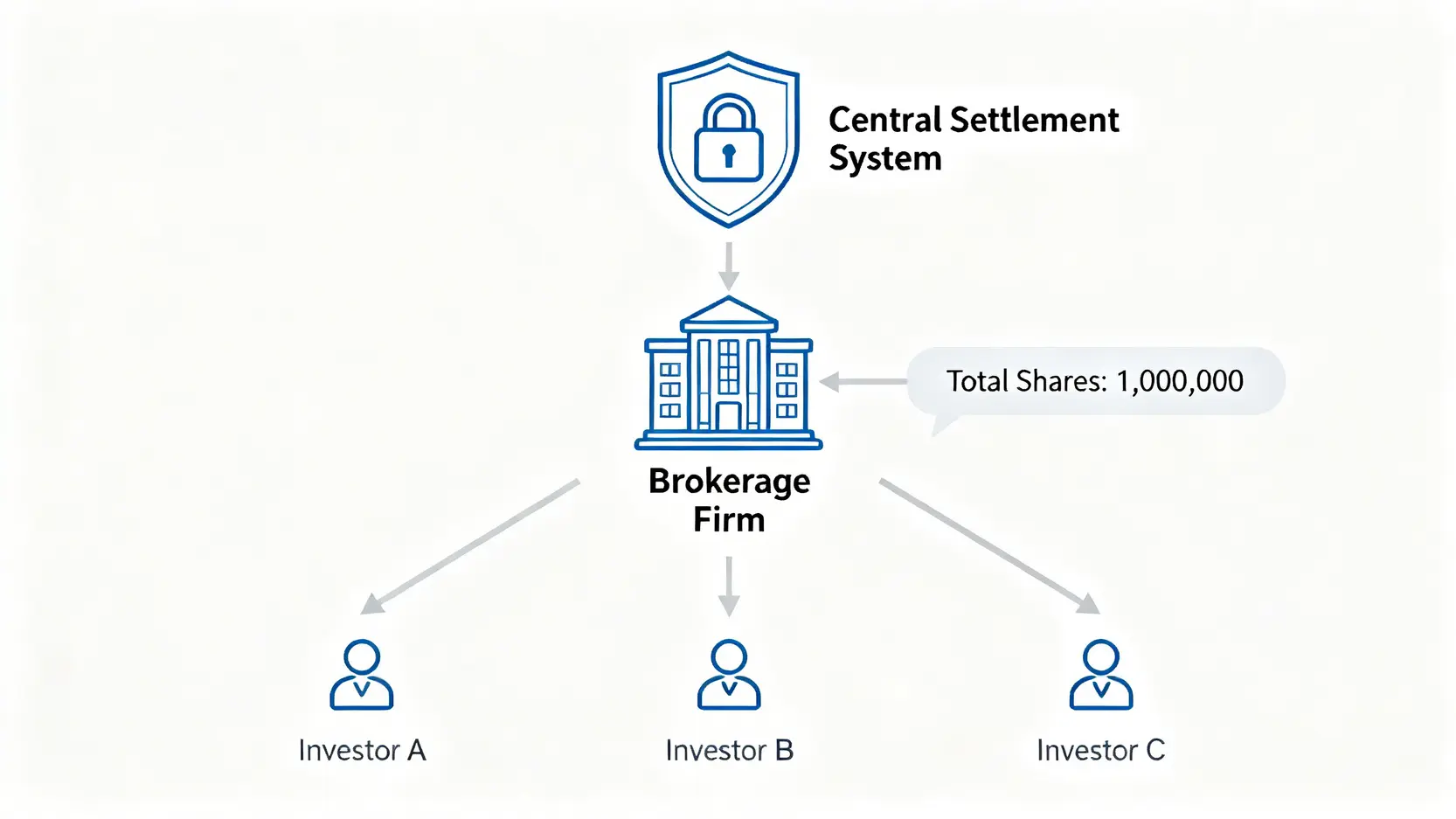
When you buy shares through a broker, ownership belongs to you, but the shares are typically held under the broker’s name within the CCASS system. Therefore, CCASS records reflect the total shares held by each broker (participant) on behalf of their clients. When a stock’s shares are highly concentrated among a small number of brokers, it often signals that major investors or institutions are operating behind the scenes. By tracking changes in these broker holdings over time, we can identify the positioning and movements of major players, which is the core logic of tracking institutional holdings.

一張圖解釋 CCASS 中央結算系統的運作原理,顯示散戶投資者的股票透過券商集中存管的流程。

CCASS Mechanism Retail Holdings Aggregated Through Brokers Into Traceable Data.


Physical Shares vs Electronic Records Understanding Where Your Shares Are Held

In the era of electronic trading, the vast majority of investors’ shares are held in electronic record form within the CCASS system. Only a very small number of investors choose to withdraw physical share certificates (commonly known as “physical shares”) and keep them themselves. After physical shares are withdrawn, that portion will be deducted from the total holdings recorded in the CCASS system. Conversely, when investors deposit physical shares into a broker account, the holdings in the CCASS system will increase accordingly. Understanding this helps in identifying the true reasons behind changes in shareholding data.


How to Check HKEX Official Platform Guide

Accessing CCASS data is completely free and simple. You can go directly to the Hong Kong Exchange official “CCASS” shareholding search platform. Below are the basic checking steps:

  1. Enter the query date: Select the specific date you want to check.
  2. Enter stock code: Input your target company’s stock code such as 0700 for Tencent.
  3. Submit query: Click “search” and the system will display all participants (brokers), their holdings, and percentage of issued shares.

With this simple step, you have taken the first step in analyzing shareholding distribution using CCASS data.


Core Concept Understanding Shareholding Distribution Through CCASS

“Shares in circulation” refers to the stocks available in the market. “Shareholding distribution analysis” studies how these shares are distributed among different investors, whether they are concentrated in the hands of a few large holders or spread across many retail investors. This analysis is crucial for predicting future stock price movements.


Concentrated vs Dispersed Holdings What It Means for Future Price Trends

In general, shareholding distribution can be divided into two types:

  • Chip Concentration: When a large proportion of a listed company’s shares (for example, more than 60–70%) are held by the top 10 brokers, it is referred to as “ownership concentration” or “chip concentration”. This usually indicates that the stock is dominated by a small number of major investors or institutions, making it relatively easier for the price to be driven upward, as there is less free float in the market and lower selling pressure. Such stocks also tend to have higher potential volatility.
  • Dispersed holdings When shares are spread across hundreds of brokers and no single broker holds a significant portion, this is considered “dispersed ownership”. It indicates the stock is mainly held by retail investors. Market sentiment tends to be inconsistent, and any negative news may trigger selling pressure, making price increases more difficult.

籌碼集中與籌碼分散的對比圖,顯示了兩種不同股權分佈結構及其對股價穩定性的影響。

Concentrated holdings (left) usually indicate that the stock price is more stable and easier to push higher; dispersed holdings (right) may lead to greater price volatility and weaker upward momentum.


Using CCASS Data to Determine Whether Major Players Are “Accumulating” or “Distributing”

The essence of tracking large investors’ holdings lies in identifying the movements of major players. By continuously observing CCASS data, we can determine whether they are “accumulating” (collecting shares) or “distributing” (offloading shares).

  • Accumulation signals: When the stock price lingers at low levels or moves sideways, if the holdings of several brokers are seen to be steadily and quietly increasing, while the holdings of brokers commonly used by retail investors are decreasing, this likely indicates that major players are accumulating shares discreetly in preparation for a future price push.
  • Distribution signals: After a significant price surge, if the stock shows signs of stalling or sharp volatility at high levels, and the previously concentrated holdings begin to be dispersed across multiple smaller brokers, or the total holdings of those brokers decline noticeably, this is a warning signal suggesting that major players may be distributing shares to retail investors at elevated levels.


Further Reading (Highly Recommended)

【CFD Tutorial】The Ultimate Beginner’s Guide to Contracts for Difference: From Account Opening to 5 Practical Investment Strategies

Margin Account Risk Guide: Beware of “Margin Call”! Stock Financing


Practical Application: Learn Large Investor Holding Tracking in 3 Steps

Theory combined with practice is the only way to truly master a skill. Below, large investor holding tracking is simplified into three core steps to help you get started quickly.


Step 1: Identify the List of Active Participants (Brokers)

First, you need to identify which brokers are the “active players” in a particular stock. On the CCASS query results page, focus on brokers ranked within the top 10 to 20 by shareholding percentage. These are typically seats of institutional investors, large investors, or market makers. Pay special attention to brokers with specific backgrounds, such as “designated brokers” closely associated with the listed company, or institutional channels mainly consisting of major foreign firms.


Step 2: Analyze the Relationship Between Changes in Holdings and Stock Price

This step is the core of the entire analysis. You should regularly (for example weekly) check and record the CCASS data of the target stock, create a simple table, and track changes in the shareholdings of top-ranked brokers. Then, compare these changes with the stock price trend over the same period.

Scenario Pattern Stock Price Trend Major Brokers’ Holdings

Market Implication

Price Up, Volume Up Uptrend Increase The most robust bullish signal, major players are buying and driving the price higher
Price Down, Volume Up Downtrend Increase Major players use the decline to lower costs and continue accumulating, indicating potential upside ahead
Price Up, Volume Down Uptrend Decrease A warning signal, major players may be pushing the price up while distributing
Price Down, Volume Down Downtrend Decrease The worst scenario, major players are exiting, indicating heavy pressure ahead

四象限圖,展示股價與大戶持倉量變化的四種情境分析:價漲量增、價漲量減、價跌量增、價跌量減。

Four Key Patterns Between Stock Price and Large Investor Holding Changes to Help You Identify the True Intent of Major Players.

If you want to learn the method in greater depth, you can refer to this stock analysis beginner tutorial, which will help you build a more solid foundation. 

Step 3: Case Study From CCASS Records to See Through a Complete Market Operation

Assume there is a stock ABC, with its price trading sideways around $2 for a long period. Through CCASS, we observe that Broker X and Broker Y continuously increase their holdings during this period, with their combined holding ratio rising from 5% to 15% within one month. Subsequently, ABC releases positive news, and the stock price begins to surge rapidly to $4. During the price increase, the holding ratios of X and Y remain stable. When the price reaches a peak of $5 and starts to fluctuate, we then observe that the holdings of X and Y begin to decline, while the holdings of dozens of brokers commonly used by retail investors increase. This forms a typical “accumulation – markup – distribution” operation by major players. Identifying the accumulation signals early gives you the opportunity to ride along with major players.


Advanced Techniques and Common Pitfalls How to Interpret CCASS Data More Accurately

Although CCASS is a powerful tool, improper interpretation may still lead to pitfalls. Mastering some advanced techniques and avoiding common mistakes can make your stock holding distribution analysis more precise.


Three Common Pitfalls in Interpreting CCASS Data

  1. Confusing increased holdings with position transfers: Sometimes a sudden increase in a broker’s holdings does not necessarily mean actual buying in the market, but may indicate that a large investor has transferred shares from one broker to another (i.e., “position transfer”). The way to determine this is to observe whether another broker’s holdings show a corresponding significant decrease. Genuine accumulation is usually continuous and gradual.
  2. Ignoring the impact of physical shares: As mentioned earlier, investors depositing or withdrawing physical shares will affect the total volume in CCASS. If the total CCASS holding ratio of a stock suddenly declines, consider whether a major shareholder has withdrawn physical shares, which does not necessarily indicate market selling.
  3. Overinterpreting single-day data: Data changes within a single trading day may contain significant noise. For example, large funds conducting quarterly portfolio rebalancing may cause temporary changes in holdings. Therefore, trends are far more valuable than single data points. Tracking large investor holdings requires observing data changes over several weeks or even months to reach more reliable conclusions.


Besides HKEX, What Other Supporting Analysis Tools Are Recommended?

Although the official HKEX query is the primary data source, manual tracking and analysis can be time-consuming. There are third-party financial data websites or apps on the market that automatically collect CCASS data and present it in charts, allowing investors to more intuitively observe historical changes in broker holdings. These tools usually require a fee, but for frequent traders, they can save significant time and improve analytical efficiency.


Common Questions About CCASS Central Clearing Shareholding Records

Q: Is CCASS data updated in real time?

A: No. CCASS data typically has a T+2 delay, meaning the data you query today reflects the shareholding status from two trading days ago. Therefore, it is more suitable for medium-term trend analysis rather than short-term trading decisions.

Q: Is CCASS data analysis 100% accurate? What are its limitations?

A: No analytical tool is 100% accurate. The main limitation of CCASS lies in its anonymity. We can only see the total holdings of brokers, but cannot identify which client is behind the transactions, nor their purchase cost. In addition, a large investor may spread holdings across multiple brokers to conceal true intentions. Therefore, CCASS should be used as one of several analytical tools, combined with fundamental and technical analysis for comprehensive judgment.

Q: Why do some brokers hold particularly large positions?

A: Brokers with large holdings typically fall into several categories. The first type includes major international investment banks, such as Morgan Stanley and Goldman Sachs, which act as custodians and trading channels for many large funds and institutional clients. The second type includes large retail banks or brokers, such as HSBC and BOC International, which have a broad retail client base. The third type may be “designated brokers” of listed companies, responsible for handling share custody for major shareholders or company executives. For example, Citibank and Standard Chartered are often regarded as key seats for institutional investors and foreign funds.

Q: Can I rely on tracking the holdings of a single broker to make decisions?

A: It is not recommended. Focusing on a single broker may lead to bias. A comprehensive stock holding distribution analysis should observe the overall movements of a “group of brokers” ranked at the top of the holdings. For example, tracking the combined holding ratio of the top 5 brokers provides more meaningful insights than observing only the top-ranked broker. At the same time, pay attention to whether there is a trend of shares flowing from top broker groups to numerous smaller broker groups.


Conclusion

In summary, CCASS central clearing shareholding records are a free resource that every Hong Kong stock investor should make full use of. By learning stock holding distribution analysis and large investor holding tracking techniques, you can more effectively assess the potential risks and opportunities of individual stocks, transforming from a passive price taker into an active market observer. Although the data has certain limitations, combining it with other analytical methods can significantly enhance the quality of your investment decisions. Start now by incorporating CCASS data into your investment analysis process to improve your market insight.

编者
Evan Lin

Evan Lin

我是Evan Lin,从大学时期开始接触外汇交易,至今已有多年实战经验,熟悉技术分析与EA策略,热衷于研究市场脉动与风险管控,喜欢分享实战经验和交易技巧,和大家一起学习、一起进步!

If you liked this article, please share it!

Related Articles

  • Hong Kong VASP License Guide 2026 for Web3 Firms
    Complete Guide to Virtual Asset Trading Platform (VASP) License Applications: A 2026 Hong Kong Web3 Compliance Practical Guide At the pivotal moment of 2026, as global financial digitization accelerates at an unprecedented pace, Hong Kong has firmly established itself as a leading Web3 compliance hub in Asia and around the...
    2026 年 6 月 3 日
  • CNH-CNY Arbitrage Guide 2026: Spread & Hedging
    2026 Offshore Renminbi Range-Bound Arbitrage Trading Guide: Mastering the CNH-CNY Spread and a Profit Guide to Hedging Through Two-Way Volatility Against the combined influence of global macroeconomic developments and international trade policies, the foreign exchange market in 2026 has become increasingly complex. The Renminbi exchange rate often exhibits a pattern...
    2026 年 6 月 3 日
  • Friday Taiwan Index Options: NFP Trading Strategy
    Friday Taiwan Index Options Buyer Strategies: Precisely Capturing Explosive Market Moves From Non-Farm Payroll Data Many investors often complain that options buyers have low win rates, frequently predicting the direction correctly but ultimately losing to time decay. However, under the new dual-settlement system, short-term volatility and event-driven trading have created...
    2026 年 6 月 3 日
返回顶部