Web3 Beginner Guide: Investing & Wallet Setup

Updated: 2026/03/06  |  CashbackIsland

Web3入門教學:一篇睇哂點樣投資同揀啱心水Web3錢包

Web3 Beginner’s Guide: A Comprehensive Look at How to Invest and Choose the Right Web3 Wallet

Do you often hear people talking about Web3, NFTs, and blockchain, but feel completely confused and unsure where to start? You are not alone. Many people want to seize Web3 investment opportunities, yet worry that the risks are too high and the concepts too complex. This Web3 beginner’s guide is designed specifically for newcomers. It will gradually introduce you to the core concepts of Web3, teach you how to invest in Web3, and provide the most practical Web3 wallet recommendations, allowing you to master all the fundamental knowledge in one article and take your first step into Web3 investing. 


What Exactly Is Web3? How Is It Different From the Web2 We Commonly Use?

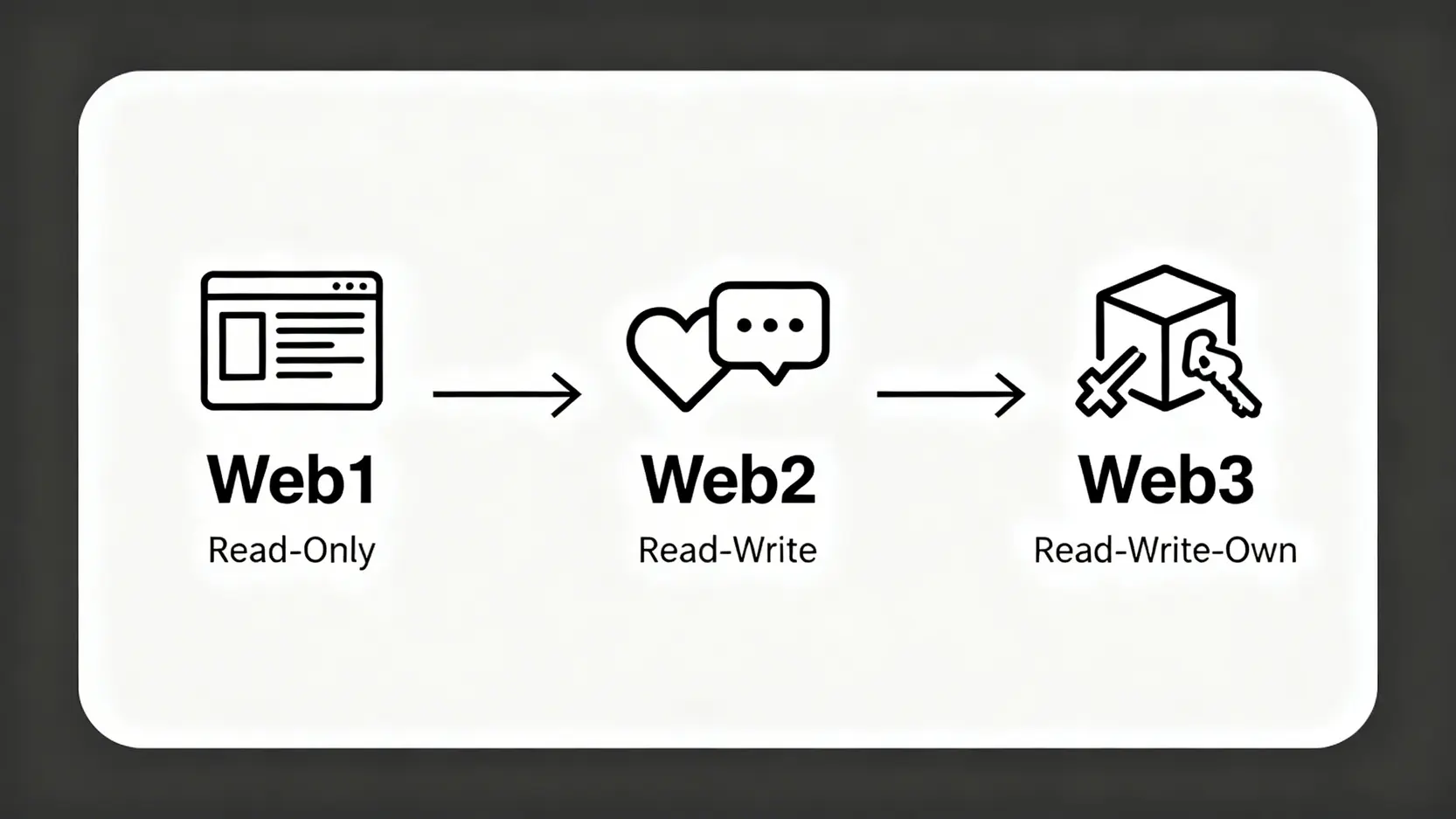
Simply put, Web3 is the next evolutionary stage of the internet. If Web1 was “Read-Only”, such as browsing news websites, and Web2 is “Read-Write”, such as creating content on Facebook and Instagram, then Web3 is “Read-Write-Own”, emphasizing the return of data and asset ownership from large corporations back to individual users.


Core Concepts of Web3: Decentralization, Blockchain, and User Data Sovereignty

  • Decentralization: This is the soul of Web3. In the Web2 world, our data, identity, and assets are controlled by centralized institutions such as Google, Meta, and banks. Decentralization, through blockchain technology, distributes power among all users. No single entity can control or alter the data, making the system more fair and transparent.
  • Blockchain: Blockchain is like a public, transparent, and tamper-resistant digital ledger. Every transaction or piece of data is recorded as a “block” and then linked together into a “chain”. Because of this feature, blockchain provides a secure and reliable foundation for asset ownership and transactions in Web3.
  • User Data Sovereignty: In Web3, your digital identity, assets, and data truly belong to you. You can manage them independently through a Web3 wallet, decide how your data is used and shared, and even profit from it, rather than having it freely exploited by platforms.

Web1、Web2與Web3的演進圖,展示了從唯讀到讀寫,再到讀寫擁有的互聯網發展階段。

Illustration: The Three Eras of the Internet, From Information Consumption to Content Co-Creation and Then to Asset Ownership.


Web3 vs Web2 vs Web1: A Simple Comparison Table to Understand the Evolution of the Internet

To help you understand more clearly, the table below allows you to quickly grasp the core differences among the three generations of the internet:

Characteristics

Web1 (Approximately 1990–2004)

Web2 (Approximately 2004–2020) Web3 (Approximately 2020–Present)
Core Concept Information Connectivity Social Connectivity & Platform Economy Value Connectivity & Ownership Economy
User Role Information Consumer (Read-Only) Content Creator (Read-Write) Network Owner (Read-Write-Own)
Data Ownership Controlled by Website Owners Controlled by Large Technology Companies Controlled by Users Themselves
Representative Applications Yahoo, Netscape Facebook, Google, YouTube Bitcoin, Ethereum, Uniswap
Key Technologies HTML, HTTP Social Media, Cloud Computing Blockchain, Cryptocurrency, AI


How Can Beginners Invest in Web3? Three Mainstream Methods and Risk Assessment

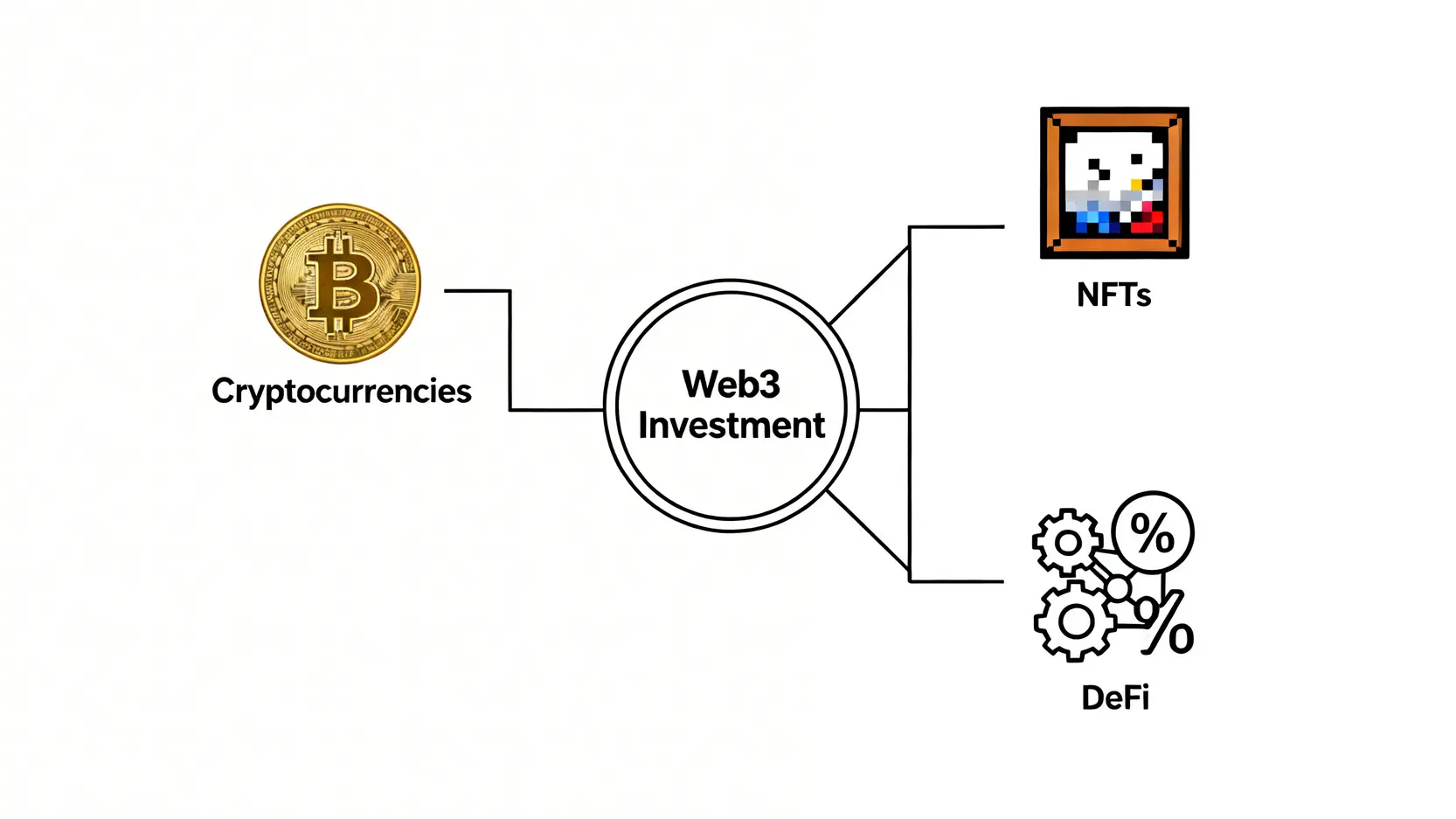
After understanding the basic concepts, the most practical question is: how should ordinary individuals invest in Web3? Currently, there are three mainstream methods, each with different approaches and risks. Choosing the path that suits you is extremely important.

投資Web3的三大主流方法示意圖,分別指向加密貨幣、NFT和去中心化金融(DeFi)。

The Three Main Web3 Investment Paths: Cryptocurrencies, NFTs, and DeFi.


Method One: Investing in Cryptocurrencies, How to Buy Bitcoin and Ether?

Investing in cryptocurrencies is the most direct way to enter Web3. Just like buying stocks means purchasing shares of a company, buying cryptocurrencies is equivalent to being optimistic about the future development of a blockchain ecosystem (such as Bitcoin or Ethereum). Bitcoin (BTC) is regarded as “digital gold” and serves as a store of value, while Ethereum (ETH) is a smart contract platform on which many Web3 applications (dApps) are built.

How to Get Started?


Method Two: Buying and Selling NFTs (Non-Fungible Tokens), More Than Just JPGs, Understanding NFT Value

NFT (Non-Fungible Token) is a unique digital asset that can represent anything: artwork, music, in-game items, memberships, and more. Each NFT has a unique code recorded on the blockchain, proving your ownership of that digital item. Investing in NFTs is not only about their artistic value, but more often about the community value behind them, the utility they provide (such as event access or in-game privileges) and their potential for appreciation.

Sources of NFT Value:

  • Rarity: Limited issuance increases value due to scarcity.
  • Community Consensus: A strong and active community is an important support for NFT value.
  • Utility: Whether the NFT provides practical use, such as in-game items or membership credentials.
  • Creator Reputation: NFTs issued by well-known artists or reputable project teams are usually more valuable.


Method Three: Participating in DeFi (Decentralized Finance) Projects, Liquidity Mining and Staking Guide

DeFi (Decentralized Finance) refers to a financial system built on blockchain technology, aiming to replace intermediaries such as traditional banks and brokerages. Through DeFi, you can conduct lending, trading, and earn interest, with greater transparency and efficiency.

  • Staking: Lock your cryptocurrencies in a protocol to help maintain network security. In return, you receive interest. This method is relatively stable and similar to fixed-term bank deposits.
  • Liquidity Mining: Provide your cryptocurrency assets to a decentralized exchange (DEX) to form trading pairs (such as ETH/USDT), thereby supplying liquidity to the market. You will receive a share of trading fees and platform reward tokens, but be aware of the risk of “impermanent loss”. For further understanding, you may refer to Wikipedia’s explanation of DeFi.


Further Reading (Strongly Recommended)

Virtual Currency Exchange Ranking: 2025 Global Exchange Ranking Review (Including Fees and Security)


Important: Four Major Risks and Pitfall Avoidance Guide You Must Understand Before Investing in Web3

Web3 is full of opportunities, but the risks should not be ignored. Beginners must be mentally prepared and implement proper risk management before entering the market.

  1. Extremely High Market Volatility: The cryptocurrency market operates 24 hours a day, and prices can fluctuate dramatically. Daily swings of more than 20 percent are common. Never invest with borrowed funds, and only participate with spare capital.
  2. Phishing Websites and Scams: Fraudsters use endless tactics, disguising themselves as official websites or airdrop campaigns to obtain your wallet authorization or mnemonic phrase. Remember, never click unknown links casually and never disclose your mnemonic phrase to anyone.
  3. Project Risk (Rug Pull): Some malicious project teams may raise funds and then disappear, causing token prices to drop to zero. Before investing, conduct thorough research (DYOR – Do Your Own Research), understand the project team’s background, white paper, and community response.
  4. Regulatory Uncertainty: Regulatory policies toward Web3 are still evolving in various countries, and future policy changes may affect the market.


Your Ticket to the Web3 World: Choose a Secure and User-Friendly Web3 Wallet

To truly “own” your Web3 assets instead of storing them on an exchange, you need a Web3 wallet. This wallet serves as your identity and vault in the decentralized world, and all operations must go through it.


Why Do You Need a Web3 Wallet? How to Choose Between a Cold Wallet and a Hot Wallet?

A Web3 wallet does not store “money”, but rather a pair of “keys” (private key and public key), which authorize you to control assets on the blockchain. Wallets are mainly divided into two categories:

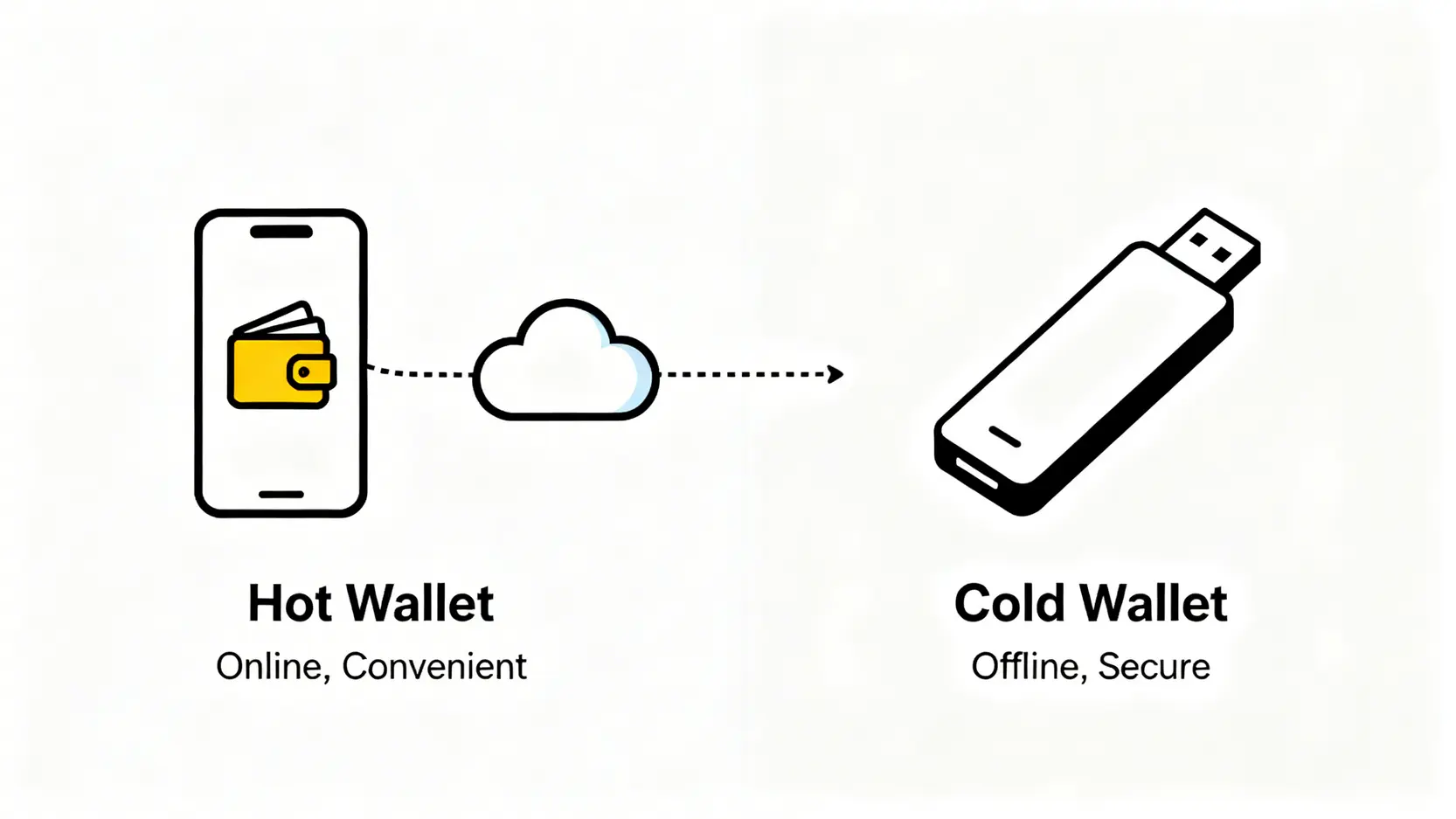
熱錢包與冷錢包的對比圖,顯示熱錢包連接網絡方便使用,而冷錢包離線儲存安全性高。

Hot Wallet vs Cold Wallet: The Trade-Off Between Convenience and Security.

  • Hot Wallet: Refers to wallets connected to the internet, such as mobile apps or browser extensions. The advantage is convenience and the ability to trade at any time; the disadvantage is the risk of hacking due to internet connectivity. Suitable for beginners, small asset storage, and daily transactions.
  • Cold Wallet: Also known as a hardware wallet, it is a physical device similar to a USB drive. The private key is stored offline, and transactions are signed only when connected to a computer, providing extremely high security. Suitable for long-term holding and large asset investors.

For beginners, it is recommended to start with a user-friendly hot wallet. After becoming familiar with the operations and as assets increase, consider purchasing a cold wallet to enhance security.


2026 Top 5 Web3 Wallet Recommendations and Feature Comparison

There are many different Web3 wallets on the market. The following are some of the most popular and comprehensive options:

Wallet Name Type

Main Features

Supported Networks Suitable Users
MetaMask Hot Wallet (Browser Extension/Mobile App) Has the largest user base and the broadest ecosystem, and is almost the standard wallet for EVM chains Ethereum, BNB Chain, Polygon and other EVM-compatible chains All Web3 users, especially DeFi and NFT users
Binance Web3 Wallet Hot Wallet (Built into the Binance App) Seamlessly connects to the Binance exchange, simplifies transfers, and enhances security with MPC technology Multi-chain support Binance exchange users, beginners seeking convenient operations
OKX Web3 Wallet Hot Wallet (Built into the OKX App) Powerful features, integrates DEX, NFT marketplace, and earning platforms for a one-stop experience Multi-chain support, supports the BTC ecosystem Advanced users seeking integrated functions and a one-stop experience
Phantom Hot Wallet (Browser Extension/Mobile App) The preferred wallet in the Solana ecosystem, with a sleek interface and smooth operation Solana, Ethereum, Polygon NFT and DeFi users within the Solana ecosystem
Trust Wallet Hot Wallet (Mobile App) Acquired by Binance, supports a wide range of tokens and blockchain networks, with simple operation Supports more than 70 public blockchains Mobile users who need to manage assets across multiple different blockchains


Practical Guide: Step-by-Step Instructions to Set Up Your First MetaMask Wallet

MetaMask is currently the most widely used Web3 wallet. Follow the steps below to complete the setup in just a few minutes:

    1. Go to the official website to download: In your browser (Chrome or Brave is recommended), search for “MetaMask”, visit the official website (metamask.io), and download the browser extension.
    2. Create a new wallet: After installation, click “Get Started”, then select “Create a Wallet”.
    3. Set a password: Set a sufficiently strong password. This password is only used to unlock the wallet on your current device and is not your private key.
  • Back up the seed phrase (extremely important!): The system will display a “Seed Phrase” consisting of 12 English words. This is the only way to recover your wallet! Be sure to write it down on paper in the correct order and store it securely in a safe place. Never take a screenshot or store it on any internet-connected device!
  1. Confirm the seed phrase: The system will ask you to click the seed phrase in the correct order to confirm that you have properly backed it up.
  2. Complete the setup: Once confirmed, your MetaMask wallet has been successfully created. You will see the MetaMask icon in the upper right corner of your browser. Click it to start using your wallet.


FAQ (Frequently Asked Questions)

Q: Is Web3 investing high risk? How should beginners allocate their funds?

A: Very high. The Web3 sector is still in its early stage of development, with significant market volatility and a high project failure rate. Beginners should adopt a learning mindset and only invest funds they can afford to lose (such as 1 to 5 percent of their total portfolio). Never put all your funds “All-in”. It is recommended to start with mainstream cryptocurrencies such as Bitcoin and Ether, and then gradually explore other areas.

Q: What should I do if I lose my seed phrase?

A: If you lose your seed phrase, it essentially means you have permanently lost all the assets in your wallet. No one (including the wallet developer) can help you recover them. This is the cost of decentralization. You have 100 percent control over your assets, but you must also bear 100 percent responsibility for safeguarding them. Therefore, physically backing up and securely storing your seed phrase is of utmost importance.

Q: How much money do I need to start investing in Web3?

A: It depends on your situation. Most exchanges have very low minimum transaction amounts, and you can purchase cryptocurrencies with just dozens to one hundred Hong Kong dollars. The key is not the amount, but the process of beginning to learn and gain experience. It is recommended to start with a small amount, personally complete the process of buying coins and transferring them to your Web3 wallet, and accumulate experience rather than investing a large amount at the beginning.

Q: Do I need to pay taxes when buying and selling cryptocurrencies or NFTs?

A: This depends on the regulations in your jurisdiction. Tax policies on crypto assets vary significantly across countries and regions. For example, some jurisdictions treat them as capital gains, which may require paying capital gains tax. It is recommended to consult a local tax professional to clearly understand your legal responsibilities and avoid unnecessary trouble.


Conclusion

Congratulations! By reading this far, you have already mastered the basic concepts of Web3, the mainstream investment methods, and how to choose and set up a Web3 wallet. Web3 is a rapidly evolving field filled with limitless possibilities, opportunities, and challenges. This beginner’s guide provides the foundation for taking your first steady step, but remember that continuous learning and staying cautious are essential for survival in this new world. Always conduct thorough research before investing (DYOR), start with small amounts, and gain hands-on experience. That is the smartest strategy. Choose a Web3 wallet that suits you and begin your decentralized exploration journey now!

If you liked this article, please share it!

Related Articles

  • Volatility Surface Guide: Skew Trading Strategies
    Practical Applications of Volatility Surfaces: From Options Modeling to Advanced Skew Trading Strategies In options markets, implied volatility is never a flat line. Instead, it forms complex "smile" or "skew" surfaces. For advanced traders, mastering the practical applications of volatility surfaces is equivalent to possessing a lens that reveals market...
    2026 年 6 月 3 日
  • Foreign Capital Flow Model: Track Institutional Money
    Building a Foreign Capital Flow Copy Trading Model: A Stock Market Indicator for Accurately Tracking Institutional Positioning In Asia-Pacific stock markets, foreign capital inflows and outflows often determine the direction of the index. However, simply looking at daily net buy and sell data is no longer enough. Only by building...
    2026 年 6 月 3 日
  • Options Buying Strategies for Extreme Market Risks
    Options Buyer Strategies During Extreme Market Conditions: Black Swan Hedging and Cross-Market Arbitrage During Volatility Surges The most terrifying aspect of financial markets is not a gradual decline, but overnight flash crashes and cross-market capital withdrawals accompanied by volatility surges. In the highly unpredictable global macroeconomic environment of 2026, geopolitical...
    2026 年 6 月 3 日
返回顶部