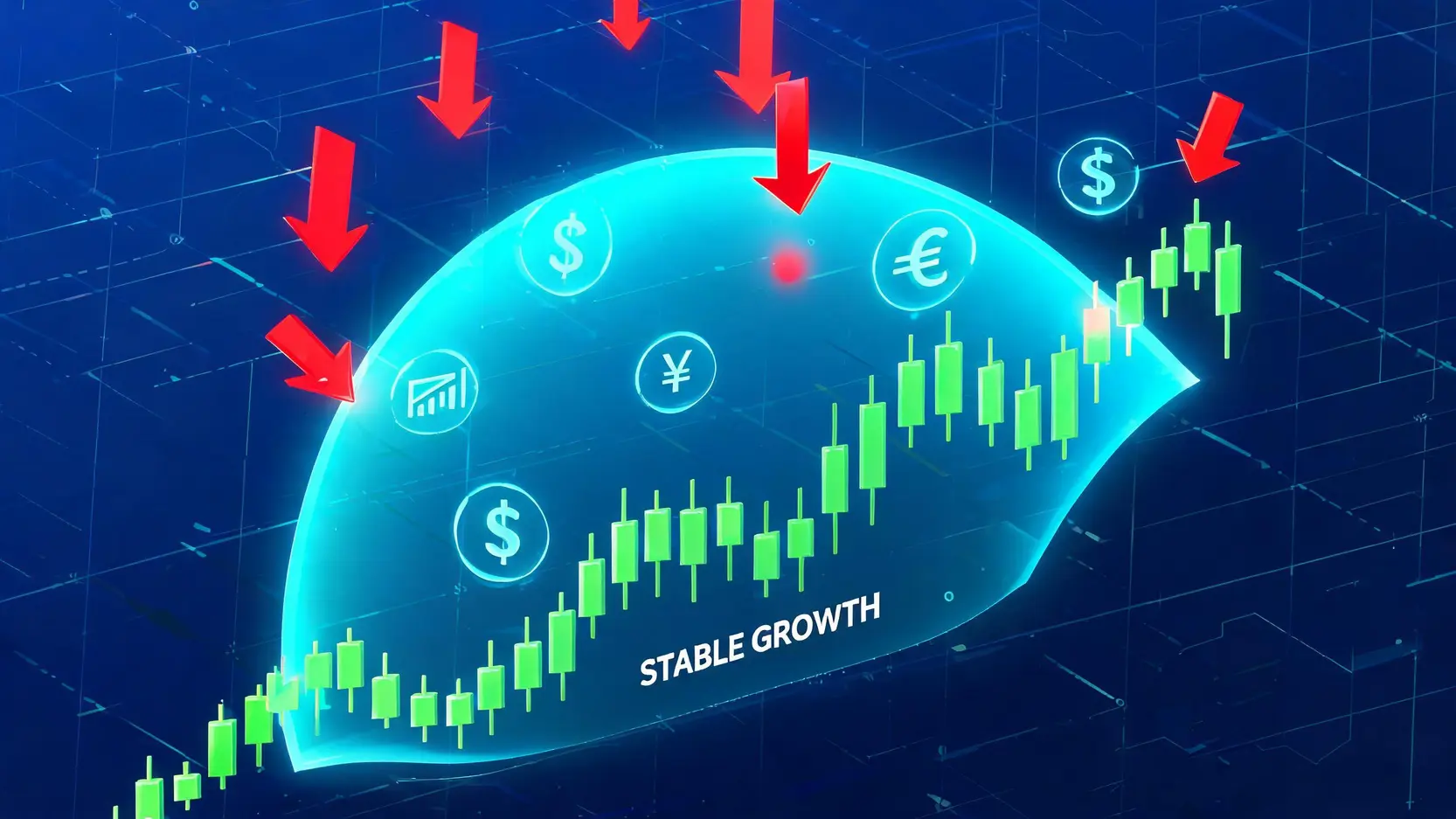
Stock Hedging Tools Guide: How to Choose Between Futures, Options, and Inverse ETFs? A Complete Guide to Portfolio Hedging Strategies
With market volatility intensifying, are you worried that the investment portfolio you worked so hard to build could see its profits shrink overnight, or even turn from gains into losses? Learning “risk hedging” is an essential lesson for every smart investor. This article provides a comprehensive risk hedging tutorial, starting from the most basic concepts, comparing the pros and cons of major stock hedging tools in detail, and offering practical portfolio hedging strategies. This allows you to move forward steadily and protect your hard-earned money regardless of whether the market rises or falls.
What Exactly Is Risk Hedging? Why Is It Crucial for Your Investment Portfolio?
Before diving into various complex tools and strategies, we must first clarify the core concept of “hedging”. Many beginners think “hedging” is something only professional traders use, but its principle is actually very close to everyday life. Once you understand it, you will realize it is an indispensable part of portfolio management.
The Basic Definition of Hedging: Understanding Investment Protection Through the Concept of “Buying Insurance”
Imagine you buy a new car. Even if you are a skilled driver, you still cannot predict whether accidents may happen on the road. To avoid huge repair costs in case of an accident, you purchase car insurance. This insurance premium is the “cost” you pay to “hedge” against potentially significant future losses.
Investment hedging works in exactly the same way. When you hold a stock portfolio, you may be optimistic about its long-term growth potential while also worrying that short-term market corrections, black swan events, or systemic risks could significantly reduce your asset value. In this case, you can allocate a small portion of capital to specific financial instruments (such as buying put options or shorting index futures) to establish a position opposite to your main holdings. If the market really declines, the profits from your hedging position can offset part of the losses in your main portfolio, achieving the purpose of “risk protection”. Simply put, hedging is buying insurance for your investment portfolio.
Why Hedge? The 3 Core Benefits of Actively Managing Downside Risk
The purpose of risk hedging is not to pursue higher returns, but to manage risk more effectively. Actively managing downside risk offers the following three major benefits:
- 1. Protect Capital and Avoid Permanent Losses: In a bear market, stock prices may fall by 50% or more. If you can hedge effectively during market declines and preserve most of your principal, you will still have enough capital to restart when the market recovers, rather than waiting painfully at the bottom just to break even.
- 2. Reduce Portfolio Volatility: An overly volatile portfolio can create enormous psychological pressure on investors, making them more likely to buy high and sell low irrationally. Through hedging, the net asset value curve of the portfolio can become smoother, helping you hold investments more confidently and stick to long-term investing discipline.
- 3. Improve Risk-Adjusted Returns: Although hedging comes with costs (much like insurance premiums), it can effectively reduce losses during extreme market events. Over the long run, a well-hedged portfolio usually achieves stronger risk-adjusted performance metrics, such as a higher Sharpe Ratio.
Comparison of Mainstream Stock Hedging Tools: Futures, Options, and Inverse ETFs
After understanding the importance of hedging, the next step is learning about the mainstream stock hedging tools available in the market. Each tool has its own strengths and is suitable for investors with different levels of experience and risk tolerance. All of them are derivative financial instruments, so it is important to fully understand how they work before using them.
1. Futures Contracts: Advantages, Disadvantages, and Suitable Investors
A futures contract is a standardized agreement to buy or sell a specific asset (such as stock indices or commodities) at a predetermined price on a future date. To hedge a stock portfolio, the most common approach is to “short” stock index futures (such as E-mini S&P 500 futures).
- Advantages:
- High Leverage: Only a small margin deposit is required to control contracts worth far more than the margin itself, resulting in highly efficient hedging.
- Low Trading Costs: Compared with directly selling large amounts of stocks, futures trading fees are usually lower.
- High Liquidity: Major stock index futures markets are typically very active, making it easy to enter and exit positions.
- Disadvantages:
- High Risk: Leverage is a double-edged sword. If the market moves against expectations, losses may exceed the initial margin, leading to margin call pressure.
- Contract Expiry Issues: Futures contracts have expiration dates, requiring rollover operations that increase operational complexity.
- Higher Entry Barrier: Investors need a dedicated futures account, and the mechanism is relatively complex for beginners.
Suitable For: Professional investors with larger capital, extensive market knowledge, and the ability to execute strict risk control.
2. Options: A Tutorial on Flexible Put/Call Strategies
Options give holders the “right”, but not the “obligation”, to buy (Call Option) or sell (Put Option) an underlying asset at a specified price before or on a specific date. The most direct way to hedge a portfolio is by buying put options (Long Put).
This works like insurance for your stocks: you pay an “option premium” to lock in a future “selling price” (strike price). If the stock price falls below that level, the value of your option increases, offsetting losses in your stock holdings. If the stock price rises, your maximum loss is limited to the premium paid, while your stocks continue benefiting from upward price movements.
- Advantages:
- Limited Risk With High Potential Returns: As a buyer, the maximum loss is only the premium paid, while downside protection can theoretically be unlimited.
- High Flexibility: Investors can buy puts on broad market indices or individual stocks, enabling precise hedging targets.
- Diverse Strategies: Beyond simply buying puts, investors can combine options into more sophisticated hedging strategies.
- Disadvantages:
- Time Decay (Theta Decay): Option value decreases over time. Even if stock prices remain unchanged, the option itself may lose value.
- Complex Concepts: Options involve multiple variables such as strike prices, expiration dates, and implied volatility, creating a steeper learning curve for beginners.
- Suitable For: Investors with some market experience who are willing to spend time learning and want more precise and flexible hedging methods.
3. Inverse ETFs: The Most Beginner-Friendly Hedging Tool
Inverse ETFs are exchange-traded funds designed to deliver the opposite daily return of the index they track. For example, when the S&P 500 falls by 1% in a single day, an inverse ETF tracking the index (such as ProShares Short S&P500 (SH)) should theoretically rise by approximately 1%.
- Advantages:
- Simple and Convenient: They trade exactly like ordinary stocks. Investors only need a standard securities account, without requiring futures or options accounts.
- Very Low Entry Barrier: Investors can purchase as little as one share, making them suitable for retail investors with smaller amounts of capital.
- No Margin Call Risk: The maximum loss is limited to the capital invested, unlike futures trading, which may require additional margin deposits.
- Disadvantages:
- Compounding Effect: Since inverse ETFs track “daily” inverse returns, their net asset value can erode over time in long-term holding periods or sideways markets due to compounding effects, making them unsuitable for long-term holding.
- Higher Management Fees: Compared with traditional ETFs, inverse ETFs generally charge higher management fees.
- Tracking Error: Actual performance may slightly differ from the theoretical inverse return.
- Suitable For: Investment beginners, retail investors, or anyone seeking a convenient short-term hedging tool.
Comparison Summary: Understand the Costs, Risks, and Convenience of Major Hedging Tools at a Glance
| Features |
Futures Contracts |
Options (Buying Put) |
Inverse ETFs |
| Ease of Use |
Low (Requires a Dedicated Account) |
Medium (Requires Options Trading Approval) |
High (Only a Standard Securities Account Required) |
| Capital Requirement |
High |
Medium |
Low |
| Risk Level |
Extremely High (Potentially Unlimited Losses) |
Limited (Maximum Loss Is the Premium Paid) |
Limited (Maximum Loss Is the Principal Invested) |
| Hedging Costs |
Trading Costs + Potential Losses |
Option Premium + Time Decay |
Management Fees + Long-Term Holding Decay |
| Suitable Holding Period |
Short to Medium Term |
Short to Medium Term |
Short Term |
Beginner Practical Guide: 3 Simple and Easy-to-Understand Portfolio Hedging Strategies
Now that we have covered the theory, let’s move on to practical application. Here are three portfolio hedging strategies, ranging from basic to advanced, allowing you to choose the most suitable approach to protect your assets based on your own situation.
Strategy 1: Hold Core Stocks While Buying Inverse ETFs to Hedge Overall Market Risk
This is the most beginner-friendly strategy. Suppose your portfolio mainly consists of large-cap technology stocks, and you are worried that the upcoming earnings season or a US Federal Reserve interest rate meeting could trigger a correction across the entire technology sector (broad market).
- Steps:
- 1. Keep your existing core holdings unchanged.
- 2. Buy a certain amount of inverse ETFs tracking the Nasdaq 100 Index in your securities account (such as ProShares UltraPro Short QQQ (SQQQ)).
- 3. After the uncertainty event passes, regardless of whether the market rises or falls, you can sell the inverse ETF and end this short-term hedge.
Advantages: Easy to execute, controllable costs, and effective at hedging systemic risk without having to sell your long-term holdings.
Further Reading (Highly Recommended)
What Are the Risks of ETFs? A Complete Analysis of ETF Risk Levels and Investment Management Strategies
Strategy 2: Use Stock Options to Buy “Downside Insurance” for Specific Stocks
If you are mainly worried about a particular stock within your portfolio (such as one with an overweight allocation or one about to release important data), using stock options for precise hedging may be a better choice.
- 1. Suppose you hold 100 shares of TSMC, currently trading at NT$600.
- 2. You are concerned that the stock price may decline sharply within the next month, so you buy one TSMC put option contract (representing 100 shares) with a strike price of NT$580 expiring next month.
- 3. Scenario A (Stock Price Falls): If the stock price drops to NT$500 after one month, your stock position loses NT$10,000, but the value of your put option increases significantly, offsetting most of the loss.
- 4. Scenario B (Stock Price Rises): If the stock price rises to NT$650, your put option expires worthless, causing you to lose the premium paid, but your stock position fully benefits from the price increase.
Advantages: Clear objective, highly targeted, and capable of providing precise downside protection for a single asset.
Strategy 3: Asset Allocation Hedging (Using Bonds or Gold as Safe-Haven Assets)
The most advanced form of hedging is actually built into everyday asset allocation. This is a strategic, long-term hedging mindset rather than a tactical operation targeting short-term events. The core idea is to include assets in your portfolio that have low or even negative correlation with stocks.
- Common Safe-Haven Assets:
- Government Bonds: During economic recessions or stock market panic, capital usually flows into assets considered “risk-free”, such as US Treasury bonds, driving bond prices higher and creating an inverse relationship with equities.
- Gold: As a traditional safe-haven asset, gold generally performs well during periods of high inflation and geopolitical instability.
- US Dollar: During global market turbulence, the US dollar often strengthens due to its reserve currency status.
How to Implement: Regularly review your portfolio to ensure that, in addition to stocks, a certain percentage (such as 10%-20%) is allocated to bond ETFs, gold ETFs, or similar assets. This creates a “stock-bond balance” and diversified allocation effect, automatically providing a buffer for your portfolio and reducing overall risk.
FAQ: Common Questions
Q: Will Hedging Affect the Long-Term Returns of My Stocks?
A: Yes, hedging comes with costs. Whether it is paying option premiums or the management fees and holding decay of inverse ETFs, these costs will slightly reduce your long-term overall returns. Therefore, the purpose of hedging is not to maximize returns, but to manage downside risk within an acceptable cost range while pursuing more stable long-term growth. The key is to hedge only when truly necessary (such as when major market volatility is expected) rather than hedging continuously.
Q: Which Hedging Tool Is Most Suitable for Retail Investors (Small-Scale Investors)?
A: For most retail investors or beginners, inverse ETFs are undoubtedly the most beginner-friendly and convenient hedging tool. They do not require additional professional accounts, can be traded as easily as stocks, and have a very low capital requirement. Although they are not suitable for long-term holding, their convenience as a short-term market risk hedging tool far exceeds that of futures and options.
Q: What Is the Difference Between Hedging, Arbitrage, and Risk Locking?
A: These three concepts are often confused. Hedging refers to establishing an opposite position to reduce the risk of an existing position, with the goal of “risk protection”. Arbitrage refers to taking advantage of small price differences for the same asset across different markets by simultaneously buying and selling to earn risk-free profits, with the goal of “capturing price spreads”. Risk locking (often referring to commercial hedging) is more commonly used in physical industries. For example, airlines may purchase fuel futures in advance to lock in future fuel costs, with the goal of “locking in costs or profits”.
Conclusion
In summary, risk hedging is not some distant financial technique reserved for professionals, but rather an essential asset protection strategy every investor should understand. Through this guide, you have learned the characteristics of mainstream stock hedging tools such as futures, options, and inverse ETFs, while also mastering three practical portfolio hedging strategies. As market volatility continues in the future, only by choosing strategies that best match your investment style and risk tolerance can you effectively control risk, protect the wealth you have worked hard to accumulate during bear markets, and achieve steady growth during bull markets. Start reviewing your portfolio today and build your first line of defense against potential risks!