How to Buy Silver 2026: 5 Best Investment Channels

Want to invest in precious metals but feel that gold’s entry barrier is too high? Silver, often called “the poor man’s gold”, may be an excellent alternative. In recent years, both industrial demand and safe-haven value have made silver trading a hot topic. However, for beginners, questions such as “How do I buy silver?” and “Should I trade silver through Taiwan banks or online platforms?” can be confusing. This article provides a complete analysis of the five mainstream channels for buying and selling silver in Taiwan, helping you understand the pros and cons and transaction processes at a glance, take your first investment step with ease, and stop worrying about how to buy silver.
Why Invest in Silver? Understanding the Three Core Values of Silver Trading
Before entering any market, it is crucial to understand its intrinsic value. Silver is not only a raw material for jewelry. Its unique dual attributes as both “money” and an “industrial” material give it an irreplaceable position as an investment. For investors considering how to buy silver, understanding these three points is fundamental.

Value One: An Inflation-Hedging Safe-Haven Asset
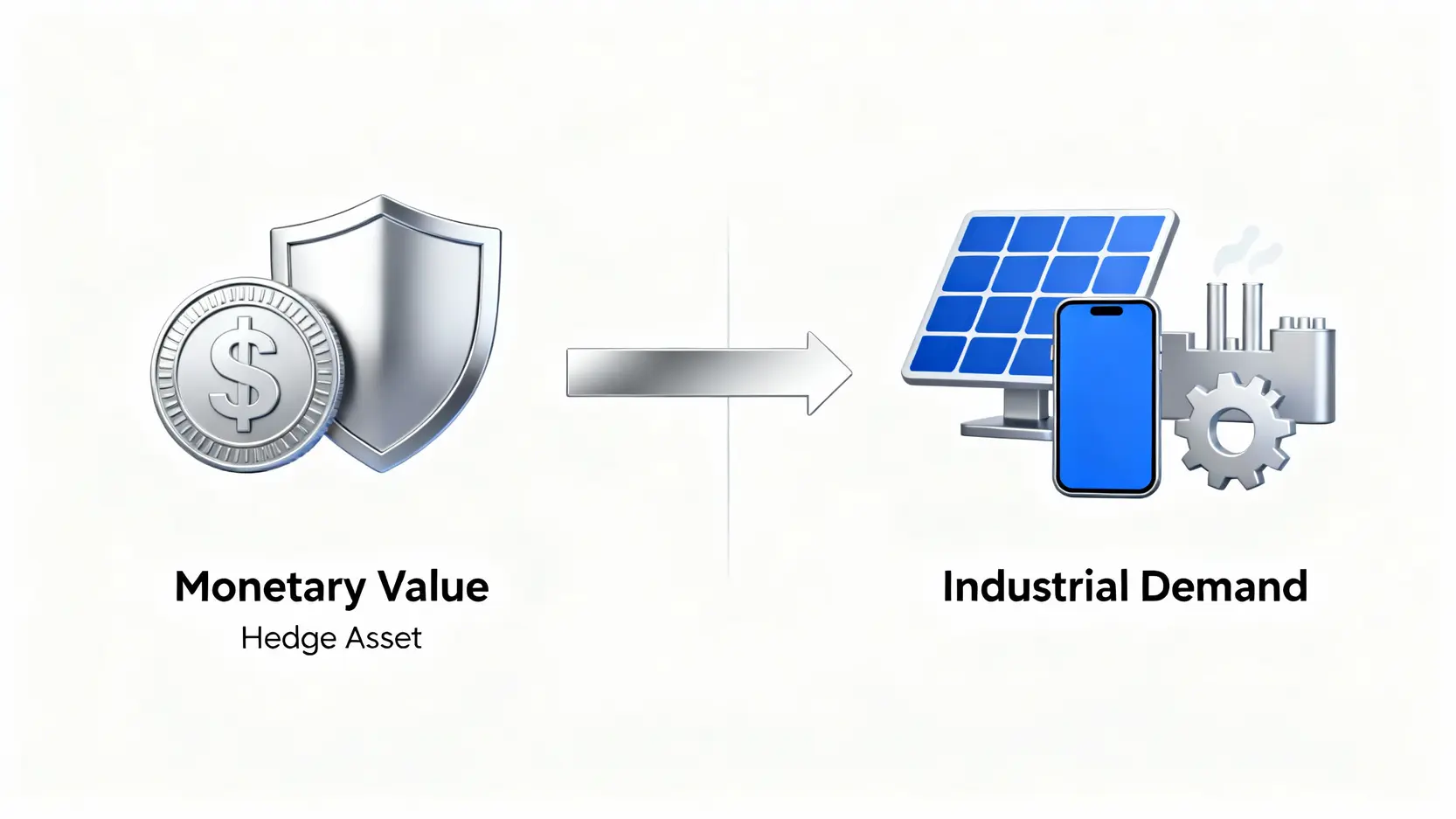
Like gold, silver has historically played the role of money over the long term. When fiat currencies depreciate due to inflation, precious metals often maintain their purchasing power and become a “safe harbor” for capital. Compared with gold, silver has a lower unit price, making it easier for small investors to participate and serving as a more flexible hedging tool.
Value Two: Broad Industrial Demand With Growth Potential
This is one of silver’s greatest advantages over gold. Silver has the best electrical and thermal conductivity among metals and is widely used in high-tech industries. From smartphones and computers that everyone uses daily, to solar photovoltaic panels and electric vehicles with vast future potential, silver is indispensable. According to market reports from authoritative institutions such as The Silver Institute, industrial applications account for more than 50% of total silver demand. As global demand for green energy and high-tech products continues to grow, industrial demand provides strong support for silver prices.
Value Three: High Price Volatility With Greater Profit Potential
The silver market is much smaller than the gold market, and as a result, its price volatility is relatively higher. For investors with higher risk tolerance, this means greater potential profit opportunities. The market commonly uses the “Gold-Silver Ratio” to measure the relative value between the two. Many traders use historical data of the Gold-Silver Ratio to judge timing points for buying and selling silver or gold and to conduct swing trading strategies.
A Complete Comparison of Taiwan’s Five Major Silver Buying and Selling Channels
After understanding silver’s value, the next step is choosing an investment channel that suits you. In Taiwan, there are many ways to buy silver, each with its own pros and cons. Below, we take an in-depth look at five of the most common ways to trade silver.
Channel One: Physical Silver (Silver Bars/Silver Coins)
Physical silver is the most traditional investment approach and provides a reassuring sense of “seeing is believing”. It is mainly purchased through banks (such as the Bank of Taiwan) or reputable bullion shops.
- Advantages:
- Complete ownership: Physical possession means no counterparty risk.
- Collectible value: Certain themed or limited-edition silver coins may appreciate beyond their metal value.
- No management fees: After purchase, you store it yourself without paying additional fees.
- Disadvantages:
- Wider spreads: The spread between the buy and sell price is usually the highest among all channels.
- Storage challenges: You must consider theft prevention, moisture protection, and fire safety. Renting a bank safe deposit box is also an expense.
- Lower liquidity: When selling, you need to find a buyback dealer and may face authentication and loss deductions.
Channel Two: Silver Passbook Accounts (Using the Bank of Taiwan as an Example)
A silver passbook, also known as “paper silver”, is a channel that Taiwanese investors are very familiar with. Investors subscribe to silver through the bank, and the bank records the buy and sell transactions in the passbook, without any physical delivery. This approach is especially suitable for investors who want to accumulate silver assets over the long term in small amounts.
- Advantages:
- Extremely low entry barrier: Usually, you can trade from as little as 1 gram, making it very friendly for small investors.
- Convenient trading: Orders can be placed easily via online banking or at the counter, eliminating storage concerns.
- Convertible to physical: Once you accumulate a certain quantity (usually in multiples of 1 kilogram), you can apply to withdraw physical silver bars.
- Disadvantages:
- Transaction costs: The bid-ask spread is lower than physical silver, but still needs to be considered.
- Not physical ownership: The asset is the bank’s liability, so there is a small risk of bank default.
- Withdrawal restrictions: Withdrawing physical silver requires additional shipping and handling fees and may involve specification restrictions.
Channel Three: Silver ETFs (Exchange-Traded Funds)
Silver ETFs are funds listed and traded on stock exchanges, with assets mainly holding physical silver or silver futures. Through a brokerage account, investors can trade silver ETFs as conveniently as buying and selling stocks. To learn more about basic ETF concepts, you can refer to this ETF investing tutorial article.
- Advantages:
- High liquidity: During exchange trading hours, you can buy and sell at any time, with fast execution.
- Low costs: Transaction costs consist only of brokerage fees and very low management fees, and spreads are also small.
- Transparent investing: The fund’s silver holdings are regularly disclosed, making information relatively transparent.
- Disadvantages:
- Requires a brokerage account: You need a Taiwan or US stock brokerage account to trade.
- Tracking error: ETF prices may trade at small premiums or discounts relative to spot silver prices.
- Management fees: Although low, they still erode long-term returns.
Channel Four: Silver Contracts for Difference (CFDs)
A CFD is a financial derivative in which investors trade the “price difference” of silver, rather than owning silver itself. Its biggest feature is the ability to use leverage to control larger positions with smaller capital, but the risk is relatively higher.
- Advantages:
- Leveraged trading: You can use a smaller margin to control a higher-value contract, amplifying gains (and losses).
- Two-way trading: You can go long (buy) or go short (sell), so there are opportunities to profit even when the market falls.
- Long trading hours: Trading is available almost 24 hours a day, allowing you to capture global market movements.
- Disadvantages:
- Extremely high risk: Leverage is a double-edged sword. If your market view is wrong, losses can accumulate quickly and may even exceed your principal.
- Holding costs: Overnight positions require paying overnight interest (financing fee).
- Not suitable for long-term holding: Higher risk and holding costs make it more suitable for short-term traders rather than long-term investors.
[Summary Comparison Table] See at a Glance Which Silver Investment Suits You Best
To help you make a clearer choice, we compare the four channels above together with “silver futures”:

| Investment Channel | Investment Threshold |
Transaction Costs |
Convenience | Risk Level | Suitable Investors |
| Physical Silver | Medium to high | High (wide bid-ask spreads) | Low (requires storage) | Low | Extreme risk-averse investors, collectors |
| Silver Passbook Accounts | Very low | Medium (spread) | High (online banking access) | Low | Small investors, long-term systematic investors |
| Silver ETFs | Low | Low (commissions plus management fees) | Very high (same as stocks) | Moderate | Most equity investors |
| Silver CFDs | Low | Medium (spread plus overnight interest) | Very high (24-hour trading) | Very high | Professional short-term traders |
| Silver Futures | High | Low (commissions) | Moderate | Very high | Professional institutions and advanced investors |
Beginner’s Guide: A Simple Three-Step Tutorial for Buying Silver
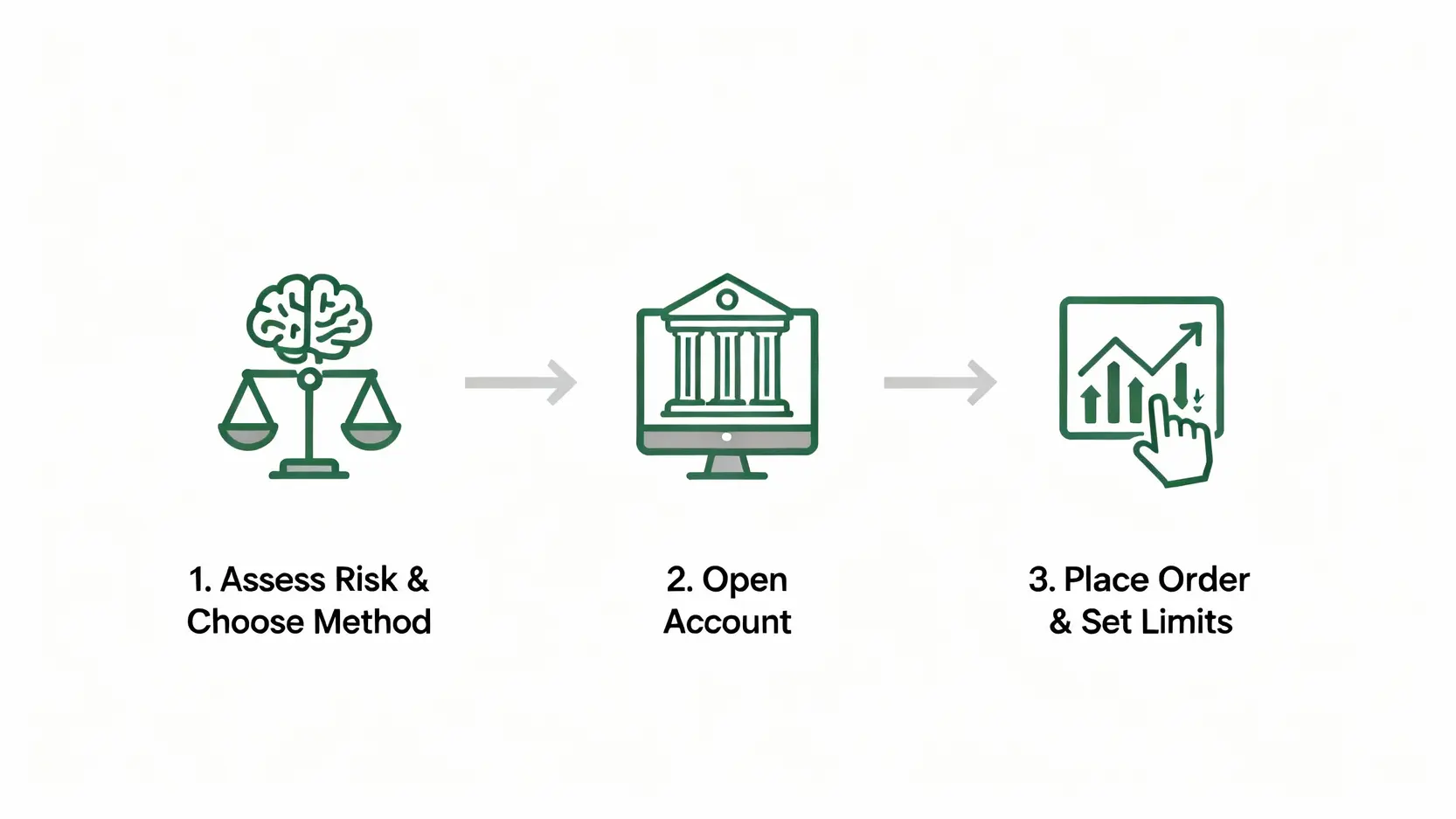
For beginners who are new to silver trading, establishing a clear process is crucial. Following the three steps below can help you start your silver investment journey in a more structured way.

Step One: Assess Risk and Choose an Investment Channel
First, assess yourself honestly. Is your investment goal long-term value preservation or short-term profit? How much capital loss can you tolerate? If you are risk-averse and only want to steadily accumulate assets, then a precious metals passbook account or physical silver may suit you well. If you are already familiar with stock market operations and want more flexible trading, a silver ETF will be a good choice. Remember, do not choose tools that are beyond your understanding and risk tolerance.
Step Two: Choose a Trustworthy Platform or Open a Bank Account
After selecting a channel, the next step is choosing where to execute it. If you choose a silver passbook account or physical silver, public-sector banks such as the Bank of Taiwan are the preferred option. If you want to trade ETFs or CFDs, you need to choose a broker or trading platform regulated by legitimate financial authorities to ensure your funds are secure.
Step Three: Place Trades and Set Stop-Loss and Take-Profit Levels
After opening your account, you can start trading. But before committing capital, be sure to set a trading plan for yourself. Decide how much capital you plan to allocate, at what price you will enter, and most importantly, at what price you will exit if the market moves against your expectations (stop-loss). If you make a profit, decide at what price you will lock in gains (take-profit). Strictly following your plan is key to avoiding chasing tops, selling bottoms, and emotional trading amid market volatility.
Frequently Asked Questions (FAQ) on Silver Trading
Q: Is tax required when buying and selling silver?
A: In Taiwan, profits generated from the trading of physical silver (silver bars and silver coins) are classified as “occasional trade income” and must be included in personal comprehensive income tax filings. Capital gains generated through financial instruments such as silver passbook accounts, ETFs, or CFDs are currently within the scope of tax suspension, but regulations may change in the future. It is recommended to consult a professional accountant before trading.
Q: Can silver bars purchased from the Bank of Taiwan be sold back to the bank?
A: Yes. The Bank of Taiwan offers buyback services for its own issued holographic bars, but requires the products to be kept in intact packaging and the original purchase documents to be presented. The bank calculates the buyback price based on the posted price of the day and may charge handling fees. Silver bars not issued by the Bank of Taiwan may not be accepted, resulting in relatively limited liquidity.
Q: What is the relationship between silver prices and gold prices?
A: Silver and gold prices generally show a positive correlation, meaning when gold rises, silver also tends to rise. The market often uses the “Gold-Silver Ratio” (gold price divided by silver price) to assess their relative strength. When the ratio is at historical highs, it may indicate that silver is relatively undervalued and has greater potential for catch-up gains in the future, and vice versa. However, this is not absolute and should only be used as a reference indicator.
Q: What is the minimum threshold for investing in silver?
A: The threshold varies by channel. The lowest threshold is silver passbook accounts. At the Bank of Taiwan or Mega International Commercial Bank, trading can start from 1 gram, costing only a few dozen New Taiwan dollars. Silver ETFs are traded by the share, typically costing from a few hundred to several thousand New Taiwan dollars. Physical silver has the highest threshold, with even the smallest silver bars or coins usually starting at several thousand New Taiwan dollars.
Conclusion
In summary, there are many channels for investing in silver, ranging from the most stable and value-preserving physical silver, to Taiwan bank silver passbook accounts that facilitate convenient small-scale accumulation, as well as silver ETFs with low transaction costs and high-leverage CFDs, each with its own advantages. Before deciding how to buy silver, beginners should carefully assess their risk tolerance, capital size, and investment objectives. Through the comparative analysis in this article, you should now have a clearer understanding of silver trading. Choose the method that suits you best and start building your precious metals asset allocation today.
Related Articles
-
Practical Applications of Volatility Surfaces: From Options Modeling to Advanced Skew Trading Strategies In options markets, implied volatility is never a flat line. Instead, it forms complex "smile" or "skew" surfaces. For advanced traders, mastering the practical applications of volatility surfaces is equivalent to possessing a lens that reveals market...2026 年 6 月 3 日
-
Building a Foreign Capital Flow Copy Trading Model: A Stock Market Indicator for Accurately Tracking Institutional Positioning In Asia-Pacific stock markets, foreign capital inflows and outflows often determine the direction of the index. However, simply looking at daily net buy and sell data is no longer enough. Only by building...2026 年 6 月 3 日
-
Options Buyer Strategies During Extreme Market Conditions: Black Swan Hedging and Cross-Market Arbitrage During Volatility Surges The most terrifying aspect of financial markets is not a gradual decline, but overnight flash crashes and cross-market capital withdrawals accompanied by volatility surges. In the highly unpredictable global macroeconomic environment of 2026, geopolitical...2026 年 6 月 3 日