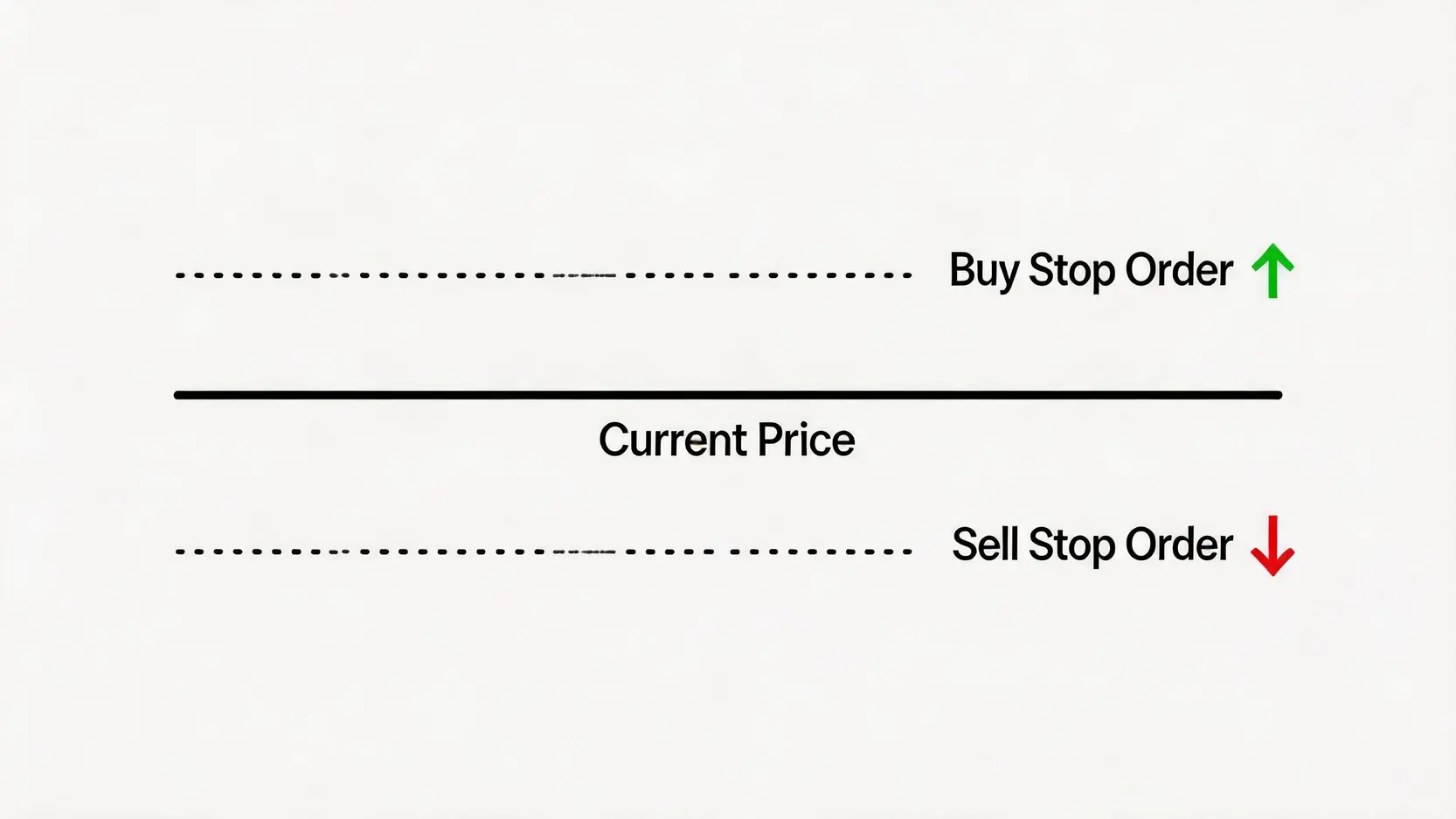
Illustration of “Straddle Pending Orders” Setup
- Profit logic: When the data is released, price will surge strongly in one direction, triggering one of the pending orders. The untriggered order is then manually cancelled.
- Risk warning: This strategy carries extremely high risk! The market may experience “whipsaw movements”, causing both orders to be triggered and stopped out. In addition, severe slippage and rapidly widening spreads may result in significantly worse execution prices than expected.
Strategy 2: “Momentum Trading After Release” (Trend Following)
For traders who do not want to face extreme volatility at the open, this is a more stable approach. The core idea is to “let the dust settle” and wait for the market to digest the data before entering.
- Execution method: After the data release, observe patiently for 5 to 15 minutes. Once initial volatility settles and a clear trend forms (for example, consecutive bullish or bearish candles on the 5-minute chart), enter in the direction of that trend.
- Profit logic: Capture the main wave driven by the data impact while avoiding false breakouts during the initial chaos. This trend-following approach generally has higher reliability.
- Advantage: Effectively filters market noise, producing more reliable signals.
Strategy 3: “Reversal Setup After Overreaction” (Advanced Mean Reversion)
This is a more advanced strategy suitable for experienced traders. The core idea is that the market often overreacts emotionally to the initial data release and later corrects itself rationally.
- Execution method: After the first strong move (usually lasting 30–60 minutes), observe whether price shows exhaustion signals at key support or resistance levels, (such as long upper/lower wicks or engulfing patterns). Then enter in the opposite direction of the initial move to capture the correction.
- Profit logic: Profit from mean reversion after market overreaction.
- Trading mindset: This strategy requires strong discipline and patience. Never attempt to “catch a falling knife” against the strongest part of the trend.
Essential for Traders: NFP Release Time in Hong Kong and Key Considerations
Knowing the exact timing and being fully prepared is a prerequisite for successful NFP trading.
2026 NFP Release Time Table (Daylight Saving and Standard Time)
The transition between U.S. daylight saving time and standard time affects the NFP release schedule. Below is the detailed 2026 timetable.
| Release Month (Data Month) |
Release Date |
Hong Kong Release Time |
Notes |
| January (2025/12) |
9 January 2026 |
9:30 PM |
Standard Time |
| February (2026/1) |
6 February 2026 |
9:30 PM |
Standard Time |
| March (2026/2) |
6 March 2026 |
9:30 PM |
Standard Time |
| April (2026/3) |
3 April 2026 |
8:30 PM |
Change to Daylight Saving Time |
| May (2026/4) |
8 May 2026 |
8:30 PM |
Daylight Saving Time |
| June (2026/5) |
5 June 2026 |
8:30 PM |
Daylight Saving Time |
| July (2026/6) |
2 July 2026 (Thursday) |
8:30 PM |
Advanced due to Independence Day holiday |
| August (2026/7) |
7 August 2026 |
8:30 PM |
Daylight Saving Time |
| September (2026/8) |
4 September 2026 |
8:30 PM |
Daylight Saving Time |
| October (2026/9) |
2 October 2026 |
8:30 PM |
Daylight Saving Time |
| November (2026/10) |
6 November 2026 |
9:30 PM |
Change to Standard Time |
| December (2026/11) |
4 December 2026 |
9:30 PM |
Standard Time |
*Note: The above times are estimates. Actual dates are subject to the official announcement by the U.S. Bureau of Labor Statistics.
3 Risk Management Techniques Before Trading Non-Farm Payrolls
Regardless of the strategy used, risk management is the key to long-term survival in the market. On NFP nights, this is especially important.
- Strict Stop-Loss: This is a non-negotiable rule. Due to extreme volatility, positions without a stop-loss can suffer devastating losses within seconds.
- Reduce Position Size: During NFP periods, it is recommended to reduce position size to half or even one-third of normal levels. This provides a sufficient buffer during sharp market swings and helps avoid being easily stopped out.
- Stick to the Plan and Avoid Emotional Trading: Define your trading plan before the data release, whether it is pending orders, momentum trading, or reversal setups, and execute it strictly. If you miss the move, do not chase impulsively. Market opportunities are unlimited, capital safety comes first.
Further Reading (Highly Recommended)
2026 Forex Trading Beginner Guide: Master Risk Management and Broker Selection for Stable Profits!
Foreign Exchange Trading Strategy Guide: Full Analysis of 5 Major Strategies, Combined with Forex Rebates to Maximize Returns!
FAQ: Common Questions About Non-Farm Payrolls Trading
Q: Should beginners avoid trading during NFP releases?
A: For complete beginners with no live trading experience, it is strongly recommended to start with observation or demo trading. NFP nights involve extremely fast and volatile price movements, requiring strong psychological discipline and execution skills. Practicing in a demo account first and transitioning to small live positions later is a more stable learning path.
Q: Besides gold, which major currency pairs are affected by NFP data?
A: NFP data has a strong impact on all USD-related currency pairs, especially major pairs. For example, EUR/USD, GBP/USD, USD/JPY, and AUD/USD all experience significantly increased volatility during the release.
Q: Does ADP data “private payrolls” help predict NFP results?
A: The ADP National Employment Report, often referred to as “small NFP” is released on the Wednesday before NFP. It measures private sector employment. Although it is considered a leading indicator, its accuracy is not consistent due to differences in data sources and methodology. It can sometimes diverge significantly from NFP results, so it should only be used as a reference, not as a sole trading signal.
Q: What should be focused on besides non-farm employment numbers?
A: A full NFP report includes three key components: Non-Farm Employment Change, Unemployment Rate, and Average Hourly Earnings. Among them, Average Hourly Earnings is increasingly important as it reflects inflation pressure. Even if employment numbers are strong, weak wage growth may reduce interest rate hike expectations and reverse market direction.
Conclusion
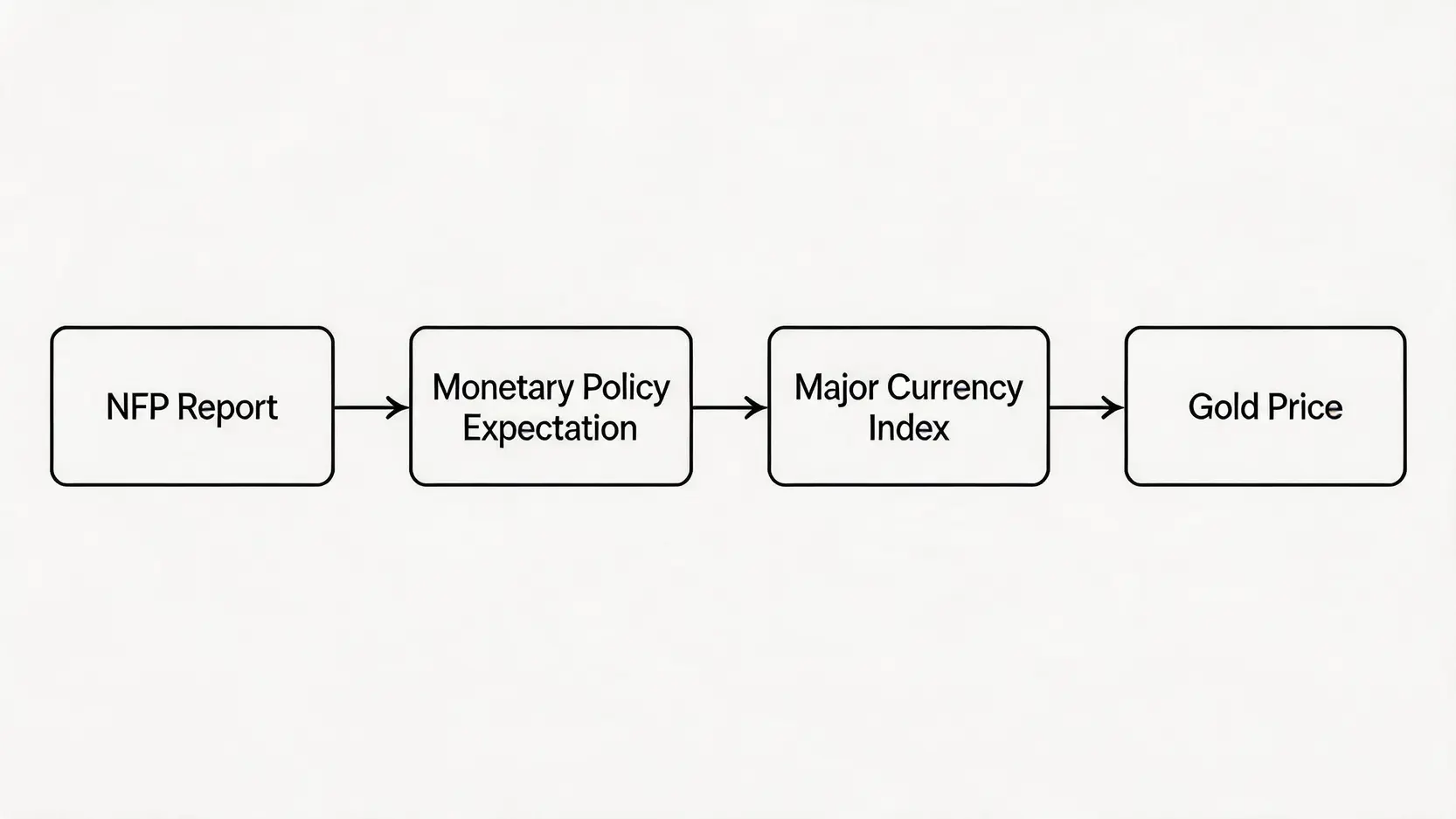
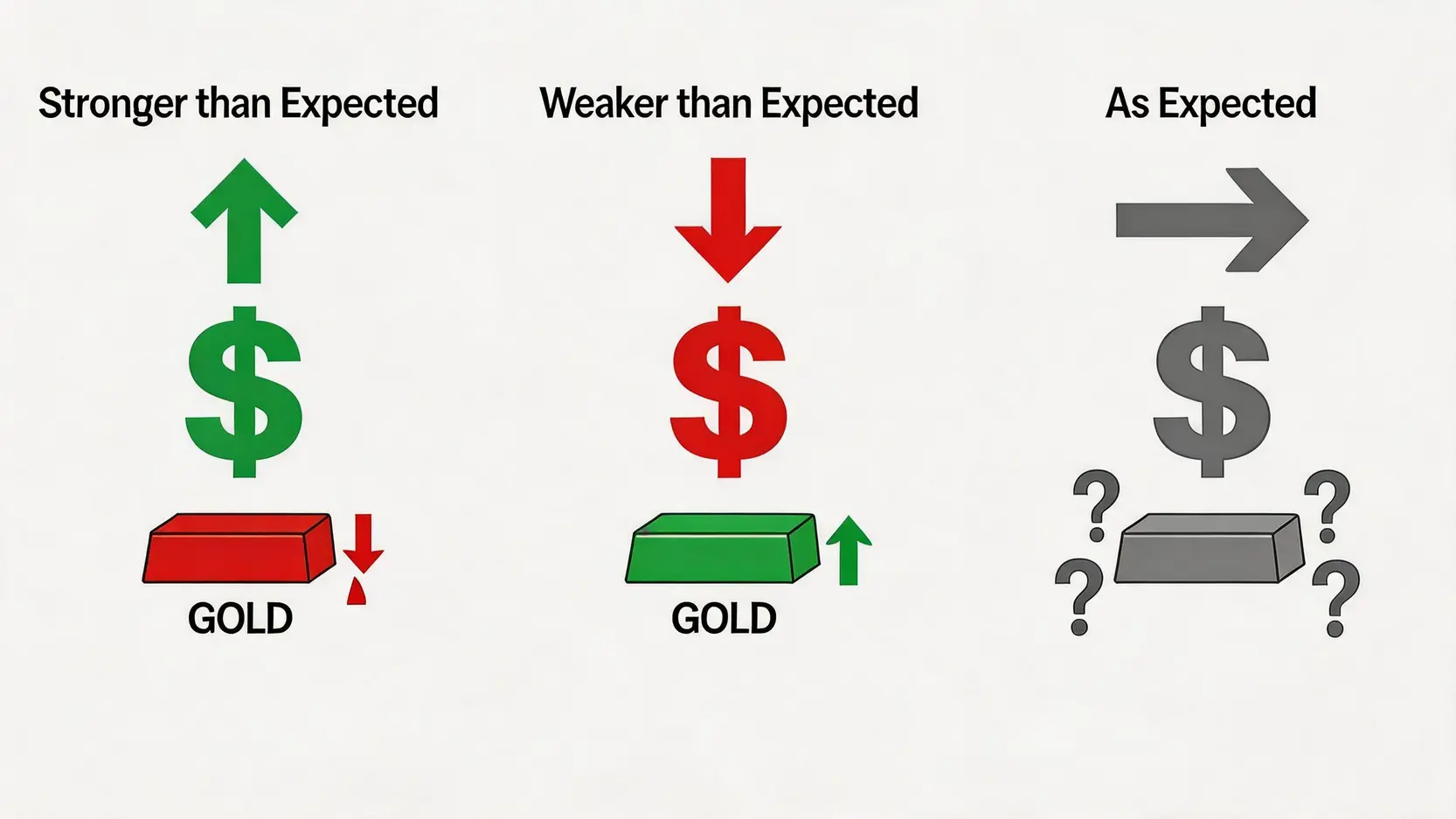
In summary, Non-Farm Payrolls (NFP) is a key indicator that every gold trader must understand due to its strong influence on Federal Reserve monetary policy expectations. Understanding the relationship between the data and gold price movements, and choosing appropriate volatility trading strategies based on your risk tolerance, is essential to successfully navigating “NFP nights”. Be sure to note the NFP Hong Kong release schedule and always prioritize risk management. With proper preparation, monthly market volatility can be transformed into consistent trading opportunities.