Next Bitcoin? 5 Cryptos With 100x Potential

Updated: 2026/03/11  |  CashbackIsland

尋找下一個比特幣:5種最具百倍潛力的加密貨幣!

Finding the Next Bitcoin: 5 Cryptocurrencies With the Greatest 100x Potential!

Have you ever regretted missing Bitcoin’s golden decade? As a new cryptocurrency bull market appears to be approaching, countless investors are actively searching for “the next Bitcoin”. Based on historical cycles and market data in crypto market bull cycle predictions, the next peak may occur around 2026. This article provides an in-depth analysis of current market trends, offers a practical framework for identifying potential cryptocurrencies, and reveals five tokens most likely to surge in 2026, helping you position early and capture the next opportunity for wealth growth. 


Understanding the Cryptocurrency Bull Market Cycle: Why 2026 Is Critical?

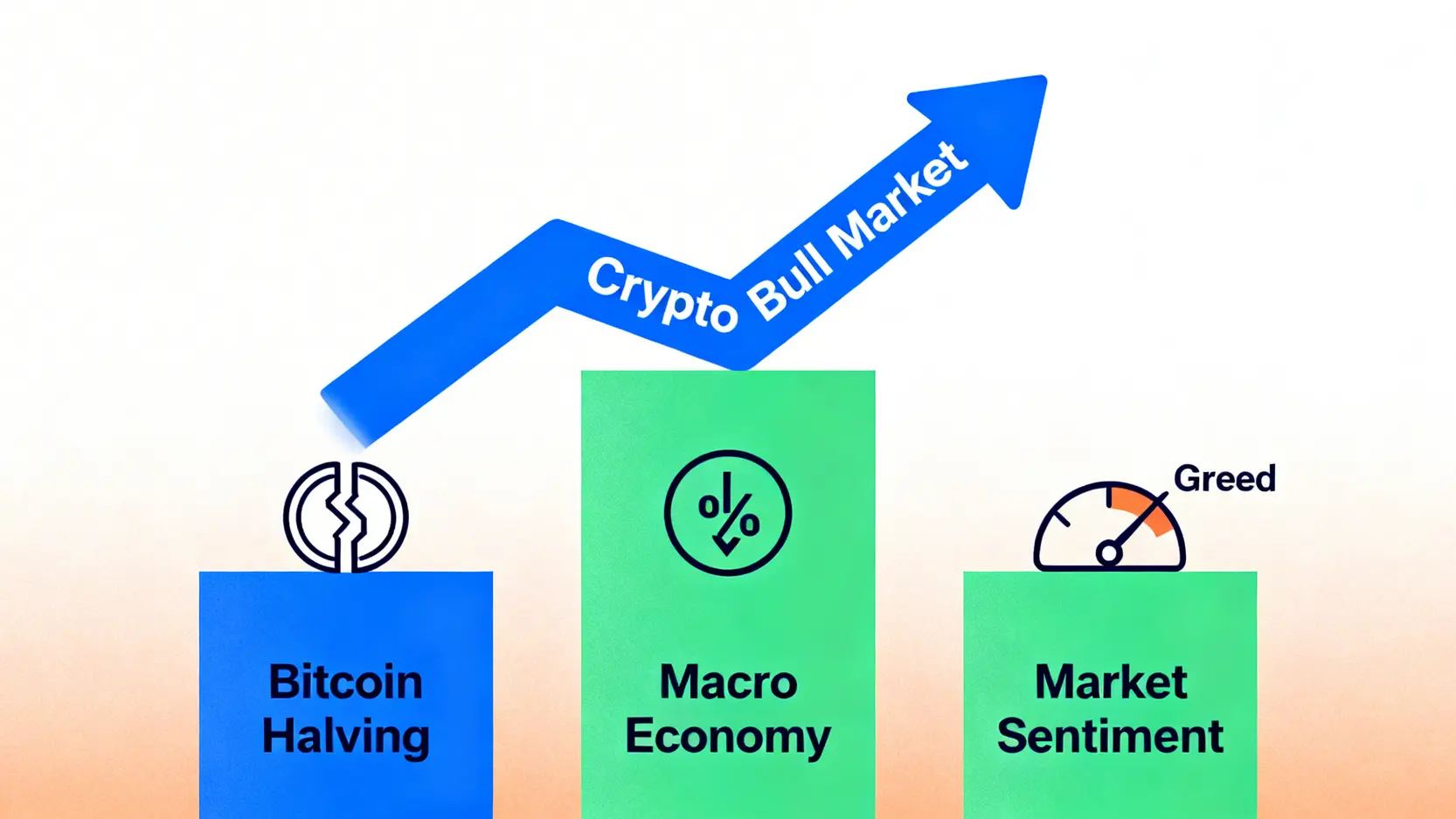
To forecast the next cryptocurrency bull market, it is essential to understand the driving forces behind it. Market rises and declines are not random, but follow cyclical patterns shaped by multiple factors. Among them, Bitcoin halving, macroeconomic conditions, and market sentiment are the three most important pillars for judging future trends.

一張圖表解釋驅動加密貨幣牛市的三大支柱:比特幣減半、宏觀經濟、以及市場情緒。

The Three Core Drivers of Cryptocurrency Bull Markets.


The Bitcoin Halving Effect: Bull Market Signals Revealed by Historical Data

The total supply of Bitcoin is capped at 21 million coins, and its issuance rate is reduced by half approximately every four years. This is known as “Bitcoin halving”. This mechanism fundamentally ensures Bitcoin’s scarcity. Historical data shows that every halving event has served as a catalyst for a bull market:

  • After the 2012 halving: Bitcoin’s price surged from about 12 US dollars to nearly 1,000 US dollars within about one year.
  • After the 2016 halving: The price rose from about 650 US dollars to a historical high of nearly 20,000 US dollars within about 18 months.
  • After the 2020 halving: The price climbed from around 8,000 US dollars to more than 68,000 US dollars within about 18 months.

The most recent halving occurred in 2024. If history repeats itself, we may expect the market to reach a new peak between the end of 2025 and 2026. Halving reduces the supply of newly issued coins, and when demand remains stable or increases, prices naturally rise, driving the entire cryptocurrency market into a bull market.


Macroeconomic Indicators: The Key to Determining Capital Inflows Into the Crypto Market

The cryptocurrency market is no longer an isolated ecosystem. Global macroeconomic trends now have an increasingly significant influence on it. Among these factors, interest rate policy is the most critical. When central banks (particularly the US Federal Reserve), adopt monetary easing policies such as interest rate cuts, liquidity in the market increases. Investors become more willing to allocate funds to higher-risk assets such as stocks and cryptocurrencies in pursuit of higher returns. Conversely, interest rate hikes withdraw liquidity from the market and place pressure on the crypto market. Monitoring macroeconomic indicator analysis reports, especially inflation data (CPI), employment reports, and central bank rate decisions, helps determine whether capital may flow into the crypto market.


Market Sentiment and Technical Analysis: How Much Further Can the Bull Market Go?

In addition to fundamentals, market sentiment and technical indicators provide important references. The Fear & Greed Index is a commonly used tool for measuring market sentiment. When the index shows “extreme greed”, it often indicates that the market may be overheating and carries the risk of correction. Conversely, “extreme fear” may signal that the market bottom is approaching. From a technical analysis perspective, Bitcoin’s price trend (such as whether it breaks through key resistance levels), changes in trading volume, and on-chain data (such as the number of active addresses and the volume of funds flowing into exchanges) are all important clues for assessing the health and potential duration of a bull market.


How to Identify the Next Bitcoin? Three Key Criteria for Evaluating Potential Cryptocurrencies

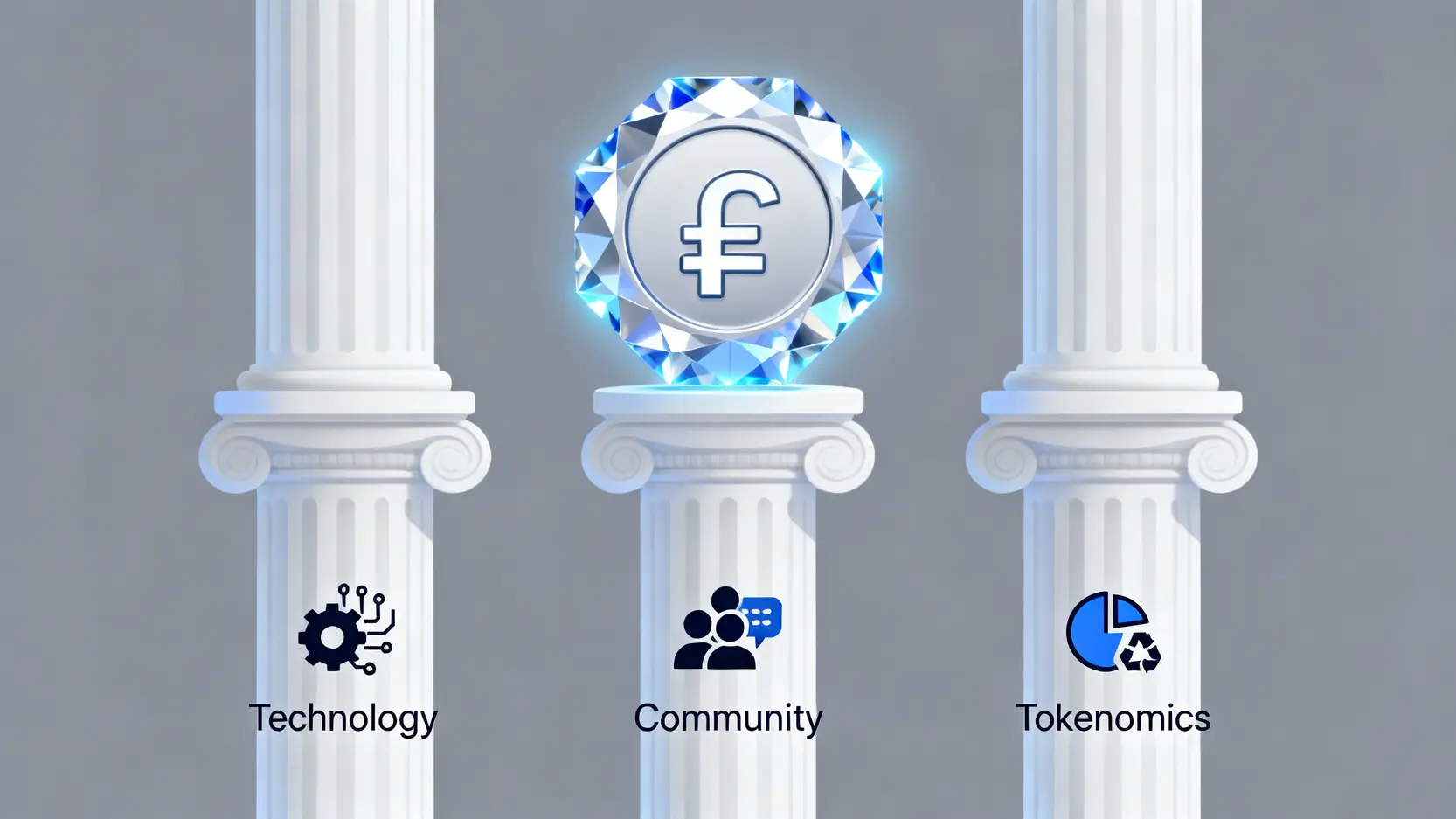
In the vast crypto market, identifying the next Bitcoin requires a clear evaluation framework rather than simply following hype. A cryptocurrency with strong potential usually performs well in the following three areas.

一張圖表展示評估潛力加密貨幣的三大標準:技術創新、社群熱度與開發者活躍度、以及代幣經濟模型。

Three Golden Criteria for Identifying Potential Tokens.


Criterion 1: Technological Innovation and Use Cases (What Problem Does It Solve?)

The core of a project’s success lies in whether it possesses genuine technological innovation and can solve real-world problems. Bitcoin succeeded by creating a decentralized electronic cash system, while Ethereum became the foundation of decentralized applications through smart contracts. When evaluating a new project, ask the following questions:

  • Uniqueness: Is its technology (such as consensus mechanisms or scaling solutions) superior to existing alternatives?
  • Practicality: Does it have clear use cases? Is it focused on gaming (GameFi), finance (DeFi), artificial intelligence (AI), or the Internet of Things (IoT)?
  • Moat: Is its technology difficult to replicate? Does it have patents or a strong first-mover advantage?

A project that only discusses concepts without an actual product or real use cases is likely to be short-lived.


Criterion 2: Community Popularity and Developer Activity

The value of cryptocurrencies largely comes from network effects. A strong and active community is essential for a project’s success. Community strength can be evaluated through the following indicators:

  • Social media: Observe the number of followers, engagement rates, and discussion quality on platforms such as Twitter, Discord, and Telegram.
  • Developer activity: Check the update frequency of code repositories and the number of contributors on platforms such as GitHub. Projects that maintain continuous developer participation usually demonstrate stronger vitality.

The community is not only a source of potential users, but also a strong support system when the project encounters difficulties. A project with no activity or interest from the community will struggle to succeed even if the technology is strong.


Criterion 3: Tokenomics and Market Capitalization Potential

Tokenomics refers to the supply and demand structure of a token, which directly affects its long-term value. A healthy model should include:

  • Reasonable distribution: Are tokens distributed fairly among the founding team, investors, and the community? Is there a risk of excessive centralization?
  • Deflationary mechanisms: Are there mechanisms such as token burning or staking lockups that reduce circulating supply and strengthen the token’s value?
  • Clear utility: Does the token have real functions within the ecosystem (such as paying transaction fees, participating in governance, or staking rewards)?

In addition, market capitalization is an important metric for evaluating growth potential. A project with a relatively low market capitalization naturally has greater upside compared with assets such as Bitcoin or Ethereum that are already at a high valuation. Identifying projects with strong fundamentals but still in an early market capitalization stage is a key strategy for capturing potential 100x returns.


Further Reading (Highly Recommended)

Ultimate Guide to Making Money With Bitcoin: Is Mining Still Profitable? Understanding the Impact of Halving and Investment Strategies

[2025 Latest] What Is SOL? A Complete Guide to Solana, Its Future Potential, and 5…


In-Depth Analysis of 5 Potential Cryptocurrencies for 2026

Based on the evaluation standards above, we have identified five cryptocurrencies that demonstrate strong potential in technology, community, and tokenomics. They are likely to shine in the bull market of 2026.


Potential Coin 1: Solana (SOL) – Ecosystem Expansion of a High-Performance Public Blockchain

Solana is often referred to as the “Ethereum killer”. Its biggest advantages are extremely high transaction speed (with TPS reaching tens of thousands) and extremely low transaction fees. This is made possible by its unique Proof of History (PoH) consensus mechanism. Although it has faced criticism in the past due to network stability issues, as the technology matures and its ecosystem continues to grow, Solana has shown strong competitiveness in areas such as DeFi, NFT, and DePIN (Decentralized Physical Infrastructure Networks). Its active developer community and expanding user base make it a potential token that cannot be ignored in this bull market cycle. For deeper insights, you may refer to the detailed introduction of SOL

Potential Coin 2: Avalanche (AVAX) – Infinite Possibilities of Subnet Technology

Avalanche’s core innovation lies in its unique “Subnet” architecture. Subnets allow developers to create highly customized blockchains that benefit from the security of the Avalanche mainnet while operating independently, avoiding congestion on the main network. This architecture is particularly attractive to institutions and large enterprises because they can build private or consortium chains that meet specific regulatory requirements. As blockchain applications expand in traditional finance and gaming, AVAX’s subnet technology may unlock substantial growth potential.


Potential Coin 3: Chainlink (LINK) – The Leading Oracle Connecting the Real World

Blockchain systems are essentially closed environments and cannot directly access real-world data. Chainlink serves as an “oracle”, responsible for securely delivering off-chain real-world data (such as weather information, stock prices, and sports results) onto the blockchain. It is critical infrastructure for all DeFi applications. As the dominant leader in the oracle sector, Chainlink has established partnerships with nearly all major public blockchains and DeFi projects. As blockchain adoption grows, demand for reliable data will continue to increase, and the value of LINK is likely to rise accordingly.


Potential Coin 4: NEAR Protocol (NEAR) – A Pioneer of AI and Blockchain Integration

NEAR Protocol is well known for its developer-friendly design and its unique “sharding” scaling technology (known as Nightshade). Its goal is to reduce the barriers to blockchain development and attract more Web2 developers into the Web3 ecosystem. Recently, NEAR has shifted its strategic focus toward integrating AI with blockchain, aiming to provide decentralized infrastructure for AI models and applications. As the AI sector continues to expand, NEAR may leverage its technological advantages and forward-looking strategy to become a bridge connecting two cutting-edge technologies, unlocking significant potential.


Potential Coin 5: Kaspa (KAS) – Next-Generation Technology Solving the Blockchain Trilemma

Kaspa is a relatively new project, but its technological ambition is noteworthy. It adopts an innovative BlockDAG (block directed acyclic graph) architecture instead of the traditional single-chain structure. This enables Kaspa to process multiple blocks in parallel, significantly increasing transaction speed and network throughput while maintaining the decentralization and security of the PoW mechanism. Kaspa aims to solve the long-standing “blockchain trilemma”, (which refers to the difficulty of achieving decentralization, security, and scalability simultaneously). If its technology can be validated on a large scale, KAS may become a disruptive next-generation foundational public blockchain.


Risks and Strategies When Investing in Potential Cryptocurrencies

The journey to finding the next Bitcoin is full of opportunities but also carries considerable risk. High returns often come with high volatility, so establishing a sound investment strategy is essential.


High Volatility Risk: How to Manage Position Allocation?

Altcoins experience much greater price volatility than Bitcoin. Price movements of 50% or more within a single day are not uncommon. Therefore, position management is the first rule of survival:

  • Diversification: Avoid allocating all capital to a single project. Funds can be distributed across three to five potential coins from different sectors or categories to spread risk.
  • Pyramid position building: Buy in batches instead of investing the entire position at once. When prices decline, additional purchases can reduce the average cost.
  • Set stop losses: Determine an exit strategy before entering a trade. Establish an acceptable loss level (such as 20%) and exit decisively once that threshold is reached to avoid being trapped in deep losses.

金字塔建倉策略示意圖,顯示在價格較低時買入最多,隨著價格上漲逐漸減少買入量,以分散風險並降低平均成本。

Pyramid Position Strategy: Buying in batches to effectively manage position risk.


Avoiding Pitfalls: Identifying Worthless Tokens and Scam Projects

During bull markets, numerous fraudulent projects and worthless “air coins” also emerge. Investors must remain vigilant and learn to recognize warning signs:

  • Excessive marketing: The project team focuses only on promotion and price hype but lacks real technological progress or product delivery.
  • Anonymous teams: The founding team has unclear backgrounds or is completely anonymous, making accountability difficult if problems arise.
  • Empty whitepapers: The project whitepaper contains impressive language and vague concepts but lacks concrete technical implementation paths and business models.
  • Unreasonable token distribution: The team and early investors hold an excessively large proportion of tokens, creating a significant risk of large-scale selling.

Remember that any investment promising “risk-free, high returns” is highly likely to be a trap. Conducting thorough research (DYOR – Do Your Own Research) is the only way to protect your assets.


Common Questions (FAQ)

Q: How long is the cryptocurrency bull market in 2026 expected to last?

A: Based on historical cycles, a bull market usually lasts about 12 to 18 months from its beginning to its peak. If the 2024 halving is taken as the starting point, the main phase of the bull market may begin in the second half of 2025 and reach its peak at some point in 2026. However, the market is influenced by many factors, and historical data can only serve as a reference rather than provide an exact prediction of the future.

Q: Besides market capitalization, what indicators should I examine to evaluate potential cryptocurrencies?

A: In addition to market capitalization, attention should be given to on-chain active addresses, daily transaction volume, total value locked (TVL, applicable to DeFi projects), developer activity (such as GitHub commit frequency) as well as the level and quality of discussion on social media communities. These indicators provide a more comprehensive reflection of a project’s health and its actual level of adoption.

Q: Is it too late to invest in Bitcoin or Ethereum now?

A: As the leading assets in the market, Bitcoin and Ethereum possess the strongest consensus and relatively lower risk. For conservative investors or beginners, they remain core allocation choices. Although their potential multiples may not be as high as some emerging altcoins, they typically still experience significant price increases during bull markets and demonstrate stronger resilience during bear markets. Allocating the majority of capital to BTC and ETH while using a smaller portion to position in potential altcoins is a balanced strategy combining offense and defense.

Q: Is investing in altcoins highly risky?

A: Yes, very high. The altcoin market is full of opportunities but also contains significant risks. Many projects may collapse due to technological bottlenecks, funding issues, or outright fraud. Therefore, capital allocated to altcoins should only be funds that would not affect normal life even if completely lost. Always conduct thorough due diligence and maintain strict position management.


Conclusion

In summary, although many investors missed Bitcoin’s early era, the cryptocurrency bull market in 2026 presents new opportunities. By understanding market cycles, mastering methods for evaluating potential cryptocurrencies, and focusing on projects with strong fundamentals such as SOL and AVAX, there is still a chance to capture substantial returns. Always remember that investment carries risk. Only through thorough research and sound asset allocation can investors move steadily forward in the search for the next Bitcoin.

编者
Evan Lin

Evan Lin

我是Evan Lin,从大学时期开始接触外汇交易,至今已有多年实战经验,熟悉技术分析与EA策略,热衷于研究市场脉动与风险管控,喜欢分享实战经验和交易技巧,和大家一起学习、一起进步!

If you liked this article, please share it!

Related Articles

  • Hong Kong VASP License Guide 2026 for Web3 Firms
    Complete Guide to Virtual Asset Trading Platform (VASP) License Applications: A 2026 Hong Kong Web3 Compliance Practical Guide At the pivotal moment of 2026, as global financial digitization accelerates at an unprecedented pace, Hong Kong has firmly established itself as a leading Web3 compliance hub in Asia and around the...
    2026 年 6 月 3 日
  • CNH-CNY Arbitrage Guide 2026: Spread & Hedging
    2026 Offshore Renminbi Range-Bound Arbitrage Trading Guide: Mastering the CNH-CNY Spread and a Profit Guide to Hedging Through Two-Way Volatility Against the combined influence of global macroeconomic developments and international trade policies, the foreign exchange market in 2026 has become increasingly complex. The Renminbi exchange rate often exhibits a pattern...
    2026 年 6 月 3 日
  • Friday Taiwan Index Options: NFP Trading Strategy
    Friday Taiwan Index Options Buyer Strategies: Precisely Capturing Explosive Market Moves From Non-Farm Payroll Data Many investors often complain that options buyers have low win rates, frequently predicting the direction correctly but ultimately losing to time decay. However, under the new dual-settlement system, short-term volatility and event-driven trading have created...
    2026 年 6 月 3 日
返回顶部