Forex Scalping Guide: 1-Minute Strategy & Indicators

Ultimate Guide to Forex Scalping Trading: 1-Minute Scalping Techniques and the Best Indicator Strategies
What Is Forex Scalping Trading? Understand the Meaning of Scalping and Core Concepts in Seconds
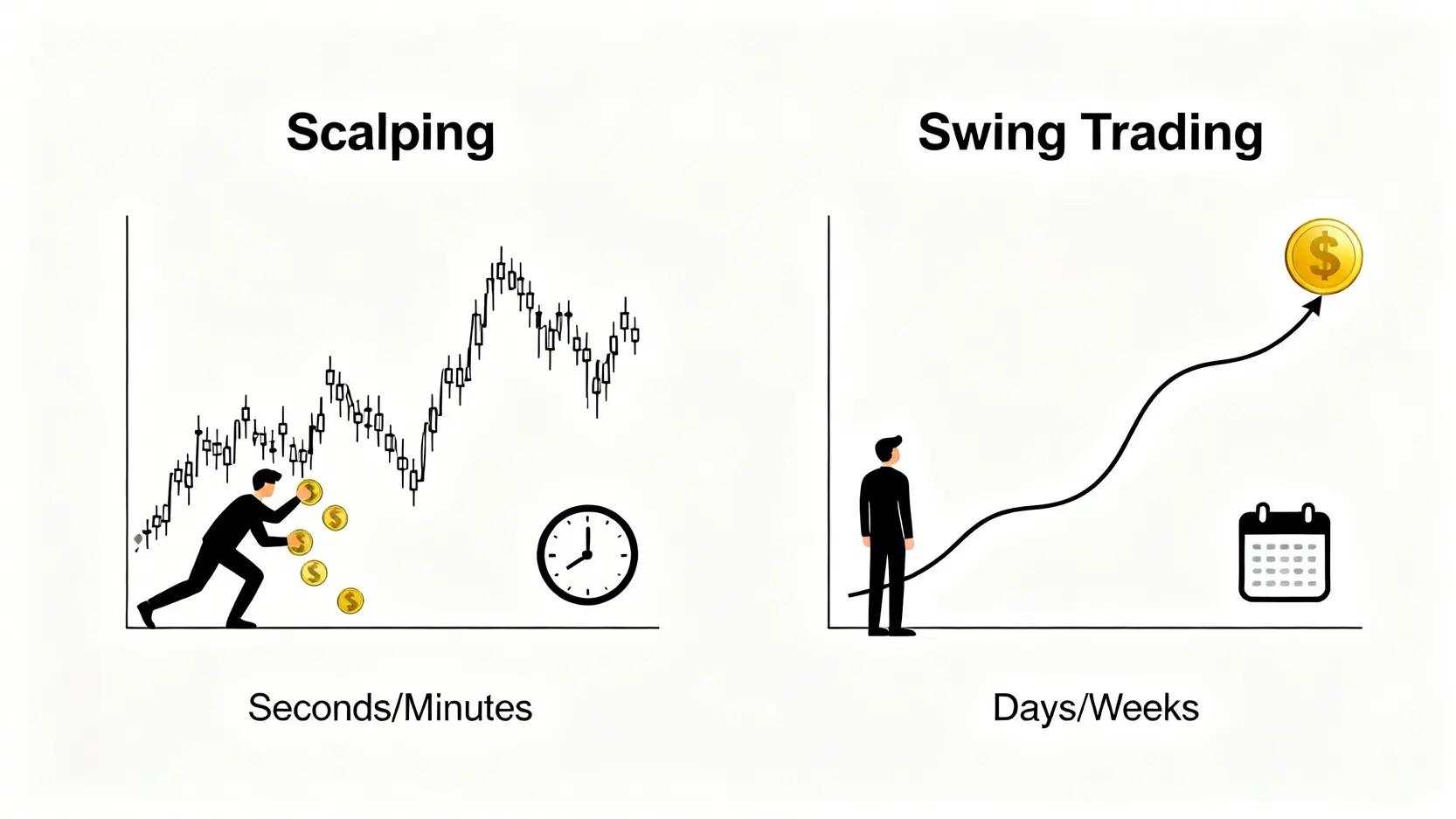
Forex scalping is an ultra-short-term trading style that aims to capture small price movements within a very short period of time, ranging from a few seconds to a few minutes. Instead of waiting hours or days for large market swings, scalping traders focus on executing a large number of high-frequency trades, earning only a few pips of profit each time. The core of this strategy lies in “accumulating small gains”, building substantial returns through a high win rate and large trading volume. Understanding the meaning of scalping is similar to understanding “opportunity hunters” in the market. They do not pursue a single massive gain, but rather continuous small profits, which is also the foundation of a complete scalping trading strategy.
For example, traditional swing traders are like farmers who plant seeds and patiently wait for the harvest. Scalping traders, on the other hand, are like sharp and agile vendors in the marketplace, rapidly buying and selling to profit from small price differences. They do not focus on long-term market trends or fundamental news, but concentrate solely on the micro price fluctuations happening in the moment. Therefore, this strategy places extremely high demands on a trader’s concentration, reaction speed, and discipline.

Analysis of the Advantages and Risks of Scalping Trading
Every trading strategy has two sides, like a coin, and scalping trading is no exception. Before engaging in it, traders must fully understand its potential advantages and the risks that cannot be ignored.
Advantages of Scalping
- High-frequency trading opportunities: The market is constantly fluctuating. Even during consolidation periods, scalping traders can find numerous entry and exit opportunities without relying on major market trends.
- Reduced overnight risk: Because holding time is extremely short, traders rarely keep positions overnight, effectively avoiding the risk of price gaps caused by major positive or negative news released overnight.
- Potential for rapid compounding: Although the profit from each trade is small, dozens or even hundreds of trades may be completed within a single day. If the strategy is effective, these small profits can accumulate quickly and lead to rapid capital growth.
- Distributed psychological pressure: Compared with the continuous psychological pressure that may arise from long-term positions, the pressure in scalping trading is concentrated within a short period. Profit or loss results are seen immediately, allowing traders to detach quickly from a single losing trade and focus on the next opportunity.
Risks of Scalping
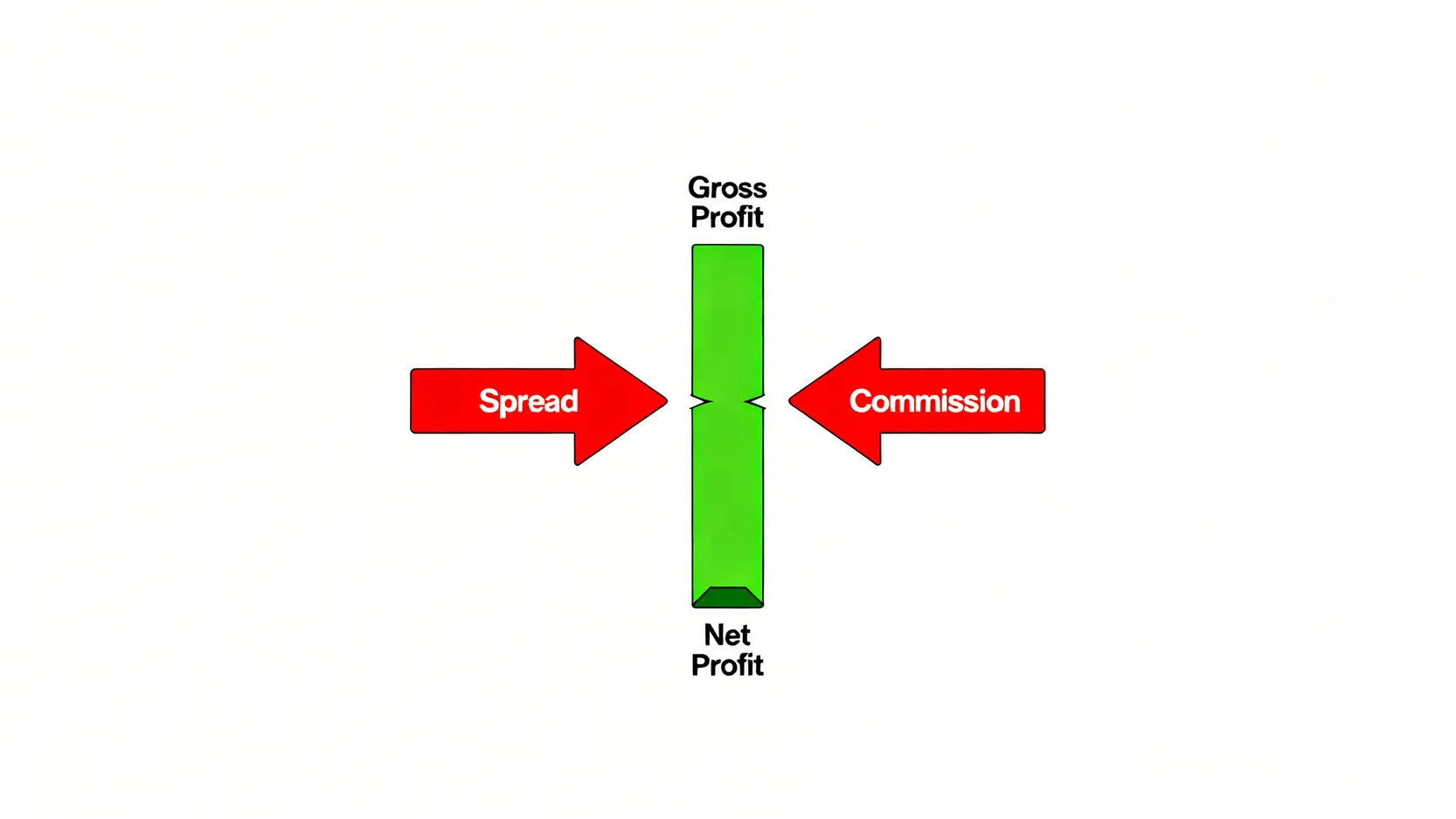
- Transaction costs eroding profits: Spreads and commissions are the greatest enemies of scalping traders. Since profit margins are extremely small, even a few pips in transaction costs can turn a profitable trade into a loss. Therefore, choosing a platform with low spreads is crucial.

- High mental pressure: Scalping requires traders to make a large number of decisions in a short period of time while maintaining intense focus for extended periods, placing heavy demands on both mental and physical stamina.
- Risk of emotional trading: The rapid trading pace can easily trigger emotional behaviors such as chasing rising prices, panic selling, or trying to recover losses quickly after a losing trade. Once emotions spiral out of control, severe losses may follow.
- Sensitivity to slippage: When markets move rapidly, slippage may occur between the order price and the actual execution price. For scalping traders whose targets are only a few pips, even a small amount of slippage can be fatal.
Revealing the Best Scalping Indicator Combinations and Their Applications
Successful scalping trading relies heavily on real-time signals generated by technical indicators. A single indicator often has blind spots, therefore combining several of the best scalping indicators into a trading system is key to improving the win rate. The following are some indicator combinations widely used in scalping trading:
| Technical Indicator | Main Use in Scalping Trading |
Practical Application Suggestions |
| Moving Average (MA) | Determine the direction of the short-term trend and serve as dynamic support and resistance. | Use Exponential Moving Averages (EMA), such as 5 EMA and 20 EMA. When the short-term EMA crosses above the long-term EMA, it is regarded as a buy signal, and when it crosses below, it is regarded as a sell signal. |
| Bollinger Bands | Identify market volatility and overbought or oversold zones. |
In a ranging market, when the price touches the upper band it can be regarded as a selling opportunity, and when it touches the lower band it can be regarded as a buying opportunity. In a trending market, price moving along the upper or lower band is a signal of strong momentum. |
| Stochastic Oscillator | Determine whether the market is in an overbought (>80) or oversold (<20) condition and provide reversal signals. | When the price is at a support level and the stochastic indicator crosses upward from the oversold zone, it is a buy signal. Conversely, when the price is at a resistance level and the indicator crosses downward from the overbought zone, it is a sell signal. |
| Relative Strength Index (RSI) | Measure the strength of price momentum and also identify overbought (>70) and oversold (<30) conditions. | It can be used together with the stochastic indicator for confirmation, or RSI divergence can be identified (price makes a new high or low while RSI does not follow) as a stronger reversal signal. |
A reliable scalping indicator system usually combines trend indicators (such as EMA) and oscillators (such as Stochastic). For example, traders can first use EMA to determine whether the current market is bullish or bearish, and then only enter trades in the direction of the main trend by using Stochastic overbought or oversold signals.
Mastering Practical Strategies With 1-Minute Scalping Techniques
In the ultra-short-term battlefield, 1-minute scalping techniques are the trader’s core weapon. This strategy requires speed, precision, and decisiveness. The following provides two commonly used practical strategy frameworks:
Strategy 1: Trend Breakout and Pullback
- First determine the main trend on a slightly longer time frame (such as a 15-minute chart). For example, if the price on the 15-minute chart is clearly above the 50 EMA, the current trend is defined as an uptrend.
- Switch to the 1-minute chart to wait for signals: Return to the 1-minute chart and only look for long opportunities.
- Entry timing: Wait for the price to pull back to a key support level on the 1-minute chart (such as the 20 EMA). At the same time, observe whether an oscillator (such as Stochastic), enters the oversold zone and forms a bullish crossover. This is a potential entry point.
- Set stop loss and take profit: After entering the trade, immediately place a very tight Stop Loss below the recent low, such as 5-8 pips. The Take Profit target can be set at 1.5 times the risk, or the position can be closed manually when the price reaches the next minor resistance level.

Strategy 2: Support and Resistance Reversal
- Identify key price levels: On the 1-minute or 5-minute chart, mark clear intraday support and resistance levels. These levels may be previous highs, previous lows, or price points that have been tested multiple times but failed to break.
- Observe price action: When the price approaches these key levels, closely observe candlestick patterns. Do bullish or bearish engulfing patterns, doji candles, or long upper or lower wicks appear as reversal signals?
- Confirm with indicators: At the same time, check whether RSI or Stochastic shows divergence or enters overbought or oversold zones to provide additional evidence for a reversal.
- Execution and risk control: Once the signal is confirmed, enter the trade immediately. The Stop Loss should be placed a few pips below the support level or above the resistance level. Scalping trading does not allow hesitation. If price action does not develop as expected, exiting decisively is the only rule to protect capital.
Further Reading (Highly Recommended)
How to Choose a Forex Platform Suitable for Scalping Trading?
Choosing the right forex trading platform is even more important than the strategy itself for scalping traders. A poor platform can render even the best strategy ineffective. The following are several key factors to consider:
- Extremely low spreads and commissions: This is the primary condition. Look for brokers that offer ECN (Electronic Communication Network) or STP (Straight Through Processing) accounts, as they usually provide the lowest spreads. Every pip saved in trading costs directly increases your profit.
- Lightning-fast execution speed: Scalping trading is a race against time. The platform’s server response speed must be fast enough to ensure orders are executed at the best possible price and to minimize slippage.
- Stable trading environment: The platform must be stable and reliable, without disconnections, lag, or delays during critical trading moments, especially when market volatility is high.
- Scalping strategy allowed: Always confirm that the broker’s terms of service clearly allow scalping trading. Some brokers impose restrictions on positions held for very short durations or extremely high trading frequency.
- Powerful charting tools: The platform should provide advanced charting functions and a wide range of technical indicators so traders can perform precise analysis on short time frame charts.
Capital Management and Mindset for Scalping Trading
If strategy and platform are the sword of scalping, then capital management and trading psychology are the shield that protects you from harm. Many traders fail not because their strategies are weak, but because they are destroyed by uncontrolled risk and emotions.
Capital Management: The Foundation of Survival
- Strict risk control per trade: The loss from any single trade should never exceed 1% of total capital. This means that even if you encounter consecutive losses, you still have enough capital to recover.
- Precise position calculation: Based on your Stop Loss level and the amount of risk you are willing to bear (such as 1% of total capital), calculate precisely how many lots should be opened for each trade. Never place trades based on intuition.
- Set a daily loss limit: Set a maximum daily loss limit for yourself (for example 3% of total capital). Once this limit is reached, immediately stop trading for the day. This effectively prevents catastrophic losses when you are not in optimal condition.
Mindset Development: The Key to Success
- Absolute discipline: Scalping trading does not allow improvisation. Every entry, exit, Stop Loss, and Take Profit must strictly follow the predefined plan.
- Accept losses: Losses are part of trading, especially in high-frequency scalping. Do not attempt to fight the market or try to “take revenge” on the market after a loss. Calmly accepting small losses allows you to capture the next profitable opportunity.
- Stay calm and focused: Eliminate all possible distractions. During trading hours, your attention should be focused solely on charts and data. Maintaining an objective and calm mindset is the prerequisite for making correct decisions. For more basic knowledge about forex margin, you may refer to authoritative sources.
Conclusion
Forex scalping trading is a path that may lead to rapid profits, but it is also full of challenges and is suitable only for traders who are disciplined, quick in response, and psychologically resilient. It requires a deep understanding of the market’s microstructure, skilled use of technical indicators, and the ability to remain rational under intense pressure. The key to successfully mastering scalping strategies lies in combining a high-quality low-spread platform, precise entry and exit strategies, and ironclad risk management and trading discipline. For beginners, it is advisable to start with a demo account, practice thoroughly and validate strategies before committing real capital after establishing a stable and profitable trading model.
Common Questions About Forex Scalping (FAQ)
Q: Is scalping trading legal?
A: Yes, scalping trading is a completely legal trading strategy in the vast majority of regulated forex markets worldwide. However, the key lies in whether the broker you choose allows this trading method. Some brokers operating under the Market Maker model may impose restrictions on ultra-short-term trading. Therefore, before opening an account, be sure to carefully read the client agreement or consult customer service directly, and prioritize ECN or STP brokers that clearly support scalping trading.
Q: How much capital is required for scalping trading?
A: In theory, thanks to the high leverage available in the forex market, scalping trading can begin with just a few hundred US dollars. However, from a risk management perspective, it is recommended that the starting capital should not be too low, ideally at least 1000 US dollars. This allows better execution of position management rules (such as keeping the risk of a single trade within 1%) and provides a sufficient buffer to handle normal market fluctuations and consecutive losses.
Q: Which currency pairs are most suitable for scalping trading?
A: The currency pairs most suitable for scalping are those with the lowest spreads and the highest liquidity. Typically, major currency pairs such as EUR/USD, USD/JPY, and GBP/USD are the preferred choices. Their bid-ask spreads are extremely small and trading volume is high, ensuring fast order execution and making them ideal markets for scalping traders.
Q: What is the difference between scalping trading and day trading?
A: Both belong to short-term trading and close all positions within the same trading day. The main difference lies in holding time and trading frequency. Scalping trading has extremely short holding periods, usually ranging from a few seconds to a few minutes, and may involve dozens or even hundreds of trades per day. Day trading positions may be held for several hours, aiming to capture major intraday price swings, and the trading frequency is relatively lower, possibly only a few trades per day.
Q: Can I perform scalping trading using only a mobile phone?
A: It is technically possible, but strongly not recommended. Scalping trading requires monitoring multiple indicators simultaneously, quickly switching between charts, and executing precise order placement. The mobile phone screen is too small and its functionality is limited, making it difficult to meet these professional requirements. Professional scalping traders usually use computers equipped with multiple monitors to achieve the best trading visibility and execution efficiency.
Related Articles
-
Practical Applications of Volatility Surfaces: From Options Modeling to Advanced Skew Trading Strategies In options markets, implied volatility is never a flat line. Instead, it forms complex "smile" or "skew" surfaces. For advanced traders, mastering the practical applications of volatility surfaces is equivalent to possessing a lens that reveals market...2026 年 6 月 3 日
-
Building a Foreign Capital Flow Copy Trading Model: A Stock Market Indicator for Accurately Tracking Institutional Positioning In Asia-Pacific stock markets, foreign capital inflows and outflows often determine the direction of the index. However, simply looking at daily net buy and sell data is no longer enough. Only by building...2026 年 6 月 3 日
-
Options Buyer Strategies During Extreme Market Conditions: Black Swan Hedging and Cross-Market Arbitrage During Volatility Surges The most terrifying aspect of financial markets is not a gradual decline, but overnight flash crashes and cross-market capital withdrawals accompanied by volatility surges. In the highly unpredictable global macroeconomic environment of 2026, geopolitical...2026 年 6 月 3 日