2026 EUR/USD Forecast: How Long Can the Euro Rally Last?

2026 EURUSD Trend Forecast: How Long Can the Euro Rebound Last? Full Fundamental and Technical Analysis
The forex market has been highly volatile recently, and many investors feel lost when facing the complex 2026 EURUSD trend. Especially as the global macroeconomic environment shifts, market capital flows are changing rapidly. Is this wave of euro rebound merely a brief breather from short-covering, or a full reversal into a bullish trend? This article will deeply analyze fundamental data, combined with the search for EURUSD technical support and resistance, as well as core variables such as the impact of Fed rate cut expectations, guiding you to capture potential profit opportunities in EURUSD from the perspective of an experienced investor.
Recent EURUSD Trend Review and the Causes of the Euro Rebound
Entering mid-2026, the focus of the forex market continues to revolve around the policy game between the two major central banks in the US and Europe. Looking back at the EURUSD trend from the first quarter to the beginning of the second quarter, we can see that after experiencing last year’s fluctuations, the exchange rate gradually built a defensive line at the bottom before launching a wave of euro rebound that caught the market’s attention. To understand the logic behind this, we must start with the economic fundamentals on both sides of the Atlantic.
The Impact of US Economic Data and Federal Reserve Monetary Policy
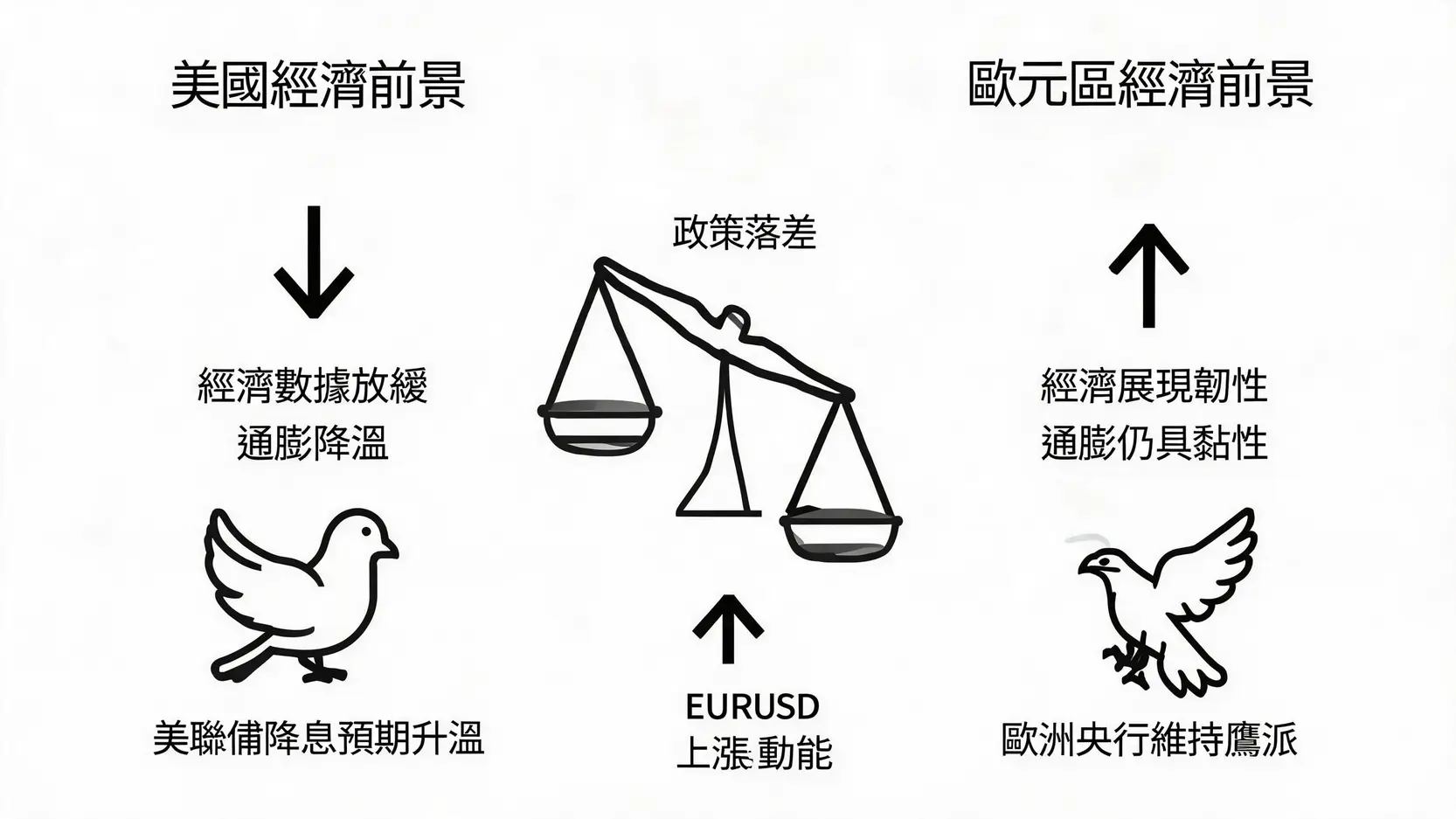
The strength of the US dollar has always been the absolute core factor dominating the EURUSD trend. According to the latest labor market and inflation data, the pace of US economic growth has shown signs of slowing. Market expectations for the Federal Reserve (Fed) to maintain high interest rates have begun to loosen, and the future monetary easing path has even been priced in ahead of time. As the impact of Fed rate cut expectations gradually takes shape, the US Dollar Index (DXY) faces selling pressure from profit-taking at high levels. This directly provides an excellent upward environment for non-US currencies, especially the euro, which carries the highest weighting.
The European Central Bank (ECB)’s Stance and the Current State of Eurozone Economic Recovery
Compared with the slowdown in US growth, the eurozone’s economic performance in 2026 has shown unexpected resilience. Manufacturing PMI data in some core countries, such as Germany and France, has gradually warmed up. In addition, European Central Bank officials have maintained a relatively hawkish tone in public speeches, emphasizing that the final mile in the fight against inflation cannot be lost. This expected policy gap of “dovish US, hawkish Europe” has become a strong support behind the euro rebound during this period. Investors interested in conducting in-depth research on cross-commodity linkages can usually refer more to professional tools such as DeepThink In-Depth Analysis to assist in judging macro trends.

The policy gap of “dovish US, hawkish Europe” is the core driver of this euro rebound
Two Major Potential Catalysts Driving the Euro Rebound
In addition to interest rate differentials in central bank monetary policy, changes in market sentiment and the external environment are often catalysts that accelerate EURUSD trend breakthroughs from key ranges.
Capital Rotation Driven by Rising Global Safe-Haven Sentiment
In capital markets, funds are always looking for the most efficient and relatively safe haven. Since 2026, some high-valuation risk assets have faced correction pressure, and intensified stock market volatility has led to a phased rise in global safe-haven sentiment. In this process of capital rotation, the euro has attracted some funds seeking stable allocation due to its sufficient liquidity and its characteristics as a funding currency during certain periods, further pushing up the exchange rate.
The Potential Impact of International Geopolitical Events
Geopolitics has always been a “black swan” that cannot be ignored in forex trading. Whether it is the development of the situation in Eastern Europe or uncertainty in energy supply in the Middle East, both will affect global supply chains and inflation expectations. Once a sudden event triggers market concerns over the US economic outlook, or causes the US dollar’s safe-haven halo to fade, the euro often benefits accordingly. According to the 2026 annual forex outlook from the authoritative institution MUFG Research, the overlap of seasonal factors and geopolitical risks may allow EURUSD to test higher resistance levels in the second half of the year.
In-Depth Technical Analysis of the EURUSD Trend (Comparison Between Retail and Institutional Chart-Reading Perspectives)
After mastering the fundamentals, precise technical analysis is needed even more to find entry and exit timing. In technical analysis, institutional investors and ordinary retail investors often have significantly different perspectives. This is also why many retail investors tend to chase highs and sell lows when facing a euro rebound.
Finding Key Support and Resistance Levels on the Daily and Weekly Charts
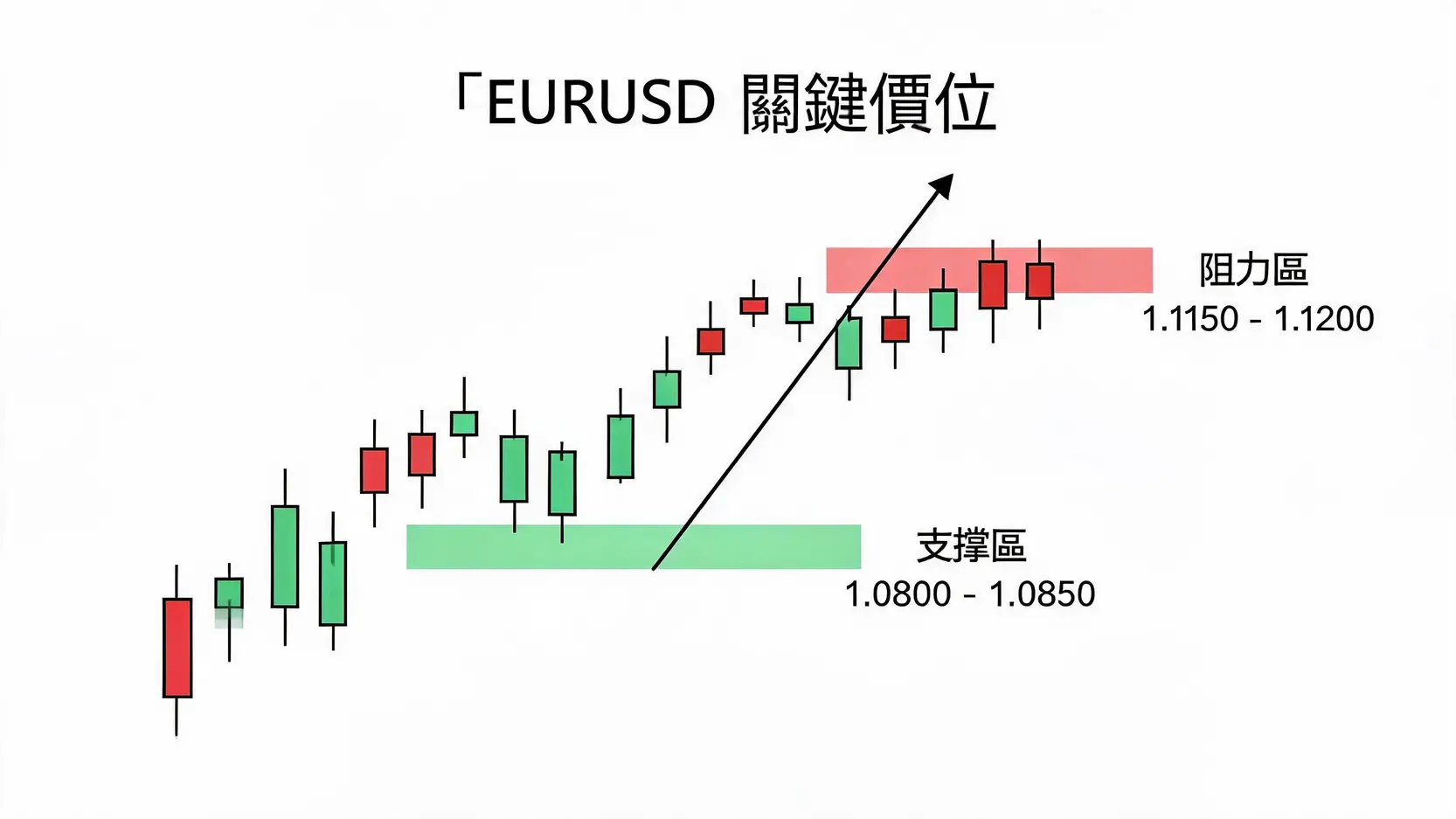
From the perspective of retail investors, most people are used to watching hourly charts or 15-minute charts to seek the excitement of short-term intraday trading. However, experienced investors pay more attention to the bigger picture on the daily chart (D1) and weekly chart (W1). In the market of June 2026, EURUSD’s bottom support level has steadily moved up to the dense chip zone between 1.0800 and 1.0850. The key resistance above falls at the long-term structural resistance zone of 1.1150 to 1.1200. To confirm whether this euro rebound has long-term continuity, it is necessary to observe whether the weekly level can break through with volume and stand firmly above the 1.1200 mark.

Mastering key support and resistance is the first step in formulating a trading strategy
How to Use MACD and RSI to Judge the Momentum of the Euro Rebound
Momentum indicators are important tools for confirming whether a trend is healthy. When the exchange rate rises, if the MACD (Moving Average Convergence Divergence) forms a golden cross above the zero line and the red histogram continues to expand, it represents strong bullish momentum. At the same time, if the RSI (Relative Strength Index) is in a strong zone above 50, but has not yet reached the extreme overbought zone above 70, it indicates that this EURUSD trend still has room to rise. Investors who want to become familiar with the combined use of these technical indicators can refer to the detailed MT5 Comprehensive Tutorial Guide to ensure that the charting software settings align with their own trading strategies.
Guarding Against False Breakouts and Liquidity Traps by Institutional Investors
The trading logic of institutional investors is often to look for places with the richest liquidity to build or close positions, and this usually happens near key support and resistance levels. This is why we often see the EURUSD trend quickly reverse downward after breaking through an important high (commonly known as a false breakout or stop-loss hunt). To guard against this kind of liquidity trap, you must wait for candlestick close confirmation before entering the market, or use a smaller lot size to test the trade, avoiding blindly chasing highs at the first moment to join this “euro rebound carnival”.
Extended Reading (Highly Recommended)
DeepThink: In-Depth AI Analysis Model for Forex and Multi-Commodities
Frequently Asked Questions About the EURUSD Trend and Euro Rebound
Q: Which time periods does the EURUSD trend tend to be affected by?
A: The period when EURUSD has the largest liquidity and the most intense volatility usually falls during the overlap between the European session and the US session, (roughly from 8 p.m. to 12 midnight Beijing/Malaysia time). This period is often accompanied by the release of core US economic data and is a golden window for short-term traders to capture major market moves.
Q: At what price level can profit-taking be considered during the euro rebound?
A: Based on the current technical structure in 2026, if you are holding long positions, the first-stage resistance zone is around 1.1050 to 1.1100, where you may consider taking profit in batches. If you are bullish in the long term, the final target can be placed at the weekly resistance level above 1.1200. Remember to set a reasonable defensive level according to your own risk tolerance.
Q: Is it suitable for beginners to enter the market and chase EURUSD highs at this time?
A: Blindly chasing highs is taboo in the forex market. After a period of euro rebound, the price may see a technical pullback at any time. A more prudent approach for beginners is to wait for the price to pull back to a key support level (such as a moving average or support converted from a previous swing high) and show a reversal signal before setting up long positions with the trend.
Q: If the Fed does not cut rates, will the euro rebound end?
A: If US inflation remains unusually stubborn, forcing the Fed to maintain current high interest rates or even return to a rate-hiking path in 2026, it will significantly boost the appeal of the US dollar. In this case, the core logic supporting the euro rebound will be broken, and the EURUSD trend is highly likely to face heavy downward pressure again. Investors need to closely monitor various forward-looking data.
Conclusion
Overall, the EURUSD trend in 2026 is full of opportunities and challenges. This wave of euro rebound, jointly driven by macro policy divergence and shifts in market sentiment, has indeed injected new vitality into the forex market. However, whether the fundamental positives can be fully digested and whether the key technical resistance can be effectively broken still need time to verify. As a mature investor, when participating in EURUSD trading, you must remain rational and strictly execute capital management and stop-loss discipline. Only by not blindly following market frenzy can you move forward steadily in the unpredictable and ever-changing forex market.
Related Articles
-
What Signal Does a Rebound in Non-USD Currencies Send? Understanding Investment Opportunities and Risks Amid a Weaker US Dollar Core Driver: Why Does a Rebound in Non-USD Currencies Occur? When the US Dollar Index (DXY) starts to weaken, the forex market often sees a wave of “non-USD currency rebound” movements....2026 年 6 月 29 日
-
How to Choose a Forex Platform? 5 Key Criteria to Avoid Scam Broker Traps When entering the fast-changing forex market, the first and most critical step is making the right forex platform selection. A good broker is your solid support in the market. Conversely, choosing the wrong platform may not...2026 年 6 月 29 日
-
Forex Carry Trade in Practice: A Complete Guide to Profiting From G10 Currency Interest Rate Differential Trades Amid Expectations of US Dollar Depreciation The 2026 forex market is highly unpredictable. For advanced investors seeking stable returns in volatile market conditions while effectively hedging exchange rate risk, simply holding a single...2026 年 6 月 29 日