Hedging Strategy Guide: 5 Methods to Manage Risk

Updated: 2026/03/03  |  CashbackIsland

對沖策略教學:5大對沖方法入門,學懂多空對沖交易避開市場風險!

Hedging Strategy Tutorial: An Introduction to 5 Major Hedging Methods, Master Long-Short Hedging to Avoid Market Risk!

The market is full of uncertainty. Do you often worry that a sudden downturn may erode your investment returns? Many investors face the same concern, and a “hedging strategy” is the key to managing these risks. This comprehensive hedging tutorial starts with core concepts and explains a range of practical hedging methods in a clear and accessible manner, particularly the “long-short hedging” commonly used by professional investors. It helps you move forward steadily in volatile market conditions, protect your assets, and achieve a smoother growth curve. 


What Is Hedging? Why Should Every Investor Understand It?

Hedging may sound professional, but the concept is quite intuitive. You can think of it as buying an “insurance policy” for your investment portfolio. When the market moves unfavorably, this “insurance policy” can reduce your potential losses. Understanding hedging methods is a crucial step from being a beginner to becoming a mature investor. It allows you to move beyond only taking long positions and learn how to use strategies to respond to different market environments.


The Core Purpose of Hedging: Risk Mitigation, Not Pure Profit

It is essential to clarify an important concept first: the primary objective of hedging is “risk management”, not “profit generation”. Just like buying car insurance, the purpose is to receive compensation in the event of an accident to reduce losses, not to profit from filing a claim. Similarly, implementing a hedging strategy aims to protect the value of your existing positions during adverse market conditions and make your overall portfolio performance more stable. Although certain advanced hedging strategies may also generate returns, their starting point is always to control downside risk.


How Hedging Works: Locking in Profit and Risk Through Opposite Positions

The basic principle of hedging is to “establish a position that is related to your main position but moves in the opposite direction”. For example:

  • You hold a technology stock and are concerned that the entire technology sector may experience a short-term correction.
  • To hedge this risk, you can short an ETF (Exchange Traded Fund) that tracks a technology index.
  • In this case, if the technology sector declines, your individual stock may incur losses, but your short ETF position will generate profits. These profits can partially or even fully offset the losses from your stock.

Through this opposite positioning, you keep potential losses within an acceptable range. This is the appeal of hedging. It gives investors greater composure and initiative in the face of uncertainty.

一張概念示意圖,展示一個保持平衡的天平,左邊是代表主要投資的上升綠色箭頭,右邊是代表對沖部位的下降紅色箭頭,象徵風險被抵銷。

Principle of Hedging: Establish an opposite position so that when the main investment declines, the hedging position generates profits, thereby reducing overall portfolio losses.


Beginner’s Guide: 3 Most Common Basic Hedging Methods

For investors new to hedging education, there is no need to start with complex derivatives. Beginning with the following three basic hedging methods is an excellent starting point for building a risk management mindset.


Method One: Hold Cash to Reduce Overall Portfolio Risk

The simplest and most direct hedging method is to “reduce risk exposure”, which means trimming part of your assets and converting them into cash. When you anticipate a significant market correction or feel uncertain about the outlook, moderately increasing your cash allocation reduces the capital exposed to the market, and potential losses naturally decline. Although this may cause you to miss unexpected market gains, it perfectly reflects the core spirit of hedging “sacrificing part of potential returns in exchange for greater certainty”.


Method Two: Diversification and Investing in Negatively Correlated Assets (Such as Stock-Bond Allocation)

The old saying “Do not put all your eggs in one basket” captures the essence of diversification. By building a diversified portfolio that includes different types of assets, you can effectively spread the risk of a single asset. The key is to include assets that are “negatively correlated” or “low correlated”.

  • Classic example: Stocks and bonds. During economic recessions and stock market declines, capital typically flows into government bonds, which are considered safe-haven assets, pushing bond prices higher. Therefore, allocating part of your portfolio to bonds can effectively hedge against stock market downside risk.
  • Other examples: Gold and real estate investment trusts (REITs) are also commonly used as tools to hedge against stock market risk.


Method Three: Using Derivatives (Such as Futures and Options) for Precise Risk Management

When you need to hedge specific risks more precisely, financial derivatives become useful. They provide flexible and cost-effective hedging methods.

  • Futures: If you hold a large number of stocks and are concerned about a market decline, you can sell stock index futures contracts. If the index falls, the profits from the futures can offset the losses from your stocks.
  • Options: This is a more flexible instrument. For example, you can purchase a “put option” for the stocks you hold. This gives you the right to sell the stock at a specified price in the future. If the stock price drops significantly, your maximum loss is locked in; If the share price rises, your loss is limited to the cost of purchasing the option at the outset (that is the premium).
  • Contract for Difference (CFD): Contract for Difference (CFD) trading allows investors to easily take short positions on various assets without actually owning them, making it one of the convenient tools for implementing hedging strategies.


Further Reading (Highly Recommended)

Contract for Difference Trading Strategies: The Complete 2026 CFD Guide, Avoid 7 Fatal Risks!

The Complete 2026 Hong Kong Bitcoin Investment Guide: Master the Key Drivers of Price Movements and Concept Stock Positioning


Advanced Practice: Master the Professional “Long-Short Hedging” Strategy

After mastering the basic hedging methods, you can explore the more professional Long-Short Equity Strategy. This is not only a risk management tool, but also a trading strategy that actively seeks returns under different market conditions, and is widely favored by hedge funds.


What Is Long-Short Hedging? The Art of Going Long and Short Simultaneously

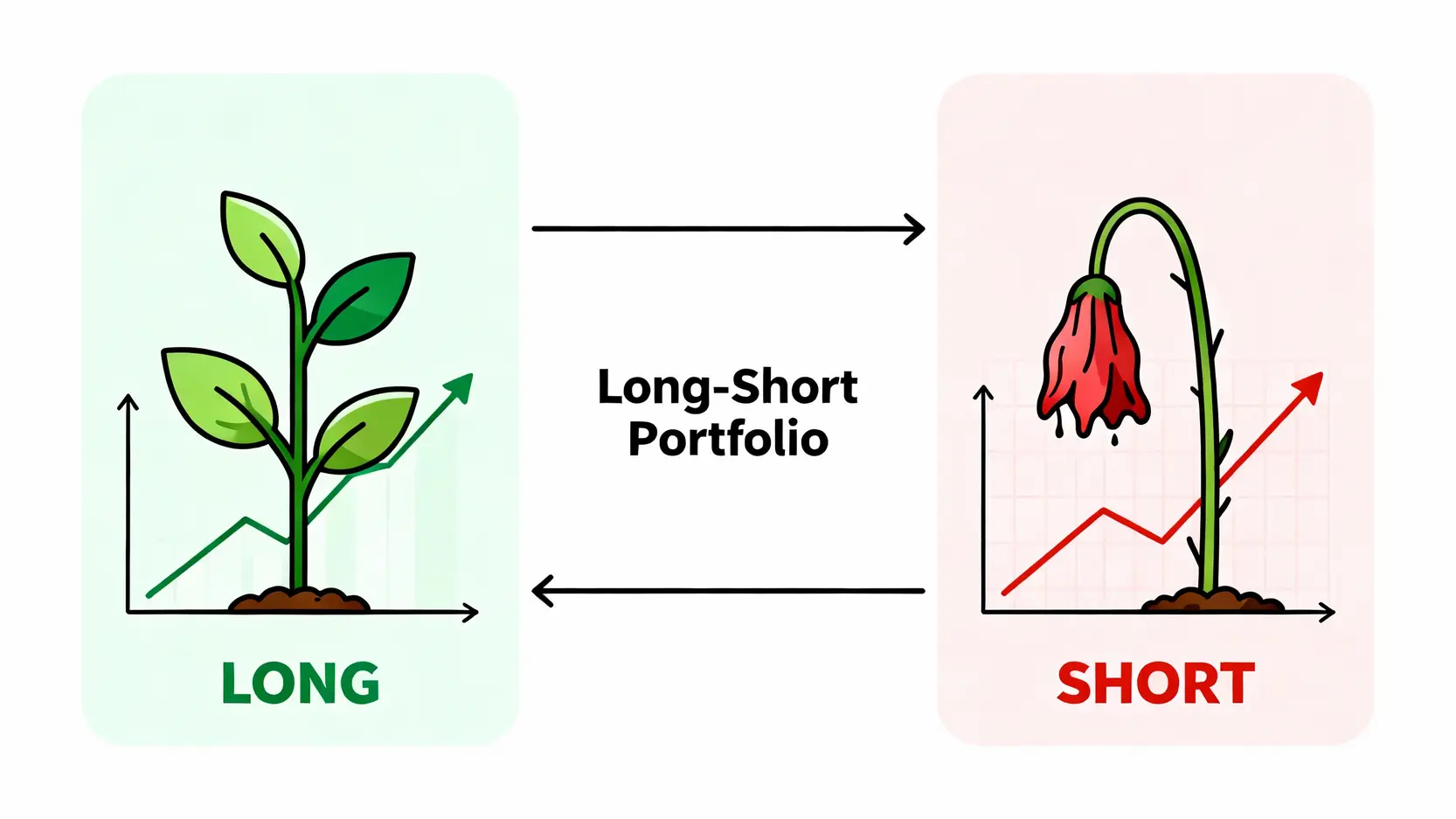
The core idea of long-short hedging is to hold both “long” (buy) and “short” (sell) positions within the same portfolio. The objective is no longer to bet on the overall direction of the market, but to profit from the “relative performance” between assets.

  • Long: Buy stocks that you believe have strong fundamentals, are undervalued, and will outperform their peers in the future.
  • Short: Sell stocks that you believe have weaker fundamentals, are overvalued, and will underperform their peers in the future.

一張對比圖,左邊標題為做多,畫著成長的植物和上漲圖表;右邊標題為做空,畫著枯萎的植物和下跌圖表,兩者被框在一起,代表一個多空投資組合。

Long-Short Hedging Strategy: Simultaneously buy undervalued assets (long) and sell overvalued assets (short) to profit from relative performance.

With this allocation, regardless of whether the overall market is bullish or bearish, as long as the stocks you go long on outperform the stocks you go short on, your portfolio can generate positive returns.


Pairs Trading Example Tutorial

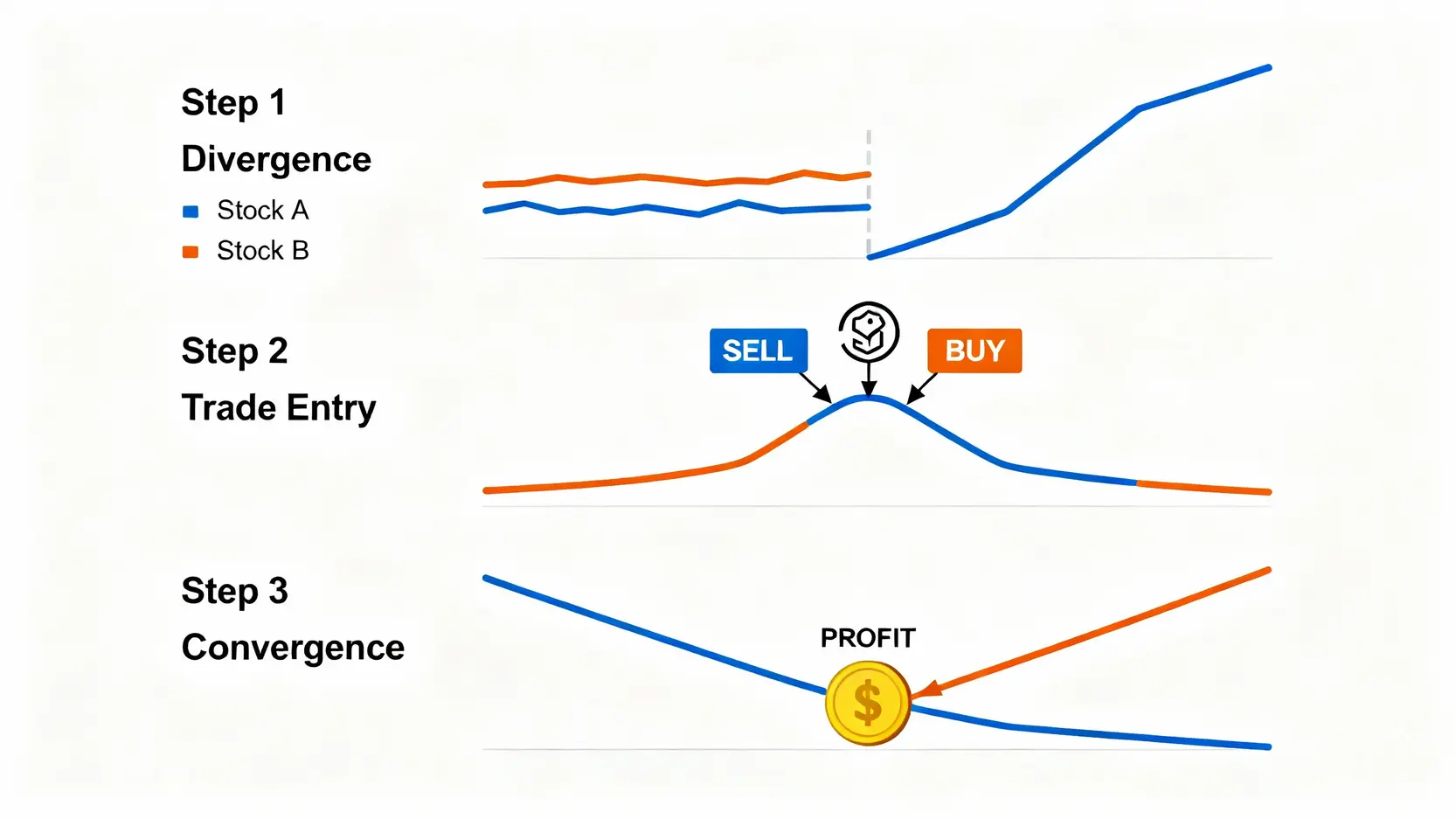
Pairs trading is one of the most classic forms of long-short hedging. It focuses on identifying two companies with similar businesses and highly correlated long-term stock price movements, and conducting arbitrage when their prices temporarily deviate from the normal trajectory.

一張展示配對交易流程的示意圖,包含三個步驟:1. 兩檔相關股票價格出現偏離;2. 交易者做空高價股、做多低價股;3. 當價格回歸正常時平倉獲利。

Pairs Trading Process: Utilize the temporary price spread between two correlated stocks, establish long and short positions when the spread widens, and close positions for profit when the spread converges.

Example: Assume Company A and Company B are industry leaders in the same sector, and their historical stock price movements are almost identical. Recently, due to a short-term piece of news, Company A’s stock price surged while Company B’s stock price remained unchanged, causing the price spread between the two to widen abnormally.

  1. Analysis and judgment: You believe this spread is temporary and will converge back to its normal level.
  2. Establish positions: You can “short” Company A, whose stock price is relatively high, while simultaneously “long” Company B, whose stock price is relatively lower, allocating equal amounts of capital.
  3. Wait for profit:
    • Scenario One: Company A’s stock price falls and Company B’s rises, both sides generate profits.
    • Scenario Two: Company A’s stock price falls while Company B remains unchanged, and you profit from the short position in A.
    • Scenario Three: Both Company A and Company B decline, but A falls more significantly, and your profit from the short position in A exceeds the loss from the long position in B, resulting in an overall profit.
  4. Close positions: When the price spread returns to its normal range, you simultaneously close both the long and short positions to lock in profits.


Market Neutral Strategy: How to Profit Regardless of Market Direction?

The Market Neutral Strategy is the ultimate application of long-short hedging. Through precise calculation, it aims to make the total market value of long positions equal to the total market value of short positions, thereby reducing the portfolio’s systematic risk (Beta) to close to zero.

This means that your portfolio returns are almost entirely unaffected by overall market index fluctuations, and depend solely on your stock selection ability, that is, whether your long positions consistently outperform your short positions. This is a pure alpha strategy that tests research and analytical capabilities, and is the objective of many professional institutional investors.


Advantages and Potential Risks of Hedging Strategies

Every investment strategy has two sides, and hedging is no exception. Before adopting these hedging methods, you must fully understand their advantages and disadvantages.


Advantages: Reduced Losses, Greater Portfolio Stability, and Increased Trading Flexibility

  • Effectively reduce downside risk: This is the core advantage of hedging. During bear markets or market corrections, it can significantly reduce portfolio losses.
  • Enhance portfolio stability: By smoothing the return curve and reducing volatility, investors can maintain positions with greater peace of mind and avoid making poor decisions due to panic.
  • Increase strategic flexibility: Once you master hedging, you are no longer limited to waiting for price increases as a “one-directional player”. Regardless of whether the market rises or falls, you have corresponding tools and strategies to respond and even profit.


Risks: Erosion of Potential Profits, Higher Transaction Costs, and Greater Operational Complexity

  • Limit potential returns: Hedging protection is not free. During sustained market uptrends, hedging positions (such as short positions) will generate losses, thereby “eroding” part of the profits from your long positions. This is the price paid for “insurance”.
  • Increase transaction costs: Establishing hedging positions incurs additional commissions, margin interest (for short selling) or option premiums, all of which affect final net returns.
  • Higher operational complexity: Especially when involving derivatives and long-short hedging, investors must possess deeper knowledge and analytical ability. Improper execution may result in additional losses. All investments involve risk and should be carefully evaluated. For more information on investment risks, please refer to official guidelines.


Frequently Asked Questions About Hedging Strategies (FAQ)

Q: Is a hedging strategy suitable for all investors?

A: Not necessarily. Hedging is most suitable for investors who already have a portfolio of a certain size and wish to protect the value of these assets. For younger investors with smaller capital or a very long investment horizon (who can withstand short-term volatility), focusing on long-term growth may be more beneficial than frequent hedging. However, understanding the concept is beneficial for everyone.

Q: How much capital is required for long-short hedging?

A: Long-short hedging usually requires a brokerage account that allows margin trading and short selling. Although there is no absolute minimum amount, considering transaction costs and the need to establish effectively diversified long and short positions, it is generally recommended to have relatively sufficient capital (such as tens of thousands of US dollars or more) to provide greater flexibility.

Q: Does hedging guarantee that you will not lose money?

A: Absolutely not. Hedging is about “managing” risk, not “eliminating” risk. A poorly designed hedging strategy, or incorrect judgment of market direction (for example if losses on hedging positions exceed losses on main positions), may still result in losses. It is a tool to reduce the probability and magnitude of losses, not a guarantee of profit.

Q: What is the simplest hedging method?

A: For ordinary investors, the simplest and most effective method is “asset diversification”. Adding bonds, gold, or other non-correlated assets in different proportions to your stock portfolio is a long-term strategy that achieves basic hedging without complex operations.

Q: What is the difference between hedging and speculation?

A: The purposes are opposite. Hedging aims to “reduce risk”, usually by establishing an opposite position to protect an existing position. Speculation aims to “profit from risk”, actively taking on directional risk in expectation of earning substantial returns from significant price movements.


Conclusion

In summary, mastering hedging strategies is an essential step for every mature investor. It is not a magic formula that guarantees profits, but a sophisticated risk management tool. Through the various hedging methods introduced in this article, from simple cash holdings and asset allocation to advanced long-short hedging, you can respond to the unknown challenges of the market with greater confidence. Beginners are advised to start by understanding and practicing basic hedging methods such as asset diversification. As experience accumulates, you can gradually incorporate more sophisticated hedging techniques into your investment system and build a more resilient all-weather portfolio.

If you liked this article, please share it!

Related Articles

  • Volatility Surface Guide: Skew Trading Strategies
    Practical Applications of Volatility Surfaces: From Options Modeling to Advanced Skew Trading Strategies In options markets, implied volatility is never a flat line. Instead, it forms complex "smile" or "skew" surfaces. For advanced traders, mastering the practical applications of volatility surfaces is equivalent to possessing a lens that reveals market...
    2026 年 6 月 3 日
  • Foreign Capital Flow Model: Track Institutional Money
    Building a Foreign Capital Flow Copy Trading Model: A Stock Market Indicator for Accurately Tracking Institutional Positioning In Asia-Pacific stock markets, foreign capital inflows and outflows often determine the direction of the index. However, simply looking at daily net buy and sell data is no longer enough. Only by building...
    2026 年 6 月 3 日
  • Options Buying Strategies for Extreme Market Risks
    Options Buyer Strategies During Extreme Market Conditions: Black Swan Hedging and Cross-Market Arbitrage During Volatility Surges The most terrifying aspect of financial markets is not a gradual decline, but overnight flash crashes and cross-market capital withdrawals accompanied by volatility surges. In the highly unpredictable global macroeconomic environment of 2026, geopolitical...
    2026 年 6 月 3 日
返回顶部