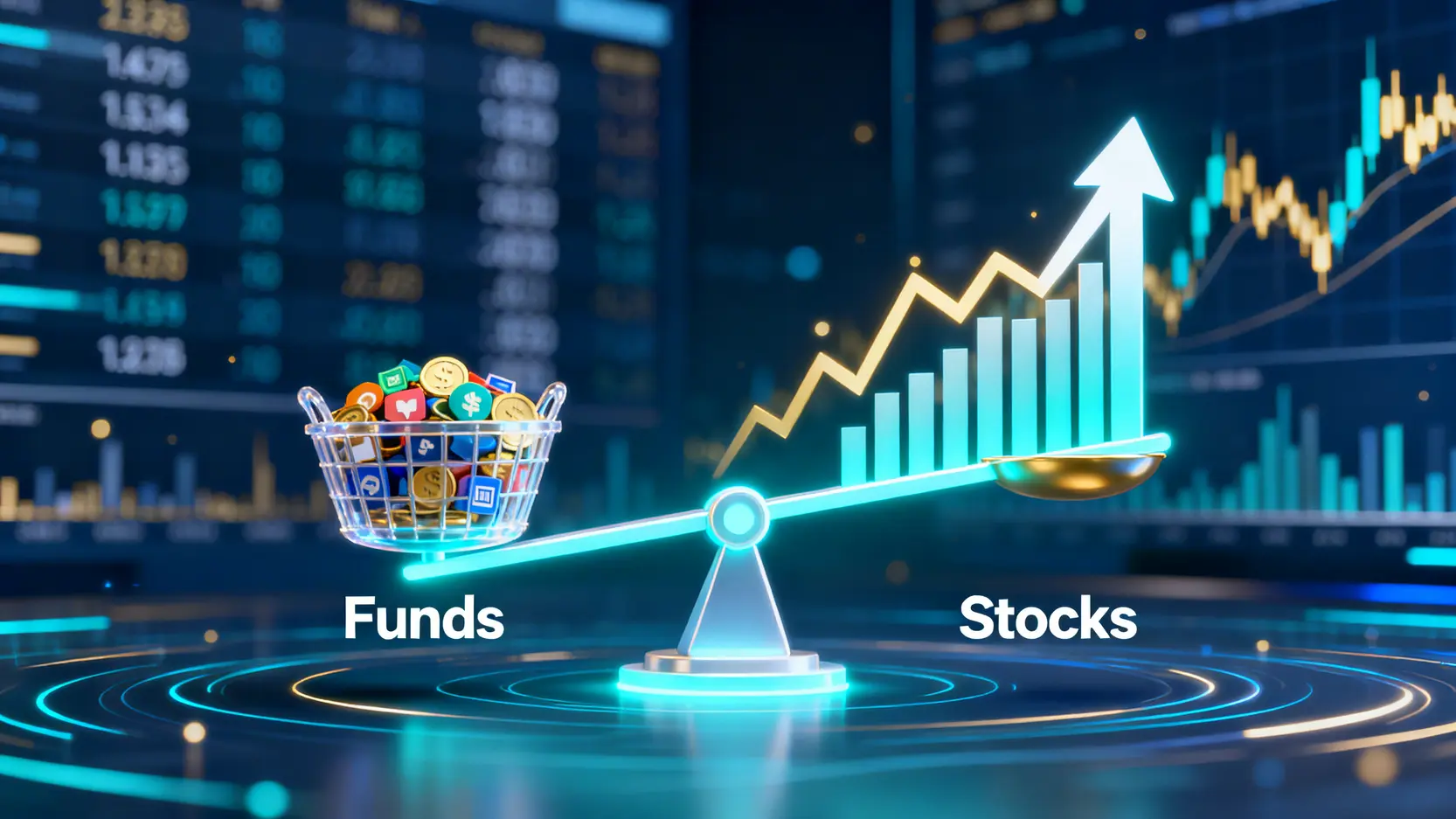
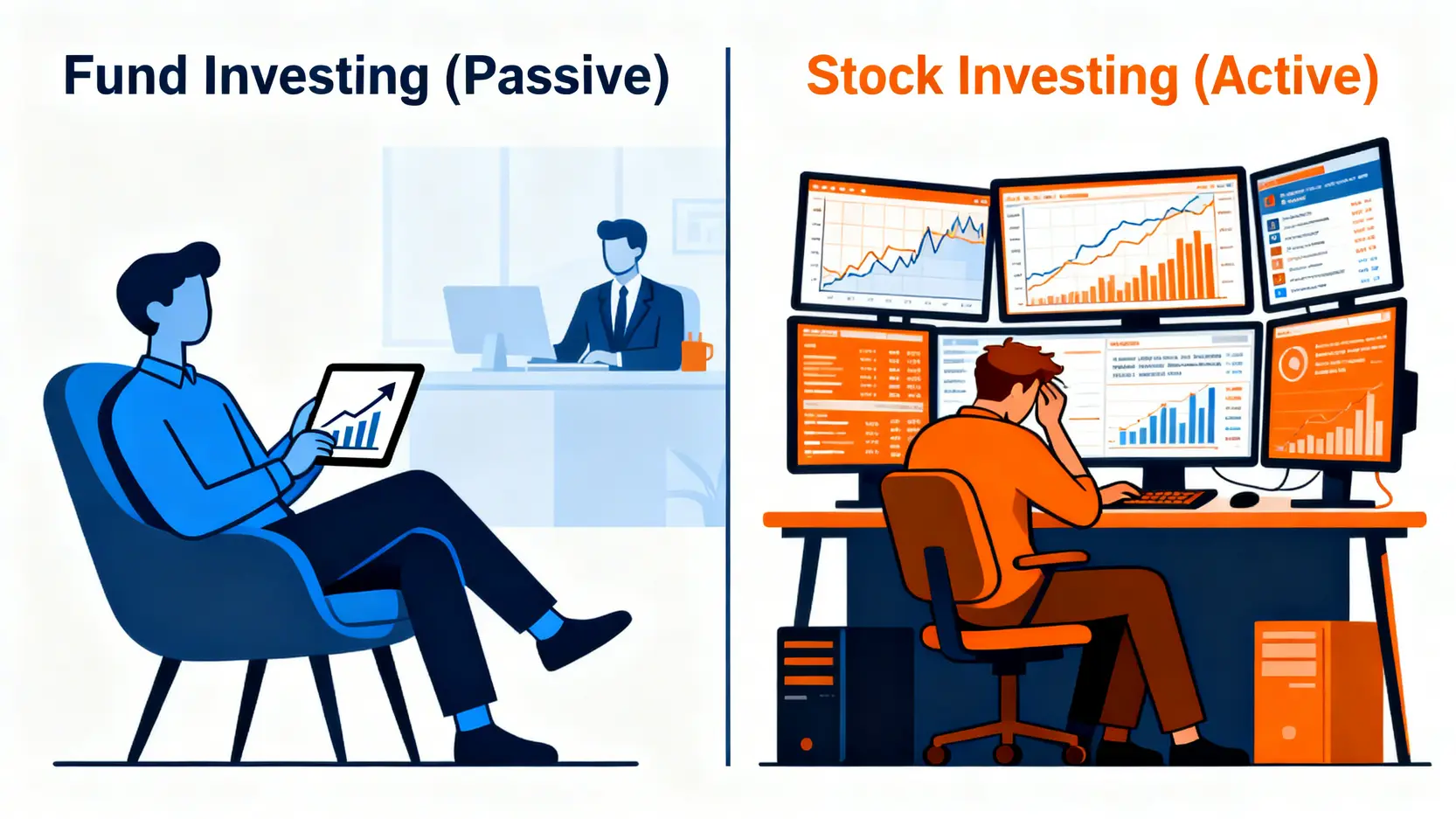
Investing in funds saves time and effort with professional management, while investing in stocks requires personal involvement and significant effort.
Comparison of Investment Thresholds and Cost Structures
Money is always the most practical consideration. Funds and stocks differ significantly in both entry costs and ongoing expenses.
- Investment Threshold:
- Stocks: The minimum requirement for buying stocks is usually “one lot”. A lot can range from dozens to thousands of shares depending on the stock, so the entry cost varies greatly. For example, buying one lot of Tencent in the Hong Kong stock market may cost tens of thousands of Hong Kong dollars, while some lower-priced stocks may require only a few hundred dollars.
- Funds: Funds usually have a much lower entry threshold. Many banks and fund platforms offer monthly investment plans, allowing you to start investing with only a few hundred to one thousand dollars per month. This is very suitable for young professionals or those who want to save through a systematic investment approach.
- Cost Structure:
- Stocks: The main costs include brokerage commissions, platform fees, stamp duty, and transaction levies. These are charged every time you buy or sell, so the more frequently you trade, the higher the costs. Want to know which brokerage charges the lowest fees? You can check “[Recommended US Stock Accounts 2026] Comparison of 7 Major US Brokerage Platforms: Which Offers Commission-Free Trading”.
- Funds: Fees are more varied and usually include subscription fees (paid when buying), redemption fees (paid when selling), and most importantly the “annual management fee”. The management fee is deducted annually from the fund’s assets and directly affects your final return. Even if the fund loses money, the management fee must still be paid.
Comprehensive Analysis: Advantages and Disadvantages of Investing in Funds
After understanding the basic differences, let us go deeper and examine the specific advantages and disadvantages of investing in funds to help you decide whether this “ingredient package” suits your taste.
[Advantages] Why Are Funds Suitable for Beginners and Lazy Investors?
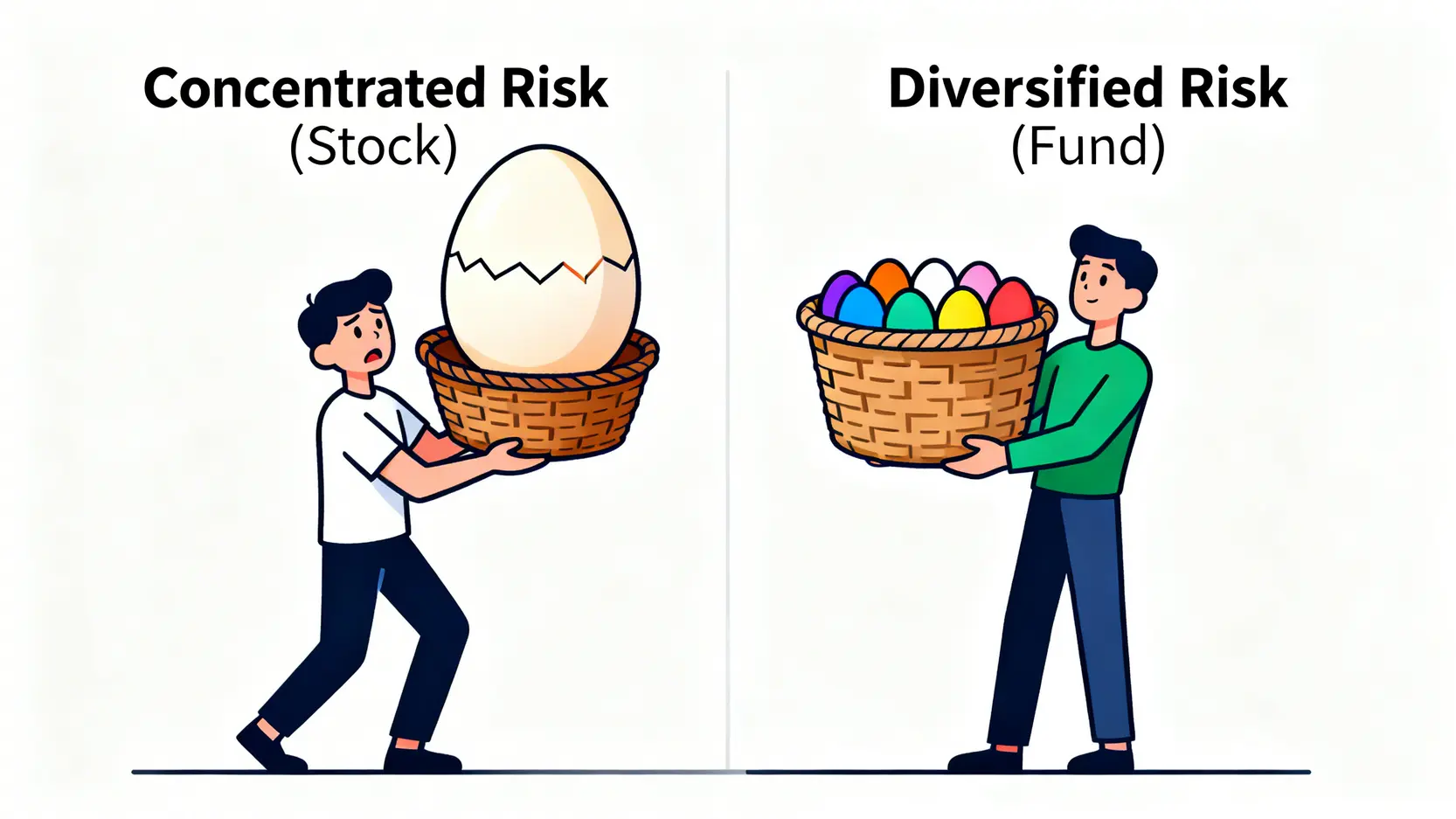
- Diversified Risk, Greater Peace of Mind: The greatest advantage of funds is diversification. Buying one fund is equivalent to buying dozens or even hundreds of securities, which can effectively reduce the impact of a single company “blowing up”. For investors who do not want to watch stock prices every day, funds are a relatively stable option.
- Professional Management, Saving a Lot of Time: Modern urban life is busy, who has the time to study financial reports and market news every day? With funds, professional teams manage the portfolio for you, allowing you to focus on your career and life and truly “let your money work for you”.
- Low Entry Threshold, Ideal for Small Investors: You can start a monthly fund investment with just a few hundred dollars. Through dollar-cost averaging and long-term persistence, it is possible to accumulate a considerable amount of wealth. This makes funds an excellent starting point for young professionals or those who want to save effortlessly.
- Wide Range of Investment Choices, Global Market Access: The variety of funds is vast. Some focus on US technology stocks, others invest in emerging Asian markets, environmental energy sectors, or commodities such as gold and oil. Through funds, you can easily invest in different asset classes across global markets.
[Disadvantages] Potential Risks and Costs You Must Know Before Investing in Funds
- Fees Erode Returns, Management Fees Are a Double-Edged Sword: Management fees, custodian fees, and administrative fees may appear to be only 1–2% per year, but over time they can “compound” and gradually erode your investment returns. When selecting funds, fees are a factor that must never be ignored.
- No Full Control, You Must Trust the Manager: You cannot decide which stocks the fund buys, nor can you instruct it to sell immediately. All investment decisions are made by the fund manager. If their investment style does not match yours, or if their judgment is wrong, you can only accept the outcome passively.
- Relatively Lower Transparency: Although funds disclose their holdings regularly, there is usually a time lag. You may not immediately know what adjustments the fund manager has made. In contrast, when you buy stocks yourself, every position is completely clear.
- Returns May Be Moderate, Hard to Achieve Explosive Growth: Because of diversification, it is difficult for a fund’s net asset value to surge due to one or two stocks skyrocketing. The typical objective of a fund is steady growth, so if you seek multiple-fold returns in a short period, funds may not provide that opportunity.
In-Depth Understanding: Advantages and Disadvantages of Investing in Stocks
If you enjoy being directly involved and like the feeling of strategizing your investments, selecting stocks yourself may suit you better. However, high returns always come with high risks, so you must fully understand the rules of the game before participating.
[Advantages] High Return Potential and Full Control
- Extremely High Return Potential if You Find the Right Opportunity: If you have sharp insight and invest in a company before it is widely recognized by the market, such as Tesla or Nvidia in their early stages, returns could reach tenfold or even a hundredfold. This kind of explosive growth is difficult for funds to match.
- Absolute Control, Your Money, Your Decision: You can buy or sell any stock at any time according to your own analysis and market conditions. No one needs to approve your actions, and all investment decisions remain entirely under your control.
- High Transparency, Clear Portfolio Positions: You know exactly what you have bought, your cost price, and how much each position represents in your portfolio. This clarity makes asset allocation and risk management easier.
- Direct Trading Costs, No Management Fees: The primary costs of stock investing are transaction commissions and taxes, with no ongoing management fees. For long-term investors, this can make stocks less costly than funds.
Further Reading (Highly Recommended)
Forex Trading Tutorial 2024: The Ultimate Beginner Investment Guide From 0 to 1 to Master Forex Trading Skills!
What Is a VIX ETF? Can You Profit From the Fear Index? VIX ETF Investment Guide and Full Risk Analysis
[Disadvantages] High Risk and Significant Time Commitment
- Extremely High Risk, Possible Total Loss: The consequences of choosing the wrong stock can be severe. Company bankruptcy or industry decline can render stock prices worthless. The risk of concentrated investing means you could lose all your capital.
- Requires Significant Research Time: Successful stock investors do not rely on rumors. They spend significant time studying company fundamentals, technical analysis, and industry trends. It is truly a specialized discipline.
- Severe Psychological Pressure: Stock price fluctuations can be extremely volatile. A stock may rise 20% one day and fall 30% the next. Without strong psychological discipline, it is easy to make poor decisions driven by greed or fear, such as chasing highs and panic selling.
- Higher Knowledge Threshold: Understanding financial statements, valuation models, and macroeconomic data requires a certain level of financial knowledge. For beginners, there is inevitably a learning process.
Decision Guide: Should I Buy Funds or Stocks?
After analyzing so much, how should you choose? The answer actually lies within yourself. Through the comparison table and decision steps below, you can more clearly identify the direction that suits you best.
See the Big Picture at a Glance: Comprehensive Comparison Table of Funds vs. Stocks
| Comparison Item |
Fund |
Stock |
| Suitable Investors |
Beginner investors, busy professionals, those who want to diversify risk, monthly savings investors |
Those with in-depth research on specific companies, those who enjoy the thrill of managing trades, those who can tolerate high risk, those seeking high returns |
| Risk Level |
Lower to moderate (due to diversified investing) |
Higher (due to concentrated investing) |
| Return Potential |
Relatively stable, pursuing long-term growth |
Extremely high potential, but may also incur significant losses, |
| Management Model |
Managed by a professional fund manager team |
The investor manages it personally and makes their own decisions |
| Time Required |
Less, mainly periodic review |
Extensive, requiring continuous research and monitoring |
| Main Costs |
Annual management fee, subscription/redemption fees |
Brokerage commission, platform fees, stamp duty |
| Investment Threshold |
Lower, can be as low as a few hundred dollars per month |
Higher, at least buying “one lot” |
Beginner Investment Advice: Three Steps to Decide Your Direction
If you are still hesitating, you may follow the three steps below and ask yourself:
- Step One: Assess Your “Risk Tolerance”
Imagine that your investment portfolio drops 20% within a week. Would you lose sleep every night and rush to sell everything? If your answer is “yes”, then you may be a conservative investor, and lower-risk funds may suit you better. On the contrary, if you believe market fluctuations are normal and even see them as opportunities to buy at lower prices, then you may consider higher-risk stocks.
- Step Two: Review Your “Time and Effort Commitment”
How much time are you willing to spend each day reading financial news and researching companies? If you work from nine to five and only want to rest after work, then letting experts manage your investments through funds may be the wiser choice. If you enjoy the research process and even treat it as a hobby, then selecting stocks yourself may bring you greater satisfaction.
- Step Three: Define Your “Financial Goals”
What are you investing for? Is it a down payment for a house in ten years? Retirement in thirty years? Or simply to make quick profits in the short term? If your goal is long-term and stable growth, such as retirement savings, the compounding effect of funds can become your best ally. If your objective is short-term speculation, then high-volatility stocks may be your arena (although the risk is extremely high).
For most beginner investors, starting with funds, especially index funds or ETFs, is a very prudent approach. After you accumulate a certain level of experience and knowledge, gradually using a small portion of your capital to invest in individual stocks can also be a good strategy.
FAQ: Common Questions About Funds and Stocks
Q: Is an ETF considered a fund or a stock?
A: An ETF (Exchange Traded Fund) can be considered a hybrid of both. In essence, it is a fund that usually tracks an index (such as the Hang Seng Index or the S&P 500 Index), meaning it holds a basket of stocks and provides diversification benefits. However, its trading method is similar to stocks, as it can be bought and sold on a stock exchange at any time, with high transparency and typically lower management fees than traditional actively managed funds. For beginners, ETFs are an excellent entry-level investment tool, combining the diversification of funds with the flexibility of stocks.
Q: What are the main fees involved in investing in funds?
A: There are three main categories of fees. First, transaction fees, including the “subscription fee” that may be charged when you buy and the “redemption fee” charged when you sell. Second, ongoing fees, which are the most important, mainly the “annual management fee”. This is usually calculated as a percentage of the fund’s total assets and deducted daily from the fund’s net asset value. In addition, there may also be “custodian fees” and “administrative fees”. Third, performance fees. Some funds (especially hedge funds) may charge an additional “performance fee” if their performance exceeds a specific benchmark.
Q: Does buying stocks always generate higher returns than funds?
A: Absolutely not. Although stocks have the potential to deliver extremely high returns, they also carry very high risks. Many studies show that over the long term, most investors who actively pick stocks actually underperform the broader market index. Funds, especially index funds that track the overall market, allow you to steadily capture the average return of the entire market. Therefore, “achieving higher returns” depends on selecting the right stocks and buying and selling at the right time, which is extremely difficult for ordinary investors.
Q: Can I invest in both funds and stocks at the same time?
A: Absolutely, and this is a very common and recommended strategy. Many experienced investors allocate the majority of their capital (for example, 70–80%) to stable funds (such as global index ETFs) as core assets for long-term growth. The remaining smaller portion (20–30%) is used as “satellite assets”, invested in individual stocks they are confident in to pursue higher returns. This approach allows most assets to grow steadily while still satisfying the interest of stock selection, creating a balanced strategy between risk and return.
Conclusion
In summary, there is no universal answer to the question “should you buy funds or stocks”. The key lies in fully understanding the differences between funds and stocks and honestly evaluating your own investment personality, goals, and capabilities. If you aim to diversify risk, save research time, and gradually accumulate wealth through monthly investments, funds can be an ideal starting point. On the other hand, if you enjoy studying the market, have confidence in your analytical abilities, and are willing to take on higher risk in pursuit of greater returns, selecting stocks yourself may be more suitable. Regardless of which path you choose, the most important step is to begin, put financial knowledge into action, and start your journey of growing wealth.