Is There Risk in Buying Funds? Understanding Fund Risk-Return Analysis and RR1-RR5 Ratings in One Article
Want to increase passive income by buying funds but worry about losing everything? The market is filled with a wide variety of fund products, each promoting attractive returns, but do you truly understand the fund risks behind them? Many beginner investors ask, “Is there risk in buying funds?” The answer is yes, but risk itself is not frightening. What is frightening is entering the market without understanding the risks. This article provides the most comprehensive analysis of fund risk and return, from understanding RR1-RR5 risk-return ratings to breaking down the five most important potential risks, helping you build a stable investment strategy and avoid unnecessary traps.
Understanding Fund Risk-Return Ratings (RR1-RR5): Is Your Fund Safe?
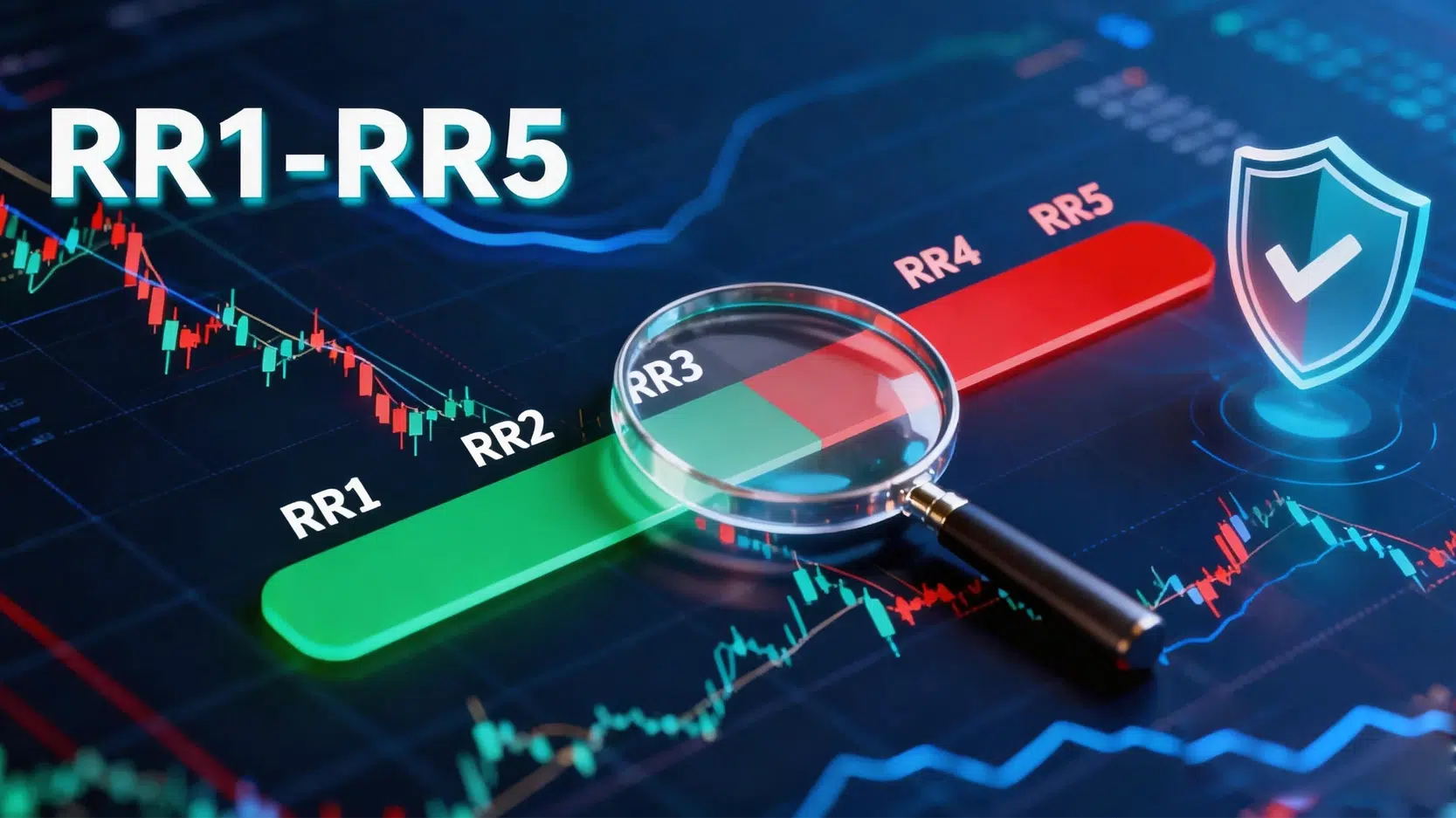
In Taiwan, all publicly offered funds are labeled with a “Risk Return Rating”, abbreviated as the RR rating. This rating is required by regulatory authorities and is determined by fund companies based on the fund type, investment scope, and strategy, assessing its potential price volatility risk and categorizing it into five levels, from RR1 (the lowest risk) to RR5 (the highest risk). This rating is the most intuitive and fastest tool for investors to assess fund risk.
What Investment Types and Risk Levels Do RR1 to RR5 Represent?
Each level corresponds to different investment targets and levels of volatility. Generally speaking, the higher the rating, the higher the potential returns, but the greater the possible losses investors may need to bear. The following is a detailed explanation of each level:
| Risk Level |
Main Investment Type |
Risk Level Description |
Suitable Investors |
| RR1 |
Money Market Funds, Cash Management Funds |
Extremely Low Volatility, Almost Equivalent to Cash, the Objective Is to Earn a Small but Stable Interest Return. |
Extremely Conservative Investors Who Cannot Tolerate Any Loss of Principal. |
| RR2 |
Government Bond Funds, Investment Grade Corporate Bond Funds |
Relatively Low Volatility, Mainly Affected by Interest Rate Changes, With a Low Probability of Principal Loss. |
Conservative Investors Seeking Stable Returns and Able to Tolerate Slight Fluctuations. |
| RR3 |
Balanced Funds, High-Yield Bond Funds, Multi-Asset Funds |
Moderate Volatility, With a Mixed Allocation of Stocks and Bonds, Balancing Growth and Income, but With Noticeable Price Fluctuations. |
Moderate Investors Willing to Accept Medium Risk in Exchange for Higher Returns. |
| RR4 |
Global Equity Funds, Developed Market Equity Funds |
Relatively High Volatility, Mainly Investing in the Stock Market and Highly Influenced by Global Economic Conditions. |
Aggressive Investors Who Can Tolerate Significant Market Fluctuations and Seek Long-Term Capital Appreciation. |
| RR5 |
Single Country or Regional Equity Funds, Sector Funds (Such as Technology, Biotechnology), Emerging Market Funds |
Extremely High Volatility, With Concentrated Investment Scope and Strong Influence From Specific Market or Industry Factors. |
Highly Aggressive Investors Willing to Accept Significant Volatility and Even the Risk of Substantial Principal Loss. |
How to Check the Risk Rating of a Fund?
Checking the RR rating of a fund is very simple. It can usually be found in the following places:
- Fund Prospectus: This is the most official and detailed document. The RR rating is usually indicated on the first page or in the fund overview section.
- Fund Monthly Report: The report released monthly by the fund company will also clearly indicate it.
- Bank or Securities Firm Trading Platform: On the website or app where you subscribe to the fund, the RR rating is usually displayed directly next to the fund name.
How to Choose the Appropriate Risk Rating Based on Your Situation?
Choosing the appropriate RR rating depends on honestly evaluating your “risk tolerance”. This is not simply a matter of courage but a comprehensive consideration, which can be examined from the following three aspects:
- Investment Objectives and Time Horizon: Are you investing for a down payment on a house in five years or for retirement thirty years later? The longer the investment horizon, the greater the ability to withstand short-term market volatility, and a higher RR rating may be considered. Conversely, funds needed for short-term goals are not suitable for high-risk RR5 funds.
- Financial Situation: Is your income stable? How much emergency reserve do you have? What proportion of your total assets does the invested amount represent? If this money represents your entire savings, starting with RR1-RR3 would be a more prudent choice.
- Investment Experience and Psychological Tolerance: Do you have prior investment experience? When the market drops 20%, would you panic and sell or view it as an opportunity to increase your position? If you are a beginner in fund investing, it is recommended to start with lower-risk funds and gradually build confidence and experience.
A Complete Analysis of the Five Core Types of Fund Risk
In addition to the overall indicator of RR ratings, understanding the specific risk types behind funds can help you conduct deeper fund risk-return analysis. The following are the five core risks investors should pay the most attention to:
Market Risk: How Economic Cycles and Policies Affect Your Returns?
Market risk, also known as systematic risk, is a risk that all investors cannot avoid. It originates from fluctuations in the overall financial market rather than problems with a single company or industry.
- Causes: Macroeconomic factors such as economic recession, inflation, interest rate changes (such as central bank rate hikes or cuts) and geopolitical conflicts.
- Impact: When the overall market declines, even the strongest companies may see their stock prices fall, leading to a decline in the net asset value of equity funds. For example, during the 2008 financial crisis, global stock markets plunged and almost all equity funds were affected.
Credit Risk: Why It Matters Especially for Bond Funds?
Credit risk mainly exists in bond funds and refers to the risk that the bond issuer (such as a government or company) cannot pay interest or repay principal on time, also known as “default risk”.
- Causes: Deterioration of the issuer’s financial condition, poor management, or a downgrade in a country’s sovereign credit rating.
- Impact: Once a default occurs, or the market expects the probability of default to increase, the bond price will drop sharply. High-yield bond funds (also known as junk bond funds) have risk ratings of RR3 or above because they mainly invest in bonds issued by companies with lower credit ratings. Although the coupon rates are high, the credit risk is also significantly higher.
Extended Reading (Highly Recommended)
The Ultimate Guide to Making Money With Bitcoin: Can Mining Still Be Profitable? Understanding the Impact of Halving and Investment Strategies
What Is a Hedge Fund? Revealing Four Core Strategies and Potential Risks of Top Funds
Liquidity Risk: Can My Fund Be Sold at Any Time?
Liquidity risk refers to the situation where, when you need cash and want to sell your fund, you may not be able to do so quickly at a reasonable price. Although this situation is less common for large mutual funds, it still exists in certain markets or types of funds.
- Causes: The assets held by the fund themselves have poor liquidity (such as illiquid stocks, unlisted companies, or real estate). It may also occur during extreme market panic when large redemption waves force fund managers to sell assets at discounted prices.
- Impact: You may need to wait longer to complete the transaction or accept a price far below the net asset value.
Exchange Rate Risk: A Hidden Cost for Overseas Fund Investors
As long as the currency of the fund you invest in is not your domestic currency, you will face exchange rate risk.
- Causes: Exchange rate fluctuations between different national currencies.
- Impact: Suppose you buy a US technology fund denominated in US dollars using New Taiwan dollars. One year later, the fund itself rose by 10%, but during the same period the US dollar depreciated by 5% against the New Taiwan dollar. When you convert your gains back to New Taiwan dollars, your actual total return will be approximately only 5%. Conversely, if the US dollar appreciates, your return will increase accordingly.
Management and Operational Risk: Fund Manager Decisions and Hidden Fees
This is a type of “unsystematic risk” that originates within the fund company itself. The success or failure of actively managed funds largely depends on the management ability of the fund manager.
- Causes: Incorrect investment decisions by the fund manager, excessive costs caused by frequent trading, system errors within the fund company, or weak internal supervision.
- Impact: An excellent manager may lead the fund to outperform the market, while a poor decision may cause the fund to significantly underperform. In addition, internal fund fees (such as management fees and custody fees) directly erode your long-term returns, which is also a form of hidden operational risk.
How to Conduct a Simple Fund Risk-Return Analysis?
After understanding risk, the next step is evaluating potential returns and determining whether the investment is “worthwhile”. For ordinary investors, complex financial models are not necessary. By understanding the following key indicators, you can conduct a basic fund risk-return analysis.
Understanding the Fund Monthly Report: Three Key Data Points to Evaluate Fund Prospects
The fund monthly report serves as a bridge between the fund company and investors and contains a large amount of useful information. Focus on the following three items:
- Top Ten Holdings: Observe which companies or bonds the fund mainly invests in. Are these familiar large blue-chip companies or small companies you have never heard of? Are the holdings overly concentrated in a single asset or industry?
- Asset Allocation and Industry Distribution: How are the fund’s assets allocated? How much is invested in stocks? How much in bonds? How much in cash? What proportions are allocated to different industries (such as technology, finance, or healthcare)? This helps you understand the fund’s style and diversification level.
- Fund Manager Commentary: Read the manager’s views on the market over the past month and their outlook and strategies for the future. While it should not be taken as absolute truth, it helps you evaluate whether their investment logic is clear and reasonable.
Make Good Use of Evaluation Tools: Standard Deviation and Sharpe Ratio
These two indicators may sound academic, but their concepts are actually simple and are powerful tools for measuring fund risk and return efficiency.
- Standard Deviation: Represents the “degree of volatility” in the fund’s net asset value. The larger the standard deviation, the greater the fluctuations in the fund’s net value and the higher the risk. You can imagine standard deviation as the “degree of shaking” in a car, the larger the number, the bumpier the ride.
- Sharpe Ratio: Represents “how much excess return can be obtained for each unit of risk taken”. The higher the Sharpe ratio, the more efficiently the fund generates returns under the same level of risk, indicating a fund with higher efficiency. When comparing two funds of similar types, the Sharpe ratio is an excellent reference indicator.
These data can usually be found on fund information websites (such as Morningstar) or on the detailed information pages of fund companies.
Conclusion
In summary, buying funds inevitably involves risk, but it is by no means something to fear. The key lies in fully understanding the types of risks associated with different funds and your own risk tolerance before investing. Through the fund risk-return analysis presented in this article, by learning to understand RR risk ratings, analyzing core risks such as market, credit, and exchange rate risks, and using tools such as standard deviation and the Sharpe ratio for evaluation, you can take your first step in investing with greater confidence. Remember, there is no investment that guarantees profit, but proper risk management allows you to face market volatility with greater composure and makes funds a powerful tool for growing your assets.
Common Questions About Fund Risk (FAQ)
Q: Is the risk of high-yield bond funds particularly high?
A: Yes. Compared with investment grade bonds or government bonds, high-yield bond funds carry significantly higher risk. They mainly invest in bonds issued by companies with lower credit ratings, therefore facing higher “credit risk” or “default risk”. When economic conditions deteriorate, these weaker companies are more likely to encounter financial difficulties, causing bond prices to drop sharply. Therefore, their risk rating is usually classified as RR3 or higher.
Q: Is there a difference in risk between a lump sum investment and regular investment?
A: The level of risk exposure is different. The risk of a lump sum investment lies in “timing risk”. If you happen to buy at a market peak, you may face substantial short-term book losses. A regular investment strategy spreads costs by investing in batches. When the market falls, the same amount of money can purchase more units, thereby lowering the average holding cost. This effectively avoids the timing risk of a lump sum investment and is a strategy suitable for beginners and long-term investors.
Q: Should I sell immediately if my fund incurs losses?
A: Not necessarily. First clarify the reason for the loss. Is it due to systematic risk caused by unfavorable overall market conditions, or because of issues with the fundamentals or management of the fund itself? If it is the former and you still have confidence in the long-term development of the market, selling in haste may cause you to miss a future rebound. If it is the latter, such as a change in fund manager or a shift in investment strategy, then you should consider switching to other more stable targets. Avoid making impulsive decisions due to temporary panic.
Q: Are money market funds (RR1) truly completely risk-free?
A: Although RR1 funds are regarded as the lowest-risk category, strictly speaking no investment is “zero risk”. Money market funds still carry extremely small risks, such as liquidity crises caused by the collapse of major financial institutions or interest rate risks under extreme circumstances. However, under normal financial conditions, the probability of principal loss is extremely low, which is why they are considered an excellent alternative tool for cash management.