DeFi Liquidity & Forex: Impact and TradFi Risks

In-Depth Analysis: The Impact of DeFi Liquidity on the Foreign Exchange Market and Potential Risks to Traditional Finance
In the past, virtual currencies were seen as independent assets decoupled from traditional finance. Today, as the decentralized finance (DeFi) ecosystem expands rapidly, tens of billions of stablecoins are circulating at high speed on-chain. When this system encounters a crisis, will this shock spill over? The impact of DeFi liquidity on the foreign exchange market has become a topic of intense concern in today’s financial world. From the depletion of cryptocurrency liquidity to DeFi arbitrage risks under extreme market conditions, this is not only a stress test, but also a challenge to future financial stability that cannot be ignored.
Understanding the Essence of “Cryptocurrency Liquidity” in the DeFi Ecosystem
Before discussing risks, it is necessary to understand the underlying logic of how DeFi operates. Unlike the traditional foreign exchange market, which relies on large banks as market makers, decentralized finance is highly dependent on smart contracts and algorithms, fundamentally changing how liquidity is provided.
How Automated Market Makers (AMMs) and Liquidity Pools Work
In traditional finance, buyers and sellers are matched through order books. However, in the DeFi world, the automated market maker (AMM) mechanism replaces traditional order books. As often mentioned in complete beginner guides to cryptocurrency investing, liquidity providers (LPs) inject funds into liquidity pools, allowing traders to swap assets at any time. While this greatly improves cryptocurrency liquidity, it also means that when the market falls into panic, if LPs withdraw funds on a large scale to avoid risk, liquidity pools can be instantly drained, triggering a severe liquidity depletion crisis.

How DeFi Automated Market Makers (AMMs) and Liquidity Pools Work
How Liquidity Mining Drives False Prosperity and High Leverage
To attract capital, many DeFi protocols launch high-yield liquidity mining programs. In pursuit of extreme returns, investors continuously increase leverage and even use lending protocols to repeatedly pledge assets as collateral. This prosperity built on layers of stacked capital can easily trigger cascading liquidations during a market correction. Once the tide goes out, a cryptocurrency market crash caused by high leverage may become the trigger that spills over into a wider range of investment tools and financial markets.
Crisis Transmission Mechanisms and the “DeFi Arbitrage” Trap Under Extreme Market Conditions
When the depth of liquidity pools in the DeFi market is insufficient, any market disturbance can be infinitely amplified, thereby triggering cross-market systemic risks.
Fat Fingers and Slippage: How Insufficient Depth Can Evaporate Tens of Millions of Dollars in a Single Trade
Because some DeFi liquidity pools are quite limited in size, large transactions often generate significant price slippage. If a so-called “fat finger” operational error occurs, it may even instantly drain an entire pool of funds. This lack of depth not only causes traders to suffer huge losses, but also triggers market panic, leading to further capital flight and further weakening overall cryptocurrency liquidity. This is also why the principles of arbitrage trading must place high importance on liquidity depth when executed on-chain.
Flash Loan Attacks and Oracle Manipulation Triggering Cascading Liquidations
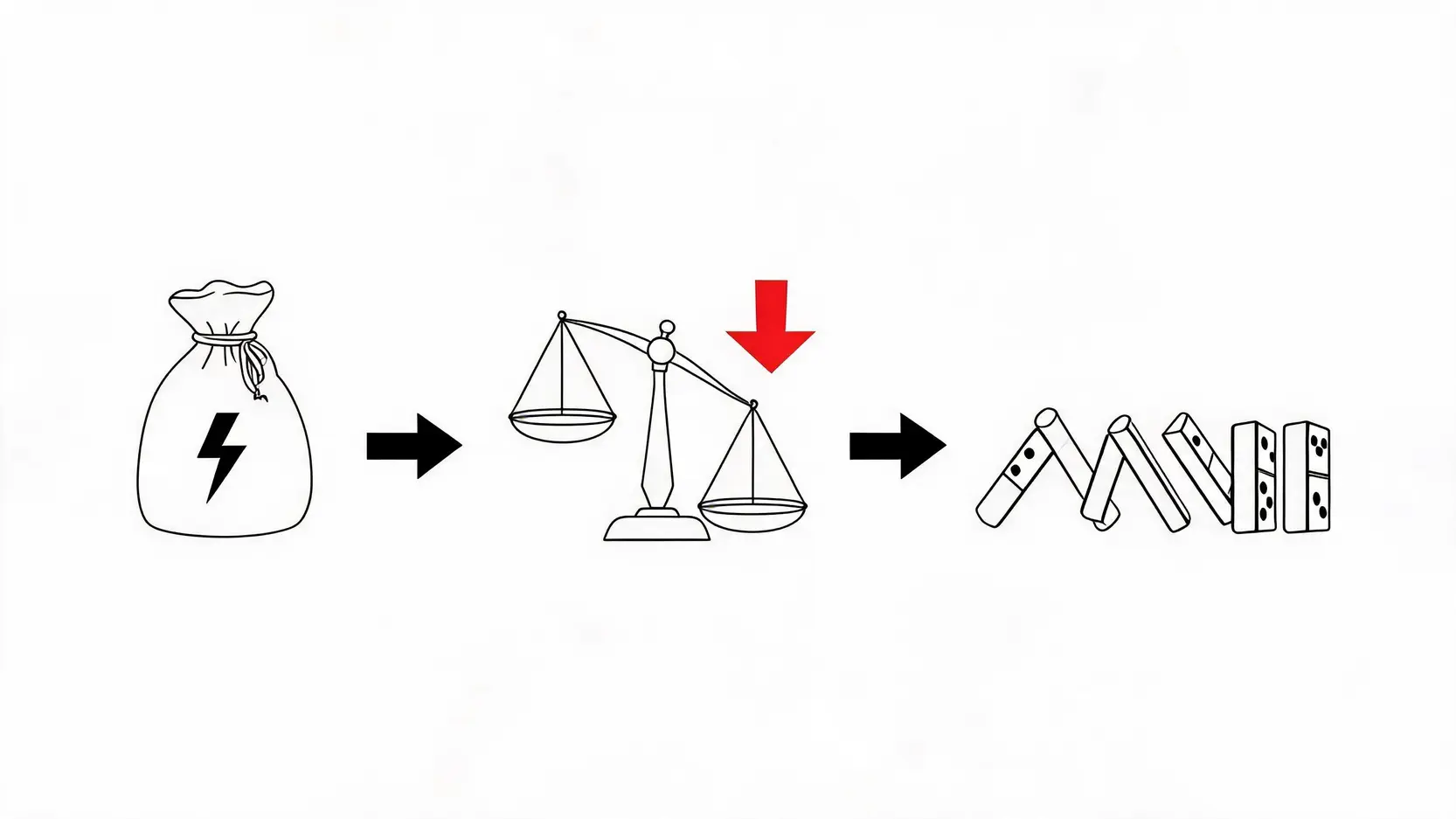
Hackers familiar with the on-chain ecosystem often use flash loans to conduct DeFi arbitrage without upfront capital, manipulating oracle price quotes to create artificial price plunges or surges, thereby triggering large-scale forced liquidations. Such attacks not only severely damage a single protocol, but also cause collateral to be sold off at distressed prices, which can then trigger a cross-protocol capital depletion crisis.

The Transmission Process of Market-Wide Cascading Liquidations Triggered by Flash Loan Attacks
The Stablecoin Depegging Black Swan: How the “Impact of DeFi Liquidity on the Foreign Exchange Market” Spills Over to Fiat Currencies
Many people assume that shocks in the crypto market remain only on-chain, but the widespread adoption of stablecoins has already made them a core bridge between traditional finance and virtual assets. When this bridge is shaken, the impact of DeFi liquidity on the foreign exchange market is no longer just theoretical.
The Systemic Importance of USDT/USDC as On-Chain Fiat Bridges
Mainstream stablecoins, such as USDT and USDC, have a total market capitalization of hundreds of billions of dollars and serve as the foundation of the entire DeFi ecosystem. These stablecoins are backed by large amounts of fiat reserves, US Treasuries, or commercial paper. When investors redeem large amounts of fiat currency to avoid risk, or when concerns over the five major causes of stablecoin depegging become reality, issuers must sell assets in traditional financial markets, directly placing heavy liquidity pressure on short-term money markets.

Risk Transmission Diagram of Stablecoins as a Bridge Between the Crypto Market and Traditional Finance
When Collateral Assets Face a Run: Related Liquidity Pressure on the Traditional Banking System
According to reports from the International Monetary Fund (IMF), if stablecoins face a severe run, the balance sheets of their reserve banks will come under enormous pressure. This may not only lead to liquidity tightening in traditional banks, but may even force central banks to intervene through monetary easing policies to prevent systemic risks. Volatility in the virtual currency market already has substantial potential to spill over into the traditional banking system.
The Dollar Siphoning Effect of Cross-Border Arbitrage Capital Under Extreme Market Conditions
Under extreme market conditions, global arbitrage capital can move rapidly between traditional foreign exchange markets and DeFi platforms. When a liquidity crisis occurs in the crypto market, large amounts of US dollar capital may be “siphoned” on-chain to fill margin gaps, or quickly converted between different fiat currencies and stablecoins to capture interest rate spreads. Such abnormal capital flows not only intensify exchange rate volatility in emerging market countries, but also confirm the real threat posed by the impact of DeFi liquidity on the foreign exchange market.
Further Reading (Highly Recommended)
Frequently Asked Questions About Cryptocurrency Liquidity and Foreign Exchange Market Risks
Q: Is the current size of the DeFi market large enough to shake the global foreign exchange market?
A: The global foreign exchange market currently has enormous daily trading volume, and the overall size of DeFi is still relatively smaller by comparison. However, if an extreme stablecoin depegging crisis were to occur, the resulting short-term liquidity tightening and market panic could indeed have a significant impact on the short-term exchange rates of specific regions or fiat currencies.
Q: What is Impermanent Loss?
A: When investors place funds into the liquidity pool of an automated market maker (AMM), if the asset price fluctuates sharply, the reduction in book value compared to simply holding the asset is known as impermanent loss. This is one of the most critical risks that cannot be ignored when providing cryptocurrency liquidity.
Q: What hidden risks are involved in DeFi arbitrage?
A: Although on-chain arbitrage may appear profitable, it carries hidden risks such as smart contract vulnerabilities, high slippage, transaction failures caused by network congestion, and the potential for liquidity to evaporate instantly. Blindly following the trend can easily result in permanent capital losses.
Q: How are central banks preventing foreign exchange market risks caused by crypto assets?
A: Regulatory authorities around the world are actively developing regulatory frameworks for stablecoins and virtual assets, requiring issuers to improve the transparency of reserve assets while accelerating the development of central bank digital currencies (CBDCs) to address the long-term systemic threats that the impact of DeFi liquidity on the foreign exchange market may bring.
Conclusion and Future Outlook
In summary, although the impact of DeFi liquidity on the foreign exchange market remains manageable in most cases at present, global financial markets must not lower their guard as stablecoin market capitalization continues to grow and gradually penetrates traditional cross-border payment systems. Whether it is the stress test of cryptocurrency liquidity or the complex and high-risk DeFi arbitrage mechanisms, both highlight the rapid rise of cross-market interconnected risks. As rational investors embrace decentralized finance innovation, they must also develop a strong awareness of asset protection. At the same time, regulators should confront the increasingly close connection risks between virtual assets and traditional finance, and establish cross-market safeguards as early as possible to prepare for potential future financial black swan events.
Related Articles
-
US PPI Comes in Below Expectations: Is Inflation Cooling? Understand the Impact on the Stock Market, Interest Rate Hikes, and Your Wallet The recently released US Producer Price Index (PPI) once again came in below market expectations, sparking optimism that inflation is cooling. What exactly does this key US PPI...2026 年 7 月 21 日
-
PPI and CPI Surge: Is the Inflation Monster Coming? Understand the Two Key Indicators and Protect Your Wallet! Have you recently felt that your money is worth less and less, with the price of everything rising except your salary? Everyone is talking about “inflation”, but where exactly does this monster...2026 年 7 月 21 日
-
When Oil Prices Rise, Which Currencies Benefit? Understanding Investment Strategies for Crude Oil Currency Pairs What Are Crude Oil Currencies? Uncovering the Relationship Between Oil Prices and Forex As volatility in the global energy market intensifies, every movement in crude oil prices affects the foreign exchange market. For perceptive investors,...2026 年 7 月 21 日