HK Licensed Crypto Exchanges 2026: SFC Platform Guide

2026 Complete List of Licensed Cryptocurrency Exchanges in Hong Kong: How to Choose an SFC-Licensed Platform?
As Hong Kong actively positions itself as a global Web3 hub, the Securities and Futures Commission (SFC) has continued strengthening its regulation of virtual assets. In 2026, with countless virtual asset trading platforms flooding the market, investors are most concerned about accidentally falling into scams. This article provides a comprehensive overview of the latest 2026 list of licensed cryptocurrency exchanges in Hong Kong, along with an in-depth analysis of the characteristics of major SFC-licensed platforms, helping you trade safely without stepping into traps.
Why Must You Choose an SFC-Licensed Cryptocurrency Exchange in Hong Kong?
In recent years, the global virtual asset market has gone through multiple bull and bear cycles, with once-dominant crypto exchanges collapsing overnight becoming an increasingly common sight. For investors based in Taiwan, Malaysia, and other regions, the greatest hidden risk when investing overseas is often “fund security”. Therefore, using the rigorous standards set by the Hong Kong Securities and Futures Commission (SFC) as a benchmark has become a powerful protective barrier. Choosing an SFC-licensed cryptocurrency exchange in Hong Kong is not merely about following trends, but a critical strategy for protecting your capital.
Protection Through Fund Security and Asset Segregation Mechanisms
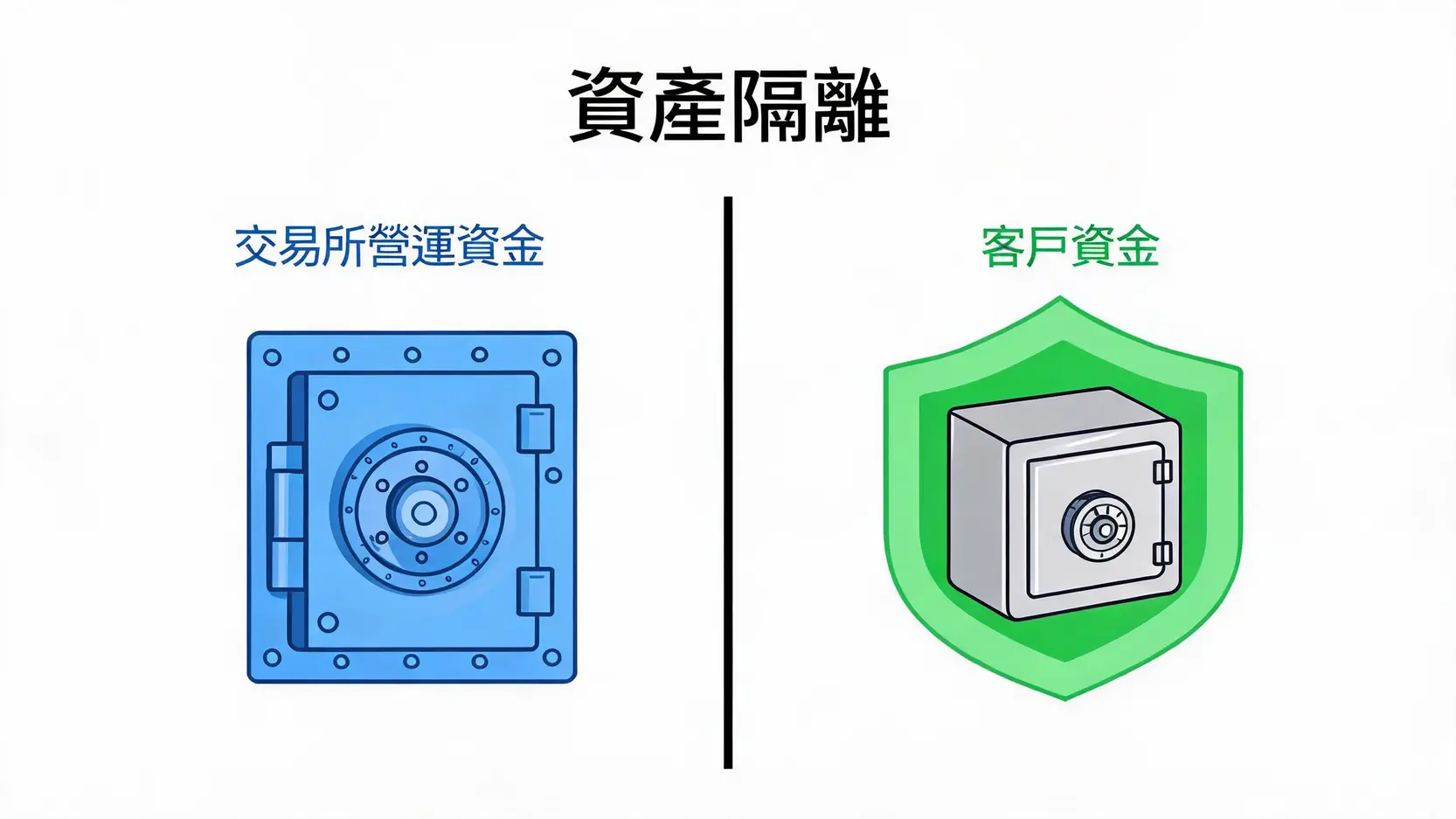
The most important principle when investing in virtual assets is capital preservation. Under the SFC regulatory framework, all licensed platforms must strictly implement client asset segregation mechanisms. This means the exchange’s operational funds and clients’ investment funds must be stored completely separately, preventing platforms from misusing customer funds for high-risk activities. In addition, licensed exchanges are required to store up to 98% of customer virtual assets in cold wallets, significantly reducing the risk of hacking and online theft.

Illustration: Client Asset Segregation and Cold Wallet Storage Mechanisms on SFC-Licensed Platforms
More importantly, the SFC requires licensed institutions to establish compensation arrangements, meaning they must insure customer virtual assets or provide equivalent financial guarantees. This means that if unforeseen security incidents occur, investors may receive meaningful compensation for losses. This functions similarly to deposit protection schemes in traditional financial institutions and fundamentally changes the old “lose your coins, lose everything” jungle rule once common in the crypto industry.
Avoiding Scam Platforms and Compliance With Anti-Money Laundering Standards
Crypto-related scams continue to emerge endlessly. Many black-market platforms promoting high returns are in reality Ponzi schemes or capital traps. Choosing officially approved virtual asset trading platforms can effectively help investors avoid these pitfalls. At the same time, licensed Hong Kong exchanges strictly implement Know Your Customer (KYC) and Anti-Money Laundering (AML) regulations. Although registration may require submitting detailed identity verification documents, which may appear cumbersome, these procedures help ensure that trading funds on the platform are clean and compliant, reducing the risk of accounts being frozen due to suspicious fund flows. Compliance ultimately provides peace of mind.
Latest 2026 Overview: Complete List of SFC-Approved Virtual Asset Trading Platforms
Following the official end of the transition period in mid-2024, Hong Kong’s virtual asset market entered a phase of comprehensive restructuring. By 2026, the market landscape had become much clearer. Institutions unable to meet regulatory standards exited the market, leaving only platforms that successfully passed strict SFC audits. Below is a summary of the latest virtual asset trading platform landscape.
Overview of Licensed Cryptocurrency Exchanges
As of 2026, the two most widely recognized pioneers listed on the official SFC licensing registry remain HashKey Exchange and OSL Exchange. These two platforms were among the first to open services to retail investors, offering direct Hong Kong dollar and US dollar deposit and withdrawal channels, greatly improving fiat currency accessibility for both local and overseas investors.
HashKey Exchange is known for its strong fiat currency infrastructure and institutional-grade trading engine. It supports direct transfers in multiple fiat currencies and has established deep partnerships with several licensed Hong Kong banks, addressing long-standing banking compliance issues associated with crypto deposits and withdrawals.
OSL Exchange, on the other hand, excels in B2B technology services and large-scale block trading, serving as a key infrastructure provider for many traditional brokerages entering the Web3 industry.
While reviewing these platform lists, if you would also like to further compare trading fees and real-world platform testing results, you may refer to “[2026 Hong Kong Cryptocurrency Exchange Recommendations] Top 5 Platform Comparison” to find the trading platform best suited to your investment needs.
The Market Restructuring Effect After the Transition Period
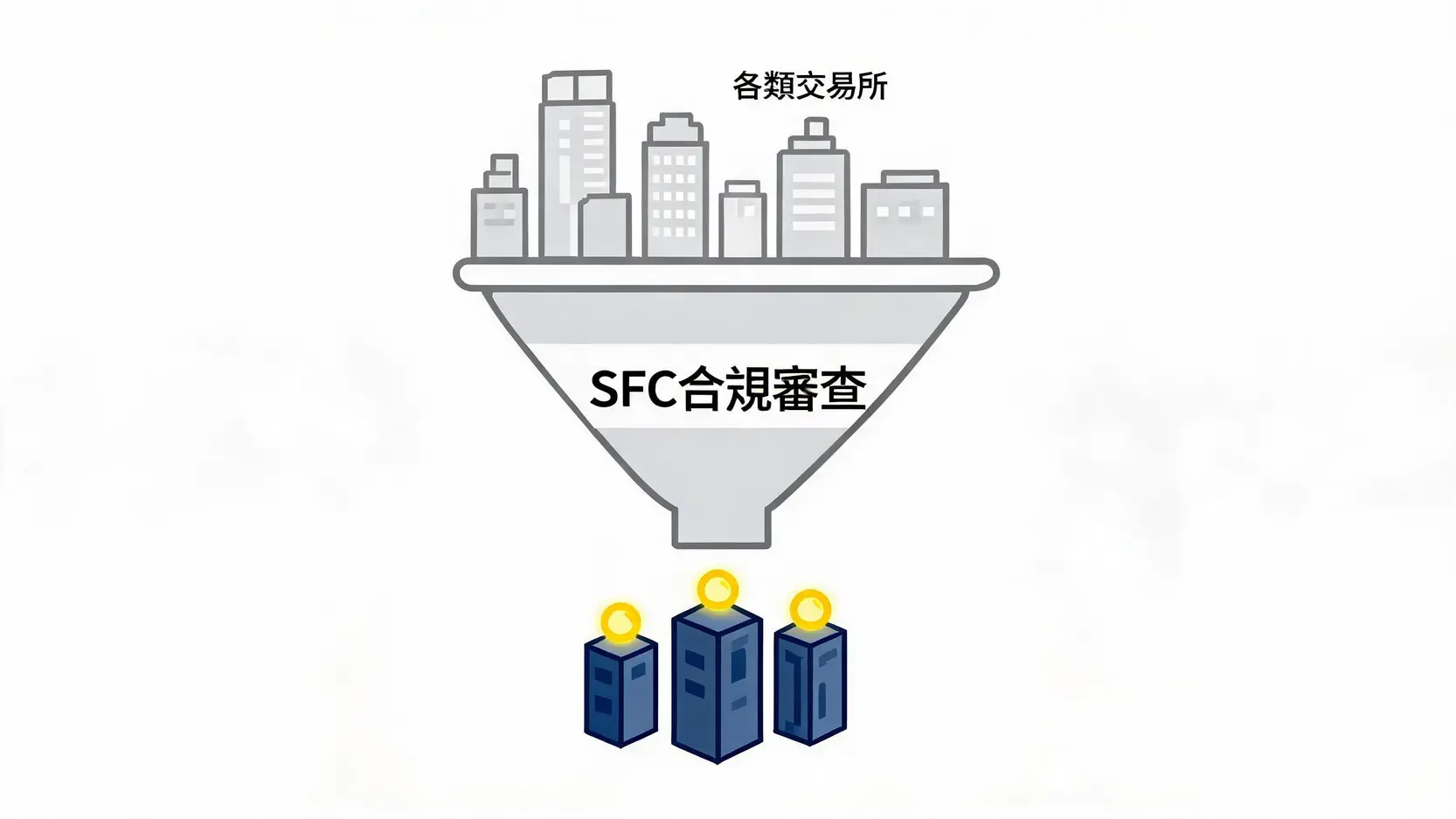
The previous gray area where platforms could continue operating while merely “applying for a license” no longer exists. The SFC has clearly stated that all cryptocurrency platforms operating in Hong Kong must hold a license. This wave of regulation eliminated a large number of small and mid-sized exchanges with weak financial foundations or insufficient resources to bear compliance costs. For ordinary investors, this is unquestionably a positive development. The market has undergone a process of consolidation, leaving behind only Hong Kong licensed virtual asset exchanges with stronger financial stability and greater operational transparency, significantly reducing the systemic risks of participating in the crypto market.

Market Consolidation After the Transition Period: Only Financially Stable Platforms Remain Following Strict SFC Reviews
Differences Between Retail and Professional Investor (PI) Trading Permissions and Available Tokens Under the SFC Licensing Framework
Within Hong Kong’s regulatory framework, investors are clearly categorized as “Retail Investors” and “Professional Investors (PI)”. Under the SFC licensing system, these two groups have dramatically different access to services and investment products.
Restrictions on Mainstream Tokens Available to Retail Investors (BTC, ETH)
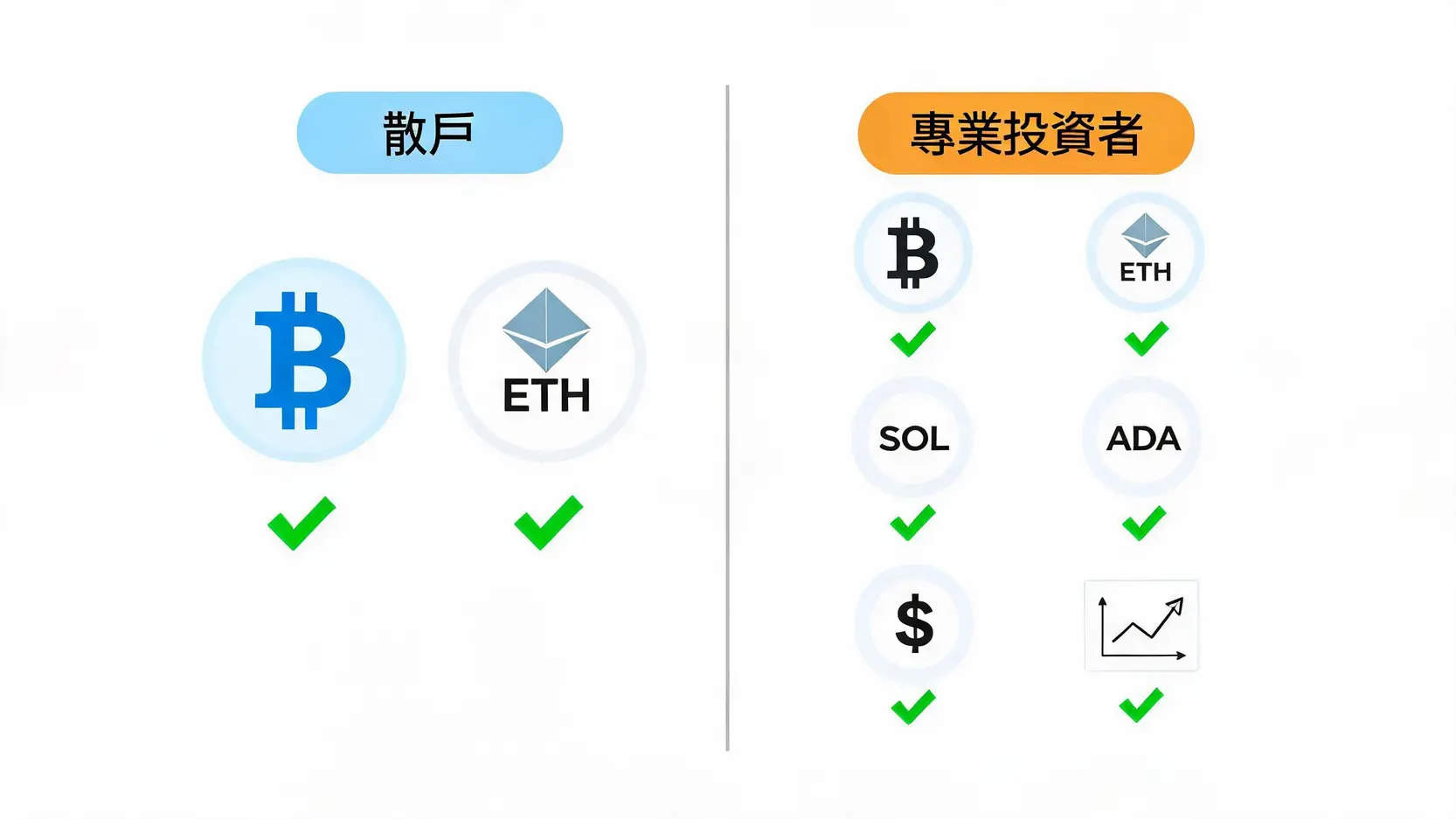
To protect investors, the SFC currently only permits retail investors to trade highly liquid, large-cap “eligible virtual assets”. In practice, this generally means only cryptocurrencies included in major indices compiled by at least two independent index providers may be made available to retail traders, such as Bitcoin (BTC) and Ether (ETH). This means ordinary retail investors cannot purchase highly volatile altcoins or meme coins on licensed platforms. Although these restrictions reduce speculative opportunities, they also genuinely protect beginner investors from having their capital wiped out by extreme volatility.
Exclusive Stablecoin and Derivatives Trading Permissions for Professional Investors (PI)
For users who qualify as Professional Investors, Hong Kong licensed platforms provide significantly broader permissions. PIs can not only trade a wider range of cryptocurrencies, but may also gain access to stablecoins such as USDT and USDC, as well as certain virtual asset derivatives products. Once high-net-worth investors obtain PI status, they may unlock advanced products such as spot margin trading, allowing them to implement more flexible hedging strategies during market volatility. In addition, Hong Kong’s regulatory framework for fiat-backed stablecoin issuers had already matured by 2026, with compliant stablecoins providing PIs with a safer hedging environment.

Comparison of Trading Permissions and Available Tokens Between Retail and Professional Investors (PI)
How to Apply for Professional Investor Status to Unlock Full Features
Investors wishing to unlock a broader range of trading pairs and platform features must apply for Professional Investor status through the platform. Under Hong Kong regulations, individual Professional Investors must hold an investment portfolio worth at least HK$8 million, or the equivalent value in foreign currencies. Applicants are generally required to provide documents such as bank statements, brokerage account statements, or trust asset certificates from within the previous 12 months. Once approved, investors can gain access to institutional-grade trading depth and expanded product offerings across these licensed cryptocurrency exchanges.
Further Reading (Highly Recommended)
Frequently Asked Questions About Licensed Cryptocurrency Exchanges in Hong Kong
Q: Is It Illegal to Use Overseas Exchanges That Are Not Licensed?
A: For ordinary retail investors, using overseas exchanges that have not obtained licenses in Hong Kong through the internet does not itself constitute a criminal offense. However, the risk lies in the fact that these overseas platforms are not regulated by the Hong Kong SFC. If the platform collapses, suffers a hacking incident, or freezes accounts without reason, investors may have no practical recourse and will not be protected under local laws. Therefore, placing the majority of your funds on compliant platforms is generally a safer strategy.
Q: How Can I Check the Latest License Status on the SFC Website?
A: You may directly visit the official website of the Securities and Futures Commission and check the “Virtual Asset Trading Platform List” section. The list is updated in real time and clearly categorizes institutions as licensed, deemed-to-be-licensed, or rejected applicants. This is an essential due diligence step before investing.
Q: Are the Fees Charged by Licensed Exchanges Higher Than Overseas Platforms?
A: Since compliant platforms must bear substantial costs related to licensing applications, regulatory compliance audits, insurance, and asset custody, their trading fees are generally slightly higher than some unregulated overseas platforms. However, these additional costs provide top-tier asset security and legitimate fiat deposit and withdrawal channels. From a long-term investment perspective, this additional risk management cost is absolutely worthwhile.
Q: Which Cryptocurrencies Can Retail Investors Currently Trade in Hong Kong?
A: According to SFC regulations, retail investors are currently only permitted to trade highly liquid and widely recognized virtual assets, primarily Bitcoin (BTC) and Ether (ETH). As for smaller-cap cryptocurrencies or stablecoins, most compliant platforms currently still restrict trading access to Professional Investors (PI). However, as regulations continue evolving in 2026, the market ecosystem may gradually become more mature and expansive in the future.
Conclusion: Embrace Compliance and Build a Stable Foundation for Virtual Asset Trading
Choosing platforms from the list of licensed cryptocurrency exchanges in Hong Kong is the first step toward protecting your assets. In the rapidly changing cryptocurrency market, compliance has already become an irreversible global trend. Virtual asset trading platforms strictly regulated by the SFC not only establish a strong layer of protection for investors, but also provide legitimate and compliant investment tools. Smart investors should prioritize opening accounts with officially licensed platforms while continuously monitoring the latest regulatory developments. Only by building on a secure foundation can investors truly enjoy the long-term returns offered by virtual assets.
Related Articles
-
US PPI Comes in Below Expectations: Is Inflation Cooling? Understand the Impact on the Stock Market, Interest Rate Hikes, and Your Wallet The recently released US Producer Price Index (PPI) once again came in below market expectations, sparking optimism that inflation is cooling. What exactly does this key US PPI...2026 年 7 月 21 日
-
PPI and CPI Surge: Is the Inflation Monster Coming? Understand the Two Key Indicators and Protect Your Wallet! Have you recently felt that your money is worth less and less, with the price of everything rising except your salary? Everyone is talking about “inflation”, but where exactly does this monster...2026 年 7 月 21 日
-
When Oil Prices Rise, Which Currencies Benefit? Understanding Investment Strategies for Crude Oil Currency Pairs What Are Crude Oil Currencies? Uncovering the Relationship Between Oil Prices and Forex As volatility in the global energy market intensifies, every movement in crude oil prices affects the foreign exchange market. For perceptive investors,...2026 年 7 月 21 日